Blog

Structural Water Damage Restoration: Saving Load-Bearing Beams

Parker Brown

CEO of BoneDry Services

May 16

In this article

    Structural Water Damage Restoration: Preserving Load-Bearing Beams

    Preserving a luxury estate requires more than just surface-level drying; it requires a deep understanding of the home’s skeletal health. When a moisture crisis occurs, the primary concern for most homeowners is the visible damage to custom cabinetry or designer flooring. However, the true threat often hides within the structural envelope. Professional structural water damage restoration must address the load-bearing beams that support your home's vertical load. If moisture is allowed to dwell within timber framing, the structural repercussions—from floor sagging to compromised headers—can be catastrophic.

    The Physics of Wicking in Structural Water Damage Restoration

    Wood is a naturally porous, cellular material designed by nature to transport fluids. Even after it has been milled into construction-grade timber, it retains these "vascular" qualities. Through a process known as capillary action or "wicking," water does not simply sit at the base of a beam; it climbs.

    The Difference Between Softwood and Hardwood Wicking

    Not all structural elements react to moisture in the same way. In many luxury Denver homes, architectural designs may include both functional softwood framing and decorative or structural hardwood beams.

    • Softwoods (Pine/Douglas Fir): Often used for internal framing, these are highly porous and wick water rapidly, acting like a straw that pulls moisture into the ceiling.
    • Hardwoods (Oak/Walnut): While denser, they are prone to severe "checking" and splitting if the structural water damage restoration process is too aggressive or too slow.

    BoneDry Services tailors the drying temperature to the specific species of wood to ensure the internal moisture is removed without causing the exterior to crack or warp.

    How Wicking Compromises a Home

    In a high-end residential setting, a basement flood or a hidden pipe leak can result in moisture traveling several feet upward. Effective structural water damage restoration requires identifying this vertical migration before the wood fibers undergo these three stages of degradation:

    1. Cellular Swelling: The wood fibers expand, putting pressure on surrounding fasteners and drywall.
    2. Fiber Saturation: The point where the wood can no longer hold moisture, leading to "soft spots."
    3. Lateral Weakening: The beam loses its ability to resist bending, which leads to visible floor sagging.
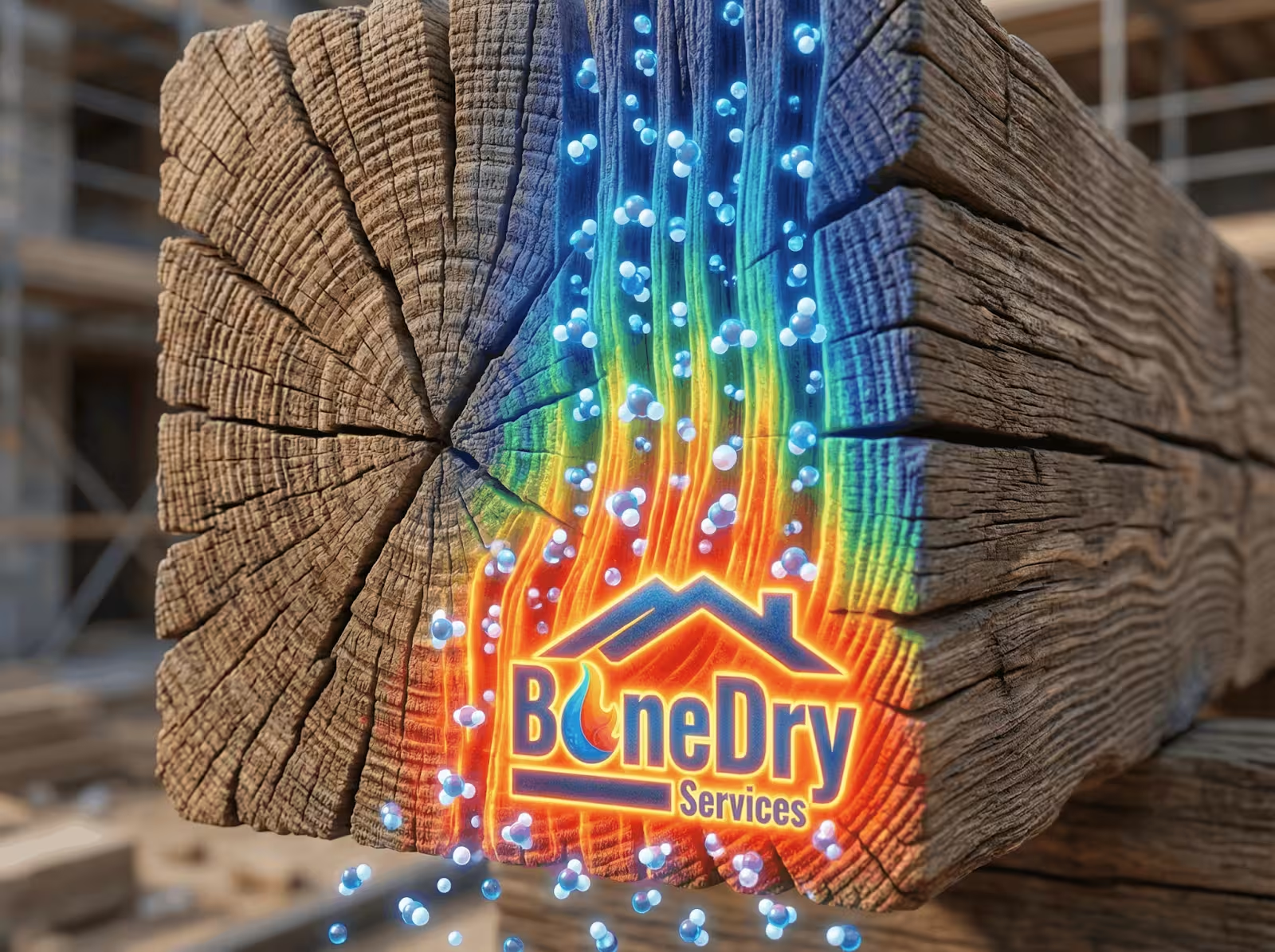
    Technical 3D visualization of capillary action and wicking in structural timber during structural water damage restoration.

    Key Indicators for Structural Water Damage Restoration

    Simply "airing out" a room is insufficient when dealing with heavy-duty load-bearing members. At BoneDry Services, our structural drying protocols involve deep-tissue moisture extraction. During our initial inspection, we look for specific red flags:

    • Checking: New longitudinal cracks appearing in the grain of the wood.
    • Fastener Corrosion: Rust appearing on the steel bolts or joist hangers.
    • Compression Failure: Signs that the wood is "crushing" under the weight it used to support easily.
    • Dimensional Instability: Doors or windows in the rooms above that no longer close properly.

    The Financial Impact of Delayed Structural Drying

    Ignoring the skeletal moisture in a property can lead to a "Secondary Loss." This occurs when the initial water damage is managed, but the structural dampness leads to expensive long-term issues. From a structural water damage restoration perspective, it is much more cost-effective to deploy high-capacity desiccants for three days than it is to replace a load-bearing header six months later.

    When a beam loses its "Modulus of Rupture" (the limit of its strength), the repairs often require temporary shoring of the entire floor, the removal of all electrical and HVAC lines running through the joists, and extensive structural engineering permits and inspections. Our goal is to ensure your home never reaches this stage of invasive reconstruction.

    4 Steps to Preventing Floor Sagging

    Have you noticed a slight dip in your hardwood floors? These are often the "aftershocks" of improper restoration. To prevent permanent deformation (known as "creep"), we follow a rigid scientific process:

    1. Thermal Mapping: Using infrared technology to see exactly how high the water has wicked inside the wall.
    2. Moisture Equilibrium: Calculating the "Dry Standard" of your home to know our target moisture percentage.
    3. Targeted Airflow: Directing high-velocity air specifically at the affected structural junctions.
    4. Desiccant Dehumidification: Pulling deep-seated moisture out of the core of the timber that standard fans can't reach.

    BoneDry Services technician measuring moisture content in structural beams to ensure high-end structural water damage restoration.

    Specialized Equipment Used in Structural Water Damage Restoration

    Professional drying requires far more than standard floor fans because reaching the core of a thick load-bearing beam is a matter of vapor pressure. We utilize LGR Dehumidifiers that can pull moisture from the air even in very low humidity, which is essential for drawing water out of dense wood.

    This is supported by Axial Air Movers that are specifically designed to push air into the tight wall cavities where beams reside. For the most delicate or inaccessible areas, we employ Injectidry Systems which use small tubes inserted behind baseboards to deliver dry air directly to the sill plate and the base of vertical studs. This technical approach to structural water damage restoration ensures we are drying the very bones of the home rather than just the visible skin.

    The Role of Precision in Structural Water Damage Restoration

    To protect your home’s value, we avoid "exploratory demolition" whenever possible. Instead of tearing down an entire custom-built wall, we use our data to perform "surgical" drying. This may involve creating small, hidden injection points to pump dry air directly to the affected beam. This level of precision defines luxury restoration.

    The final phase of any structural project is verification. We provide documented proof that the load-bearing elements have returned to their pre-loss condition. This is essential for maintaining the resale value of your property, proving that no mold removal & remediation was necessary due to rapid intervention.
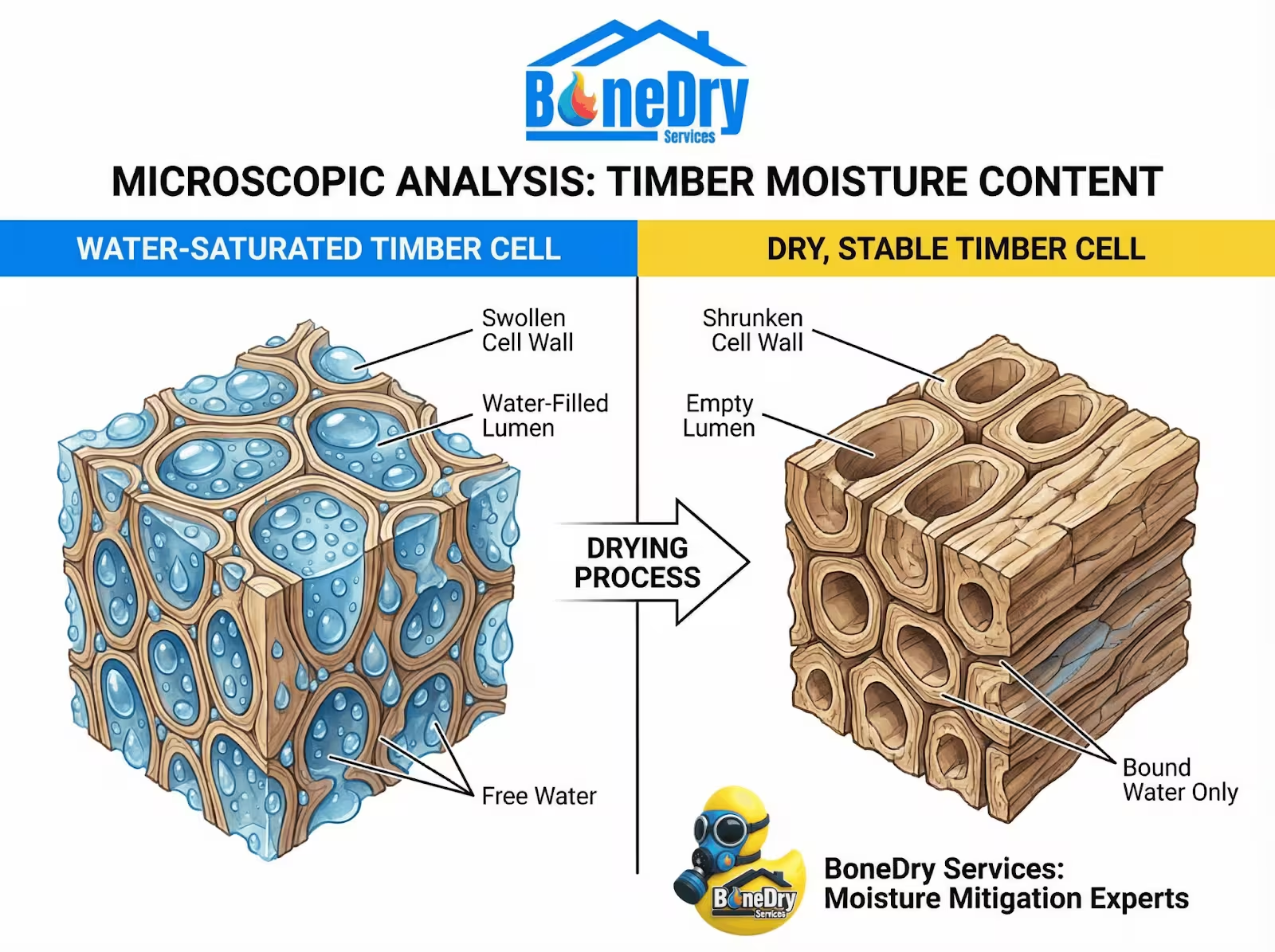
    Microscopic comparison of timber cell integrity before and after professional structural water damage restoration.

    Protect Your Home’s Structural Foundation

    Don't let hidden wicking and moisture saturation compromise the "bones" of your estate. Ensure your load-bearing beams are stabilized and dried to professional standards before permanent sagging or structural failure occurs.

    📞 Call BoneDry Services at (303) 276-4163 for expert Structural Drying and Water Damage Restoration in Denver today.

    FAQ

    Q1: Does wood get weaker when wet? 

    Yes, wood loses significant structural stiffness when its moisture content rises. Water acts as a lubricant between the wood fibers, making the beam more flexible and prone to "deflection" or sagging. Structural water damage restoration must begin immediately to prevent this loss of strength from becoming permanent.

    Q2: How does moisture content affect wood strength? 

    As moisture content increases toward the Fiber Saturation Point (around 30%), the "Modulus of Elasticity" decreases. Essentially, the wetter the wood, the less weight it can carry before it starts to bend.

    Q3: Is 17% moisture in wood bad? 

    While 17% is not "rotting" territory (which usually begins at 20%+), it is high for indoor structural timber, which should ideally sit between 9% and 12%. At 17%, the wood is in a state of expansion. A structural water damage restoration expert would recommend active drying to bring that number down to safe levels.

    Q4: How long can moisture stay in wood? 

    In a trapped environment like a wall cavity, moisture can remain in a heavy beam for months or even years. Because structural timber is dense, it does not give up deep-seated water easily on its own. This is why specialized equipment like desiccants and axial movers are required to "pull" the water out effectively.

    Q5: Does moisture destroy wood?

    Moisture itself causes swelling and weakening, but the secondary effects—rot and mold—are what truly "destroy" the wood's cellular structure. By utilizing rapid, high-tech Water Damage Restoration techniques, we remove the moisture before these biological agents can begin consuming the timber and compromising your home's safety.

    Q6: How long can moisture stay in wood?

    In a trapped environment like a wall cavity, moisture can remain in a heavy beam for months or even years. Because structural timber is dense, it does not give up deep-seated water easily on its own. This is why specialized Water Damage Restoration equipment, like desiccants and axial movers, is required to "pull" the water out effectively.

    Recent Articles

    16 May 2026

    Structural Water Damage Restoration: Saving Load-Bearing Beams

    Protect your home's structural integrity. BoneDry Services provides technical structural water damage restoration to prevent wicking and sagging in luxury beams.
     read more

    Structural Water Damage Restoration: Preserving Load-Bearing Beams

    Preserving a luxury estate requires more than just surface-level drying; it requires a deep understanding of the home’s skeletal health. When a moisture crisis occurs, the primary concern for most homeowners is the visible damage to custom cabinetry or designer flooring. However, the true threat often hides within the structural envelope. Professional structural water damage restoration must address the load-bearing beams that support your home's vertical load. If moisture is allowed to dwell within timber framing, the structural repercussions—from floor sagging to compromised headers—can be catastrophic.

    The Physics of Wicking in Structural Water Damage Restoration

    Wood is a naturally porous, cellular material designed by nature to transport fluids. Even after it has been milled into construction-grade timber, it retains these "vascular" qualities. Through a process known as capillary action or "wicking," water does not simply sit at the base of a beam; it climbs.

    The Difference Between Softwood and Hardwood Wicking

    Not all structural elements react to moisture in the same way. In many luxury Denver homes, architectural designs may include both functional softwood framing and decorative or structural hardwood beams.

    • Softwoods (Pine/Douglas Fir): Often used for internal framing, these are highly porous and wick water rapidly, acting like a straw that pulls moisture into the ceiling.
    • Hardwoods (Oak/Walnut): While denser, they are prone to severe "checking" and splitting if the structural water damage restoration process is too aggressive or too slow.

    BoneDry Services tailors the drying temperature to the specific species of wood to ensure the internal moisture is removed without causing the exterior to crack or warp.

    How Wicking Compromises a Home

    In a high-end residential setting, a basement flood or a hidden pipe leak can result in moisture traveling several feet upward. Effective structural water damage restoration requires identifying this vertical migration before the wood fibers undergo these three stages of degradation:

    1. Cellular Swelling: The wood fibers expand, putting pressure on surrounding fasteners and drywall.
    2. Fiber Saturation: The point where the wood can no longer hold moisture, leading to "soft spots."
    3. Lateral Weakening: The beam loses its ability to resist bending, which leads to visible floor sagging.
    Technical 3D visualization of capillary action and wicking in structural timber during structural water damage restoration.

    Key Indicators for Structural Water Damage Restoration

    Simply "airing out" a room is insufficient when dealing with heavy-duty load-bearing members. At BoneDry Services, our structural drying protocols involve deep-tissue moisture extraction. During our initial inspection, we look for specific red flags:

    • Checking: New longitudinal cracks appearing in the grain of the wood.
    • Fastener Corrosion: Rust appearing on the steel bolts or joist hangers.
    • Compression Failure: Signs that the wood is "crushing" under the weight it used to support easily.
    • Dimensional Instability: Doors or windows in the rooms above that no longer close properly.

    The Financial Impact of Delayed Structural Drying

    Ignoring the skeletal moisture in a property can lead to a "Secondary Loss." This occurs when the initial water damage is managed, but the structural dampness leads to expensive long-term issues. From a structural water damage restoration perspective, it is much more cost-effective to deploy high-capacity desiccants for three days than it is to replace a load-bearing header six months later.

    When a beam loses its "Modulus of Rupture" (the limit of its strength), the repairs often require temporary shoring of the entire floor, the removal of all electrical and HVAC lines running through the joists, and extensive structural engineering permits and inspections. Our goal is to ensure your home never reaches this stage of invasive reconstruction.

    4 Steps to Preventing Floor Sagging

    Have you noticed a slight dip in your hardwood floors? These are often the "aftershocks" of improper restoration. To prevent permanent deformation (known as "creep"), we follow a rigid scientific process:

    1. Thermal Mapping: Using infrared technology to see exactly how high the water has wicked inside the wall.
    2. Moisture Equilibrium: Calculating the "Dry Standard" of your home to know our target moisture percentage.
    3. Targeted Airflow: Directing high-velocity air specifically at the affected structural junctions.
    4. Desiccant Dehumidification: Pulling deep-seated moisture out of the core of the timber that standard fans can't reach.
    BoneDry Services technician measuring moisture content in structural beams to ensure high-end structural water damage restoration.

    Specialized Equipment Used in Structural Water Damage Restoration

    Professional drying requires far more than standard floor fans because reaching the core of a thick load-bearing beam is a matter of vapor pressure. We utilize LGR Dehumidifiers that can pull moisture from the air even in very low humidity, which is essential for drawing water out of dense wood.

    This is supported by Axial Air Movers that are specifically designed to push air into the tight wall cavities where beams reside. For the most delicate or inaccessible areas, we employ Injectidry Systems which use small tubes inserted behind baseboards to deliver dry air directly to the sill plate and the base of vertical studs. This technical approach to structural water damage restoration ensures we are drying the very bones of the home rather than just the visible skin.

    The Role of Precision in Structural Water Damage Restoration

    To protect your home’s value, we avoid "exploratory demolition" whenever possible. Instead of tearing down an entire custom-built wall, we use our data to perform "surgical" drying. This may involve creating small, hidden injection points to pump dry air directly to the affected beam. This level of precision defines luxury restoration.

    The final phase of any structural project is verification. We provide documented proof that the load-bearing elements have returned to their pre-loss condition. This is essential for maintaining the resale value of your property, proving that no mold removal & remediation was necessary due to rapid intervention.

    Microscopic comparison of timber cell integrity before and after professional structural water damage restoration.

    Protect Your Home’s Structural Foundation

    Don't let hidden wicking and moisture saturation compromise the "bones" of your estate. Ensure your load-bearing beams are stabilized and dried to professional standards before permanent sagging or structural failure occurs.

    📞 Call BoneDry Services at (303) 276-4163 for expert Structural Drying and Water Damage Restoration in Denver today.

    FAQ

    Q1: Does wood get weaker when wet? 

    Yes, wood loses significant structural stiffness when its moisture content rises. Water acts as a lubricant between the wood fibers, making the beam more flexible and prone to "deflection" or sagging. Structural water damage restoration must begin immediately to prevent this loss of strength from becoming permanent.

    Q2: How does moisture content affect wood strength? 

    As moisture content increases toward the Fiber Saturation Point (around 30%), the "Modulus of Elasticity" decreases. Essentially, the wetter the wood, the less weight it can carry before it starts to bend.

    Q3: Is 17% moisture in wood bad? 

    While 17% is not "rotting" territory (which usually begins at 20%+), it is high for indoor structural timber, which should ideally sit between 9% and 12%. At 17%, the wood is in a state of expansion. A structural water damage restoration expert would recommend active drying to bring that number down to safe levels.

    Q4: How long can moisture stay in wood? 

    In a trapped environment like a wall cavity, moisture can remain in a heavy beam for months or even years. Because structural timber is dense, it does not give up deep-seated water easily on its own. This is why specialized equipment like desiccants and axial movers are required to "pull" the water out effectively.

    Q5: Does moisture destroy wood?

    Moisture itself causes swelling and weakening, but the secondary effects—rot and mold—are what truly "destroy" the wood's cellular structure. By utilizing rapid, high-tech Water Damage Restoration techniques, we remove the moisture before these biological agents can begin consuming the timber and compromising your home's safety.

    Q6: How long can moisture stay in wood?

    In a trapped environment like a wall cavity, moisture can remain in a heavy beam for months or even years. Because structural timber is dense, it does not give up deep-seated water easily on its own. This is why specialized Water Damage Restoration equipment, like desiccants and axial movers, is required to "pull" the water out effectively.
    16 May 2026

    Sewage Cleanup Denver: Professional Sewer Backup Restoration

    Protect your family from black water pathogens. BoneDry Services offers professional Sewage Cleanup Denver and biohazard disinfection for local homes.
     read more

    Category 3 Pathogens and Sewage Cleanup Denver: The Science of Restoration

    When a main sewer line backs up into a Denver home, the situation is far more than a simple plumbing inconvenience because it represents a major biological hazard. In the restoration industry, backed up sewage is classified as Category 3 water, or black water, because it contains highly unsanitary contaminants. This type of intrusion can cause severe illness if not handled with professional Sewage Cleanup Denver protocols. For families in high-traffic households, the priority is not just removing the standing water but achieving a level of clinical wall-to-wall disinfection that ensures the living space is safe for children and pets to occupy once again.

    Certified Sewage Cleanup professional wearing full PPE while performing black water extraction in a Denver home.

    The Biological Reality of Black Water and Sewage Cleanup Denver

    The science of Sewage Cleanup Denver begins with understanding what is actually living in the water. Unlike "Gray Water" from a washing machine, black water is teeming with a cocktail of pathogens including E. coli, Hepatitis A, Salmonella, and various parasites. These microorganisms thrive in the porous materials of your home such as carpet padding, drywall, and subflooring.

    Because these pathogens are microscopic, they can easily become airborne during a flood event, which creates an inhalation risk for everyone in the building. A standard mop and bucket are completely insufficient for sewage restoration because they simply spread the bacteria around rather than neutralizing it at the molecular level. Professional extraction via a proper sewer clean out is the only way to ensure these contaminants are physically removed from the structural pores of your property.

    Immediate Safety Actions for Homeowners

    If you discover backed up sewage in your basement or crawlspace, follow these safety steps immediately before our team arrives:

    • Evacuate the Area: Keep children, pets, and elderly family members away from the affected rooms to prevent tracking bacteria or inhaling fumes.
    • Shut Down the HVAC: Turn off your furnace or AC to prevent the "Stack Effect" from pulling contaminated air into the rest of the home.
    • Avoid DIY Cleaning: Do not use household fans to dry the area, as this will aerosolize pathogens and spread them into your vents.
    • Switch Off Power: If it is safe to reach the breaker box without stepping in water, turn off electricity to the flooded zone to prevent electrocution.

    The 5-Step Scientific Process for Sewage Restoration

    To make a high-traffic family area safe again, BoneDry Services follows a rigorous process that goes far beyond surface cleaning. This scientific approach to Biohazard Cleanup ensures that the "invisible" threats are completely eliminated.

    1. Industrial Extraction: We utilize truck-mounted vacuum systems to remove standing water and solid waste quickly.
    2. Controlled Demolition: Saturated porous materials (carpet, padding, and insulation) are removed and disposed of as biohazardous waste.
    3. Antimicrobial Disinfection: We apply hospital-grade disinfectants to all structural surfaces, including floor joists and wall studs.
    4. ULV Fogging: We use Ultra-Low Volume foggers to distribute specialized odor-neutralizers and antimicrobials into hard-to-reach cavities.
    5. Structural Drying: High-velocity air movers and LGR dehumidifiers are deployed to return the home to a "dry standard."
    Diagram showing the effectiveness of professional antimicrobial treatments during the Sewage Cleanup process.

    Scientific Drying and Air Quality Control

    Even after the bacteria are neutralized, the moisture left behind can trigger a secondary mold crisis within 24 to 48 hours. Our structural drying and dehumidification protocol utilizes specialized equipment to pull deep-seated moisture out of the building materials.

    HEPA Air Filtration for Respiratory Safety

    During the drying process, we utilize HEPA air scrubbers that filter the air in the room several times per hour. This is a critical component of Sewage Cleanup Denver because it captures any dry spores or bacteria that may have become airborne during the extraction. This ensures that the air your family breathes is just as clean as the floor they walk on.

    Industrial air filtration and drying equipment used by BoneDry Services during professional Sewage Cleanup.

    Final Clearance and Moisture Monitoring

    The final stage of sewage restoration involves moisture mapping and verification. We use non-invasive moisture meters to prove that the structural timber has returned to a safe level. This data-driven approach is why BoneDry Services is the trusted name for Sewage Cleanup Denver, as we provide the documentation your insurance company needs for a seamless Water Damage Restoration claim.

    Why Professional Sewer Line Cleaning Matters

    Many backups occur because of tree root intrusion or aging infrastructure in the Front Range. Investing in regular sewer line cleaning can prevent the catastrophic failure of your sewer clean out point. By maintaining your drains, you reduce the risk of high-toxicity black water entering your living space and requiring emergency remediation.

    📞 Call BoneDry Services at (303) 276-4163 for professional Sewage Cleanup and biological disinfection today.

    FAQ

    Q1: How much is a sewage treatment?

    The cost of professional Sewage Cleanup varies significantly based on the square footage affected and the category of the water. Residential projects typically range from a few thousand dollars to much higher if structural demolition is required to remove saturated drywall or flooring. Most homeowners' policies cover this cost through a specific sewer backup rider which our team can help you navigate during the claims process.

    Q2: What are the 8 steps of sewage treatment?

    In a restoration context, the steps include emergency assessment and containment followed by the removal of standing water and biohazardous materials. We then perform a deep antimicrobial cleaning and fogging before beginning the structural drying phase. The final steps involve detailed air filtration and a clearance inspection to ensure the property is 100% sanitized before the final reconstruction and restoration of the living space begins.

    Q3: What is the largest sewage treatment plant in the world?

    The Stickney Water Reclamation Plant in Cicero, Illinois is currently considered the largest in the world since it serves millions of residents in the Chicago area. While we focus on residential Sewage Cleanup, these massive municipal plants use similar biological and chemical filtration principles to neutralize the same pathogens our technicians encounter on a smaller scale during a basement backup or main line failure.

    Q4: What are the three types of sewage treatment plants?

    The three primary types include centralized municipal plants and decentralized package plants along with residential septic systems. Each system is designed to break down waste using primary or mechanical separation and secondary or biological treatment along with tertiary or advanced chemical filtration. If any of these systems fail near your home, professional Sewage Cleanup is required to mitigate the biological impact on your property.

    Q5: What is the most expensive part of a septic system?

    The soil absorption system or the drain field is usually the most expensive component because it requires extensive excavation and specialized gravel and piping. When a drain field fails, it often causes sewage to back up into the home through the lowest drains which necessitates immediate Sewage Cleanup. Replacing a drain field can cost upwards of ten to twenty thousand dollars depending on the soil composition and local Colorado regulations.

    Q6: What is the lifespan of a sewage treatment plant?

    Most residential septic systems and local treatment infrastructures are designed to last between 20 and 30 years with proper maintenance. However, shifting soils in the Denver area or the use of flushable wipes can significantly shorten this lifespan and lead to sudden failures. Regular inspections can prevent a catastrophic backup that would require professional Sewage Cleanup to restore your home’s safety and value.

    27 Apr 2026

    Colorado Emergency Restoration: Monsoon & Flash Flood Guide

    Protect your luxury garage and vehicle collection from Colorado monsoons. BoneDry Services offers expert Colorado Emergency Restoration and flood diversion.
     read more

    Colorado Emergency Restoration for Monsoon Floods and High Value Estates

    In the high-altitude climate of the Front Range, summer doesn't just bring warmth—it brings the monsoon season. For owners of luxury estates, a single afternoon downpour can transform a driveway into a river, sending thousands of gallons of sediment-heavy water toward high-value vehicle collections. When these rapid-onset rain events breach your property, seconds count. Understanding the logistics of Colorado Emergency Restoration is the difference between a minor cleanup and the total loss of a curated automotive investment.

    Diagram showing how a trench drain prevents the need for Colorado Emergency Restoration during a monsoon flash flood.

    The Anatomy of a Colorado Flash Flood and the Need for Colorado Emergency Restoration

    Colorado’s terrain is notorious for "rain shadows" and steep gradients. During a monsoon event, the ground often cannot absorb water fast enough, leading to "sheet flow"—a wall of water that moves across the landscape. If your luxury garage sits at a lower elevation than your driveway or the street, it becomes a natural collection point.

    Standard drainage systems are frequently overwhelmed by the sheer volume of debris and silt carried by these floods. This is where professional Colorado Emergency Restoration experts step in, not just to dry the space, but to implement the industrial-grade diversion tactics necessary to protect mechanical systems and custom flooring from permanent water damage.

    Industrial-Grade Solutions to Prevent Colorado Emergency Restoration

    For properties housing exotic or vintage car collections, the goal is always prevention. However, when a monsoon breaches your perimeter, the Colorado Emergency Restoration process must include an upgrade to your existing infrastructure to prevent a recurrence.

    Colorado Emergency Restoration team performing rapid water extraction in a luxury garage.

    High-Capacity Trench Drains and Catch Basins

    Standard residential 4-inch drains are insufficient for Colorado monsoons. Our team often recommends and installs 8-inch to 12-inch industrial trench drains with heavy-duty steel grates. These systems are designed to swallow a "deluge" and redirect it to a dedicated swale or municipal storm line. Integrating these systems is a core part of a long-term Colorado Emergency Restoration strategy for high-risk properties.

    Automated Sump Pump Arrays

    In luxury garages where the floor is below grade, we install dual-sump pump systems with battery backups. If the primary pump fails or the power goes out during a mountain thunderstorm, the secondary pump engages. This redundancy is a hallmark of professional Water Damage Restoration planning, ensuring your garage remains dry even when you aren't home to monitor it.

    Protecting High-Value Vehicle Collections During Colorado Emergency Restoration

    Water doesn't have to be deep to be devastating. Even two inches of water can reach the undercarriages of low-clearance sports cars, leading to electrical shorts and corrosion in the chassis.

    Thermal imaging used during Colorado Emergency Restoration to find hidden water under a garage floor.

    The Risks of Humidity and Silt

    Flash flood water isn't clean; it’s a "Category 3" liquid filled with bacteria and abrasive silt. If this water sits in your garage, the resulting humidity spike can damage leather interiors and sensitive engine components. A critical phase of Colorado Emergency Restoration involves rapid dehumidification and "pressure relief" for the garage walls to ensure moisture doesn't travel into the main residence through the shared foundation.

    Restoring Specialized Garage Flooring

    Many luxury garages feature epoxy, Swisstrax, or polished concrete. These surfaces require specific cleaning agents to remove contaminants without stripping the finish. Our Mold Removal & Remediation protocols ensure that any biological pathogens carried in by the floodwater are neutralized, protecting both your cars and your family’s health.

    Warning Signs Your Property is at Risk for Colorado Emergency Restoration

    Property owners should perform a "wet weather walk-through" during a light rain to identify these red flags:

    1. Driveway Pooling: If water pools for more than 10 minutes after rain stops, your grading is failing.
    2. Garage Door Seal Gaps: Even a quarter-inch gap can allow hundreds of gallons of water into the structure during a flash flood.
    3. Saturated Retaining Walls: If the walls surrounding your driveway are "weeping," they may fail under the pressure of a full monsoon, requiring Emergency Board-Up or structural stabilization.

    The BoneDry Protocol for Colorado Emergency Restoration

    When the clouds break and the water starts rising, BoneDry Services is the region’s premier choice for high-stakes recovery. Our Colorado Emergency Restoration process is built on speed and technical precision. We arrive within 90 minutes with industrial-grade pumps capable of moving thousands of gallons per hour. We don't just clear the water; we provide a "white glove" service that respects the value of your property and your vehicles.

    📞 Don't let a flash flood stall your collection. Call BoneDry Services at (303) 276-4163 for an immediate audit or 24/7 Colorado Emergency Restoration today.

    FAQ

    Q1: What is the emergency plan for a flash flood?

    Your plan should include moving all high-value items to higher ground, shutting off electricity to the garage to prevent shorts, and having a 24/7 Colorado Emergency Restoration partner on speed dial. Ensure all drainage paths are clear of debris before the storm hits. Once the event begins, stay out of standing water, which may be electrically charged or contaminated by sewage.

    Q2: How to stop water from flooding a garage?

    The most effective method is installing a trench drain at the mouth of the driveway and ensuring the soil is graded away from the structure. You can also use temporary flood barriers or specialized sandbags for immediate protection. For a permanent solution, Colorado Emergency Restoration experts can install a specialized sump system and waterproof exterior membranes to seal the foundation.

    Q3: Are there flash floods in Colorado?

    Yes, Colorado is highly susceptible to flash floods, particularly during the "Monsoon Season" from July through September. Rapid snowmelt combined with heavy afternoon thunderstorms can turn dry gulches into raging torrents in minutes. Homeowners must be prepared for Colorado Emergency Restoration events regardless of their proximity to a major river or mountain creek.

    Q4: How to divert water away from a garage?

    Diverting water requires a combination of French drains, swales, and proper gutter downspout extensions. The goal is to catch the water at the highest point of your property and channel it safely around the garage. If your property's natural slope is problematic, a Colorado Emergency Restoration consultant can design a custom drainage map to protect your assets from future monsoons.

    Q5: Can water come up through concrete in a garage?

    Yes, this is known as hydrostatic pressure. During a flash flood, the water table underneath your garage can rise rapidly, forcing water through hairline cracks or the "cold joint" where the floor meets the wall. Professional Colorado Emergency Restoration involves sealing these areas from the inside or installing interior perimeter drains to relieve this pressure safely.

    22 Apr 2026

    Mold Remediation in Denver and Littleton: Crawlspace Guide

    Protect your Littleton home from the Stack Effect. BoneDry Services provides expert Mold Remediation Denver and crawlspace encapsulation to stop rot and improve air quality.
     read more

    Mold Remediation in Denver and Littleton: Crawlspace Encapsulation & Humidity Management

    In the scenic communities of Littleton and the greater Denver area, homeowners often overlook the dark, cramped space beneath their feet. However, the dirt floor of a traditional crawlspace is a constant source of moisture. Without professional Mold Remediation Denver experts intervening, this dampness migrates upward, compromising your home’s structural integrity and the very air your family breathes.

    The Hidden Science of the Stack Effect and Mold Remediation Denver

    Understanding why your home needs Mold Remediation Denver starts with a phenomenon known as the "Stack Effect." Your house acts like a giant chimney; as warm air rises and escapes through the upper levels, it creates a vacuum that pulls air from the lowest point—the crawlspace—up into your living areas.

    In Colorado, this means up to 50% of the air on your first floor originated in your crawlspace. If that space is harboring damp soil, open vents, or rotting organic matter, you aren't just breathing air; you are breathing fungal spores and soil gases. This is why Mold Remediation Denver is often a reactive necessity rather than a proactive choice. By the time you smell that "musty basement" scent in your Littleton living room, the Stack Effect has already distributed mold spores throughout your HVAC system.

    Diagram explaining the Stack Effect and how crawlspace moisture leads to a high demand for Mold Remediation Denver in Littleton homes.

    Why Littleton Properties Face High Demand for Mold Remediation Denver

    While Colorado is known for its semi-arid climate, the localized geography of Littleton—near the South Platte River—and heavily irrigated residential landscapes create specific humidity traps. These factors accelerate the need for professional Mold Remediation Denver services.

    Localized Humidity and Fungal Colonization

    When the relative humidity in a crawlspace exceeds 60%, mold begins to colonize organic materials like wooden floor joists and paper-faced insulation. Our Mold Remediation Denver specialists frequently find that Littleton homes with open foundation vents actually pull in more humid air during the summer, worsening the problem.

    Expansive Soils and Subfloor Seepage

    The clay-heavy soils common in the Denver area retain water long after the spring runoff has ended. This "hydrostatic pressure" forces moisture through porous foundation walls. Once the wood becomes saturated, it is only a matter of time before a homeowner requires Mold Remediation Denver to address structural rot. If this moisture leads to a larger flood event, you may also need to call for 24/7 Water Damage Restoration to stabilize the property before remediation begins.

    The BoneDry Solution: Integrated Mold Remediation Denver and Encapsulation

    To permanently solve the moisture issue, we recommend a combination of expert Mold Remediation Denver and a full crawlspace encapsulation system. This process transforms a damp, dirty crawlspace into a clean, dry, and conditioned part of your home.

    The Comprehensive Encapsulation Strategy

    • Professional Assessment: We use thermal imaging and moisture meters to find hidden pockets of dampness that require Mold Remediation Denver.
    • HEPA Containment: We isolate the crawlspace so that the remediation process doesn't spread spores into your living room.
    • Vapor Barrier Installation: We seal the floor and walls with a heavy-duty, 20-mil reinforced polyethylene barrier.
    • Permanent Dehumidification: We install an industrial-grade dehumidifier to keep humidity levels below 50% year-round.
    • Final Sanitization: We apply EPA-registered antimicrobials to ensure long-term protection against regrowth.
    Before and after of a Littleton crawlspace encapsulation and Mold Remediation Denver project by BoneDry Services.

    The Risks of Ignoring the Need for Mold Remediation Denver

    Ignoring a damp crawlspace in Littleton is a gamble with your property value. Beyond the health risks of breathing in spores, the structural components of your home—the floor joists and subflooring—will eventually lose their load-bearing capacity.

    Secondary Hazards: Beyond Just Mold

    When moisture is trapped behind foundation walls, it creates a perfect environment for more than just fungi. Saturated environments often lead to secondary damage that requires specialized expertise to resolve. For instance, if a sewage line leaks into this damp environment, you will need immediate Sewage Cleanup in addition to your Mold Remediation Denver protocol to neutralize pathogens.

    Protecting Your Home’s Air Quality

    When moisture is trapped in the dark, it creates a perfect environment for fungal growth. Our team provides comprehensive Mold Removal & Remediation to ensure that your home's air quality is not compromised by the damp conditions caused by the Stack Effect.

    BoneDry Services technician performing a moisture inspection to determine the scope of Mold Remediation Denver needed.

    The BoneDry Process for Mold Remediation Denver

    When the Stack Effect wins and your home starts to smell of mildew, you need a team that understands the unique geography of the Front Range. Our Mold Remediation Denver protocol begins with high-volume HEPA air scrubbing. We don't just "clean" the mold; we change the environment that allowed it to grow in the first place. By using LGR dehumidifiers as part of our Mold Remediation Denver service, we pull deep-seated moisture out of masonry and structural timber, ensuring it returns to a "dry standard."

    Trust BoneDry Services for Professional Mold Remediation Denver

    The health of your home starts from the ground up. If you suspect that moisture is infiltrating your crawlspace or if you have noticed a musty odor in your Littleton home, do not wait for the damage to become structural. BoneDry Services specializes in the complex needs of Colorado homes, providing the most reliable Mold Remediation Denver and encapsulation services in the region. Our family-owned team is dedicated to restoring your property and your peace of mind with 24/7 emergency availability and a 90-minute arrival guarantee.

    📞 Contact BoneDry Services at (303) 276-4163 to speak with a specialist and schedule your comprehensive crawlspace moisture inspection today. 

    FAQ

    Q1: Does reducing humidity reduce mold? 

    Yes, reducing humidity is the most effective way to stop mold growth. Fungi require moisture to thrive, so keeping your crawlspace or basement below 50% relative humidity creates a "kill zone." Our Mold Remediation Denver experts use industrial dehumidifiers to ensure these dry levels are maintained permanently.

    Q2: Is mold common in Colorado homes? 

    While Colorado is semi-arid, mold is extremely common in crawlspaces and basements due to snowmelt and high water tables. The "Stack Effect" pulls this moisture upward, often leading to hidden growth behind drywall or under floors. Many homeowners in Littleton require Mold Remediation Denver specifically for these subterranean moisture issues.

    Q3: How to get rid of mold caused by humidity? 

    To permanently remove humidity-driven mold, you must combine physical removal with environmental control. Our team performs professional Mold Remediation Denver by scrubbing surfaces with antimicrobials and then installing a vapor barrier. This "encapsulation" prevents the humidity from returning and feeding new spores.

    Q4: What humidity level will cause mold? 

    Mold typically begins to grow when relative humidity levels consistently stay above 60%. In a dark, unventilated crawlspace, even a small amount of seepage can spike these levels quickly. We recommend Mold Remediation Denver assessments for any space that feels damp or registers above 55% humidity.

    Q5: Is 70% humidity too high for a house? 

    Yes, 70% humidity is dangerously high and will almost certainly lead to rot and fungal issues. At this level, condensation forms on windows and wooden structural beams, creating an immediate need for Mold Remediation Denver. Ideal indoor humidity should stay between 30% and 50% for health and safety.

    Q6: What are the 10 warning signs of mold toxicity?

    Warning signs include chronic coughing, sneezing, skin rashes, persistent headaches, and fatigue. You may also experience "brain fog," itchy eyes, shortness of breath, sinus congestion, or a metallic taste in your mouth. If you notice these symptoms, a Mold Remediation Denver air quality test is highly recommended.

    20 Apr 2026
    8 mins read

    Emergency Water Damage

    Water damage can strike your home or business at any time, often without warning. From burst pipes and appliance failures to severe storms or flooding,
     read more

    Water damage can strike your home or business at any time, often without warning. From burst pipes and appliance failures to severe storms or flooding, the effects can be devastating. Immediate action is critical to prevent further structural damage, mold growth, and costly repairs. Knowing what to do during a water damage emergency can save both your property and your peace of mind.

    Emergency Water Damage: Acting Fast to Protect Your Home

    When water starts invading your property, every minute counts. Quick response and professional intervention are essential to minimize damage and restore your home safely.

    Common Causes of Emergency Water Damage

    Water emergencies can occur from a variety of sources, including:

    • Burst or leaking pipes – Often sudden and hidden inside walls or ceilings.
    • Appliance failures – Washing machines, dishwashers, or water heaters can flood entire rooms.
    • Severe storms and flooding – Heavy rain or flash floods can overwhelm drainage systems.
    • Sewer backups – Contaminated water can pose serious health risks.
    • Roof leaks – Damaged shingles or flashing can allow water to enter the home during storms.

    Signs of Water Damage That Require Immediate Attention

    Even minor leaks can escalate quickly if ignored. Watch for:

    • Standing water on floors or carpets
    • Damp or warped walls, ceilings, or flooring
    • Musty odors or visible mold growth
    • Peeling paint or wallpaper
    • Rapidly increasing water bills without explanation

    Early detection and quick action are crucial to prevent widespread damage.

    Steps to Take During a Water Damage Emergency

    Acting fast can drastically reduce repair costs and long-term damage:

    1. Ensure safety first – Avoid electrical hazards and turn off power if necessary.
    2. Stop the water source – Shut off the main water supply or address leaks if possible.
    3. Document the damage – Take photos for insurance claims.
    4. Remove valuables – Move furniture, electronics, and important items out of the affected area.
    5. Call a professional restoration company – Quick professional response can prevent mold, structural damage, and further losses.

    Why Professional Water Damage Restoration Matters

    Professional restoration goes beyond simple cleanup. At Bone Dry Services, we provide:

    • Emergency water extraction to remove standing water quickly
    • Structural drying and dehumidification to prevent hidden moisture
    • Mold inspection and remediation to protect health
    • Full restoration to bring your home back to pre-damage condition

    Our certified technicians use advanced equipment and proven techniques to handle both residential and commercial emergencies efficiently.

    How to Prevent Future Water Damage Emergencies

    While some emergencies are unavoidable, preventative steps can reduce risk:

    • Inspect plumbing and appliances regularly
    • Install water leak detection devices or smart shutoff valves
    • Maintain your roof, gutters, and drainage systems
    • Keep basements and crawl spaces dry with sump pumps and dehumidifiers
    • Schedule professional inspections for aging pipes or drainage systems

    Contact Us

    Get Immediate Help

    We’re available 24/7. Our team responds quickly and handles everything with care and discretion.
    Thank you! Your submission has been received!
    Oops! Something went wrong while submitting the form.

    24/7 Water Damage Restoration

    Mold Removal & Remediation

    Fire Damage Restoration

    Biohazard Cleanup

    Storm Damage Restoration

    Sewage Cleanup

    Emergency Board-Up

    Structural Drying & Dehumidification

    Contents Restoration

    Odor Removal