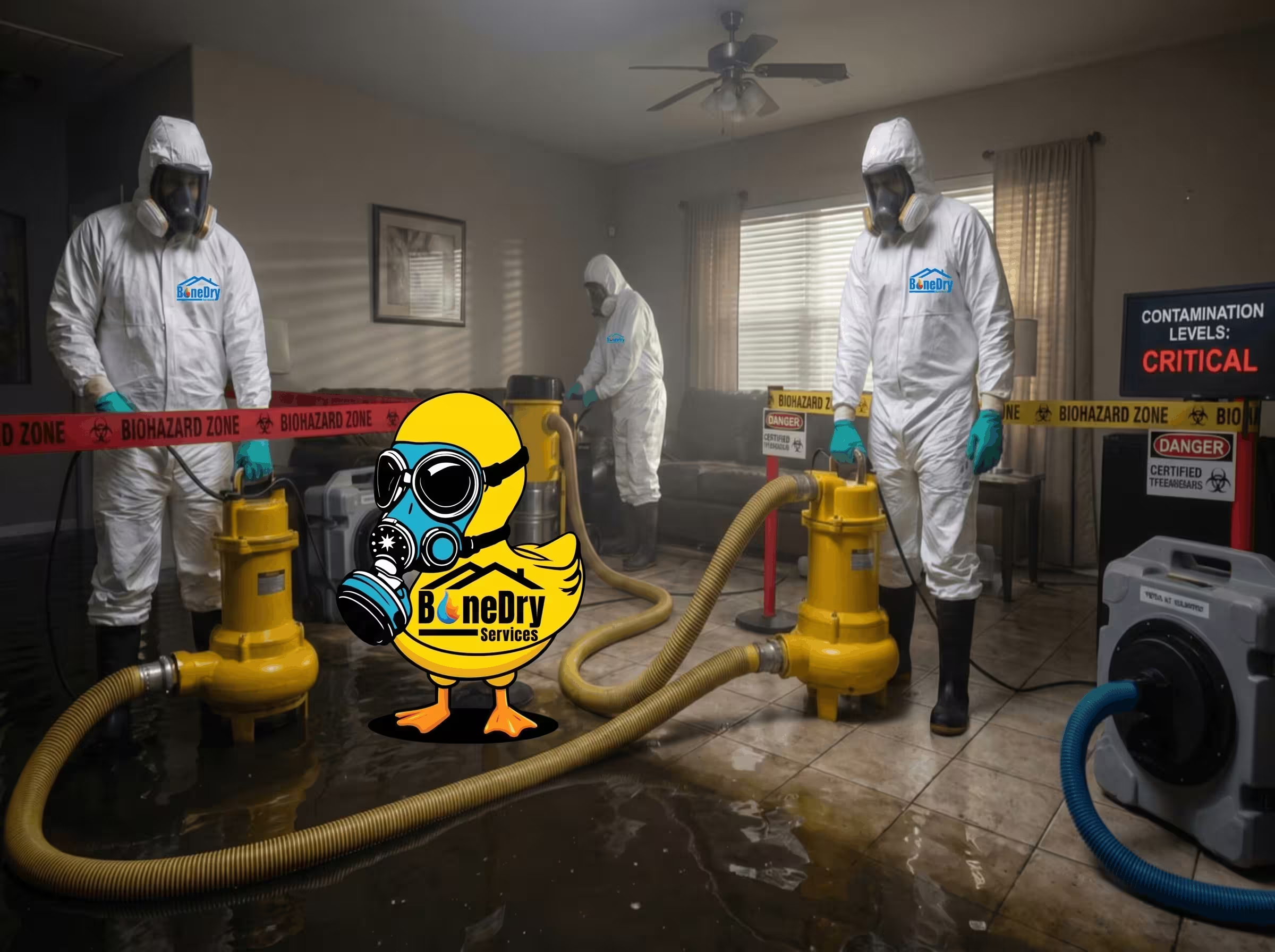
Raw sewage and wastewater can cause serious health risks and structural damage. BoneDry provides rapid 24/7 sewage cleanup and restoration to protect your home, business, and family.


Sewage incidents are emergencies that demand immediate attention. Our certified team uses industrial-grade equipment and biohazard-safe techniques to restore your property quickly and safely.

Overflow removal and sanitation
Cleanup and structural repair
Water Cleanup and Basement repair
Restaurants, offices, and warehouses
Mold prevention and decontamination
Complete restoration documentation for claims
Sewage backups can cause severe health risks and property damage. Our team responds immediately to remove waste, disinfect affected areas, and prevent further contamination. We restore affected structures and belongings, ensuring a safe and clean environment. BoneDry provides comprehensive cleanup solutions you can trust.
We quickly remove sewage and contaminated materials to safeguard your health and property.
Our team disinfects and restores all affected areas, ensuring your property is clean and safe.
From contaminated water to hazardous waste, our certified team safely removes sewage, cleans, and restores your property for a healthy environment.
Quick on-site assessment to prevent further contamination.
Identify affected areas and level of contamination.
Extract sewage, clean, and disinfect impacted spaces.
Restore floors, walls, and structural elements.
Complete work and assist with claims processing.
Backed-up toilets, sewer line breaks, and flood contamination create health risks. Fast cleanup and sanitation are vital.
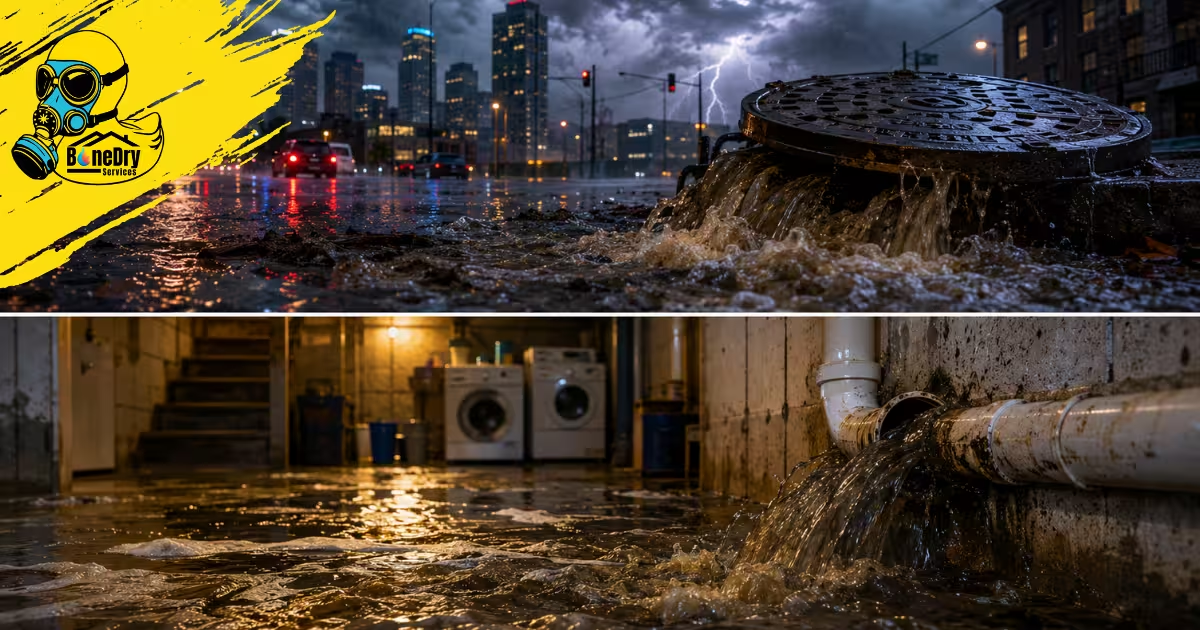
Denver's July monsoon storms can drop an enormous volume of water in a very short time, and when they do, the city's sewer system can be pushed past its limits. When that happens, wastewater has nowhere to go but backward—up through floor drains, toilets, and basement fixtures into the home.
The need for fast, professional sewage cleanup after one of these events is not a matter of convenience; it is a health and safety necessity. Sewage backup carries bacteria, viruses, and contaminants that make a flooded basement far more hazardous than a clean-water leak, and the cleanup demands specialized handling.
At BoneDry Services, we want Denver homeowners to understand why these backups happen during heavy storms and how the right preparation can reduce the risk. Understanding the physics of a municipal sewer surge—and the role of backflow prevention—helps explain why some homes flood while others stay dry, and why proper cleanup matters so much when they don't.
A municipal sewer system is designed to carry a predictable daily flow. During an intense Denver monsoon, however, stormwater can overwhelm that capacity in minutes—especially in older urban areas where storm drainage and sanitary sewer lines are interconnected or sized for a different era. When the volume entering the system exceeds what the pipes can carry away, pressure builds, and that pressure has to go somewhere. Often, it travels back up the lateral lines that connect homes to the main, creating the conditions that make sewage cleanup necessary.
The result is a backup that pushes contaminated water into the lowest points of a house first—basement floor drains, ground-floor toilets, and laundry connections. Because this water originates in the municipal system, it is classified as highly contaminated, and that classification changes everything about how the cleanup must be handled. This is not water you can simply mop up and dry; it requires containment, disinfection, and the safe removal of affected materials.
During a heavy storm, the sewer main can fill faster than it drains. As it pressurizes, the path of least resistance is back up the smaller lines branching off it—including the lateral running to your home. Water follows that pressure gradient, rising through the lowest open fixtures. This is why basements bear the brunt of a surge: they sit below the level of the street main, so they are the first place backflowing wastewater reaches when the system is overwhelmed.
Colorado's monsoon season concentrates intense rainfall into short, powerful bursts, and Denver's mix of older neighborhoods and rapid runoff from hard urban surfaces makes the system especially vulnerable. A storm that dumps an inch of rain in under an hour leaves little time for the system to keep pace. These conditions are precisely when sewer surges occur, and why sewage cleanup demand spikes in the weeks following the heaviest summer storms.

If a sewer surge pushes water backward, the logical defense is a device that only lets water flow one way. That is exactly what a backwater valve—also called a backflow prevention valve—does. Installed on the home's main sewer line, it allows wastewater to flow out toward the municipal main but automatically closes when flow reverses, blocking the surge from entering the home. For Denver homeowners in surge-prone areas, it is one of the most effective ways to avoid the need for emergency sewage cleanup.
No single device is a guarantee, and valves require correct installation and periodic maintenance to work when it matters. But combined with smart fixture placement and an awareness of a home's vulnerability, backflow prevention dramatically lowers the odds of a contaminated backup. When a backup does occur despite precautions, our sewage cleanup teams respond quickly to contain and decontaminate the affected area before the contamination spreads.
A backwater valve contains a flap or gate that hangs open during normal flow, letting wastewater leave the home freely. When water tries to flow back toward the house—as it does during a surge—the reversing flow pushes the flap shut, sealing the line. Once normal conditions return, the flap reopens. It is a simple mechanical principle, but it is highly effective at stopping the exact backflow that causes the most damaging basement sewage events.
A backwater valve is only as reliable as its upkeep. Debris, grease, or sediment can prevent the flap from sealing fully, and a valve that cannot close completely offers little protection during a surge. Periodic inspection and cleaning keep the mechanism free to move and seat properly. Homeowners who treat backflow prevention as a one-time installation rather than an ongoing safeguard may find it fails at the worst possible moment, when a storm surge arrives.
Sewage backup is a biohazard, and the cleanup follows a careful sequence built around safety and decontamination. Rushing or skipping steps risks both health and lasting damage to the home. This is the order we follow on a typical storm-related sewage cleanup:
Following this sequence ensures the contamination is fully removed rather than just hidden, and that the basement is genuinely safe to use again, not merely dried out.

Sewage backup is fundamentally different from a clean-water leak, and treating it like one is dangerous. The reasons professional sewage cleanup is essential come down to health, thoroughness, and protecting the home:
Storm-driven backups rarely arrive alone—they often come with broader flooding from the same event. When a monsoon causes damage beyond the sewer line, our storm damage restoration teams address the full scope so the home is restored completely rather than one problem at a time.

A sewer backup during a Denver monsoon is both a health hazard and a fast-moving threat to your home. The sooner contaminated water is contained, extracted, and disinfected, the less damage it causes and the safer your household stays. As Colorado's largest privately owned, family-operated restoration company, BoneDry Services brings the equipment, training, and rapid response that safe sewage decontamination requires.
During a heavy storm, the municipal sewer system can fill faster than it drains, building pressure that forces wastewater backward up the line to your home. Because basements sit below street level, they are the first place this backflow reaches, rising through floor drains and low fixtures. Older urban areas where storm and sanitary lines interconnect are especially prone to this. It is the volume and pressure of the surge, not anything you did, that causes the backup.
Yes. Sewage backup is classified as highly contaminated and carries bacteria, viruses, and other pathogens that pose real health risks. Cleaning it without proper protective equipment and disinfection can expose you to illness and spread contamination further into the home. Wastewater also soaks into porous materials and hidden cavities that surface cleaning misses. Professional sewage cleanup uses the right protection, extraction, and decontamination to handle it safely and thoroughly.
A backwater valve is a device installed on your main sewer line that lets wastewater flow out but automatically closes when flow reverses, blocking a surge from entering the home. For Denver homeowners in surge-prone or low-lying areas, it is one of the most effective ways to reduce backup risk. It requires correct installation and periodic maintenance to work reliably. Whether you need one depends on your home's location and history, which a professional can help assess.
Usually not. Porous materials like carpet, padding, and drywall that have absorbed sewage are difficult to fully decontaminate and are typically removed and disposed of safely. Attempting to keep them risks lingering bacteria, odors, and mold growth. Non-porous surfaces and structural elements can often be cleaned, disinfected, and dried instead. A professional assessment determines what can be salvaged and what must go to ensure the space is genuinely safe.
As fast as possible. Contaminated water spreads and soaks deeper into materials every hour it sits, increasing both the health hazard and the cost of restoration. Standing sewage also drives up the risk of secondary mold growth and persistent odors. Prompt extraction and disinfection limit the damage and make the space safe again much sooner. Calling for professional sewage cleanup right away is the best way to protect your home and household.

When a main sewer line backs up into a Denver home, the situation is far more than a simple plumbing inconvenience because it represents a major biological hazard. In the restoration industry, backed up sewage is classified as Category 3 water, or black water, because it contains highly unsanitary contaminants. This type of intrusion can cause severe illness if not handled with professional Sewage Cleanup Denver protocols. For families in high-traffic households, the priority is not just removing the standing water but achieving a level of clinical wall-to-wall disinfection that ensures the living space is safe for children and pets to occupy once again.

The science of Sewage Cleanup Denver begins with understanding what is actually living in the water. Unlike "Gray Water" from a washing machine, black water is teeming with a cocktail of pathogens including E. coli, Hepatitis A, Salmonella, and various parasites. These microorganisms thrive in the porous materials of your home such as carpet padding, drywall, and subflooring.
Because these pathogens are microscopic, they can easily become airborne during a flood event, which creates an inhalation risk for everyone in the building. A standard mop and bucket are completely insufficient for sewage restoration because they simply spread the bacteria around rather than neutralizing it at the molecular level. Professional extraction via a proper sewer clean out is the only way to ensure these contaminants are physically removed from the structural pores of your property.
If you discover backed up sewage in your basement or crawlspace, follow these safety steps immediately before our team arrives:
To make a high-traffic family area safe again, BoneDry Services follows a rigorous process that goes far beyond surface cleaning. This scientific approach to Biohazard Cleanup ensures that the "invisible" threats are completely eliminated.

Even after the bacteria are neutralized, the moisture left behind can trigger a secondary mold crisis within 24 to 48 hours. Our structural drying and dehumidification protocol utilizes specialized equipment to pull deep-seated moisture out of the building materials.
During the drying process, we utilize HEPA air scrubbers that filter the air in the room several times per hour. This is a critical component of Sewage Cleanup Denver because it captures any dry spores or bacteria that may have become airborne during the extraction. This ensures that the air your family breathes is just as clean as the floor they walk on.

The final stage of sewage restoration involves moisture mapping and verification. We use non-invasive moisture meters to prove that the structural timber has returned to a safe level. This data-driven approach is why BoneDry Services is the trusted name for Sewage Cleanup Denver, as we provide the documentation your insurance company needs for a seamless Water Damage Restoration claim.
Many backups occur because of tree root intrusion or aging infrastructure in the Front Range. Investing in regular sewer line cleaning can prevent the catastrophic failure of your sewer clean out point. By maintaining your drains, you reduce the risk of high-toxicity black water entering your living space and requiring emergency remediation.
The cost of professional Sewage Cleanup varies significantly based on the square footage affected and the category of the water. Residential projects typically range from a few thousand dollars to much higher if structural demolition is required to remove saturated drywall or flooring. Most homeowners' policies cover this cost through a specific sewer backup rider which our team can help you navigate during the claims process.
In a restoration context, the steps include emergency assessment and containment followed by the removal of standing water and biohazardous materials. We then perform a deep antimicrobial cleaning and fogging before beginning the structural drying phase. The final steps involve detailed air filtration and a clearance inspection to ensure the property is 100% sanitized before the final reconstruction and restoration of the living space begins.
The Stickney Water Reclamation Plant in Cicero, Illinois is currently considered the largest in the world since it serves millions of residents in the Chicago area. While we focus on residential Sewage Cleanup, these massive municipal plants use similar biological and chemical filtration principles to neutralize the same pathogens our technicians encounter on a smaller scale during a basement backup or main line failure.
The three primary types include centralized municipal plants and decentralized package plants along with residential septic systems. Each system is designed to break down waste using primary or mechanical separation and secondary or biological treatment along with tertiary or advanced chemical filtration. If any of these systems fail near your home, professional Sewage Cleanup is required to mitigate the biological impact on your property.
The soil absorption system or the drain field is usually the most expensive component because it requires extensive excavation and specialized gravel and piping. When a drain field fails, it often causes sewage to back up into the home through the lowest drains which necessitates immediate Sewage Cleanup. Replacing a drain field can cost upwards of ten to twenty thousand dollars depending on the soil composition and local Colorado regulations.
Most residential septic systems and local treatment infrastructures are designed to last between 20 and 30 years with proper maintenance. However, shifting soils in the Denver area or the use of flushable wipes can significantly shorten this lifespan and lead to sudden failures. Regular inspections can prevent a catastrophic backup that would require professional Sewage Cleanup to restore your home’s safety and value.

The Front Range of Colorado presents a unique hydrological challenge. Between the rapid snowmelt from the Rockies and the torrential "monsoon" rains of late spring, Denver basements are often under-engineered for the volume of groundwater they face. At BoneDry Services, we see the aftermath of undersized systems every day. While prevention is the goal, our team provides the most thorough sump pump cleanup Denver residents can rely on to save their finished basements when a system fails.
The geography of the Denver metro area creates a high-velocity runoff environment. When heavy precipitation hits our expansive clay soils, the earth quickly becomes hydrophobic, forcing massive amounts of water toward your foundation. If your sump basin is not optimized to handle the "GPM" (Gallons Per Minute) of a Front Range storm, you are essentially waiting for a sump pump cleanup Denver emergency to happen. Proper drainage and a high-capacity pump are the primary defenses against sewage cleanup issues caused by overwhelmed residential lines.
Hydrostatic pressure is the force exerted by stagnant groundwater against your foundation walls. In high-volume scenarios, this pressure can force water through microscopic fissures. An optimized sump system acts as a pressure relief valve. Without a high-capacity pump, that pressure finds a way into your living space, requiring an immediate sump pump cleanup Denver specialist to dry out saturated structural plates and subfloors.

Many Denver homes feature beautiful walk-out basements that represent a significant financial investment. A standard 1/3 HP pump is often insufficient for these layouts. To avoid the high costs of a sump pump cleanup Denver project, homeowners should consider scaling their pumping capacity to industrial standards. If your system has already been overwhelmed, our experts specialize in mold remediation to ensure that the lingering moisture from a pump failure doesn't lead to toxic growth.
A power outage during a Denver thunderstorm is the most common catalyst for a flooded basement. Even the best primary pump is useless without a sophisticated backup. To ensure you never need an emergency sump pump cleanup Denver crew, your backup system must be as robust as your primary.
Standard "big box" battery backups often last only a few hours. For high-volume runoff, we advocate for:

The difference between a "residential" pump and an "industrial" pump is the build quality. During a 24-hour rain event in Denver, a cheap pump can overheat and seize. Once the pump fails, the clock starts on microbial growth. This is when professional sump pump cleanup Denver becomes an immediate necessity to extract standing water and sanitize the area before drywall and flooring are permanently lost.
A silent killer of sump pumps is "short-cycling." If your check valve is faulty, water flows back into the pit, forcing the motor to work twice as hard. This wear and tear leads to premature failure. We install heavy-duty, "quiet" check valves that handle high-velocity shut-off, protecting you from the unexpected need for water damage restoration and sump pump cleanup Denver services.
Optimization is not a "set it and forget it" process. Because Denver’s soil contains high mineral content, your system needs technical calibration. If you haven't maintained your pit and it overflows, our sump pump cleanup Denver protocol involves deep-cleaning the basin and disinfecting the surrounding floor to remove "iron ochre" and bacterial silt.

If your pump has already failed, you cannot afford to wait. The science of sump pump cleanup Denver requires moving beyond surface drying. At BoneDry Services, we use structural drying technology to fix the problem after it occurs. We go beneath the surface to ensure your home is restored to its dry standard, protecting your foundation and your family's health.
Absolutely. Denver’s unique "expansive clay" soil absorbs water like a sponge and then expands, creating immense pressure against foundation walls. During rapid snowmelt or high-volume rain events, this water has nowhere to go but into your basement. Without a functional sump pump, you are leaving your home's structural integrity to chance and significantly increasing your risk of needing extensive Water Damage Restoration.
The cost of the hardware varies based on capacity and material. A standard, light-duty pump may cost around $200, but for high-volume protection, a cast-iron submersible pump can range from $600 to $1,200. While the upfront cost is higher, industrial-grade pumps are a cost-effective alternative to the thousands of dollars you would spend on Water Damage Restoration after a single basement flood.
A professional replacement in the Colorado market typically ranges from $800 to $2,500. This price fluctuation depends on whether you are simply swapping a motor or upgrading the entire basin, discharge lines, and backup power supply. Investing in a professional installation ensures your backup systems are calibrated correctly to prevent a catastrophic Water Damage Restoration scenario.
Most homes built in Colorado after the mid-1980s are required to have a sump pit and pump system. However, many older homes in historic Denver neighborhoods were built before these codes existed. These older properties are the most vulnerable to groundwater intrusion and often require a professional retrofit to avoid recurring Water Damage Restoration needs.
The primary drawbacks include noise, the space taken up in the basement, and the need for regular technical maintenance. Furthermore, a sump pump provides a false sense of security if it lacks a battery backup; if the power goes out during a storm, the pump stops, and the water begins to rise. To avoid a Water Damage Restoration crisis, you must manage these negatives with a high-quality redundant power system.

When a deep freeze settles over Colorado Springs, most homeowners worry about bursting fresh water supply pipes. However, there is a nastier, more hazardous winter plumbing threat that rarely gets discussed until it happens: frozen sewer lines.
While less common than supply line freezes, a frozen sewer lateral (the pipe connecting your home to the city main) is a catastrophic event. When the exit route for your home’s wastewater freezes shut, everything you flush or drain has nowhere to go but back into your home. This is a biohazard emergency requiring immediate, professional sewage cleanup.
It seems counterintuitive—sewastewater is usually warm, so how does it freeze?
In Colorado Springs, the frost line (the depth to which the ground freezes) can reach several feet deep during sustained periods of sub-zero temperatures. While flowing sewer water usually stays liquid, issues arise when:

Once an ice dam forms inside your sewer line, it creates an immovable plug. The immediate danger is pressure buildup.
Every time a toilet is flushed, a shower is run, or the washing machine drains, gallons of water enter the system behind the ice blockage. This hydraulic pressure seeks the path of least resistance. Unfortunately, that path is usually back up through the lowest drains in your home—typically basement floor drains, utility sinks, or downstairs showers.
The most critical thing for homeowners to understand is that this water is not clean. In the restoration industry, sewage is classified as Category 3 Water, also known as "black water."
It is highly contaminated with fecal matter, urine, harsh chemicals, and countless pathogenic bacteria, viruses, and parasites (such as E. coli, Salmonella, and Hepatitis).
DIY cleanup is dangerous and ineffective. Standard household cleaners are insufficient for sanitizing porous materials like concrete, drywall, and framing lumber that have absorbed sewage. Failing to perform professional sewage cleanup immediately can lead to:

Catching a frozen sewer line early can save you from a massive cleanup operation. During a severe Colorado Springs cold snap, watch for these signs:
If you flush an upstairs toilet and hear loud gurgling or bubbling coming from a basement toilet or floor drain, air is trapped in the line due to a forming blockage.
If the kitchen sink, bathroom shower, and laundry tub all start draining slowly at the exact same time during freezing weather, the main exit line is likely obstructed by ice.
The smell of raw sewage near floor drains or utility sinks suggests water traps have dried out or waste is backing up near the surface.
The classic sign: You flush a toilet, and filthy water immediately backs up into the shower tub next to it. This indicates a complete blockage downstream.
If you suspect a sewer freeze and backup is occurring:
Call Professionals: You need BoneDry Services for emergency sanitation and extraction.

When a sewer line freezes and backs up, the restoration process is far more complex than typical water damage. It requires specialized sanitation protocols to ensure the home is safe for habitation.
At BoneDry Services, a sewer backup is more complex than standard water damage restoration. It requires:
If you suspect a frozen sewer line, stop using water immediately and call the experts. BoneDry Services provides rapid, 24/7 sewage cleanup in Colorado Springs. We don't just "mop up"—we sanitize, dry, and restore your home to a safe, healthy condition.
📞 Call now for immediate service: (303) 276-4163
1. How do I know if my sewer line is frozen or just clogged?
If you have multiple drains backing up at once—specifically on the lowest level of your home—it is likely a frozen main line. If flushing a toilet causes water to bubble up in your shower or floor drain during a cold snap, you have a sewer freeze emergency.
2. Will homeowners insurance cover a sewage backup?
Standard policies often require a specific "Sewer and Drain Backup" rider. Without this add-on, many companies will not cover the cost of sewage cleanup or restoration. Always check your policy before the winter season hits.
3. Can I clean up a sewage backup myself with bleach?
No. Bleach kills some surface bacteria but cannot reach the biohazards absorbed by porous concrete or wooden wall studs. Professional restoration is required to scientifically sanitize the structure and ensure the air is safe to breathe.
4. How fast does mold grow after a sewage backup?
In the damp, nutrient-rich environment of a sewage spill, mold can begin to colonize in 24 to 48 hours. Rapid extraction and professional drying are the only ways to prevent a secondary mold infestation.
5. Can I pour antifreeze down the drain to prevent a freeze?
Never use automotive antifreeze; it is toxic to the environment. However, you can use non-toxic "RV Antifreeze" in floor drains that aren't used often to prevent the water in the trap from freezing and cracking the pipe.
JD got our small job patching a hole sorted out really quickly. His team was efficient and communicated with us really well through the whole process. You would never be able to tell there was a hole in the ceiling. Highly recommend!

We had an unexpected water issue that flooded part of our basement on super bowl sunday and Bone Dry Services came to the rescue. From start to finish, the experience was professional, efficient, and stress-free.

Roman and Francisco worked for two days on my place. The were hardworking and very polite. Excellent communication skills and kept me updated on everything that was happening. Bone dry services has two great employees.

JD got our small job patching a hole sorted out really quickly. His team was efficient and communicated with us really well through the whole process. You would never be able to tell there was a hole in the ceiling. Highly recommend!

Roman and Francisco worked for two days on my place. The were hardworking and very polite. Excellent communication skills and kept me updated on everything that was happening. Bone dry services has two great employees.

JD got our small job patching a hole sorted out really quickly. His team was efficient and communicated with us really well through the whole process. You would never be able to tell there was a hole in the ceiling. Highly recommend!

I am going to steal a comment from the previous review - J.D. Stewart went above and beyond for me; That absolutely sums up my sentiment. While unlike the previous review, honestly I was not totally happy with the initial progress. JD was able to change my view of BoneDry. I acknowledge that every company has problems, but the important thing is to address them decisively and correct them rapidly. BoneDry did that with irreplaceable from JD. Because of that I am willing to overlook their (resolved) problems and recommend their services to anyone.
Bone Dry Services were great to work with. From Heidi always being available to communicate and answer our questions super quickly. To Ana, Burke, and Lina doing great work with a detailed cleaning. Jorge made sure everything was done to top quality, taking care of our house as if it was his own. And then JD, Manuel, and their team did a great carpet installation, making sure we were super happy with how it turned out. We definitely recommend!
Roman and Francisco worked for two days on my place. The were hardworking and very polite. Excellent communication skills and kept me updated on everything that was happening. Bone dry services has two great employees.
My water heater flooded my home back in May 2025 and a plumber from AAA Service Plumbing, Heating, and Electric came out to replace it. When the plumber was at my home, he told me about Bone Dry Services and called them to come out. Bone Dry immediately came to my home and assessed the damages. And they immediately set up fans and dehumidifiers for mitigation of the water damages. I had already had a water damage claim opened up with my insurance carrier and so the process got started between Bone Dry and my insurance company.
JD got our small job patching a hole sorted out really quickly. His team was efficient and communicated with us really well through the whole process. You would never be able to tell there was a hole in the ceiling. Highly recommend!
I can’t recommend Bone Dry Services enough! From start to finish, their team went above and beyond to ensure my water damage issue was handled professionally and efficiently.
Tyson assessed the situation with expertise, not only identifying the problem but also taking the time to educate me on what to look for and how to better understand the issue. His knowledge and willingness to explain everything made a huge difference.
Maria and Karen were wonderful! I would definitely have Bone Dry out again if we need this type of cleaning. We had concrete dust covering everything after some restoration work, but these two ladies did a great job cleaning all my walls and floors. It feels a lot better in my house now.
The whole Bonedry team really stepped up to help us with an entire bathroom restoration so we could close on our house in time! Brandon from the restoration team really stood out! He communication the entire time really went above and beyond. He was attentive and efficient! Thank you Brandon and Bonedry!
We had an unexpected water issue that flooded part of our basement on super bowl sunday and Bone Dry Services came to the rescue. From start to finish, the experience was professional, efficient, and stress-free. A huge shout out to Bryan R and Sara. Bryan was incredibly knowledgeable and thorough with the mitigation process, and Sara was so helpful and communicative throughout. They made a tough situation much easier to handle. Highly recommend Bone Dry Services for anyone dealing with water damage!
John, Santiago and JJ were all wonderful to work with. Very knowledgeable, prompt, and kind. They didn't rush, took time to explain the process. I'd definitely recommend BoneDry Services. They even brought my trash can up from the road.
I’m so grateful for the help, attention to detail and customer service that Bone Dry has provided. It’s never convenient to have a pipe burst, but working with a company that has been kind, transparent and helped explain every step of the process has us given such peace of mind.
I run a plumbing company and needed help from a restoration company on a Sunday. They answered right away and were on the job site in less then an hour....... on a SUNDAY. Even though my customer was understandably upset, they dealt and worked with him and explained the restoration process. Colton and Connor are the best. If I ever need a restoration company they are going to be the only ones I call. Thanks guys. 🌟🌟🌟🌟🌟
Our team is available 24/7 and can arrive promptly to contain the contamination, remove sewage, and begin cleaning and disinfection to protect your property and health.
Many homeowners and commercial insurance policies cover sewage-related incidents. BoneDry provides thorough documentation and works directly with your insurance provider to simplify the claims process.
The timeline depends on the severity of the contamination. Minor incidents may be resolved in a day, while extensive sewage damage involving structural remediation may take several days.
Yes, sewage contains harmful bacteria and pathogens. Our certified team follows strict safety protocols to disinfect and sanitize all affected areas, ensuring a safe environment.
Absolutely. BoneDry restores homes, offices, and commercial buildings impacted by sewage, ensuring thorough cleanup and safe, hygienic conditions.

619 E Main Street, Frisco, Summit County, Colorado, 80424