


Desiccant vs Refrigerant Dehumidification Pros and Cons for Water Damage
When a luxury property in Denver suffers from moisture intrusion, the choice of drying technology is the most critical decision a technician makes. In the world of high-end restoration, not all dehumidifiers are created equal. While many standard companies rely on basic refrigerant units, the unique climate of the Front Range—characterized by high altitude and low ambient humidity—often requires a more sophisticated approach. Understanding the desiccant vs refrigerant dehumidification pros and cons is essential for protecting the structural integrity of your home’s high-value finishes and ensuring comprehensive structural drying and dehumidification.
The Science of Refrigerant Technology in Water Damage Restoration
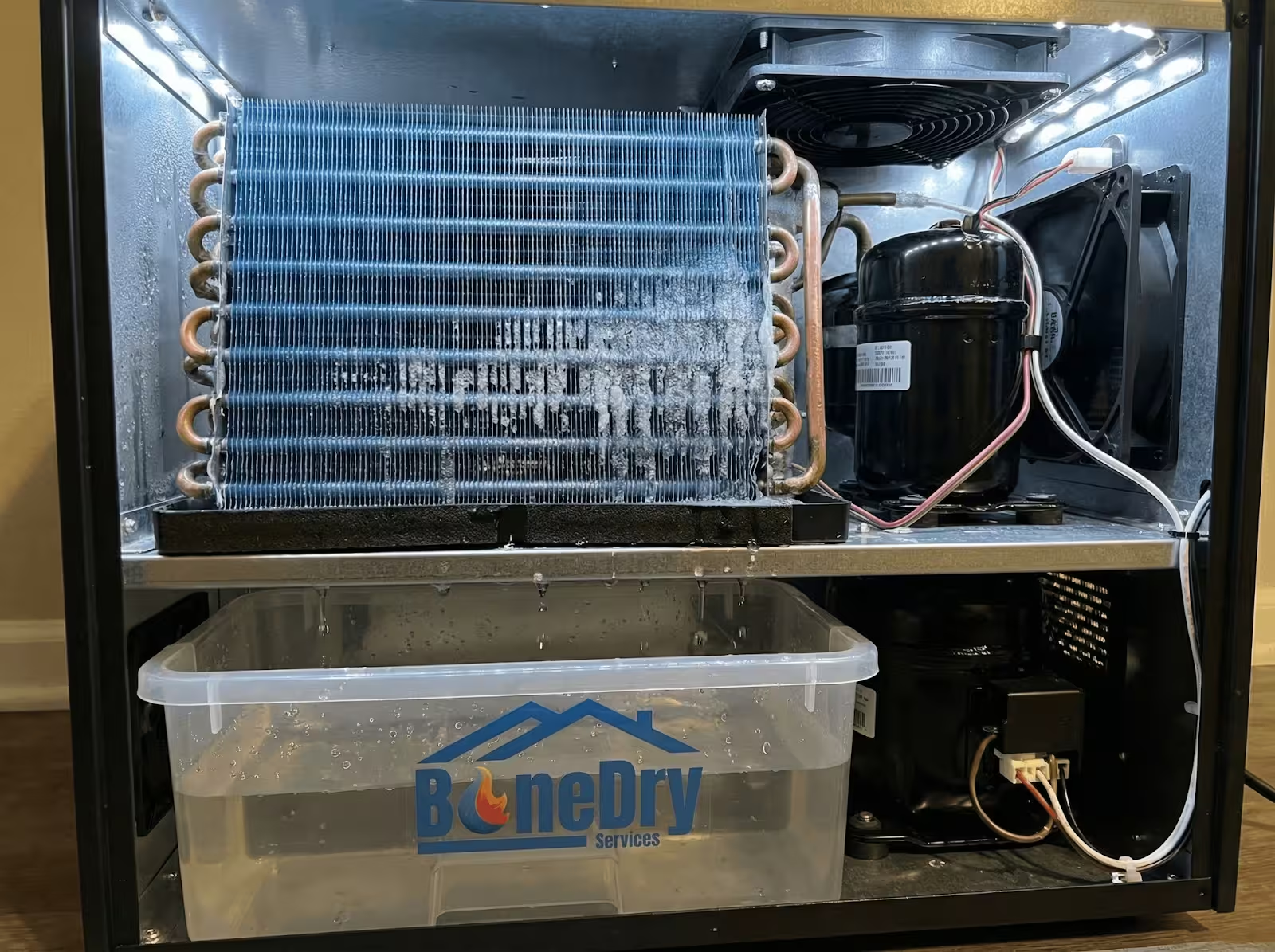
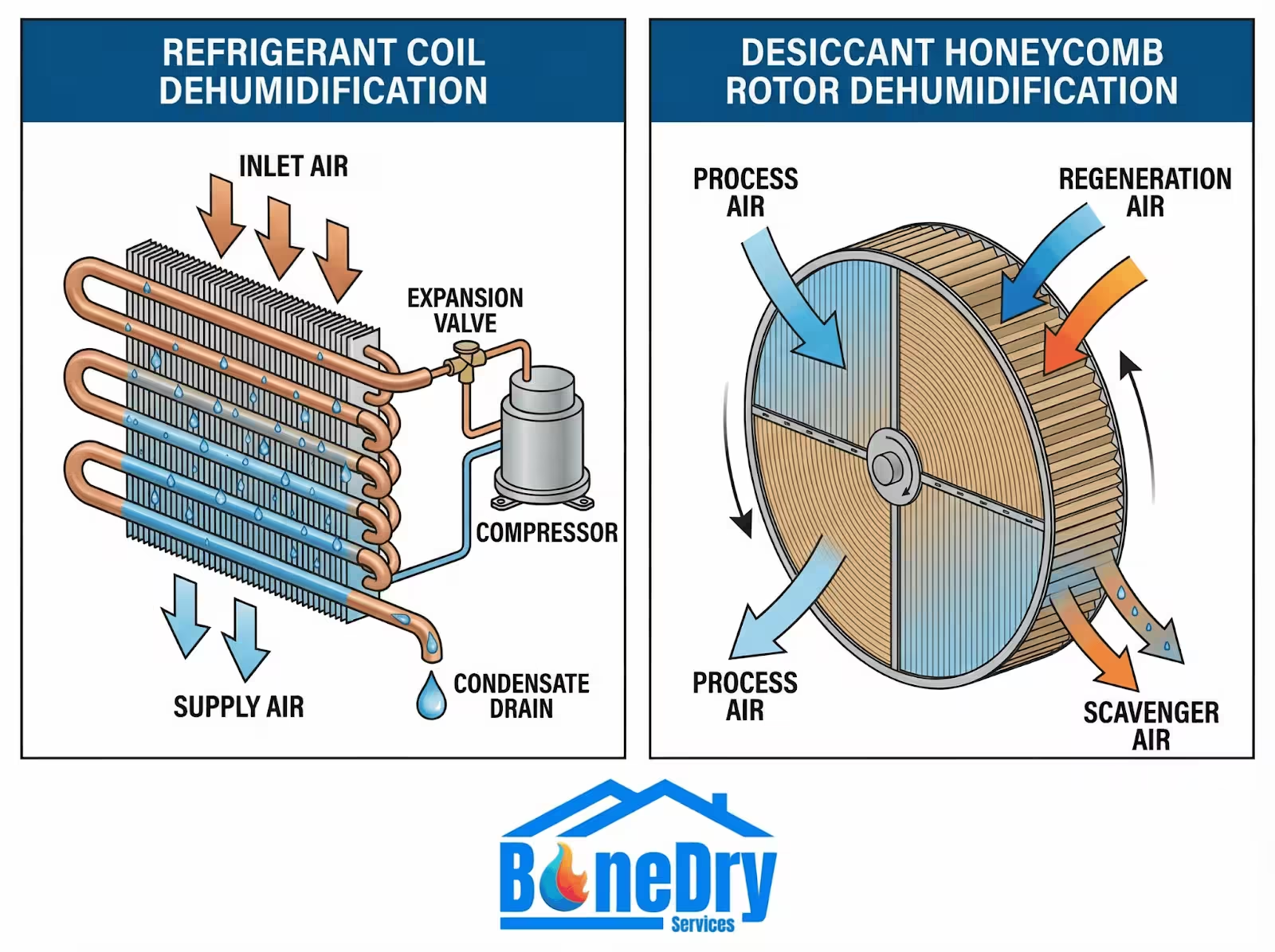
Standard refrigerant dehumidifiers, specifically Low Grain Refrigerant (LGR) units, work by cooling the air to condense moisture into liquid droplets. This technology is a staple in the industry because it is highly effective in warm, humid environments.
How it Works: The Condensation Process
Moist air is pulled over internal cooling coils, causing water to bead up and drop into a collection pump. For this to work efficiently, there must be a significant temperature difference between the air and the coils.
Best Use Case for LGR Units
LGR units excel in Category 1 water losses—such as a clean water pipe burst—where temperatures are maintained above 70°F and the affected materials are relatively porous, such as standard drywall or synthetic carpeting. They are the "workhorses" of the industry for initial bulk water removal.
The GPP Floor: Limitations of LGR Units
In the technical language of restoration, we measure the amount of water in the air using Grains Per Pound (GPP). Standard refrigerant dehumidifiers generally hit a "floor" once the air reaches approximately 34 to 40 GPP. In the humid climates of coastal states, this is often sufficient.
The Risk of Stalled Drying in Denver
In a luxury Denver estate where we are trying to pull moisture out of dense subfloors or specialized cabinetry, staying at 40 GPP is simply not enough. If the air in the room isn't significantly drier than the moisture trapped inside the material, the drying process stalls. This "stalled drying" is a primary cause of secondary issues, often requiring professional mold removal and remediation.
Why Desiccant Drying is Superior for Colorado Restoration
Colorado presents a unique challenge due to our high elevation and naturally dry air. When evaluating Refrigerant-Based vs. Desiccant Dehumidification Systems, the fundamental mechanics of the equipment become the deciding factor for success.
How Does a Desiccant Dehumidifier Work?
Desiccant dehumidifiers do not use cooling coils; instead, they use a chemical attraction to "pull" moisture out of the air using a silica gel rotor.
As the rotor turns, it passes through two air streams: the process air (which is dried) and the reactivation air (which removes the moisture from the rotor and vents it outside). This allows the machine to work independently of the ambient temperature or humidity levels.
Key Advantages for High-Altitude Environments
- Low Humidity Performance: Desiccants can achieve single-digit GPP levels, which is necessary for pulling moisture from the "deep tissue" of a building.
- Vapor Pressure Mastery: By creating extremely dry air, desiccants create a massive vapor pressure differential, forcing water out of specialized materials like lath and plaster or stone.
- Cold Weather Efficiency: Refrigerant units lose efficiency as temperatures drop, whereas desiccants perform perfectly in the cooler crawlspaces and basements common in Colorado luxury homes.
Understanding the Vapor Pressure Differential
The true magic of desiccant restoration lies in the creation of a "vapor pressure vacuum." Physics dictates that moisture will always move from an area of high pressure (your wet walls) to an area of low pressure (the ultra-dry air from a desiccant).
Deep-Core Structural Integrity
Because a desiccant can drop the GPP of a room into the single digits, it creates a massive "pull" that forces water molecules to leave the center of a 10-inch thick structural beam. Without this pressure differential, the exterior of your wall might feel dry to a touch-test, but the inner core remains saturated, leading to structural rot or hidden microbial growth over the coming months.
Targeted Restoration for Dense Building Materials
Luxury homes often feature materials that act as "moisture traps." If your home has 12-inch thick masonry, rare marble tiles, or multilayered hardwood, standard refrigerant units may fail to reach the core. At BoneDry Services, we utilize desiccant technology to ensure these materials are dried from the inside out.
The Desiccant Advantage for High-End Finishes
- Hardwood Preservation: Desiccants pull moisture from the "bottom-up," helping to prevent the cupping and crowning of expensive wood floors.
- Plaster and Stone: These dense materials require the ultra-low humidity that only a desiccant rotor can provide.
- Mold Prevention: By dropping the relative humidity faster than a refrigerant unit, desiccants minimize the window of opportunity for mold to take root.
Psychrometrics and the BoneDry "Dry Standard"
We don't guess when a project is finished; we use psychrometric science to prove it. Every project we oversee involves establishing a "Dry Standard" by measuring an unaffected area of the home.
Faster Recovery and Reduced Disruption
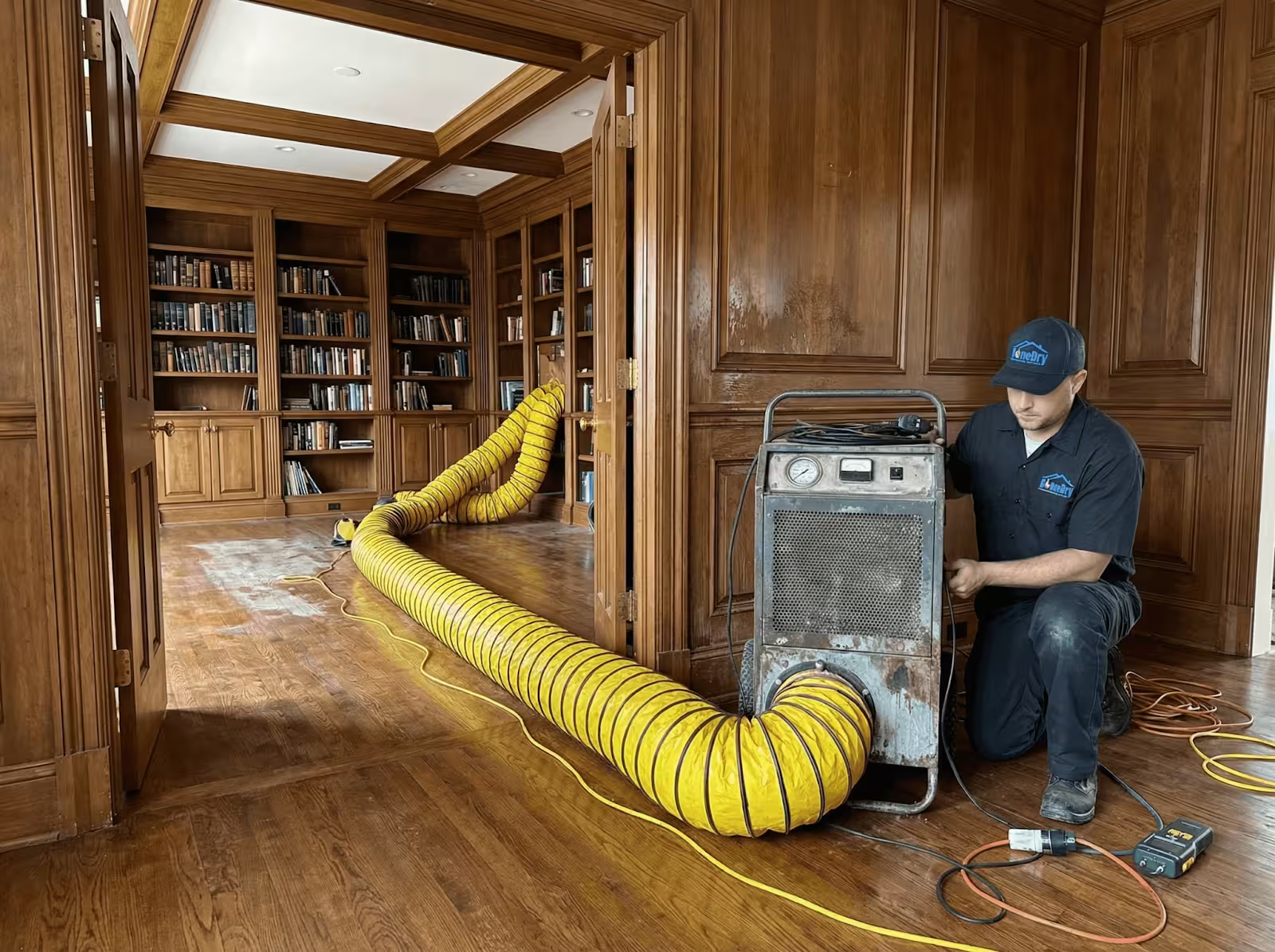
We use high-precision sensors to ensure the affected materials have reached equilibrium. By utilizing desiccant technology, we can reach these dry standards up to 40% faster than competitors using standard refrigerant units. This reduced "Cycle Time" means less disruption to your lifestyle and a faster return to the comfort of your home.
The BoneDry Approach to Precision Restoration
We don't believe in a "one-size-fits-all" solution. Our team evaluates the specific psychrometric conditions of your home before deploying our fleet. In cases where structural damage is severe, we may even provide emergency board-up services to secure the property while the scientific drying process begins.
Our Specialized Hybrid Strategy
In many cases, we utilize a "hybrid" approach—analyzing the desiccant vs refrigerant dehumidification pros and cons for your specific layout. Often, we use LGR units for initial bulk moisture removal and transition to desiccants for the technical drying of structural beams and dense substrates. This scientific precision ensures your home is returned to a pre-loss condition without unnecessary and costly demolition.
Experience the Science of Deep Structural Drying
Don't settle for "surface dry" when the integrity of your luxury finishes is at stake. Ensure your home reaches a true scientific dry standard with our advanced desiccant technology and psychrometric monitoring. BoneDry Services is dedicated to providing the most advanced drying solutions in the Front Range.
📞 Call BoneDry Services at (303) 276-4163 for precision Water Damage Restoration and high-altitude drying expertise today.
FAQ
Is a desiccant dehumidifier better than a refrigerant?
In the context of Water Damage Restoration in Colorado, a desiccant is often superior for structural drying. While refrigerant units are great for general air drying, desiccants can achieve the ultra-low humidity levels required to pull moisture out of dense hardwoods and thick plaster. For high-end homes with specialty materials, the desiccant is the preferred tool for a non-invasive recovery.
Is desiccant dehumidification better than mechanical refrigeration?
"Better" depends on the environment, but for deep-tissue Water Damage Restoration, desiccant technology has the edge. Mechanical refrigeration (LGR) struggles once the air becomes relatively dry, essentially hitting a "floor" where it can no longer pull water. Desiccants have no such floor, allowing them to continue drying until the structural materials reach a true dry standard.
What are the disadvantages of a desiccant dehumidifier?
The primary disadvantage is the complexity of the setup; desiccants require "reactivation" air to be ducted outside of the home, which requires more technical expertise. They also tend to be larger and more expensive to operate than standard refrigerant units. However, in professional Water Damage Restoration, these minor logistical hurdles are a small price to pay for the superior drying results they provide.
Do desiccant dehumidifiers contain refrigerant?
No, desiccant dehumidifiers do not use compressors or refrigerant gases to remove moisture. Instead, they use a desiccant material (typically silica gel) on a rotating wheel to adsorb water vapor directly from the air. This makes them a more environmentally stable choice for certain Water Damage Restoration projects and allows them to operate in much colder temperatures than refrigerant-based machines.
What is a potential disadvantage of using a refrigerant dehumidifier?
A major disadvantage in Water Damage Restoration is that refrigerant units lose their effectiveness as the room gets drier or colder. If the ambient temperature drops below 60°F or the humidity drops below a certain point, the coils can freeze or simply stop condensing water. This leaves the "deep" moisture inside your walls untouched, which can lead to long-term structural rot or mold growth.