Frozen Pipes Are Starting Early This Year: Prevent Water Damage at Your Mountain Home
Colorado homeowners, especially those in high-altitude and mountain regions, are facing early-season freezes far sooner than usual this year. With temperatures dropping rapidly across areas like Breckenridge, Winter Park, Vail, Evergreen, and Conifer, the risk of frozen pipes and catastrophic water damage is rising fast.
If your pipes freeze and burst, the resulting damage can cost thousands of dollars, cause major structural issues, ruin flooring and drywall, and even impact your home’s long-term value. Even worse—many homeowners don’t notice the warning signs in time.
This guide explains how early freezes increase risks, what signs to look for, and what you can do to protect your mountain home.
Why Early Freezes Put Mountain Homes at Higher Risk
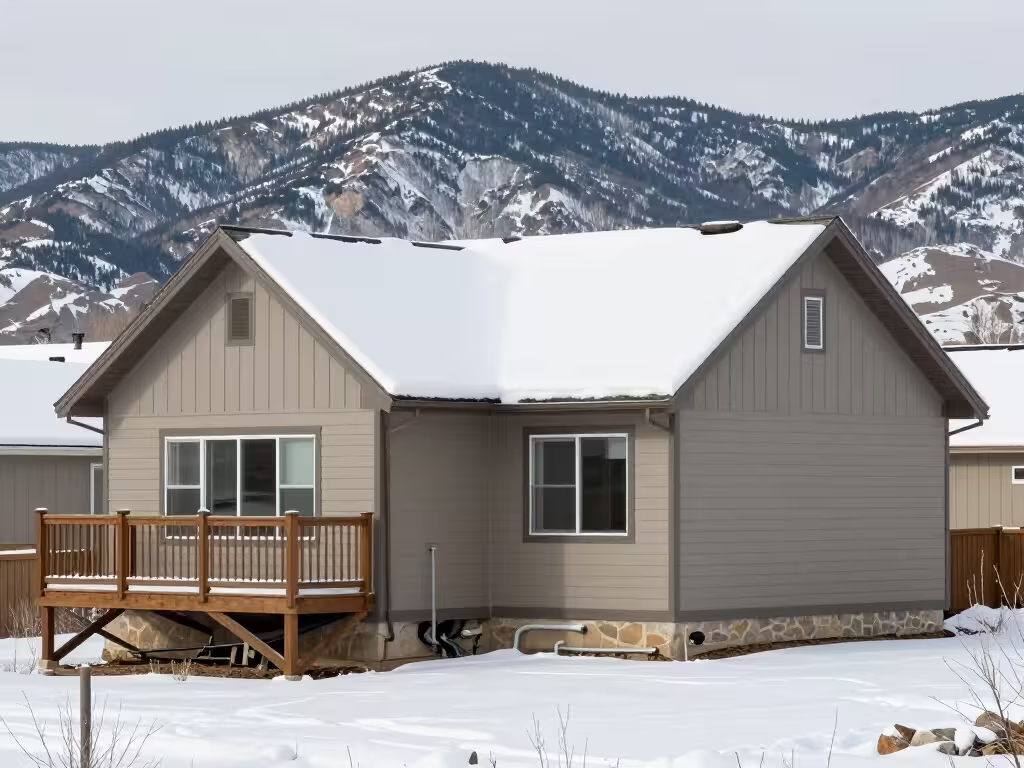
Colorado’s elevation and wide temperature swings make mountain homes especially vulnerable. Sudden drops below 32°F can freeze standing water inside plumbing lines rapidly—especially in:
- Exposed pipes
- Crawl spaces
- Exterior walls
- Garages
- Unheated basements
- Vacation homes that sit empty for long periods
Homes in places like Winter Park, Fraser, Estes Park, and Fairplay often experience colder temperatures earlier in the season than Denver or the Front Range.
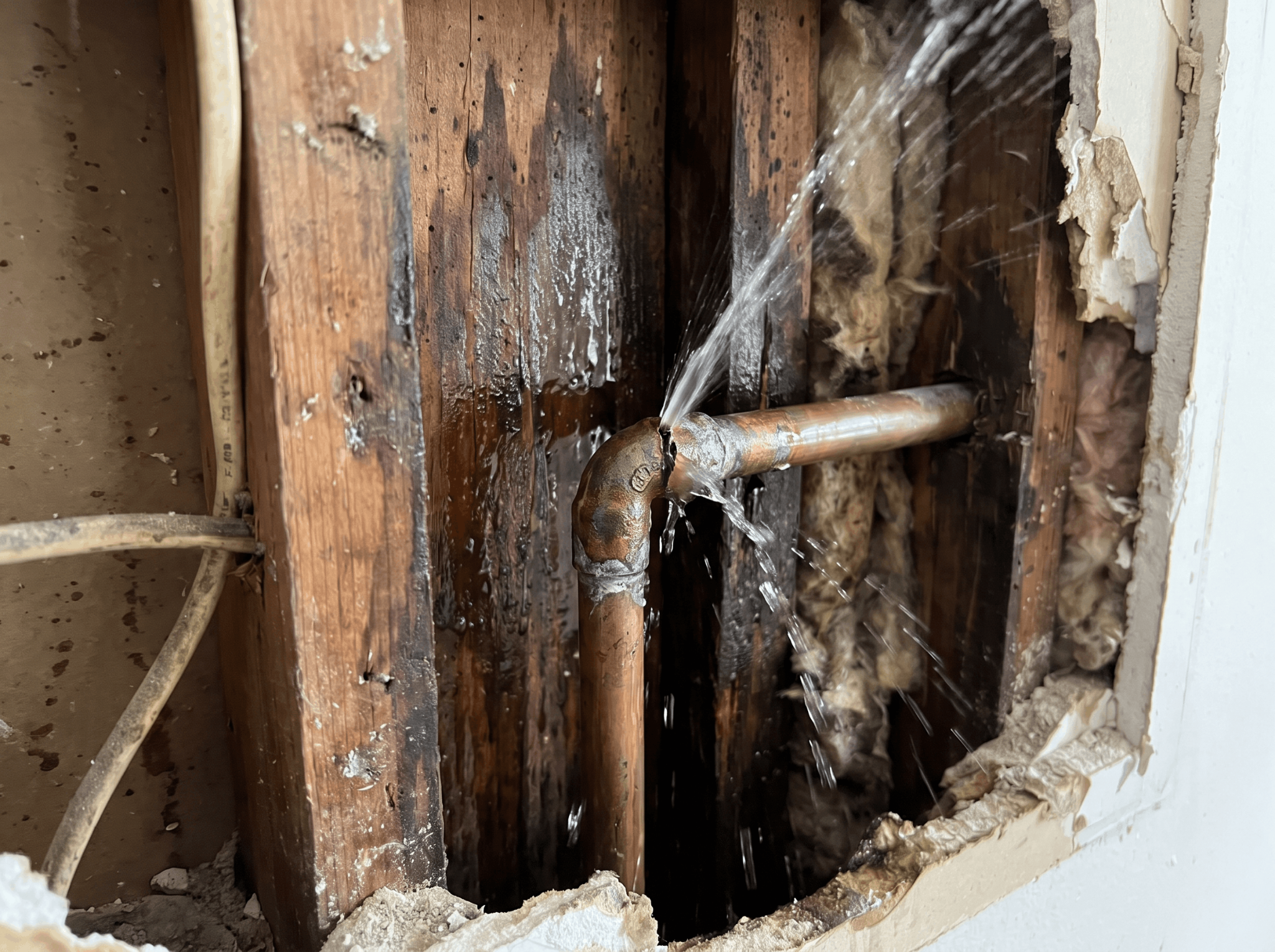
When water freezes, it expands. That expansion creates enough pressure to rupture copper, PVC, and even PEX lines. Once the ice thaws, water surges into your home, causing fast—and often hidden—structural damage.
Warning Signs of Frozen Pipes Homeowners Should Never Ignore
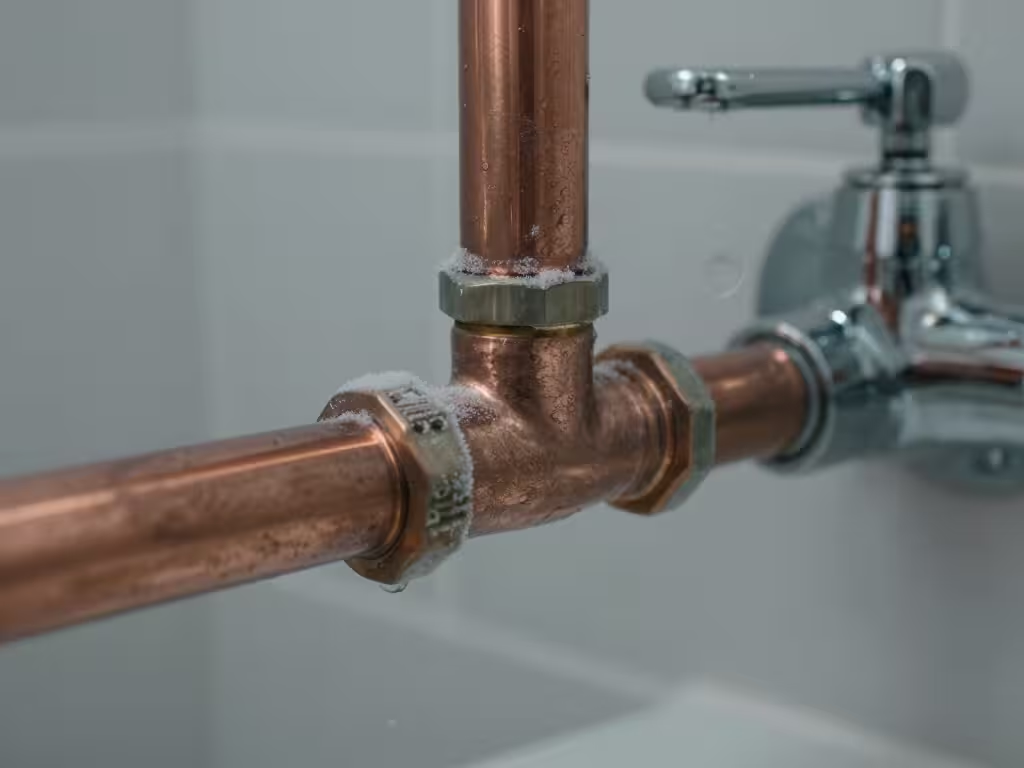
Early detection can prevent thousands of dollars in restoration costs. Look for:
1. Reduced Water Pressure or No Water
If faucets trickle or fail completely, pipes may already be frozen.
2. Frost on Exposed Pipes
Any visible frost on plumbing is a major red flag.
3. Strange Odors from Sinks or Drains
This can happen when ice blocks proper airflow.
4. Unusually Cold Walls or Floors
If a wall feels cold or damp, a pipe behind it may be frozen.
5. Gurgling or Whistling Sounds
Pressure changes inside frozen lines create unusual noises.
If you notice any of these signs, turn off the main water supply immediately to reduce risk of flooding.
Steps to Prevent Frozen Pipes in Colorado Mountain Homes
1. Insulate Vulnerable Plumbing
Pipes running through:
- Crawl spaces
- Attics
- Exterior walls
- Garages
…should be wrapped with high-grade insulation or heat tape.
2. Keep Indoor Temperatures Stable
Never allow your home to drop below 55°F, even when you're away.
3. Let Faucets Drip During Extreme Cold
A slow drip keeps water moving and reduces freezing risk.
4. Open Cabinet Doors
Allow warm air to circulate around pipes under sinks.
5. Seal Air Leaks
Cold drafts around windows, doors, and foundations dramatically increase freeze risk.
6. Shut Off Outdoor Water Sources
Disconnect hoses and drain sprinkler lines well before the first freeze.
7. Install Smart Home Sensors
Moisture sensors and temperature monitors can alert you before a pipe fails—ideal for second homes or Airbnb properties.
What to Do If You Suspect a Frozen Pipe
If you catch the issue early:
- Shut off the main water supply.
- Open faucets to relieve pressure.
- Warm the pipe slowly using towels soaked in warm water, a space heater, or a hair dryer.
- Never use open flames—they cause fires and damage pipes.
If a pipe is bulging, cracked, or has already burst, you need professionals immediately. Delaying even 30 minutes can dramatically worsen water damage.
How BoneDry Services Protects Colorado Homes From Winter Water Damage
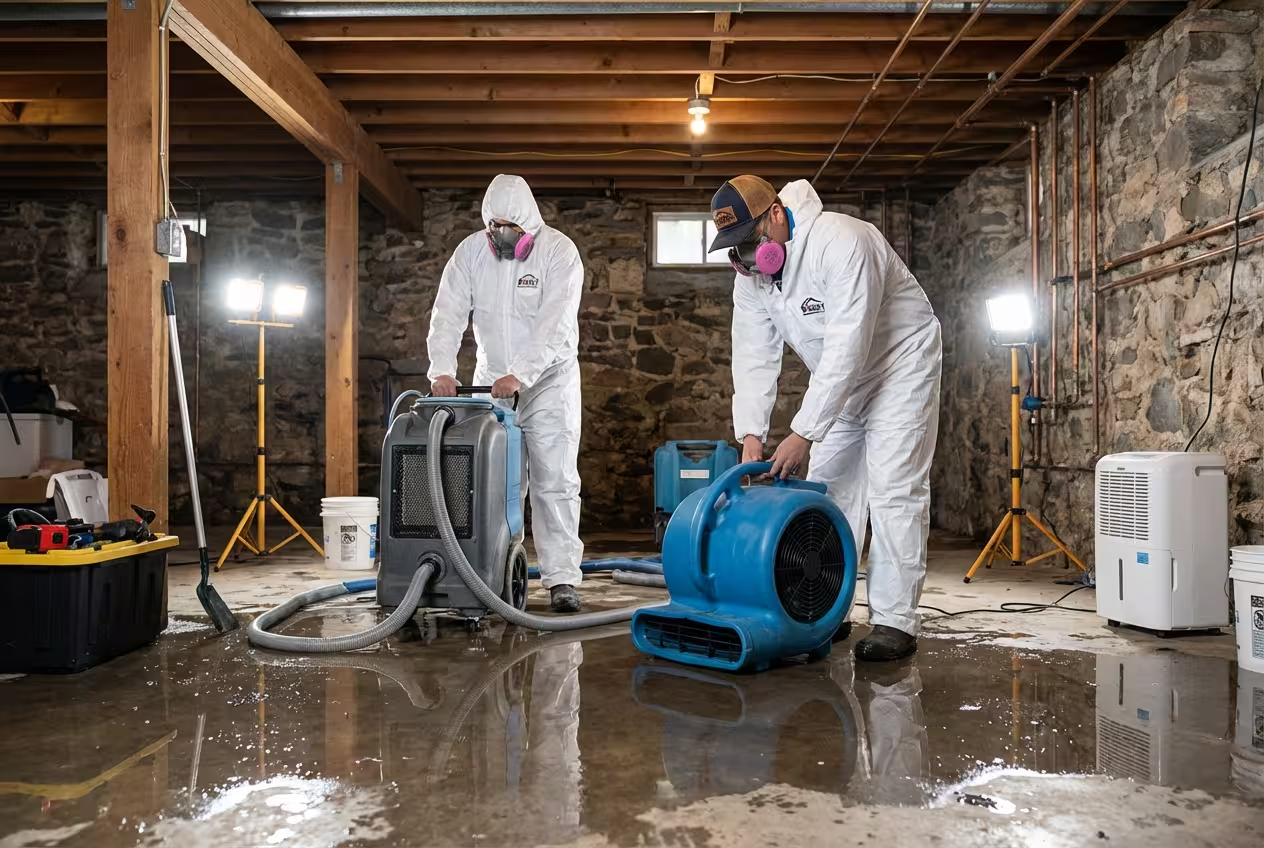
BoneDry Services is Colorado’s largest family owned restoration company, trusted by homeowners across Denver, the Front Range, and high-altitude mountain communities.
When pipes burst or freeze, our certified technicians provide:
- 24/7 emergency response
- 90-minute arrival guarantee anywhere in Colorado
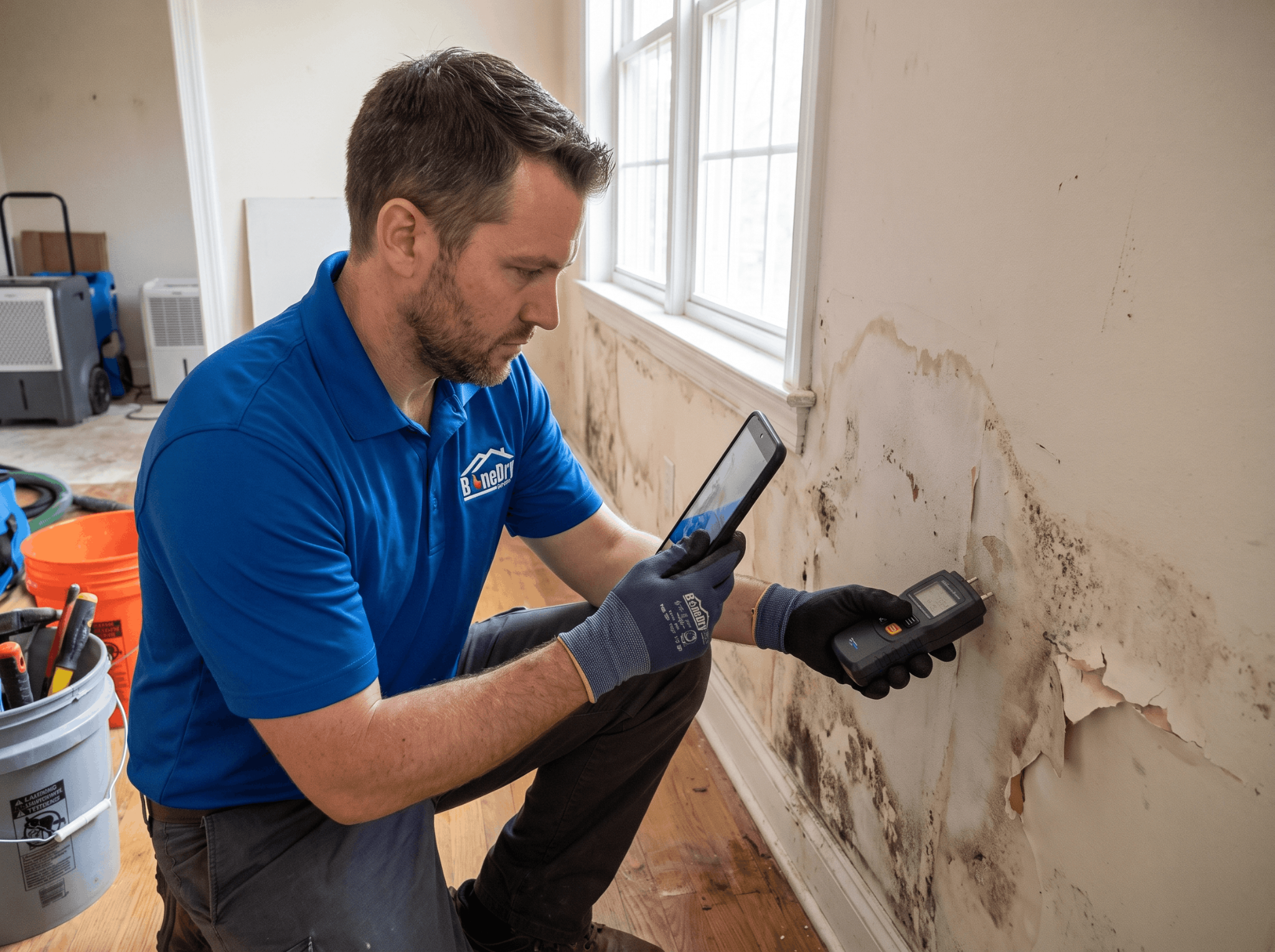
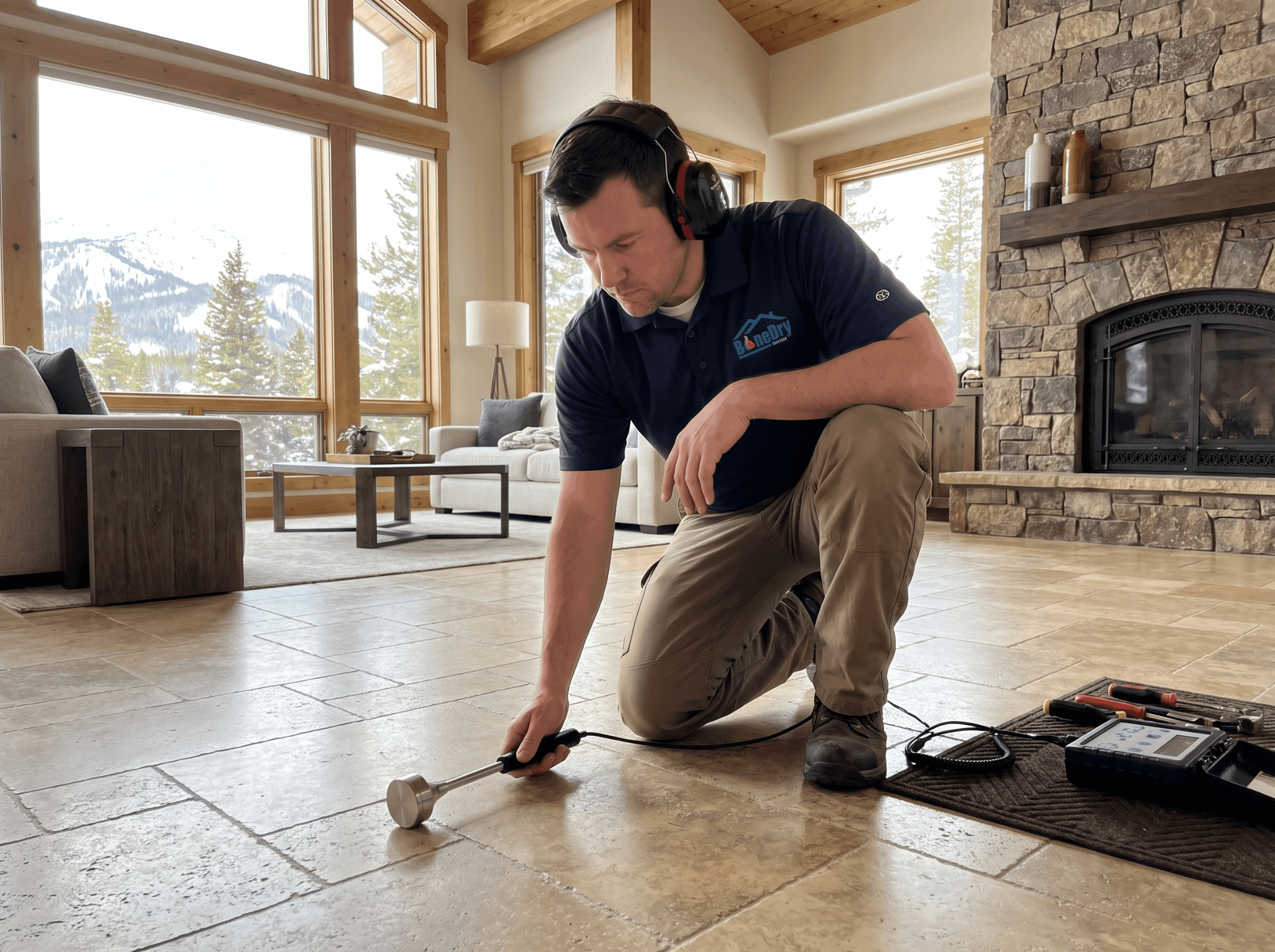
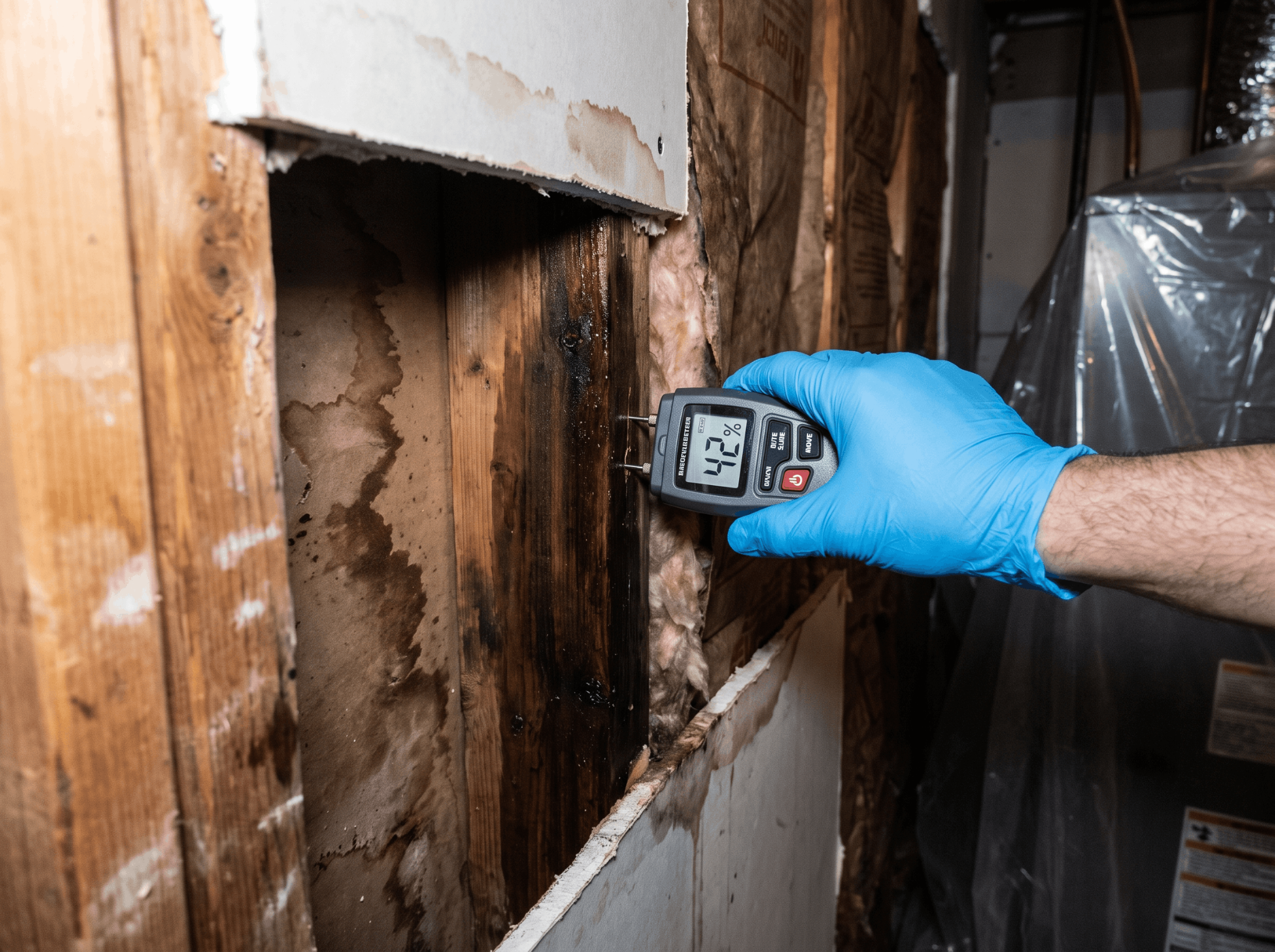
- Thermal imaging and moisture mapping to detect hidden freeze damage
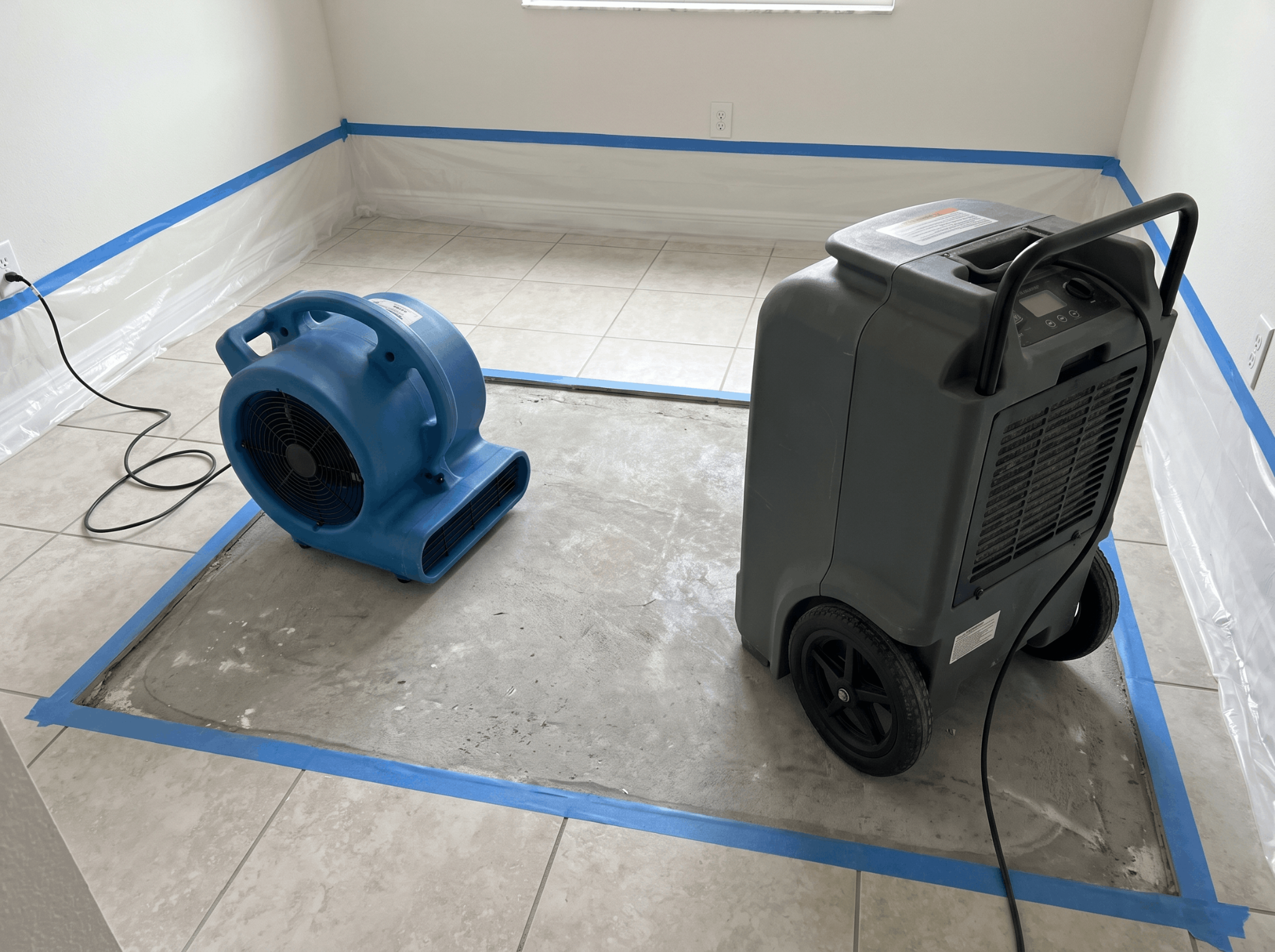
- Rapid extraction, drying, and dehumidification
- Full restoration, structural repair, and reconstruction
Learn more about our damage restoration services:
Preventing Emergency Disasters in Vacation & Second Homes
Mountain properties that sit empty for part of the year face even greater risks. Homeowners often return months later to discover:
- Burst pipes
- Mold growth
- Damaged drywall or flooring
- Structural deterioration
- Rodent infestation due to water-damaged insulation
Consider these prevention tools:
- Remote water shutoff valves
- Smart thermostats
- Moisture alarms
- Weekly caretaker inspections
These small investments can prevent massive winter repair bills.
When to Call a Professional Immediately
Contact BoneDry Services if:
- A pipe has burst
- You see water flooding floors or ceilings
- Water is dripping from light fixtures
- Walls appear swollen or buckled
- You smell mold or musty odors
- Floors feel soft or spongy
- You hear running water but can’t find the source
Even a few gallons of water can spread quickly through insulation, electrical systems, and structural supports.
Call Colorado’s Fastest Water Damage Restoration Team—24/7
Frozen pipes don’t wait—and neither should you.
BoneDry Services offers:
- 24/7 emergency water damage response
- 90-minute arrival anywhere in Colorado
- Certified restoration and reconstruction teams
- Free inspections & leak detection
📞 Call now: (303) 276-4163
Protect your mountain home—and your peace of mind.
FAQ
1. What temperature causes pipes to freeze in Colorado mountain homes?
Pipes can begin freezing at 32°F, but wind chill, uninsulated walls, and drafts can cause internal freezing even when outdoor temperatures are slightly higher.
2. How quickly can a frozen pipe burst?
A frozen pipe can burst within hours, depending on pressure buildup. Mountain climates with fast temperature drops increase this risk dramatically.
3. Does homeowners insurance cover frozen pipe water damage?
Most policies do, as long as the homeowner maintained reasonable heating. BoneDry Services assists with documentation for stress-free claims.
4. What areas in Colorado experience frozen pipes the earliest?
High-altitude regions like Winter Park, Estes Park, Vail, Breckenridge, and Evergreen typically freeze earlier than Denver or the Front Range.
5. Can I thaw a frozen pipe myself?
Yes—if caught early. Use slow, controlled heat. However, if pipes bulge, crack, or you cannot locate the freeze point, call a professional immediately.
6. Why do vacation homes face higher frozen pipe risks?
Empty homes have inconsistent heating, lower circulation, and delayed detection—making freeze damage far more severe.
7. What should I do before leaving my mountain home for the winter?
Keep the heat above 55°F, shut off the water, drain pipes, install smart sensors, and ask a caretaker to check levels weekly.
_converted.avif)