


Holiday Travel Risks: Why Homes in Arvada, Wheat Ridge & Golden Need Extra Protection
The holiday season is one of the most traveled times of the year — and for homeowners in Arvada, Wheat Ridge, Golden, and the surrounding Denver metro, this means leaving homes empty during the coldest and riskiest part of winter. While you’re visiting family or taking a winter vacation, your home may be facing silent threats that escalate quickly: frozen pipes, water leaks, furnace failures, and flooding from snowmelt or plumbing issues.
Every winter, BoneDry Services responds to dozens of emergency water damage calls from homeowners who returned to find:
- flooded basements
- burst pipes
- water-soaked floors
- sagging ceilings
- mold beginning to grow
- entire sections of the home damaged by a hidden leak
Most of these disasters occurred while the home was empty — and nearly all could have been prevented with the right preparation.
This guide explains the top risks homeowners face during holiday travel and how to protect your property before leaving town.
Why Holiday Travel Increases Water Damage Risks
1. Sudden Temperature Drops
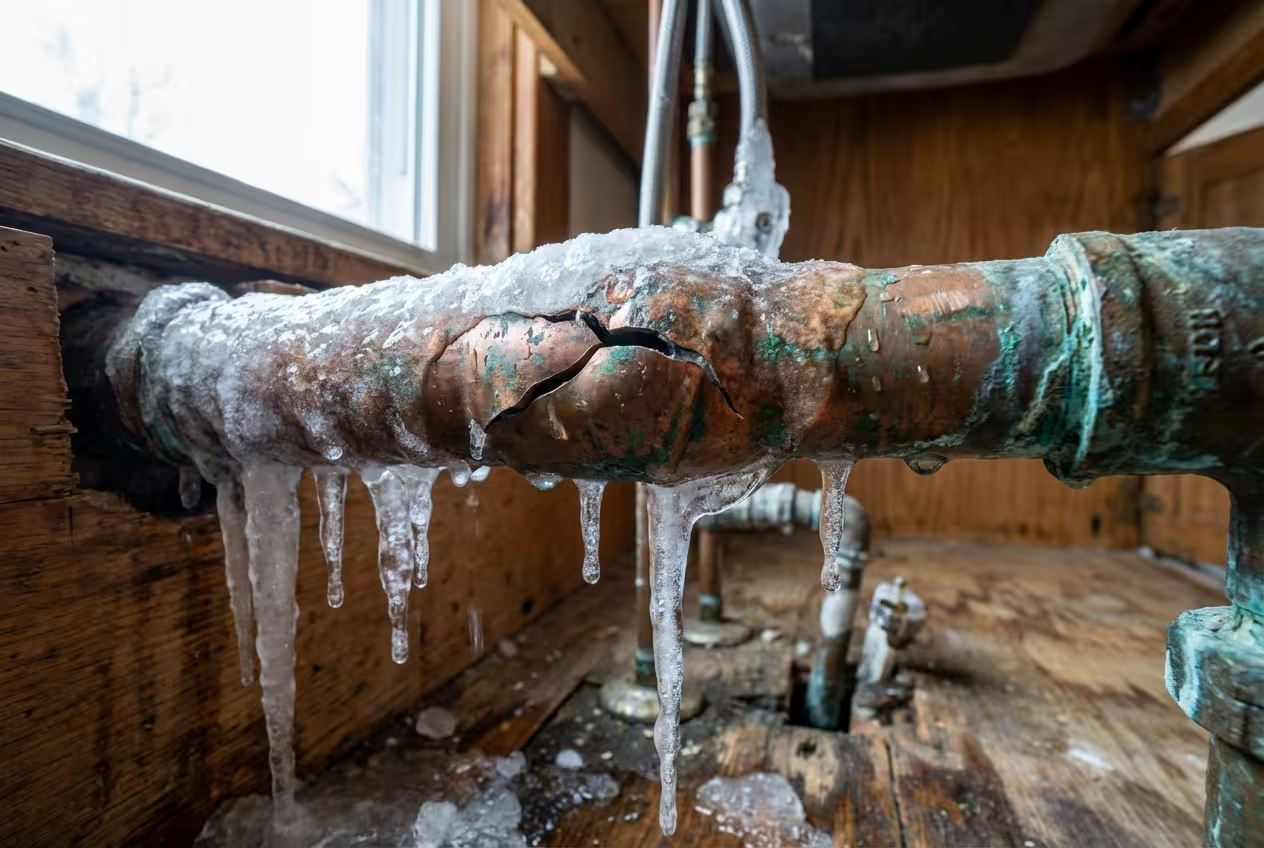
Arvada, Wheat Ridge, and Golden experience rapid freeze-thaw swings in December. Even a single night of sub-zero temperatures can freeze unprotected pipes.
2. Unattended Furnace or Heating Failures
If your furnace shuts off while you’re away, interior temperatures can quickly drop below freezing, causing widespread pipe failures.
3. Increased Snowmelt Around the Home
Warm daytime temperatures followed by cold nights push melting snow toward foundations, seeping into basements and crawl spaces.
4. No One Home to Notice Early Warning Signs
A small drip under the sink or a slow leak in a bathroom can escalate into full flooding when days pass without anyone seeing it.
5. Higher Risk of Sump Pump Malfunctions
If snowmelt or groundwater overwhelms your sump pump while you’re away, your basement can flood in hours.
Common Holiday Water Damage Scenarios in Arvada, Wheat Ridge & Golden
BoneDry’s emergency teams frequently respond to the same types of seasonal issues:
Frozen and Burst Pipes
Especially in:
- garages
- crawl spaces
- basements
- exterior walls
- under kitchen/bathroom sinks
Water Heater Failures
Older units crack or rupture under pressure changes caused by freezing temperatures.
Roof Leaks from Snow Accumulation
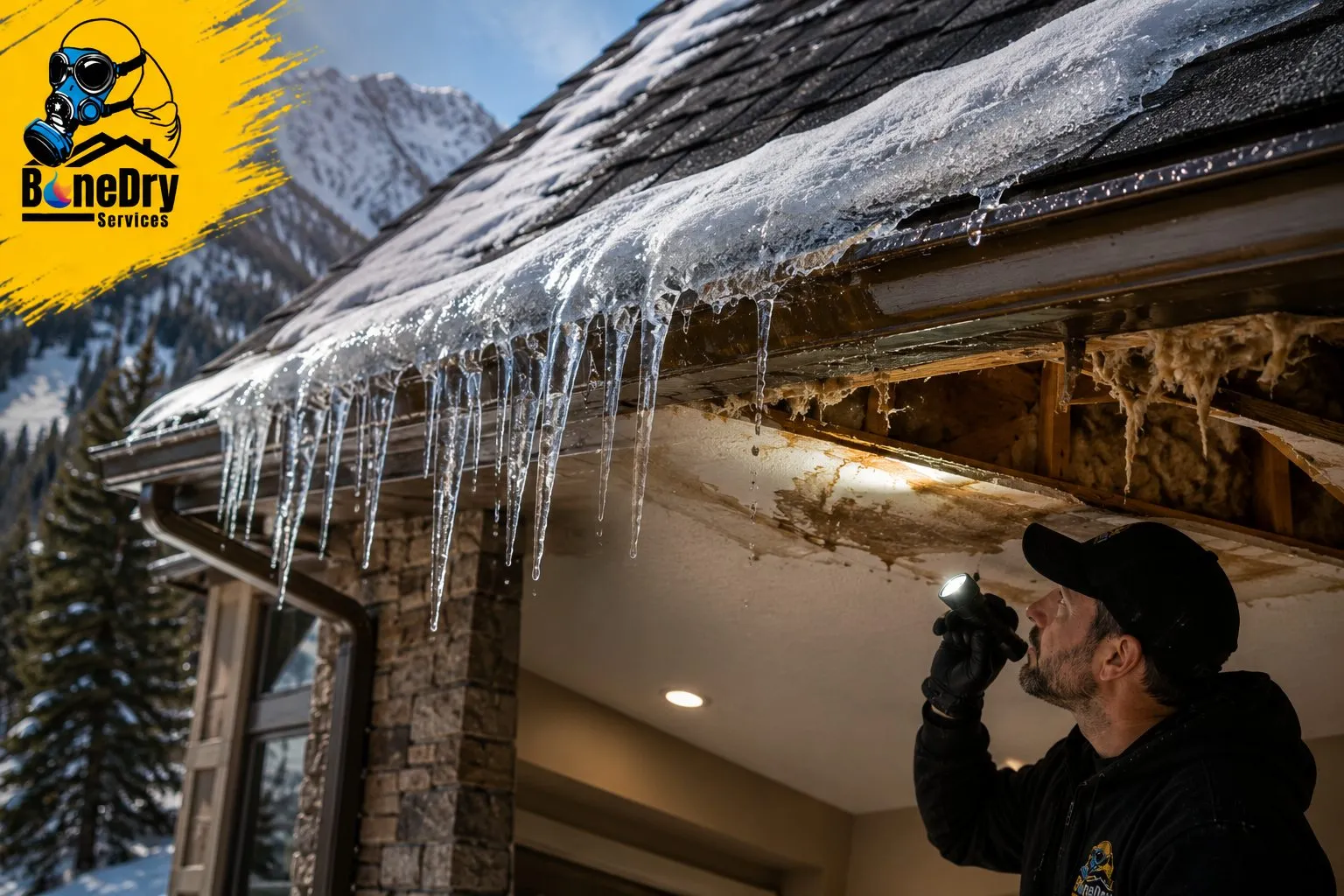
Ice dams often form while homeowners are traveling, allowing meltwater to seep into attics, walls, and ceilings.
Basement Flooding
From snowmelt, sump pump issues, or foundation cracks.
Hidden Leaks in Vacant Homes
A small pipe split can dump thousands of gallons of water in 24 hours.
Warning Signs to Check Before Leaving for Holiday Travel
Before locking the door for Christmas or New Year’s, inspect the home for:
- dripping or sweating pipes
- cold drafts in areas with plumbing
- slow drains (possible early freeze or clog)
- unusual furnace noises
- water staining on ceilings or walls
- sump pump short cycling
- weak water pressure
Catching issues early prevents catastrophic outcomes.
How to Protect Your Home Before Traveling for the Holidays
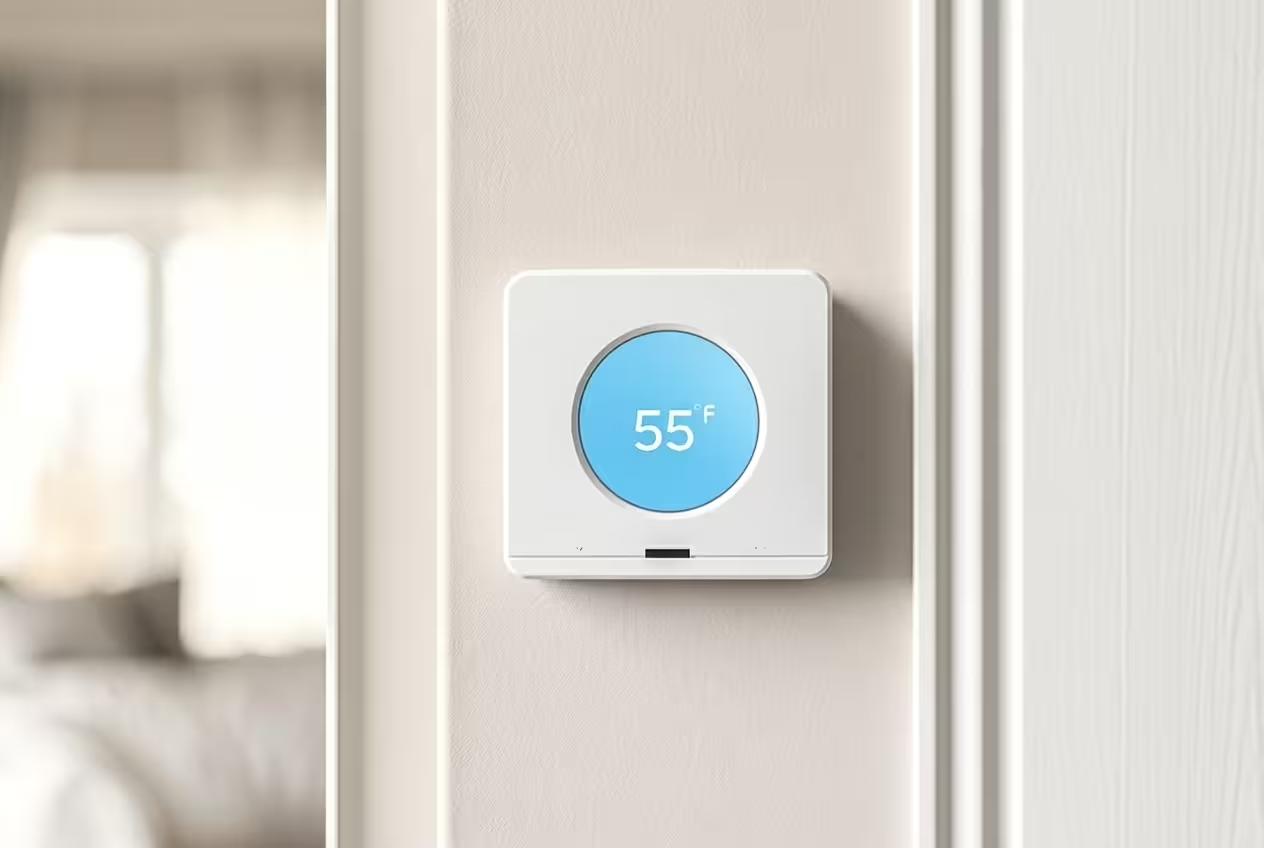
Follow these steps to dramatically reduce winter water damage risks:
1. Keep the Heat On
Set your thermostat to at least 55°F throughout the home.
2. Open Cabinet Doors Under Sinks
Allow warm air to circulate around plumbing.
3. Shut Off the Main Water Supply (if possible)
This is the #1 way to prevent widespread flooding from pipe failures.
4. Drain Outdoor Faucets and Disconnect Hoses
Water left inside exterior plumbing freezes quickly.
5. Install Smart Leak & Temperature Sensors
These devices alert you to water flow or freezing temperatures while you’re away.
6. Check the Sump Pump
Pour water into the pit to ensure it activates properly.
7. Clear Gutters and Downspouts
Clogged gutters cause roof leaks and ice dam formation.
8. Ask a Neighbor or Friend to Check In
Even one walkthrough during your trip can prevent major damage.
What To Do If You Return to Water Damage
If you walk into:
- standing water
- a flooded basement
- dripping ceilings
- visible mold
- burst pipes
- sewage backup
…you need professional help immediately.
Avoid:
- turning on affected electrical circuits
- attempting to clean contaminated water
- removing wet drywall without assessing structure
- ignoring strong odors or discoloration
Water damage spreads fast — and what you don’t see is often more serious than what you do.
How BoneDry Services Protects Colorado Homes During Winter Emergencies
BoneDry Services is Colorado’s most trusted emergency restoration team, serving Arvada, Wheat Ridge, Golden, Denver, and all surrounding communities.
Our certified technicians provide:
24/7 Emergency Response
We arrive within 90 minutes anywhere in the Denver metro area.
Water Extraction and Structural Drying
We use industrial extraction systems and advanced dehumidification to stop damage at the source.
Thermal Imaging and Moisture Mapping
This identifies hidden water inside:
- walls
- ceilings
- flooring
- basement foundations
Cleanup and Sanitation
We remove compromised materials and protect the home from mold development.
Travel With Peace of Mind — BoneDry Is Ready 24/7
Going out of town for the holidays shouldn’t mean risking your home’s safety.
Whether it’s a frozen pipe, basement flood, or hidden roof leak, BoneDry Services is available day and night to protect homes across Colorado.
BoneDry provides:
- 24/7 rapid emergency response
- 90-minute arrival
- Certified water damage technicians
- Complete mitigation + reconstruction
- Free inspections & leak detection
📞 Call now: (303) 276-4163
FAQ Section
Q1: What is the biggest risk to homes left vacant during holiday travel?
Frozen and burst pipes are the most common cause of winter water damage when homes are left unattended.
Q2: How low can I set the thermostat when traveling?
Never below 55°F — colder temperatures increase freeze risks dramatically.
Q3: Should I turn off the main water supply before leaving?
Yes, if possible. Shutting off water dramatically reduces the chance of catastrophic flooding.
Q4: What areas of the home are most vulnerable during winter travel?
Basements, crawl spaces, exterior walls, attics, and any area with exposed plumbing.
Q5: How do I know if my sump pump will fail while I’m away?
Test it before traveling by pouring water into the pit to ensure proper activation.
Q6: What should I do first if I return to find water damage?
Do not touch electrical systems. Call a professional restoration team immediately.