

The Role of Infrared Technology in Modern Water Damage Restoration
Preserving the aesthetic integrity of a high end property is a top priority during a moisture crisis. For homeowners with custom silk wallpapers, hand painted murals, or rare stone tiles, the traditional method of ripping holes in walls to find a leak is a nightmare scenario. Fortunately, modern Water Damage Restoration has evolved significantly over the last decade. By utilizing advanced infrared technology, BoneDry Services can pinpoint moisture intrusion with surgical precision, saving your luxury finishes from unnecessary and costly destruction.
The Science of Infrared Technology in Water Damage Restoration
Thermal imaging does not actually see through walls like an X-ray; instead, it detects minute differences in surface temperature across a building’s envelope. This is a critical distinction in professional Water Damage Restoration because water has a high thermal mass. This means that moisture absorbs and releases heat at a much different rate than dry building materials like drywall, plaster, or wood.
How the Infrared Spectrum Works
When our technicians scan a room, hidden moisture appears as distinct purple or blue "cold spots" on the infrared spectrum. This allows us to:
- Map the exact path of a leak hidden deep within wall cavities.
- Visualize the moisture boundary without touching the delicate surface.
- Identify temperature anomalies caused by evaporating water.
- Pinpoint the origin of the leak before moisture wicks into surrounding materials.
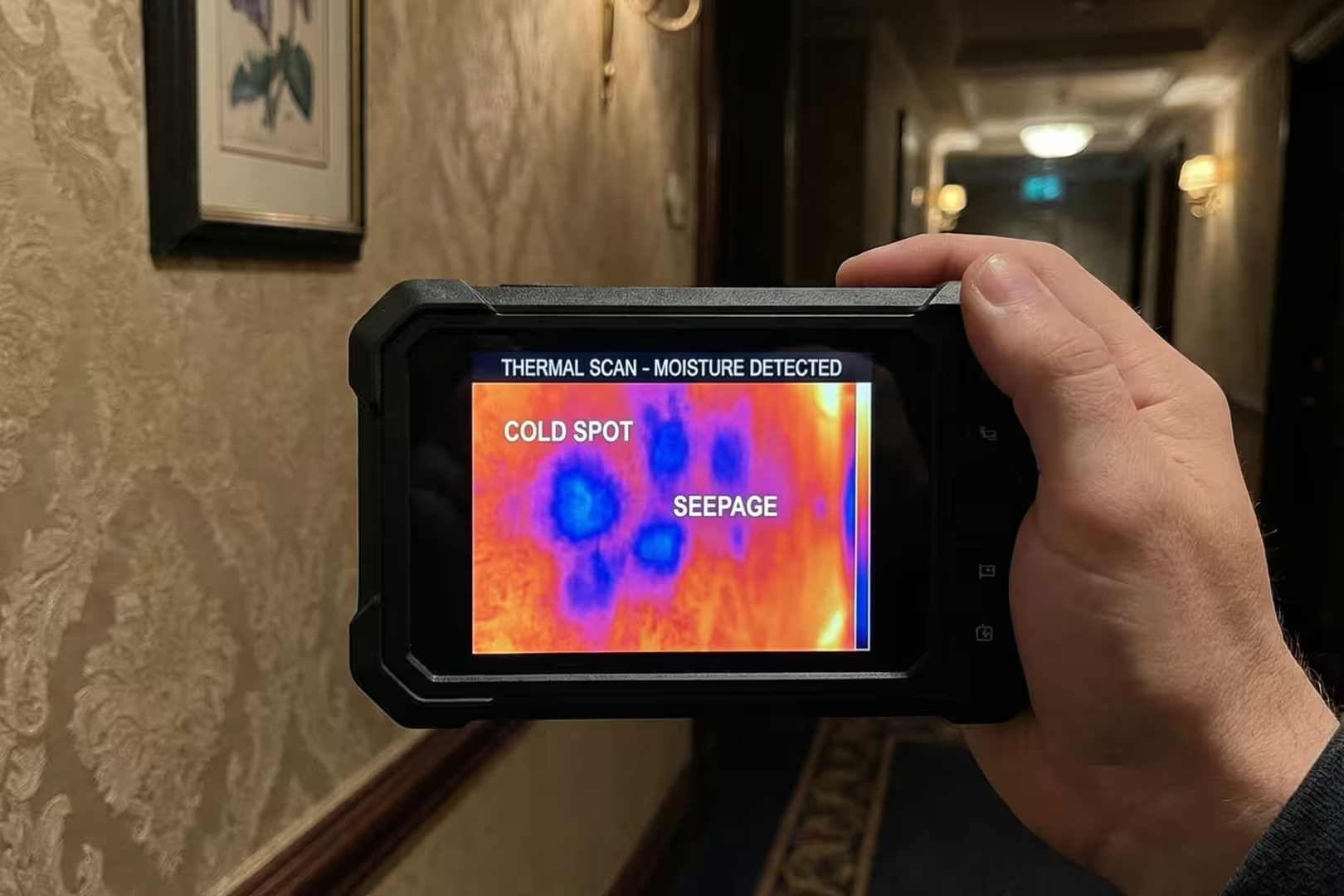
Non Invasive Detection for High End Finishes
The greatest benefit of thermal imaging in Water Damage Restoration is the total elimination of exploratory demolition. In the past, finding a pinhole leak meant removing sections of a wall blindly until the source was finally located. If you have invested in Italian silk or designer wall coverings, even a small hole can be a total loss because these materials often cannot be patched seamlessly.
Strategies for Preserving Home Value
Our process uses thermal scanning to provide a higher level of care for your assets:
- Source Identification: We find the exact origin of a pipe leak or window seal failure.
- Activity Verification: We determine if the moisture is "active" or just a residual stain.
- Boundary Marking: We use thermal mapping to limit the "repair zone" to the smallest possible footprint.
- Finish Protection: We avoid peeling back wallpaper or removing stone until it is absolutely necessary.
Detecting Moisture Behind Tile and Stone Installations
Stone and tile are particularly deceptive because they often do not show visible signs of dampness until the structural sub floor is already rotting. Through infrared Water Damage Restoration techniques, we can detect cool signatures behind marble shower stalls or heavy backsplash tiling. This allows us to address the leak before the adhesive fails and the stone begins to fall from the wall. If these issues are caught early enough, we can often perform mold removal and remediation from the back side of the wall, preserving the expensive stone work on the front.

Precision Drying Guided by Thermal Mapping
Once the leak is located and the source is stopped, thermal imaging continues to play a vital role in the Water Damage Restoration drying phase. We do not simply guess when a wall is dry; we verify the status with hard data and visual confirmation. We create a baseline thermal map of the affected area to establish the moisture boundary and then apply targeted airflow to those specific zones.
Validation and Professional Reporting
Throughout the project, we perform daily scans during the Water Damage Restoration process to ensure the temperature signature is returning to a normal dry state. This documentation is also invaluable for any future reconstruction and repair work that may be required to touch up the aesthetics of the home.
- Baseline Scans: Establishing the starting moisture levels.
- Progress Reports: Visual proof that the drying plan is working.
- Final Clearance: Thermal evidence that the structure has been returned to its pre-loss condition.
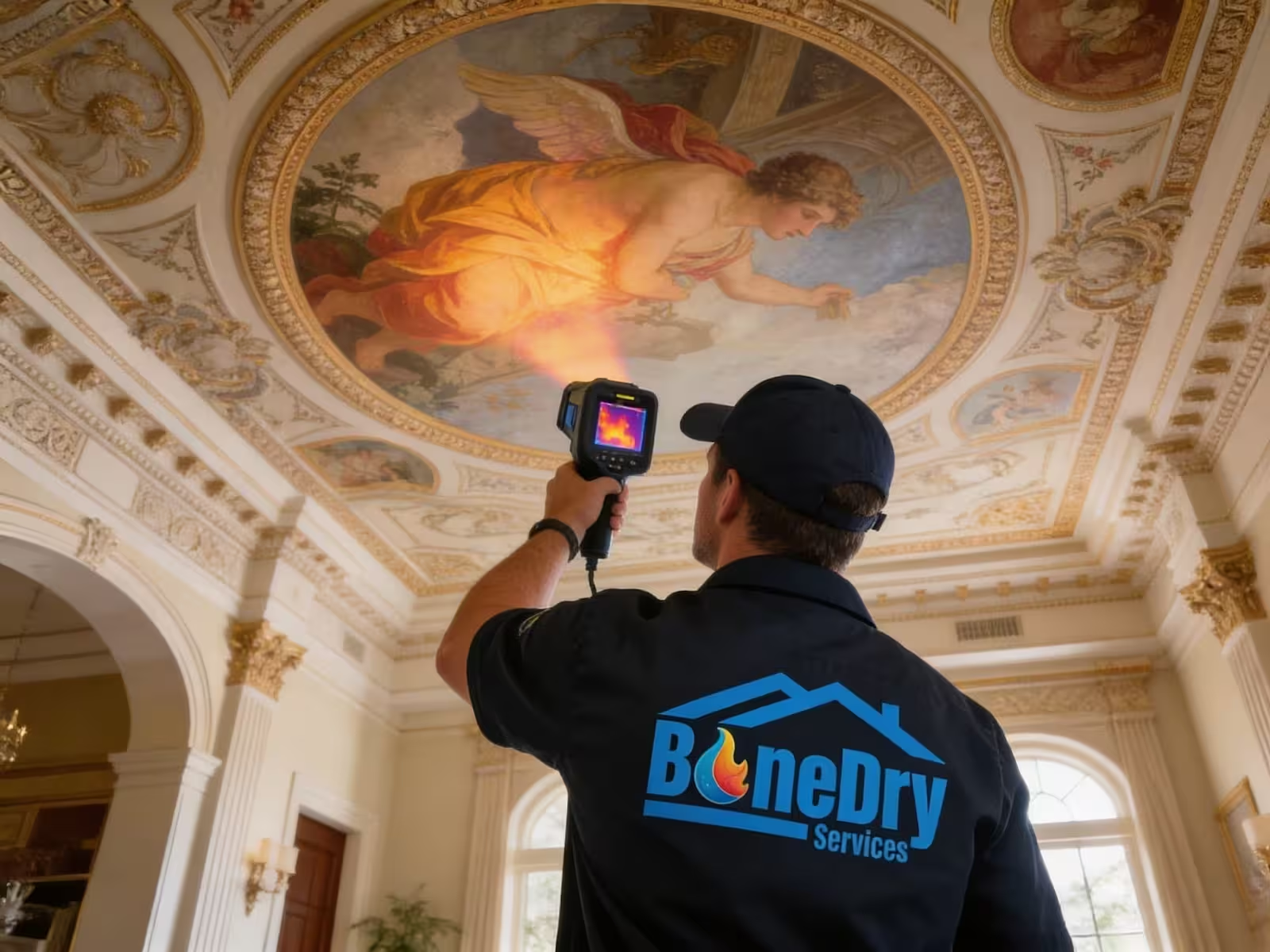
Contact BoneDry Services for Precision Water Damage Restoration
If you suspect a leak behind your luxury wall coverings, do not wait for the stains to appear on your expensive wallpaper. Our team offers 24/7 Water Damage Restoration with a 90-minute arrival guarantee across the entire Denver metro area. We treat your home like the gallery it is, using the latest infrared technology to minimize disruption and maximize results.
📞 Call BoneDry Services at (303) 276-4163 to schedule your non-invasive thermal inspection today.
FAQ
Q1: Does thermal imaging show water damage?
Thermal imaging does not show the damage itself but rather identifies the thermal anomalies caused by moisture. Because water-saturated materials are cooler than dry ones, they appear as dark spots on the camera. Our Water Damage Restoration experts use these images to map out exactly where the water has traveled. It is the most effective way to see "invisible" moisture behind walls.
Q2: How is thermal imaging used to detect presence of water?
It works by detecting the evaporative cooling effect that occurs when moisture sits within a building material. During a Water Damage Restoration inspection, we scan surfaces to find areas with lower temperatures than the rest of the wall. These cold signatures typically correlate with moisture intrusion or a hidden pipe leak. This allows us to find the source without cutting into your drywall.
Q3: What are the disadvantages of thermal imaging?
The main disadvantage is that the camera can sometimes produce "false positives" from drafts or insulation gaps. It also cannot see through reflective surfaces like mirrors or highly polished metal. This is why our Water Damage Restoration team always uses moisture meters to confirm the camera's findings. A thermal camera is a powerful tool, but it requires an expert technician to interpret the data correctly.
Q4: What is the best water leak detection device?
In high-end Water Damage Restoration, the best results come from combining a high-resolution thermal camera with a non-penetrating moisture meter. The camera finds the general area of the leak, while the meter confirms the specific moisture content of the material. This dual-tool approach ensures we never miss a hidden pocket of water. Using both tools together provides the highest level of accuracy for luxury homes.
Q5: Do plumbers use thermal imaging?
Many advanced plumbers use thermal imaging to find leaks in hot water lines or radiant floor heating systems. However, Water Damage Restoration professionals use it differently, focusing on the spread of moisture through structural materials rather than just the pipe itself. We use the technology to ensure the entire wall cavity is dry, not just to find the plumbing break. It is a vital tool for both plumbing and full restoration.