

Substrate Saturation: The Science of Water Damage Restoration in Denver
When a property suffers a leak or flood, the most dangerous moisture is the kind you cannot see. Many Denver property owners assume that once the carpets feel dry, the recovery process is complete. However, "touch-dry" is a dangerous myth.
True restoration requires addressing substrate saturation—the moisture trapped deep within structural studs, subfloors, and masonry that leads to long-term rot. At BoneDry Services, we don't just dry your surfaces; we provide the advanced Water Damage Restoration Denver residents need to protect their home’s structural integrity.
Why "Touch-Dry" is a Myth for Water Damage Restoration Denver Homes
Surface dryness is often an illusion. You might run a shop vac and a household fan, but professional evidence proves that moisture remains trapped in porous materials. This is known as "bound water." Without industrial-grade equipment to create a vapor pressure differential, this moisture remains stagnant. This is particularly dangerous in Denver's climate, where seasonal shifts can cause trapped moisture to cycle through freeze-thaw patterns, accelerating structural decay and rapid fungal growth.
The Risks of Old Plumbing and Sewer Aging in Denver
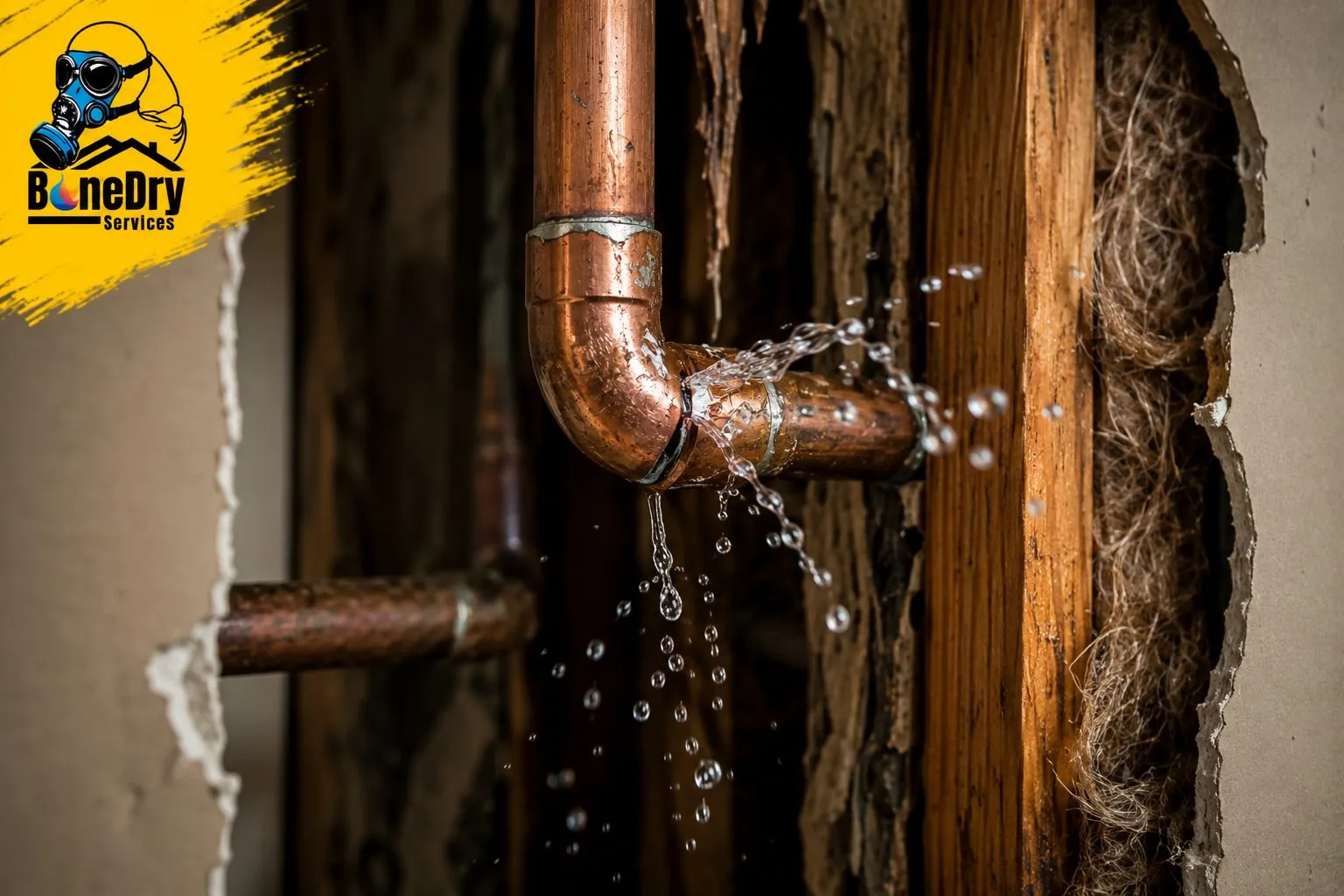
Many established neighborhoods in Denver feature old plumbing systems that are reaching the end of their lifespan. Galvanized steel and cast iron pipes are prone to internal corrosion, leading to pinhole leaks that saturate wall substrates for months before they are discovered. Furthermore, sewer aging is a major contributor to "Category 3" water losses. When an aging sewer line backs up, it introduces highly porous building materials to pathogens and excessive moisture. In these cases, our sewage cleanup team focuses on deep-cleaning the substrate to ensure no biological contaminants remain trapped.
Addressing Foundation Cracks and Subfloor Saturation
Denver’s expansive clay soil is notorious for shifting, which often results in foundation cracks. These cracks act as highways for groundwater to seep into your basement or crawlspace. Once water enters through the foundation, it doesn't just sit on the floor; it undergoes capillary action, pulling moisture upward into the drywall and wall studs. Effective Water Damage Restoration Denver must account for the "dry standard" of the specific material by monitoring capillary suction and hygroscopic absorption.
Advanced Technology for Water Damage Restoration Denver: Moisture Mapping
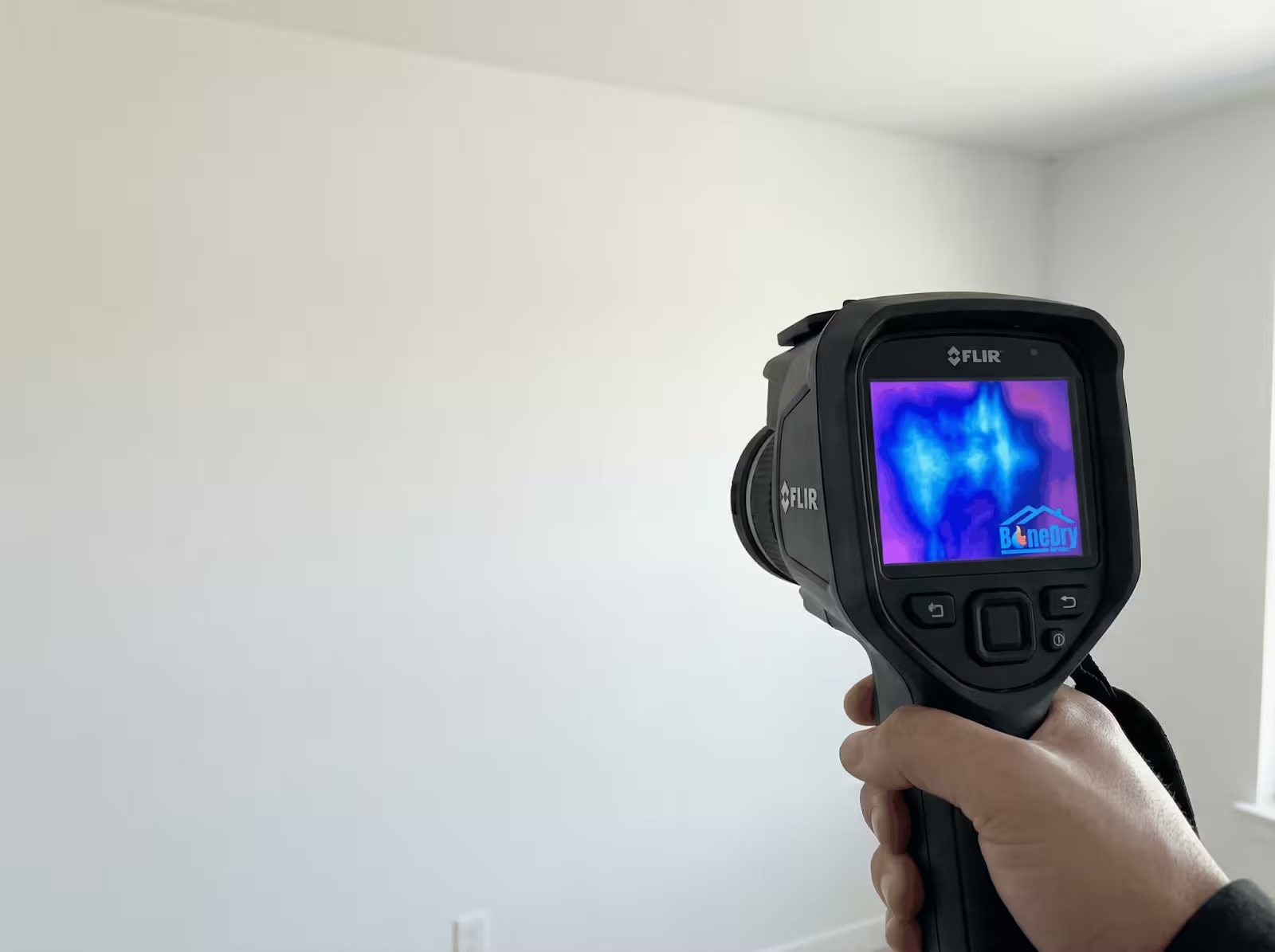
To ensure a property is truly safe, we utilize moisture mapping. Water restoration without mapping is merely guesswork. By identifying the exact boundaries of the moisture pocket, our team can target specific areas rather than tearing out entire rooms unnecessarily. We utilize Infrared (IR) Cameras to detect temperature differences caused by evaporative cooling. These cameras reveal blue "cool" spots where water is hiding behind a seemingly dry coat of paint.
Specialized Structural Drying Equipment and Psychrometrics
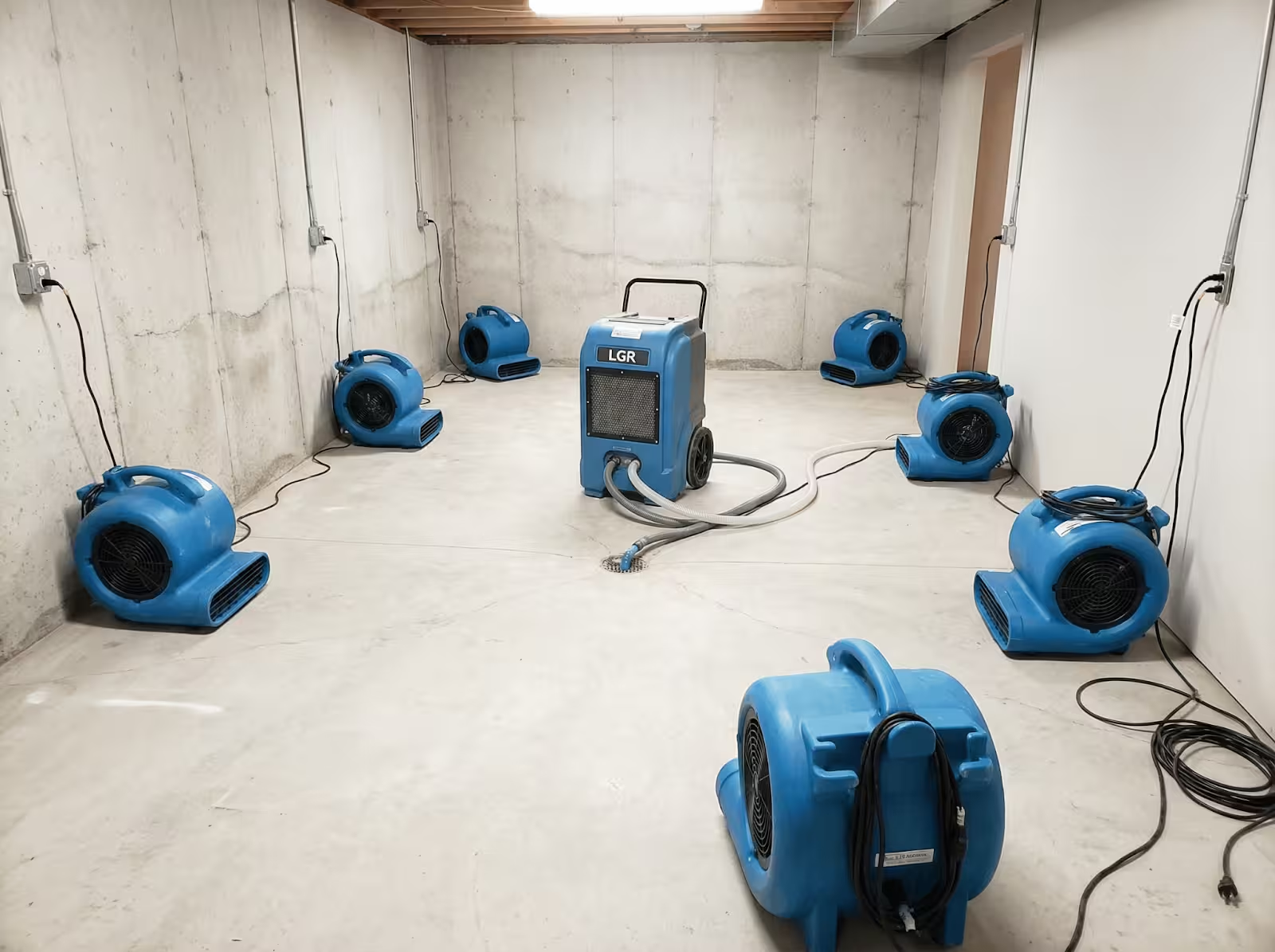
We don't use standard household fans. Our team utilizes high-velocity air movers and LGR (Low Grain Refrigerant) dehumidifiers. These are the heavy hitters of structural drying and dehumidification. By lowering the "grains per pound" (GPP) of the air, we create a vapor pressure differential. This acts as a vacuum for moisture: because the air is so dry, the water trapped inside the dense wooden studs is "pulled" out into the air where it can be processed by the dehumidifier.
Choosing BoneDry Services for Technical Restoration
Don't settle for a surface-level clean that leaves your home's skeleton vulnerable to decay. Whether you are dealing with a pipe burst, foundation cracks, or a failing sewer line, you need the technical expertise of BoneDry Services. We provide the most thorough Water Damage Restoration Denver has to offer, going beneath the surface to protect your home.
📞 Call BoneDry Services now at (303) 276-4163 to schedule your scientific moisture inspection and start your water damage restoration today.
FAQ
Q1: Does water damage dry on its own?
Technically, water will eventually evaporate, but it rarely does so fast enough to prevent permanent damage. In a typical home environment, stagnant moisture trapped behind drywall or under floorboards creates a greenhouse effect. This leads to mold growth within 24–48 hours and the degradation of structural adhesives and wood fibers. Professional intervention is required to manipulate the environment’s temperature and humidity to force evaporation before structural rot or toxic mold colonies take hold.
Q2: Can water damage stop a touch screen?
Yes, water damage is a frequent culprit for touchscreen failure in smart home hubs and appliances. Moisture can seep behind the glass and interfere with the capacitive layer that detects your finger's electrical charge. If the water contains minerals or contaminants—common in pipe bursts or flood scenarios—it can create "parasitic capacitance" or short-circuit the internal ribbon cables. Professional drying helps, but often the corrosion caused by the water requires the replacement of the interface panel itself.
Q3: How many days for water damage to dry?
On average, a professional drying cycle takes between 3 to 5 days, but this timeline depends heavily on the materials involved. Highly porous materials like drywall dry quickly, while dense materials like hardwood, concrete, or "Class 4" materials require much longer durations and specialized equipment. If the substrate is fully saturated due to foundation cracks or aging plumbing, we may need to use targeted heat drying or floor mat systems to reach the "dry standard," which can extend the process to over a week.
Q4: How to dry out water damage?
The most effective way to dry water damage is through a process called "In-Place Drying" using psychrometric science. This involves using high-velocity air movers to break the "boundary layer" of air on a surface and LGR dehumidifiers to remove the moisture from the air. By creating a high vapor pressure differential, we pull the water out of the structural elements. Simply opening windows or using household fans is insufficient, as it doesn't address the bound water trapped deep within the building's subfloors and wall studs.
Q5: How to tell if water damage is still wet?
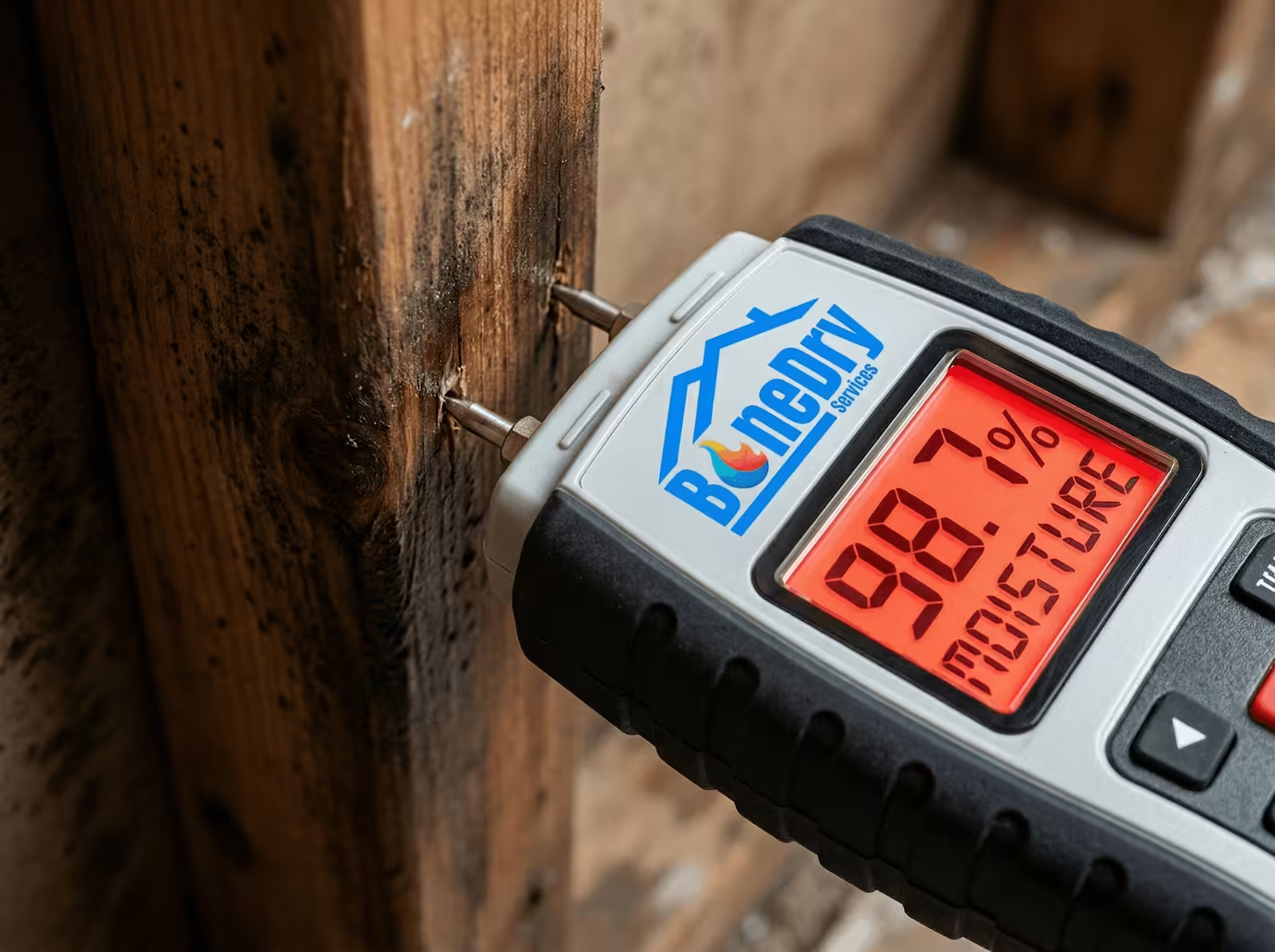
You cannot accurately tell if a material is wet by touch alone, as many materials feel dry to the hand while their core remains saturated. Professionals use two primary tools: non-invasive moisture meters and thermal imaging cameras. Moisture meters measure the electrical conductivity or impedance within a material to provide a percentage of saturation. Thermal cameras detect "cool spots" created by evaporative cooling, which clearly show the boundaries of where water is still hiding behind seemingly dry surfaces.
Q6: Is water dry until you touch it?
This is a common misconception; water is never "dry," but it can be "bound" within a material's cellular structure. In the restoration industry, we distinguish between free water (surface liquid) and bound water (moisture absorbed by the material). Even if a wall looks perfectly normal and feels dry to the touch, it can hold enough bound water to support mold growth and wood rot. This is why we use scientific "Dry Standards" to compare the affected area to a known dry part of your home to ensure true restoration.