Blog

Colorado Emergency Restoration for Luxury Colorado Homes & Estates

Parker Brown

CEO of BoneDry Services

Jun 9

7 minutes

In this article

    Colorado Emergency Restoration for Luxury Colorado Homes & Estates

    When a fire, flood, or storm strikes a high-value home in Aspen, Cherry Hills Village, or Douglas County, every hour counts. For owners of luxury Colorado estates, the speed of the response often determines how much of the property can be saved. Colorado Emergency Restoration at this level is not simply about extracting water or removing smoke—it is about mobilizing a rapid, expertly managed recovery that protects both the structure and the irreplaceable finishes inside it. This is what sets a true emergency response apart: 24/7 availability, fast on-site arrival, and the technical depth to stabilize a high-value home before minor damage becomes a major loss.

    At BoneDry Services, we understand that a large loss in a high-profile community brings unique pressures. From curious neighbors to specialized insurance policies, the path back to "pre-loss" condition requires a level of coordination that standard franchises rarely provide.

    What Rapid Colorado Emergency Restoration Really Means

    For most homeowners, restoration is a logistical event. For owners of luxury estates, it is also a race against the clock. Water that sits for 48 hours becomes mold; smoke residue that isn't neutralized quickly etches custom finishes permanently. Rapid Colorado Emergency Restoration reframes the entire process around speed of response, getting certified crews on-site fast to stabilize the property and limit the spread of damage before it reaches irreplaceable materials.

    This means 24/7 dispatch, fast on-site arrival across the Denver metro and mountain communities, and a single point of contact who coordinates the full scope of work from the first phone call. The goal is a recovery that moves quickly and decisively, containing the damage in the critical first hours when the difference between a minor repair and a full rebuild is measured in minutes.

    Why the First Hour Matters Most

    In a high-value home, the first hour after a loss is decisive. Clean water migrates into hardwood, drywall, and subfloors within minutes, and within 24 to 48 hours it can trigger mold growth that turns a contained leak into a whole-room remediation. A rapid emergency response stops that clock: certified technicians extract standing water, set up containment, and begin structural drying before moisture reaches the materials that are hardest and most expensive to replace.

    Minimizing Disruption to the Home

    A major loss should not force a family to abandon their home entirely. Efficient Colorado Emergency Restoration works to contain the damage to the affected zone—sealing off the work area, running air scrubbers to protect indoor air quality, and keeping unaffected living spaces clean, secured, and fully usable throughout the project. Fast, well-sequenced work means a shorter overall timeline and a quicker return to normal.
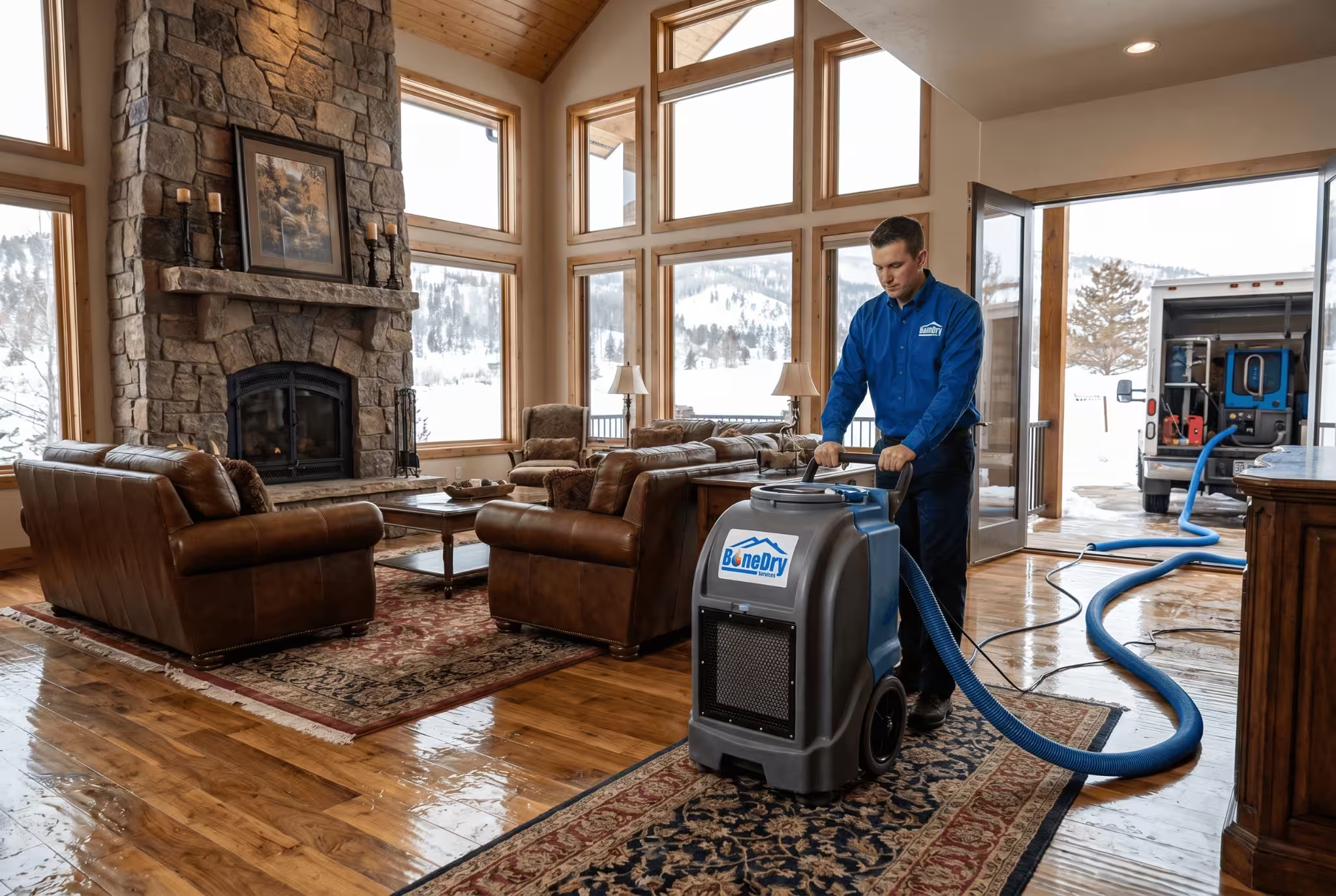
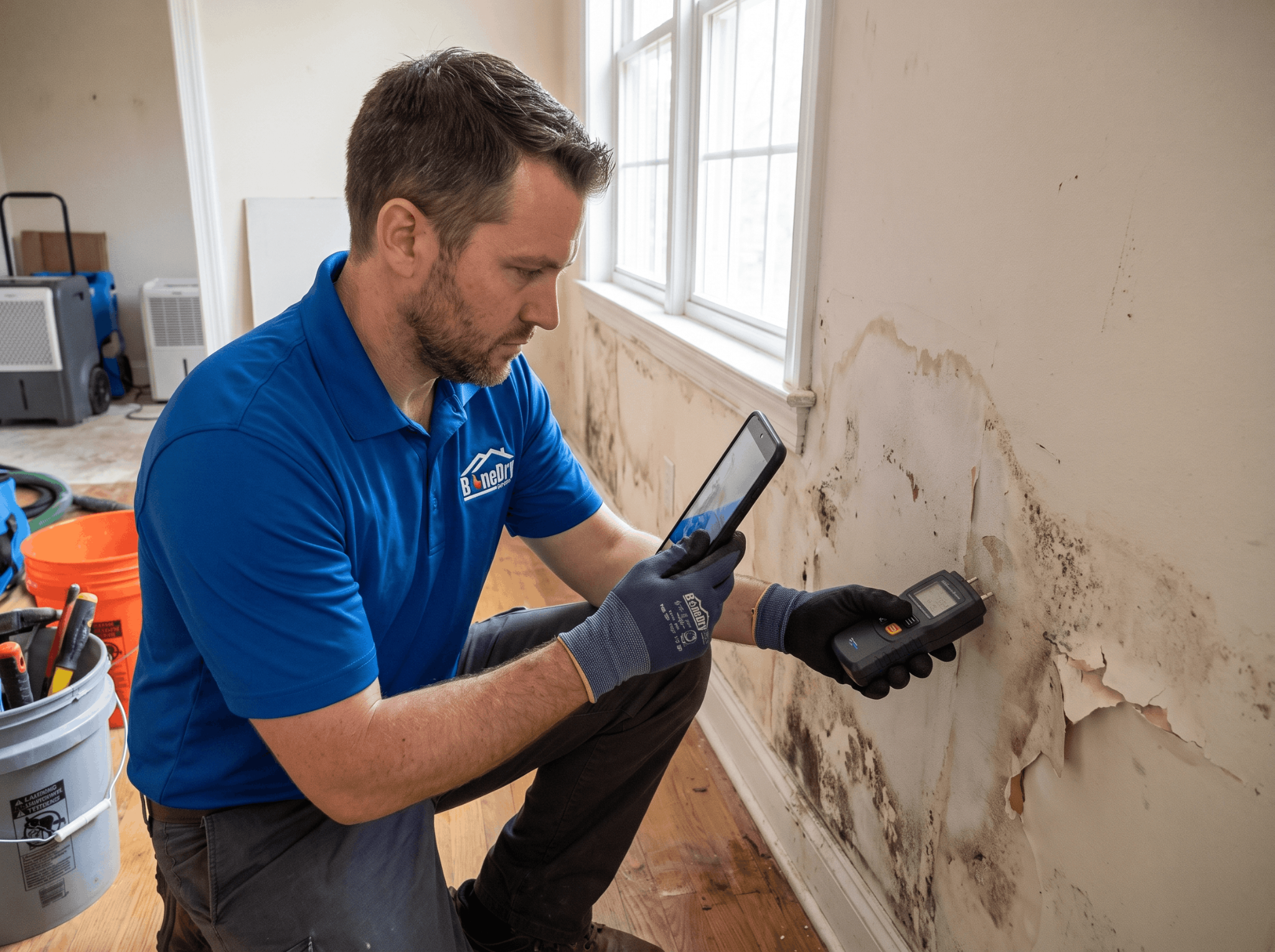
    BoneDry Services technicians performing rapid water extraction in a luxury Colorado home after an emergency loss.

    What Sets Local Colorado Emergency Restoration Apart

    When a high-value home floods or burns, the geography of Colorado works against you. Mountain weather, canyon access roads, and the sheer distance between foothill estates and a crew's home base can turn a 20-minute drive into a two-hour delay—and in restoration, those hours are exactly when containable damage becomes catastrophic. A locally rooted emergency team is built to close that gap.

    As Colorado's largest privately owned, family-operated restoration company, BoneDry Services offers 24/7 emergency response with on-site arrival typically within about 90 minutes. That speed, combined with deep familiarity with the building styles and seasonal hazards of communities like Aspen, Cherry Hills Village, and Douglas County, is what separates a true local emergency provider from a national franchise dispatching from miles away.

    Local Crews, Faster Arrival

    Restoration is a race against moisture, soot, and time, so arrival speed is the single most important variable. Crews based in and around the Denver metro can reach affected homes quickly, day or night, and begin mitigation before water wicks into wall cavities or smoke residue sets into finishes. When a pipe bursts at 9 p.m. or a storm tears off roof flashing overnight, there is one number to call and a team that is already nearby and ready to deploy.

    Full-Service Capabilities Under One Roof

    A high-value loss rarely involves just one type of damage. A burst pipe can mean water extraction, structural drying, mold prevention, and contents restoration all at once; a fire adds smoke, soot, and odor removal on top of that. Handling these phases in-house—rather than handing the home off between disconnected subcontractors—keeps the recovery fast and accountable, and protects rare materials and custom millwork by restoring them to their original character rather than patching with off-the-shelf substitutes.

    Five Pillars of a Successful Large-Loss Recovery

    A truly executive-level recovery rests on a structured framework. These are the five pillars we apply to every high-profile Colorado Emergency Restoration project:

    1. Confidential intake and assessment — Damage is documented thoroughly and privately, with photography and reporting handled by trusted personnel only.
    2. Low-visibility site staging — Equipment, dumpsters, and crew presence are positioned to reduce curb-side disruption and neighborhood attention.
    3. Sequenced project scheduling — Each phase is timed to protect the household's routine and limit the total footprint of active work.
    4. Specialized material sourcing — Custom and high-value finishes are matched and restored rather than replaced wherever feasible.
    5. Verified completion and documentation — The property is returned to pre-loss condition with full reporting suitable for insurance and resale records.

    This framework ensures that even the most complex losses—whether from 24/7 water damage restoration needs or a fire event—are handled with the same disciplined, low-profile approach from start to finish.
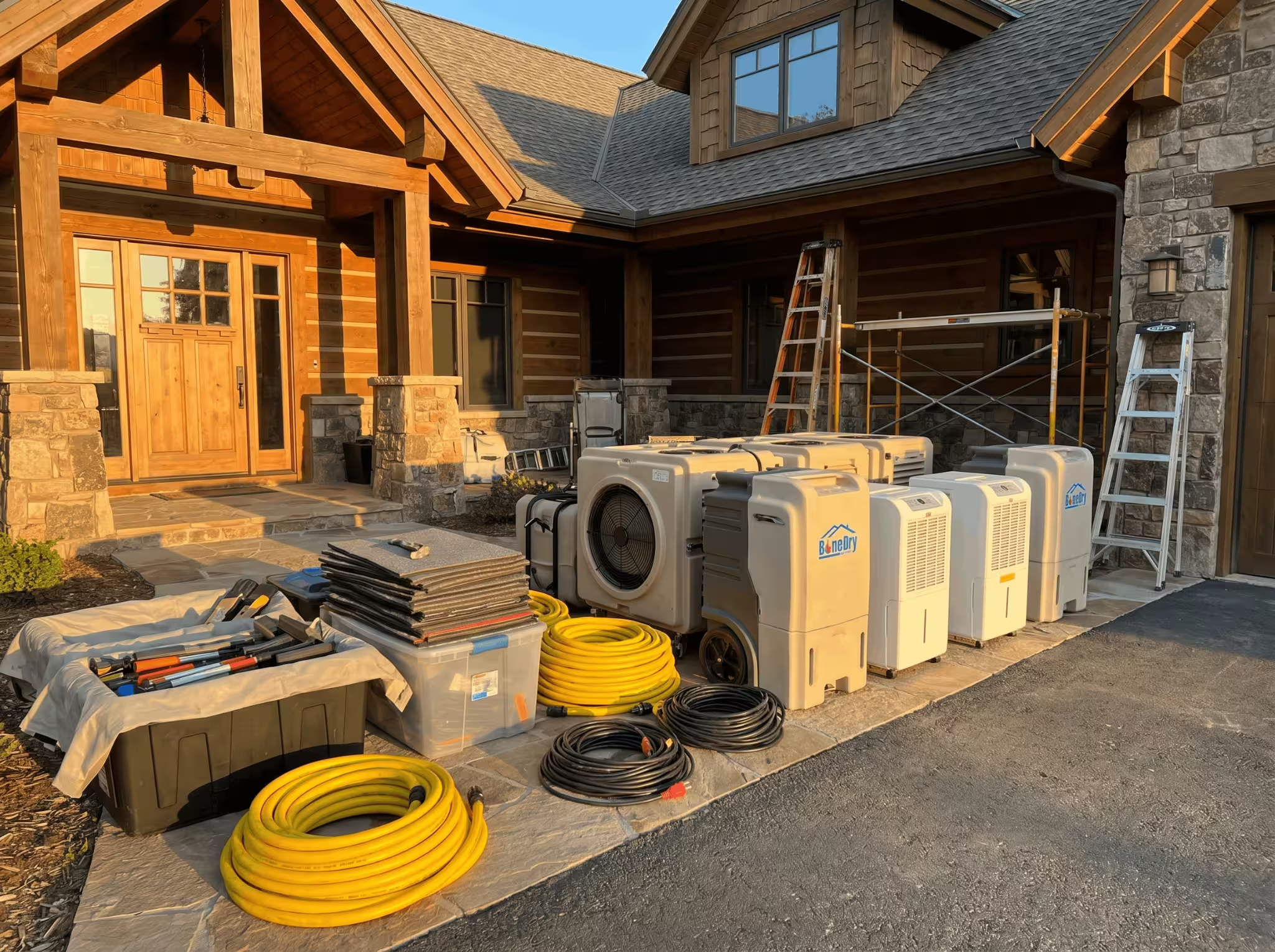
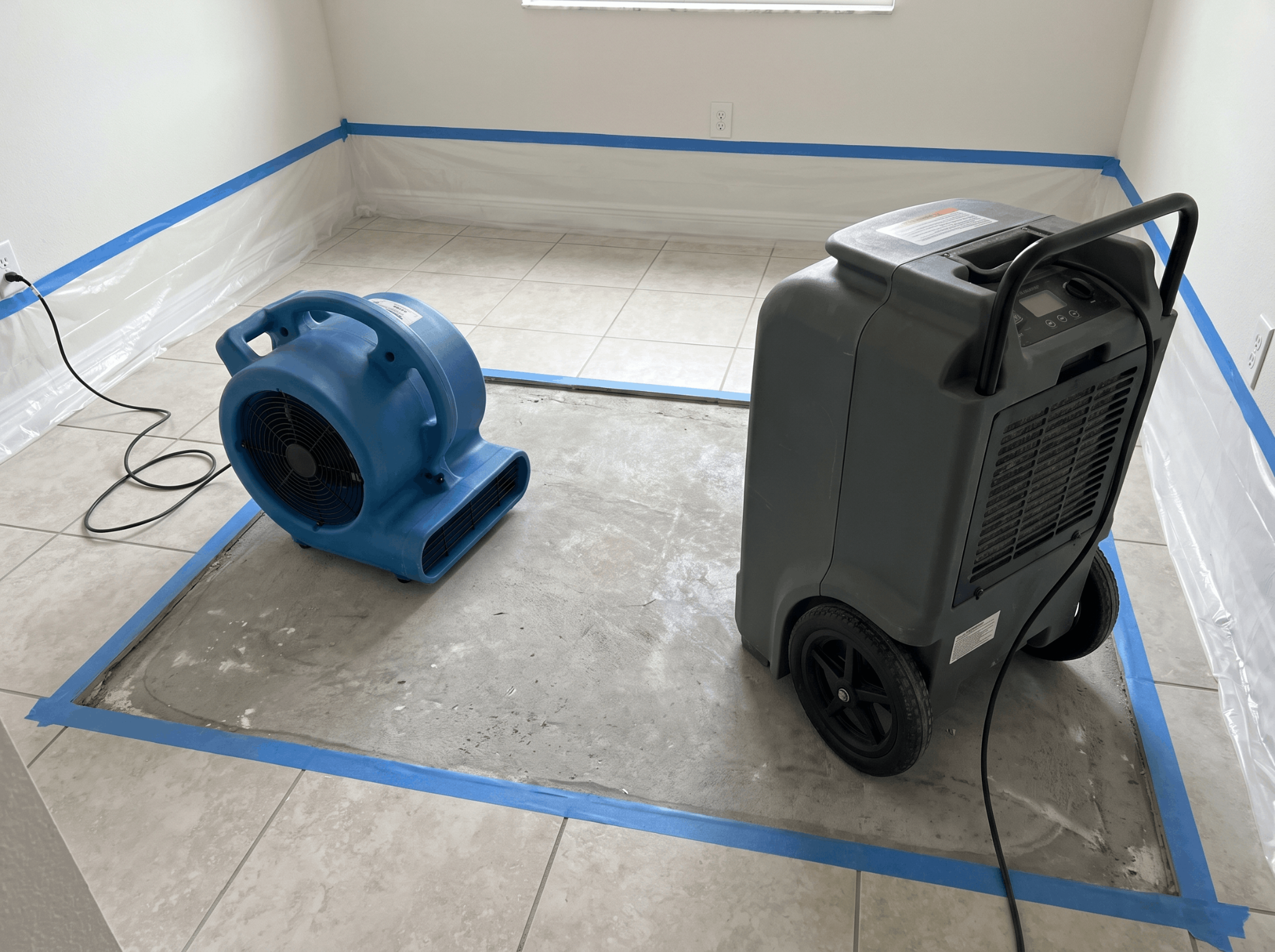
    Colorado Emergency Restoration site staging at a high-profile Colorado property.

    Why Colorado’s Climate Makes Response Speed Critical

    Colorado’s climate creates restoration risks that homes in milder states never face. Hard winter freezes burst supply lines and split pipe joints; spring snowmelt and summer hail drive water through roofs and foundations; and wildfire season pushes smoke and soot into homes miles from the nearest flames. In high-elevation communities like Aspen, the freeze-thaw cycle alone makes a fast response essential.

    This means the type of damage varies sharply by season and by region, and so does the urgency. A burst pipe in a vacant mountain home can run for hours before anyone notices, while a fast-moving grass fire can threaten a foothill estate with little warning. When a major event like a fire requires extensive work, our fire damage restoration teams respond quickly to contain smoke and soot before they cause permanent damage to finishes and air quality.

    Winter Freeze and Burst Pipes

    When temperatures plunge, water inside an unheated wall or an exposed line freezes, expands, and ruptures the pipe. The leak often goes undetected until the thaw, when gallons of water flood the structure at once. In second homes and seasonally occupied estates, this can mean days of unchecked water damage—which is exactly why a 24/7 emergency line and rapid extraction matter most in the winter months.

    Wildfire Smoke and Storm Damage

    Smoke particles and soot settle into HVAC systems, soft furnishings, and porous finishes long after a wildfire has passed, and the acidic residue can permanently etch surfaces if it isn’t neutralized quickly. Summer hailstorms and heavy spring runoff add roof and foundation water intrusion to the mix. Each of these demands a fast, specialized response—the sooner the source is addressed, the more of the home can be saved.

    Working With Specialized Insurance Adjusters

    Large losses on high-value properties rarely fit a standard insurance template. These homes are often covered by high-net-worth carriers and serviced by specialized adjusters who evaluate claims with far greater scrutiny and nuance. Navigating this relationship well is one of the most valuable parts of executive-level Colorado Emergency Restoration.

    A few factors that distinguish high-value claim handling include:

    • Detailed scope documentation that accounts for custom finishes, rare materials, and replacement-cost considerations far beyond a typical policy.
    • Direct adjuster collaboration, where the project manager and adjuster work in tandem rather than at odds, keeping the claim moving smoothly.
    • Accurate valuation support, ensuring that bespoke elements are appraised and restored to their true worth rather than undervalued.

    Our experience negotiating with adjusters means owners are not left to translate technical restoration language into insurance terms on their own. We bridge that gap, advocating for a fair and complete claim while keeping the process transparent.

    Restoring Value, Not Just Repairing Damage

    The ultimate measure of a luxury recovery is whether the property's character and value are fully preserved. This is why precision matters at every stage—from content handling to final finishes. Our contents restoration specialists treat heirlooms, art, and high-value possessions with the careful documentation and handling they deserve.

    A fast, well-managed Colorado Emergency Restoration project leaves no lingering evidence of the loss. The home looks, functions, and feels exactly as it did before—because the damage was caught early and the structure was dried, cleaned, and rebuilt to its original standard.

    Restoration technician completing a final inspection in a fully restored modern Colorado home after emergency water damage repair.

    Why High-Profile Clients Choose BoneDry Services

    As Colorado's largest privately owned, family-operated restoration company, BoneDry Services offers something national franchises cannot: personalized accountability. Every executive-level project receives a dedicated lead, a confidentiality-trained crew, and the technical depth required to restore even the most demanding estate. We combine discretion with genuine expertise, ensuring that your recovery is handled with the seriousness and care it warrants.

    📞 Call BoneDry Services at (303) 276-4163 for discreet, executive-level Colorado Emergency Restoration today.

    FAQ

    What makes Colorado Emergency Restoration for high-profile homes?

    Discreet restoration focuses on minimizing the visibility of the recovery process while delivering full technical results. This includes low-profile site staging, carefully scheduled deliveries, and confidentiality-trained crews who avoid drawing neighborhood attention. The goal is a recovery that protects both the property and the household's privacy. For high-profile owners, this discretion is treated as a core service standard rather than an optional extra.

    How does project management improve the restoration experience?

    Dedicated project management gives the homeowner a single, accountable point of contact instead of a confusing web of technicians and subcontractors. That project lead manages scheduling, documentation, and communication while coordinating specialized trades in proper sequence. This absorbs the complexity of a large loss so the client doesn't have to. The result is a calmer, more organized recovery with clear visibility into every phase.

    How do you protect neighbor privacy during a large loss?

    We actively manage discretion at the property line by scheduling deliveries during quieter hours, keeping the work zone contained and tidy, and briefing crews to disclose nothing about the household. The visible footprint of equipment and personnel is minimized wherever possible. Crews understand they are guests in a community that values privacy. This keeps the project from becoming a topic of neighborhood speculation.

    Do you work with high-net-worth insurance adjusters?

    Yes. Large losses on luxury estates are often covered by specialized high-net-worth carriers with adjusters who scrutinize claims closely. Our project managers collaborate directly with these adjusters, providing detailed scope documentation and accurate valuation support for custom finishes and rare materials. We advocate for a fair, complete claim while keeping the process transparent. This spares owners from translating restoration details into insurance terms themselves.

    Can you restore custom finishes and high-value contents?

    Absolutely. High-end estates often feature bespoke millwork, rare materials, and irreplaceable possessions that require specialized handling. We source matching materials and restore custom elements rather than replacing them with generic substitutes that diminish value. Our content teams document and treat heirlooms, art, and valuables with meticulous care. The objective is to preserve the property's full character and worth, not simply repair the damage.

    Recent Articles

    16 Jul 2026
    10 mins read

    Burst or Broken Pipes

    Burst pipes from freezing, corrosion, or poor installation can flood homes fast. Immediate extraction and drying prevent mold and rot.
     read more

    A burst or broken pipe can turn into a homeowner’s worst nightmare within minutes. From soaked carpets and damaged walls to potential mold growth, the aftermath can be overwhelming and costly if not handled quickly. Whether caused by freezing temperatures, aging plumbing, or unexpected pressure buildup, pipe failures require immediate attention. Understanding the causes, warning signs, and proper steps to take can help you protect your home and minimize damage before it spreads.

    Burst or Broken Pipes: What Causes Them and How to Protect Your Home

    Few things can cause more sudden damage to your home than a burst or broken pipe. In just minutes, hundreds of gallons of water can flood your property, damaging walls, floors, and furniture. Understanding why pipes burst—and how to respond when they do—can save you from expensive repairs and long-term damage.

    Common Causes of Burst or Broken Pipes

    Several factors can contribute to a pipe bursting or cracking. Some of the most common causes include:

    • Freezing Temperatures – Water expands when it freezes, building pressure inside pipes until they break.
    • Aging or Corroded Pipes – Older plumbing systems can weaken over time, making them more prone to leaks and bursts.
    • High Water Pressure – Excessive water pressure can strain pipes and fittings beyond their capacity.
    • Ground Shifting – Soil movement or nearby construction can put stress on underground pipes.
    • Clogs or Blockages – Pressure buildup behind a clog can cause a pipe to burst.

    Signs You Might Have a Broken Pipe

    Sometimes, the signs of a pipe problem are obvious—but in other cases, they’re subtle and easy to miss. Watch out for these warning signs:

    • Sudden drop in water pressure
    • Unusual noises when running water
    • Damp walls, ceilings, or floors
    • Unexplained increase in your water bill
    • Musty odors or visible mold growth

    If you notice any of these symptoms, don’t wait—addressing the issue early can prevent widespread water damage.

    How Burst Pipes Can Damage Your Home

    Even a small leak can cause serious problems if not repaired quickly. Common damage includes:

    • Warped floors and baseboards
    • Discolored walls and ceilings
    • Mold and mildew growth
    • Electrical hazards from water intrusion
    • Structural weakening of walls and framing

    The longer water sits, the more extensive (and costly) the repairs can become.

    Why Professional Water Damage Restoration Is Essential

    After a burst or broken pipe, simply drying the area isn’t enough. Hidden moisture can remain trapped inside walls, flooring, and insulation—leading to mold and long-term structural issues.

    At Bone Dry Services, our certified technicians use advanced moisture detection tools and drying equipment to ensure your home is completely dry and safe. We handle:

    • Emergency water extraction
    • Structural drying
    • Mold prevention and remediation
    • Complete property restoration

    Our team is available 24/7 to respond quickly and minimize damage from burst pipes.

    Tips to Prevent Pipes from Bursting

    While not all pipe failures can be avoided, these maintenance tips can significantly reduce your risk:

    • Insulate exposed pipes during cold weather.
    • Keep faucets dripping slightly during freezing temperatures.
    • Check for leaks and corrosion regularly.
    • Maintain consistent indoor temperatures.
    • Install a water pressure regulator if needed.

    Regular inspections and maintenance go a long way in keeping your plumbing system reliable and safe.

    14 Jul 2026
    10 mins read

    Appliance Malfunctions

    Appliances like water heaters, washers, and fridges can leak or clog, causing floor damage and mold. We restore affected areas quickly.
     read more

    Home appliances make life easier—until they malfunction. When an appliance breaks down, it can cause much more than inconvenience. Leaks, electrical issues, and hidden water damage are common side effects that can lead to expensive repairs if not handled quickly. Here’s what every homeowner should know about appliance malfunctions and how to respond effectively.

    Common Appliances That Cause Water or Fire Damage

    Many household appliances use water or electricity, which means when they fail, the results can be serious. The most common culprits include:

    • Washing Machines – Loose hoses or worn seals can cause major leaks.
    • Dishwashers – Clogged drains and cracked water lines often lead to flooding under cabinets.
    • Refrigerators – Ice maker or defrost line leaks can create hidden water damage behind the unit.
    • Water Heaters – Tank corrosion or pressure valve failures can release gallons of water within minutes.
    • HVAC Systems – Clogged condensate lines or overflow pans can create slow leaks that go unnoticed.

    Signs Your Appliance May Be Malfunctioning

    Early detection is key to preventing damage. Watch for these red flags:

    • Strange noises or burning smells
    • Pools of water near appliances
    • Fluctuating temperatures (especially in refrigerators or dryers)
    • Tripped circuit breakers or flickering lights
    • Increased water or electric bills

    The Hidden Risks of Ignoring Appliance Malfunctions

    Ignoring a malfunction might seem harmless at first, but it can lead to bigger problems, such as:

    • Water Damage – Leaks can soak flooring, drywall, and cabinetry.
    • Mold Growth – Moisture trapped behind appliances creates a breeding ground for mold.
    • Electrical Fires – Faulty wiring or short circuits can spark fires.
    • Structural Damage – Prolonged water exposure can weaken subfloors and framing.

    What to Do When an Appliance Fails

    If an appliance malfunctions, act fast:

    1. Turn off the power or water supply to prevent further damage.
    2. Unplug the appliance if safe to do so.
    3. Clean up standing water and ventilate the area.
    4. Document the damage for insurance purposes.
    5. Call a professional restoration team—like Bone Dry Services—to inspect and restore the affected area.

    How Bone Dry Services Can Help

    At Bone Dry Services, we specialize in water damage restoration, mold remediation, and structural drying caused by appliance malfunctions. Our certified technicians use advanced equipment to detect hidden moisture, repair damage, and restore your property to pre-loss condition—fast and effectively.

    Whether it’s a burst washing machine hose or a leaking dishwasher, we’re available 24/7 for emergency response across Denver and the greater Colorado area.

    Preventing Future Appliance Failures

    Prevention is always better than restoration. Here are a few maintenance tips:

    • Inspect hoses and connections every six months.
    • Clean lint filters and vents regularly.
    • Keep appliances level to reduce strain on seals.
    • Replace old or brittle water supply lines.
    • Schedule professional maintenance for large systems like HVAC and water heaters.
    13 Jul 2026
    6 minutes

    Indoor Air Quality in Denver: Post-Storm Mold & Allergens

    A wet Denver summer degrades indoor air with humidity, mold & allergens. BoneDry Services restores indoor air quality with HEPA air scrubbing & drying.
     read more

    Indoor Air Quality in Denver: Post-Storm Mold & Allergens

    A wet Denver summer leaves more behind than puddles and saturated lawns. Weeks of monsoon humidity can quietly degrade the air inside your home, raising moisture levels, feeding mold growth, and loading the air with allergens and fine particulates long after the storms pass. 

    This is where Denver homeowners often discover an unexpected truth: the most damaging effects of a wet season are frequently invisible, settling into indoor air and surfaces rather than appearing as obvious water damage. Addressing that lingering air quality problem—through proper drying, air scrubbing, and particulate removal—is just as important as cleaning up any visible moisture.

    At BoneDry Services, we see the after-effects of wet Denver summers play out in homes across the metro every year. Elevated humidity and the mold and allergens it encourages do not always announce themselves, but they can affect comfort, health, and the long-term condition of a home. Understanding how to restore clean indoor air is the key to undoing the damage a rainy season leaves behind.

    How a Wet Summer Sets the Stage for Poor Indoor Air Quality

    Mold needs three things to thrive: moisture, organic material to feed on, and time. A wet Denver summer supplies all three. Weeks of elevated humidity keep indoor surfaces damp enough for spores to take hold, and the materials in any home—drywall, wood, fabric, dust—give them plenty to grow on. By late summer, homes that never saw a single flood can still develop the conditions that lead to indoor air quality problems, simply from sustained ambient moisture.

    The effects extend beyond mold itself. Damp conditions raise the concentration of allergens like dust mites and mold spores in the air, and fine particulates that would normally settle out stay suspended longer in humid environments. The result is indoor air that feels heavy, smells musty, and can aggravate allergies and respiratory sensitivities. Restoring that air to a healthy state is about more than removing visible growth—it means addressing the moisture and the airborne particles together.

    The Link Between Humidity and Mold

    Indoor humidity is the hidden driver of most seasonal mold problems. When relative humidity stays elevated for long stretches, moisture condenses on cooler surfaces and soaks into porous materials, creating exactly the damp footholds spores need. You may never see standing water, yet mold can flourish behind furniture, inside closets, and in basements. Controlling humidity is therefore the foundation of effective indoor air quality control—without it, growth simply returns.

    Why High Altitude Doesn’t Mean Dry Indoors

    Denver's climate is generally dry, which leads many homeowners to assume indoor humidity is never a concern. But during a wet monsoon season, moisture gets trapped inside well-sealed modern homes, and basements in particular hold dampness long after the weather clears. The contrast between a dry outdoor reputation and a humid indoor reality is exactly why post-storm air quality issues catch so many Denver households by surprise.

    Elevated indoor humidity after a wet Denver summer creating conditions for poor indoor air quality in Denver.

    Air Scrubbing and Particulate Removal for Indoor Air Quality

    When a wet season degrades indoor air, the solution is to physically remove the contaminants suspended in it. Air scrubbing does exactly that. An air scrubber pulls air through a series of filters—including a HEPA stage that captures mold spores, allergens, and fine particulates—and returns cleaned air to the room. Run over time, it steadily lowers the concentration of airborne contaminants, which is why air scrubbing is a core part of restoring indoor air quality after a wet season.

    Particulate removal works hand in hand with moisture control. There is little point in cleaning the air while the conditions that produced the contamination persist, so drying and dehumidification go alongside filtration. When humidity has fed active growth, our mold removal & remediation teams combine source removal with air scrubbing so both the visible mold and the airborne particles it released are addressed together.

    How Air Scrubbers Clean Indoor Air

    An air scrubber works by continuously cycling a room's air through its filtration stages. Larger particles are caught first, while the HEPA filter traps the smallest and most problematic ones, including mold spores and many common allergens. 

    Because the unit processes the air repeatedly over hours or days, it gradually reduces the airborne contaminant load far below what passive settling would achieve. The cleaner the air leaving the unit, the healthier the room becomes with each cycle.

    Tackling Allergens and Fine Particulates

    A humid summer raises levels of allergens that sensitive household members feel keenly—mold spores, dust, and other fine particles that linger in moist air. These particulates are too small to remove by dusting or ordinary ventilation. HEPA-based air scrubbing captures them at the source, easing the musty smell and the allergy symptoms that often accompany a wet season. Pairing this with humidity control keeps the relief from being temporary.

    Our Approach to Post-Storm Indoor Air Quality in Denver

    Restoring healthy indoor air after a wet summer follows a logical order, addressing the cause before polishing the result. This is the sequence we follow on a typical post-storm indoor air quality project:

    1. Assess moisture and air quality — Humidity levels and problem areas are identified so the underlying moisture source can be addressed, not just the symptoms.
    2. Control humidity and dry the space — Dehumidification brings indoor moisture back to a healthy range, removing the conditions mold and allergens depend on.
    3. Remove any active mold growth — Visible mold is removed at the source so it stops releasing spores into the air.
    4. Scrub the air with HEPA filtration — Air scrubbers run over time to capture spores, allergens, and fine particulates suspended in the indoor air.
    5. Verify and maintain results — Conditions are rechecked, and homeowners get guidance on keeping humidity in check so the problem does not return.

    Following this order ensures the air is not just temporarily cleaned but kept clean, because the moisture conditions that caused the problem have been corrected.

    HEPA air scrubber removing particulates during indoor air quality restoration in Denver.

    The Benefits of Professional Indoor Air Quality Care in Denver

    Restoring indoor air after a wet season delivers benefits that go well beyond a fresher smell. Professional indoor air quality care in Denver protects health, comfort, and the home itself:

    • Healthier indoor air — Removing spores and allergens eases respiratory irritation and allergy symptoms for sensitive household members.
    • Eliminated musty odors — Addressing both moisture and airborne particles clears the damp, musty smell a wet summer leaves behind.
    • Mold growth prevented — Bringing humidity back to a healthy range removes the conditions that let mold establish and spread.
    • Protected home and furnishings — Controlling moisture protects drywall, wood, and fabrics from the gradual damage sustained dampness causes.

    Lingering humidity often traces back to a moisture source that needs fixing, not just managing. When a leak or seasonal water intrusion is feeding the problem, our structural drying & dehumidification teams dry the structure thoroughly so the air stays healthy for the long term.

    Fresh, healthy indoor air in a Denver home after indoor air quality restoration.

    Breathe Easier After a Wet Denver Summer

    The lingering humidity, mold, and allergens left by a rainy season do not have to settle into your home for good. With proper moisture control, source removal, and HEPA air scrubbing, your indoor air can be restored to a clean, healthy state. As Colorado's largest privately owned, family-operated restoration company, BoneDry Services brings the equipment and expertise to address both the moisture and the air it affects.

    📞 Call BoneDry Services at (303) 276-4163 today for professional post-storm indoor air quality care in Denver.

    FAQ

    Can a wet summer cause mold even without flooding?

    Yes. Mold only needs sustained moisture, organic material, and time, and a humid Denver summer supplies all three without any flooding at all. Weeks of elevated indoor humidity keep surfaces damp enough for spores to take hold behind furniture, in closets, and in basements. You may never see standing water, yet mold can still develop. This is why air quality and humidity matter as much as visible water damage after a wet season.

    What does an air scrubber actually do?

    An air scrubber continuously pulls room air through filtration stages, including a HEPA filter that captures mold spores, allergens, and fine particulates. Cleaned air is returned to the room, and because the unit cycles the air repeatedly over hours or days, contaminant levels steadily drop. This removes airborne particles that dusting and normal ventilation cannot. It is a core tool for restoring healthy indoor air after a humid season has degraded it.

    Why does my home smell musty after a rainy season?

    A musty smell is usually a sign of elevated humidity and the mold or microbial growth it encourages, often in hidden or poorly ventilated areas. The odor comes from compounds released by that growth and from damp materials holding moisture. Simply masking the smell does not solve it. Addressing both the moisture source and the airborne particles—through drying and HEPA air scrubbing—is what actually clears the odor for good.

    Should I worry about indoor humidity in dry Colorado?

    It is worth watching, especially during monsoon season. While Colorado's outdoor climate is dry, moisture gets trapped inside well-sealed modern homes during wet stretches, and basements hold dampness long after the weather clears. That trapped humidity is enough to encourage mold and degrade air quality. Keeping indoor humidity in a healthy range during and after a wet summer is a simple, effective way to protect your air and your home.

    How long does air scrubbing take to improve air quality?

    It depends on the size of the space and how degraded the air has become, but air scrubbing works gradually rather than instantly. Because the unit cycles the air repeatedly, contaminant levels fall over hours and days of continuous operation. Pairing it with humidity control speeds and sustains the improvement. A professional assessment can estimate the timeline for your specific situation and confirm when the air has reached a healthy state.

    07 Jul 2026
    7 minutes

    Sewage Cleanup: When Denver Municipal Lines Fail in Storms

    Why Denver storms cause sewer backups and how backflow prevention helps. BoneDry Services provides fast, safe sewage cleanup after monsoon-driven sewer surges.
     read more

    Sewage Cleanup: When Denver Municipal Lines Fail in Storms

    Denver's July monsoon storms can drop an enormous volume of water in a very short time, and when they do, the city's sewer system can be pushed past its limits. When that happens, wastewater has nowhere to go but backward—up through floor drains, toilets, and basement fixtures into the home. 

    The need for fast, professional sewage cleanup after one of these events is not a matter of convenience; it is a health and safety necessity. Sewage backup carries bacteria, viruses, and contaminants that make a flooded basement far more hazardous than a clean-water leak, and the cleanup demands specialized handling.

    At BoneDry Services, we want Denver homeowners to understand why these backups happen during heavy storms and how the right preparation can reduce the risk. Understanding the physics of a municipal sewer surge—and the role of backflow prevention—helps explain why some homes flood while others stay dry, and why proper cleanup matters so much when they don't.

    Why Storm Surges Trigger the Need for Sewage Cleanup

    A municipal sewer system is designed to carry a predictable daily flow. During an intense Denver monsoon, however, stormwater can overwhelm that capacity in minutes—especially in older urban areas where storm drainage and sanitary sewer lines are interconnected or sized for a different era. When the volume entering the system exceeds what the pipes can carry away, pressure builds, and that pressure has to go somewhere. Often, it travels back up the lateral lines that connect homes to the main, creating the conditions that make sewage cleanup necessary.

    The result is a backup that pushes contaminated water into the lowest points of a house first—basement floor drains, ground-floor toilets, and laundry connections. Because this water originates in the municipal system, it is classified as highly contaminated, and that classification changes everything about how the cleanup must be handled. This is not water you can simply mop up and dry; it requires containment, disinfection, and the safe removal of affected materials.

    How a Municipal Sewer Surge Works

    During a heavy storm, the sewer main can fill faster than it drains. As it pressurizes, the path of least resistance is back up the smaller lines branching off it—including the lateral running to your home. Water follows that pressure gradient, rising through the lowest open fixtures. This is why basements bear the brunt of a surge: they sit below the level of the street main, so they are the first place backflowing wastewater reaches when the system is overwhelmed.

    Why Denver's July Monsoons Are High-Risk

    Colorado's monsoon season concentrates intense rainfall into short, powerful bursts, and Denver's mix of older neighborhoods and rapid runoff from hard urban surfaces makes the system especially vulnerable. A storm that dumps an inch of rain in under an hour leaves little time for the system to keep pace. These conditions are precisely when sewer surges occur, and why sewage cleanup demand spikes in the weeks following the heaviest summer storms.

    Sewage backing up through a basement floor drain during a Denver storm, requiring sewage cleanup.

    Backflow Prevention: The Key to Reducing Sewage Cleanup Risk

    If a sewer surge pushes water backward, the logical defense is a device that only lets water flow one way. That is exactly what a backwater valve—also called a backflow prevention valve—does. Installed on the home's main sewer line, it allows wastewater to flow out toward the municipal main but automatically closes when flow reverses, blocking the surge from entering the home. For Denver homeowners in surge-prone areas, it is one of the most effective ways to avoid the need for emergency sewage cleanup.

    No single device is a guarantee, and valves require correct installation and periodic maintenance to work when it matters. But combined with smart fixture placement and an awareness of a home's vulnerability, backflow prevention dramatically lowers the odds of a contaminated backup. When a backup does occur despite precautions, our sewage cleanup teams respond quickly to contain and decontaminate the affected area before the contamination spreads.

    How a Backwater Valve Works

    A backwater valve contains a flap or gate that hangs open during normal flow, letting wastewater leave the home freely. When water tries to flow back toward the house—as it does during a surge—the reversing flow pushes the flap shut, sealing the line. Once normal conditions return, the flap reopens. It is a simple mechanical principle, but it is highly effective at stopping the exact backflow that causes the most damaging basement sewage events.

    Maintenance Keeps Prevention Working

    A backwater valve is only as reliable as its upkeep. Debris, grease, or sediment can prevent the flap from sealing fully, and a valve that cannot close completely offers little protection during a surge. Periodic inspection and cleaning keep the mechanism free to move and seat properly. Homeowners who treat backflow prevention as a one-time installation rather than an ongoing safeguard may find it fails at the worst possible moment, when a storm surge arrives.

    The Sewage Cleanup Process After a Storm Backup

    Sewage backup is a biohazard, and the cleanup follows a careful sequence built around safety and decontamination. Rushing or skipping steps risks both health and lasting damage to the home. This is the order we follow on a typical storm-related sewage cleanup:

    1. Ensure safety and stop the source — The area is secured, power risks are managed, and the backup source is identified before any cleanup begins.
    2. Extract contaminated water — Standing wastewater is removed quickly with specialized equipment to limit how far the contamination spreads.
    3. Remove unsalvageable materials — Porous materials soaked by sewage, such as carpet and affected drywall, are safely bagged and disposed of.
    4. Clean and disinfect — All affected surfaces are cleaned and treated with disinfectants to eliminate bacteria and other contaminants.
    5. Dry, deodorize, and verify — The space is fully dried, odors are neutralized, and the area is checked to confirm it is safe before restoration.

    Following this sequence ensures the contamination is fully removed rather than just hidden, and that the basement is genuinely safe to use again, not merely dried out.

    Backwater valve for backflow prevention installed to reduce sewage cleanup risk in a Denver home.

    Why Professional Sewage Cleanup Matters

    Sewage backup is fundamentally different from a clean-water leak, and treating it like one is dangerous. The reasons professional sewage cleanup is essential come down to health, thoroughness, and protecting the home:

    • Serious health hazards — Sewage carries bacteria, viruses, and other pathogens that require proper protective equipment and disinfection to handle safely.
    • Hidden contamination — Wastewater wicks into subfloors, wall cavities, and porous materials, where it must be found and addressed, not just surface-cleaned.
    • Proper material disposal — Items soaked by sewage often cannot be salvaged and must be removed and disposed of correctly to prevent lingering contamination.
    • Odor and mold prevention — Thorough drying and disinfection stop the persistent odors and secondary mold growth that follow an unaddressed backup.

    Storm-driven backups rarely arrive alone—they often come with broader flooding from the same event. When a monsoon causes damage beyond the sewer line, our storm damage restoration teams address the full scope so the home is restored completely rather than one problem at a time.

    Technician disinfecting a basement during professional sewage cleanup after a Denver storm backup.

    Act Fast When Sewage Backs Up

    A sewer backup during a Denver monsoon is both a health hazard and a fast-moving threat to your home. The sooner contaminated water is contained, extracted, and disinfected, the less damage it causes and the safer your household stays. As Colorado's largest privately owned, family-operated restoration company, BoneDry Services brings the equipment, training, and rapid response that safe sewage decontamination requires.

    📞 Call BoneDry Services at (303) 276-4163 today for fast, professional Sewage Cleanup after a storm-related sewer backup in the Denver area.

    FAQ

    Why does sewage back up into my basement during storms?

    During a heavy storm, the municipal sewer system can fill faster than it drains, building pressure that forces wastewater backward up the line to your home. Because basements sit below street level, they are the first place this backflow reaches, rising through floor drains and low fixtures. Older urban areas where storm and sanitary lines interconnect are especially prone to this. It is the volume and pressure of the surge, not anything you did, that causes the backup.

    Is sewage backup water dangerous to clean up myself?

    Yes. Sewage backup is classified as highly contaminated and carries bacteria, viruses, and other pathogens that pose real health risks. Cleaning it without proper protective equipment and disinfection can expose you to illness and spread contamination further into the home. Wastewater also soaks into porous materials and hidden cavities that surface cleaning misses. Professional sewage cleanup uses the right protection, extraction, and decontamination to handle it safely and thoroughly.

    What is a backwater valve and do I need one?

    A backwater valve is a device installed on your main sewer line that lets wastewater flow out but automatically closes when flow reverses, blocking a surge from entering the home. For Denver homeowners in surge-prone or low-lying areas, it is one of the most effective ways to reduce backup risk. It requires correct installation and periodic maintenance to work reliably. Whether you need one depends on your home's location and history, which a professional can help assess.

    Can sewage-soaked carpet and drywall be saved?

    Usually not. Porous materials like carpet, padding, and drywall that have absorbed sewage are difficult to fully decontaminate and are typically removed and disposed of safely. Attempting to keep them risks lingering bacteria, odors, and mold growth. Non-porous surfaces and structural elements can often be cleaned, disinfected, and dried instead. A professional assessment determines what can be salvaged and what must go to ensure the space is genuinely safe.

    How quickly should I respond to a sewage backup?

    As fast as possible. Contaminated water spreads and soaks deeper into materials every hour it sits, increasing both the health hazard and the cost of restoration. Standing sewage also drives up the risk of secondary mold growth and persistent odors. Prompt extraction and disinfection limit the damage and make the space safe again much sooner. Calling for professional sewage cleanup right away is the best way to protect your home and household.

    Contact Us

    Get Immediate Help

    We’re available 24/7. Our team responds quickly and handles everything with care and discretion.
    orange user icon
    orange envelope icon
    orange phone vector
    orange 24/7 icon
    orange envelope icon
    Thank you! Your submission has been received!
    Oops! Something went wrong while submitting the form.

    Contents Restoration

    24/7 Water Damage Restoration

    Mold Removal & Remediation

    Fire Damage Restoration

    Biohazard Cleanup

    Storm Damage Restoration

    Sewage Cleanup

    Emergency Board-Up

    Structural Drying Services & Dehumidification

    Asbestos Abatement

    Lead Paint Removal

    Odor Removal