

Blog

Asset Documentation: How Professional Reports Speed Up Large Loss Claims

Parker Brown

CEO of BoneDry Services

Sep 8

7 minutes

In this article

    Water Damage Restoration in Denver: How Documentation Speeds Large Loss Claims

    When a major water loss hits a high-value home, water damage restoration is only half the battle. The other half plays out on paper, in the claim, and it is where large losses so often stall. Thorough documentation is what keeps that process moving, and it is a defining part of professional water damage restoration. Detailed moisture logs, photographs, and itemized records are the homeowner's strongest evidence, turning a slow, contested claim into one an adjuster can review and approve with confidence.

    A large loss involves more scope, more materials, and more money than a routine claim, which means more scrutiny from the insurer. Every affected room, every saturated material, and every step of the drying process has to be substantiated. At BoneDry Services, we treat documentation as a core deliverable of the restoration itself, not an afterthought, because the quality of that record often determines how quickly and how fully a claim is paid. This guide explains what proper documentation includes, why it matters so much for large losses, and how it protects the homeowner throughout the claim.
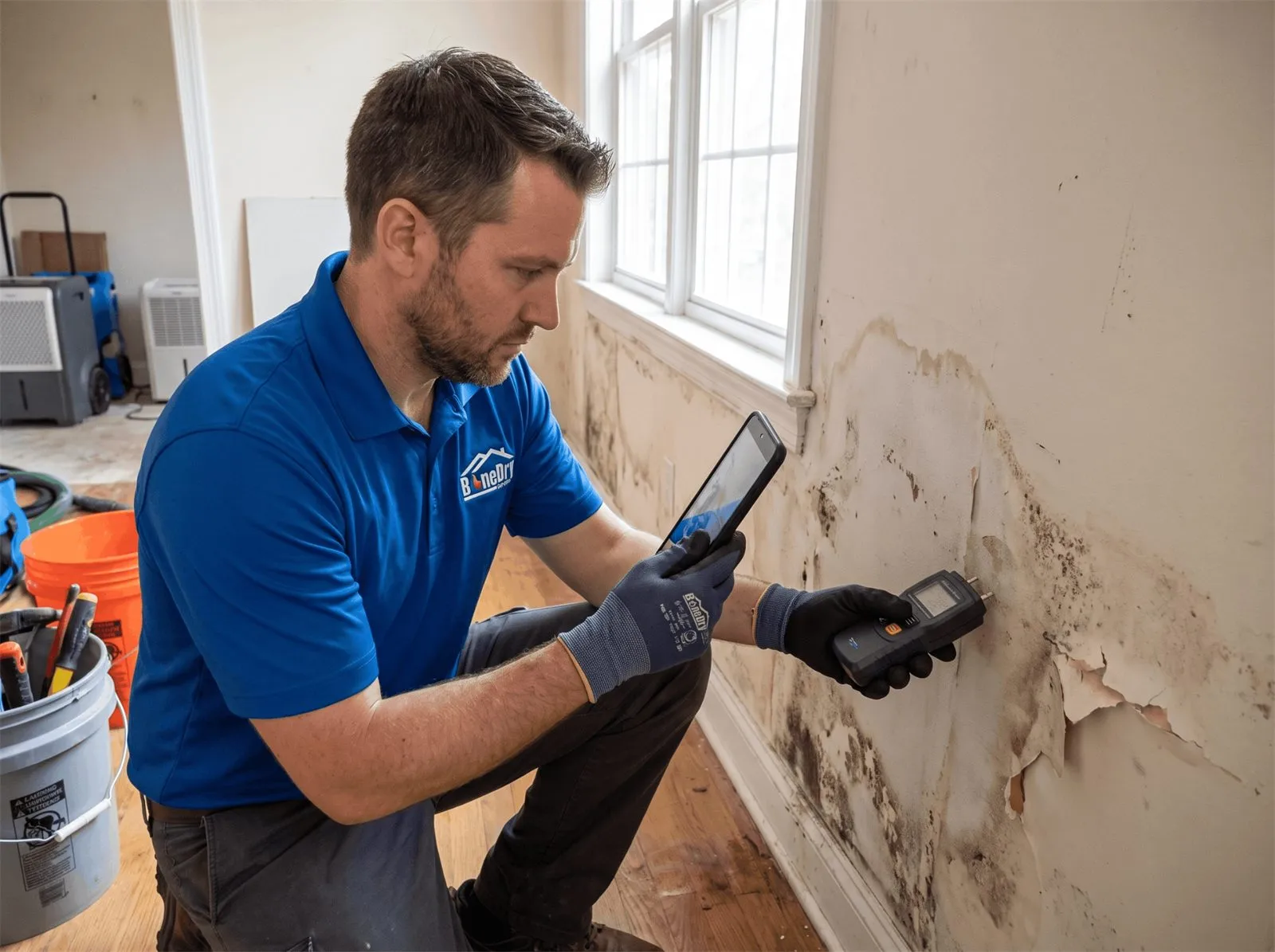
    Restoration pro photographing a water-damaged wall and taking moisture readings in a Denver home.

    Why Large Loss Claims Demand Rigorous Documentation

    The larger the claim, the closer the insurer looks. A modest water loss may be approved with minimal back-and-forth, but a large loss, with extensive structural drying, multiple affected rooms, and significant material replacement, invites detailed review. The insurer needs to understand exactly what was damaged, why the work performed was necessary, and how the costs were justified. Without a rigorous record, that review turns into a series of questions, delays, and disputes.

    Documentation is what answers those questions before they are asked. A complete record establishes the full scope of the damage, demonstrates that the restoration methods were appropriate and standards-based, and itemizes the work in a form the adjuster can readily evaluate. When the evidence is clear and comprehensive, there is little left to contest, the claim can move forward on facts rather than negotiation.

    For the homeowner, this is the difference between a claim that resolves smoothly and one that drags on for months. Poor documentation invites the insurer to question the scope, dispute individual line items, or delay while it seeks more information. Strong documentation removes that friction, protecting both the timeline and the amount ultimately recovered. In a large loss, where the stakes are high, that record is the homeowner's most valuable asset in the process.

    More Scope Means More Scrutiny

    A large loss touches more of the home, more rooms, more materials, more equipment, and a longer timeline, and every one of those elements is something the insurer will examine. That expanded scope naturally draws more scrutiny, because there is simply more to justify. Comprehensive documentation meets that scrutiny head-on, accounting for each affected area and each step of the work so nothing is left open to question.

    Documentation as the Homeowner's Evidence

    In a claim, the burden of demonstrating the loss falls largely on the policyholder, and memory or rough estimates are not enough for a large one. A professional record of timestamped photos, moisture readings, and itemized scope becomes the homeowner's evidence, the objective proof of what happened and what it took to make it right. With that evidence in hand, the homeowner is negotiating from documented fact rather than assertion.

    The Anatomy of a Professional Restoration Report

    A thorough restoration report is built from several distinct records, each capturing a different dimension of the loss. Together they form the complete picture an adjuster needs. These are the components that make up strong water damage restoration documentation:

    • Timestamped photos and video: Visual evidence of the damage from multiple angles, captured before and throughout the work to show the loss and the progress of restoration.
    • Moisture logs and readings: Daily moisture measurements that map the extent of saturation and demonstrate the drying progress objectively over time.
    • Detailed scope of work: An itemized account of every task performed and why it was necessary, tied to the damage it addressed.
    • Equipment and drying records: A log of the air movers, dehumidifiers, and other equipment used, and how long each ran, to justify the drying approach.
    • Itemized contents inventory: A record of affected belongings, noting what was salvageable and what was a total loss, to support the personal-property portion of the claim.

    Each record reinforces the others, and the contents inventory in particular often carries significant weight in a high-value home. Our contents restoration teams document affected belongings carefully as they work, so the personal-property side of the claim is supported by the same rigor as the structure itself.

    How Standards-Based Documentation Strengthens Your Claim

    Documentation carries the most weight when it reflects recognized industry standards rather than one company's opinion. Insurers and adjusters work within established frameworks for what proper restoration requires, and a record built on those same standards speaks their language. It demonstrates that the drying targets were legitimate, the methods were appropriate, and the scope was justified, not inflated.

    This is why objective, measurable data matters so much. Moisture readings that show materials were genuinely saturated and then verifiably dried, equipment logs that match the scale of the loss, and a scope tied directly to documented damage all remove subjectivity from the claim. The adjuster is not being asked to take anyone's word for it; the numbers and images make the case on their own.

    The result is a claim grounded in evidence rather than argument. When the documentation is thorough and standards-based, the review is faster, the disputes are fewer, and the settlement more fully reflects the true cost of the loss. That rigor is part of what defines professional water damage restoration, and it is one of the clearest ways a quality restoration company protects the homeowner beyond the physical work.

    Objective Data Versus Estimates

    There is a world of difference between telling an insurer a room was “very wet” and showing a log of daily moisture readings that quantify the saturation and its decline. Objective, measured data replaces subjective description, and it is far harder to dispute. A claim supported by numbers, readings, and timestamped images rests on evidence the adjuster can verify, which is exactly what accelerates approval.

    Working Directly With Adjusters

    Documentation works best when it is shared in close coordination with the insurer's adjuster. A restoration company that communicates directly with the adjuster, providing the records, walking through the scope, and answering questions with evidence, keeps everyone aligned and prevents the misunderstandings that stall claims. That direct line, backed by a thorough record, is what turns a potentially adversarial process into a straightforward one.

    A detailed moisture log and photo report used to support a large loss claim during water damage restoration in Colorado.

    What Thorough Water Damage Documentation Protects

    Rigorous documentation delivers value that lasts well beyond the initial cleanup, protecting the homeowner's claim, timeline, and recovery. The benefits of thorough water damage restoration documentation include:

    • Faster claim approval: A complete, evidence-based record answers the insurer's questions up front, reducing back-and-forth and speeding approval.
    • Fuller recovery of costs: Itemized, justified documentation supports the full scope of the loss, helping the settlement reflect its true cost.
    • Fewer disputes and delays: Objective data leaves little to contest, minimizing the disputes that stall large claims for months.
    • Peace of mind: Knowing the loss is fully and professionally documented lets the homeowner focus on recovery rather than fighting the claim.

    Large losses frequently arrive with a broader disaster, a major storm, a catastrophic failure, that affects far more than one system. When the loss is part of a wider event, our storm damage restoration teams document and address the full scope together, so the entire claim is supported by one thorough, consistent record.

    📞 Call BoneDry Services at (303) 276-4163 today for water damage restoration and thorough large-loss documentation. Based in Wheat Ridge, we serve Denver, Boulder, Aurora, Lakewood, and communities across the Front Range.

    Frequently Asked Questions

    What documentation do I need for a water damage insurance claim?

    A strong claim is supported by timestamped photos and video of the damage, daily moisture readings that map the saturation and drying, an itemized scope of the work performed and why it was necessary, equipment and drying logs, and an inventory of affected belongings noting what was salvageable. Together these records establish the full extent of the loss and justify the restoration. A professional restoration company assembles this documentation as part of the job, giving you the evidence your insurer needs.

    How does documentation speed up an insurance claim?

    Documentation speeds a claim by answering the insurer's questions before they are asked. A complete, evidence-based record establishes the scope, justifies the methods, and itemizes the costs, so the adjuster can review and approve the claim on facts rather than requesting more information or disputing individual items. Objective data like moisture logs and timestamped photos is difficult to contest, which removes the friction that stalls large losses. The result is fewer delays and a faster path to approval.

    What is a large loss claim?

    A large loss claim is an insurance claim involving significant damage and cost, typically extensive structural drying, multiple affected rooms or floors, substantial material replacement, and a longer restoration timeline. Because far more scope and money are involved than in a routine claim, insurers scrutinize large losses closely, examining each affected area and each step of the work. That heightened review is exactly why thorough, standards-based documentation is so important for a large loss.

    Does BoneDry work directly with my insurance company?

    Yes. We work directly with insurance companies and adjusters, providing the detailed documentation, photos, moisture logs, and itemized scope, that supports the claim and keeps it moving. Communicating directly with your adjuster and backing the scope with objective evidence keeps everyone aligned and helps prevent the misunderstandings that delay large claims. Our goal is to make the claims process as smooth as possible so you can focus on getting your home restored rather than managing paperwork.
    Recent Articles

    08 Sep 2026
    7 minutes

    Asset Documentation: How Professional Reports Speed Up Large Loss Claims

    In a large water loss, documentation is your strongest evidence. Learn how moisture logs, photos, and itemized scope get claims approved faster.

    Water Damage Restoration in Denver: How Documentation Speeds Large Loss Claims

    When a major water loss hits a high-value home, water damage restoration is only half the battle. The other half plays out on paper, in the claim, and it is where large losses so often stall. Thorough documentation is what keeps that process moving, and it is a defining part of professional water damage restoration. Detailed moisture logs, photographs, and itemized records are the homeowner's strongest evidence, turning a slow, contested claim into one an adjuster can review and approve with confidence.

    A large loss involves more scope, more materials, and more money than a routine claim, which means more scrutiny from the insurer. Every affected room, every saturated material, and every step of the drying process has to be substantiated. At BoneDry Services, we treat documentation as a core deliverable of the restoration itself, not an afterthought, because the quality of that record often determines how quickly and how fully a claim is paid. This guide explains what proper documentation includes, why it matters so much for large losses, and how it protects the homeowner throughout the claim.

    Restoration pro photographing a water-damaged wall and taking moisture readings in a Denver home.

    Why Large Loss Claims Demand Rigorous Documentation

    The larger the claim, the closer the insurer looks. A modest water loss may be approved with minimal back-and-forth, but a large loss, with extensive structural drying, multiple affected rooms, and significant material replacement, invites detailed review. The insurer needs to understand exactly what was damaged, why the work performed was necessary, and how the costs were justified. Without a rigorous record, that review turns into a series of questions, delays, and disputes.

    Documentation is what answers those questions before they are asked. A complete record establishes the full scope of the damage, demonstrates that the restoration methods were appropriate and standards-based, and itemizes the work in a form the adjuster can readily evaluate. When the evidence is clear and comprehensive, there is little left to contest, the claim can move forward on facts rather than negotiation.

    For the homeowner, this is the difference between a claim that resolves smoothly and one that drags on for months. Poor documentation invites the insurer to question the scope, dispute individual line items, or delay while it seeks more information. Strong documentation removes that friction, protecting both the timeline and the amount ultimately recovered. In a large loss, where the stakes are high, that record is the homeowner's most valuable asset in the process.

    More Scope Means More Scrutiny

    A large loss touches more of the home, more rooms, more materials, more equipment, and a longer timeline, and every one of those elements is something the insurer will examine. That expanded scope naturally draws more scrutiny, because there is simply more to justify. Comprehensive documentation meets that scrutiny head-on, accounting for each affected area and each step of the work so nothing is left open to question.

    Documentation as the Homeowner's Evidence

    In a claim, the burden of demonstrating the loss falls largely on the policyholder, and memory or rough estimates are not enough for a large one. A professional record of timestamped photos, moisture readings, and itemized scope becomes the homeowner's evidence, the objective proof of what happened and what it took to make it right. With that evidence in hand, the homeowner is negotiating from documented fact rather than assertion.

    The Anatomy of a Professional Restoration Report

    A thorough restoration report is built from several distinct records, each capturing a different dimension of the loss. Together they form the complete picture an adjuster needs. These are the components that make up strong water damage restoration documentation:

    • Timestamped photos and video: Visual evidence of the damage from multiple angles, captured before and throughout the work to show the loss and the progress of restoration.
    • Moisture logs and readings: Daily moisture measurements that map the extent of saturation and demonstrate the drying progress objectively over time.
    • Detailed scope of work: An itemized account of every task performed and why it was necessary, tied to the damage it addressed.
    • Equipment and drying records: A log of the air movers, dehumidifiers, and other equipment used, and how long each ran, to justify the drying approach.
    • Itemized contents inventory: A record of affected belongings, noting what was salvageable and what was a total loss, to support the personal-property portion of the claim.

    Each record reinforces the others, and the contents inventory in particular often carries significant weight in a high-value home. Our contents restoration teams document affected belongings carefully as they work, so the personal-property side of the claim is supported by the same rigor as the structure itself.

    How Standards-Based Documentation Strengthens Your Claim

    Documentation carries the most weight when it reflects recognized industry standards rather than one company's opinion. Insurers and adjusters work within established frameworks for what proper restoration requires, and a record built on those same standards speaks their language. It demonstrates that the drying targets were legitimate, the methods were appropriate, and the scope was justified, not inflated.

    This is why objective, measurable data matters so much. Moisture readings that show materials were genuinely saturated and then verifiably dried, equipment logs that match the scale of the loss, and a scope tied directly to documented damage all remove subjectivity from the claim. The adjuster is not being asked to take anyone's word for it; the numbers and images make the case on their own.

    The result is a claim grounded in evidence rather than argument. When the documentation is thorough and standards-based, the review is faster, the disputes are fewer, and the settlement more fully reflects the true cost of the loss. That rigor is part of what defines professional water damage restoration, and it is one of the clearest ways a quality restoration company protects the homeowner beyond the physical work.

    Objective Data Versus Estimates

    There is a world of difference between telling an insurer a room was “very wet” and showing a log of daily moisture readings that quantify the saturation and its decline. Objective, measured data replaces subjective description, and it is far harder to dispute. A claim supported by numbers, readings, and timestamped images rests on evidence the adjuster can verify, which is exactly what accelerates approval.

    Working Directly With Adjusters

    Documentation works best when it is shared in close coordination with the insurer's adjuster. A restoration company that communicates directly with the adjuster, providing the records, walking through the scope, and answering questions with evidence, keeps everyone aligned and prevents the misunderstandings that stall claims. That direct line, backed by a thorough record, is what turns a potentially adversarial process into a straightforward one.

    A detailed moisture log and photo report used to support a large loss claim during water damage restoration in Colorado.

    What Thorough Water Damage Documentation Protects

    Rigorous documentation delivers value that lasts well beyond the initial cleanup, protecting the homeowner's claim, timeline, and recovery. The benefits of thorough water damage restoration documentation include:

    • Faster claim approval: A complete, evidence-based record answers the insurer's questions up front, reducing back-and-forth and speeding approval.
    • Fuller recovery of costs: Itemized, justified documentation supports the full scope of the loss, helping the settlement reflect its true cost.
    • Fewer disputes and delays: Objective data leaves little to contest, minimizing the disputes that stall large claims for months.
    • Peace of mind: Knowing the loss is fully and professionally documented lets the homeowner focus on recovery rather than fighting the claim.

    Large losses frequently arrive with a broader disaster, a major storm, a catastrophic failure, that affects far more than one system. When the loss is part of a wider event, our storm damage restoration teams document and address the full scope together, so the entire claim is supported by one thorough, consistent record.

    📞 Call BoneDry Services at (303) 276-4163 today for water damage restoration and thorough large-loss documentation. Based in Wheat Ridge, we serve Denver, Boulder, Aurora, Lakewood, and communities across the Front Range.

    Frequently Asked Questions

    What documentation do I need for a water damage insurance claim?

    A strong claim is supported by timestamped photos and video of the damage, daily moisture readings that map the saturation and drying, an itemized scope of the work performed and why it was necessary, equipment and drying logs, and an inventory of affected belongings noting what was salvageable. Together these records establish the full extent of the loss and justify the restoration. A professional restoration company assembles this documentation as part of the job, giving you the evidence your insurer needs.

    How does documentation speed up an insurance claim?

    Documentation speeds a claim by answering the insurer's questions before they are asked. A complete, evidence-based record establishes the scope, justifies the methods, and itemizes the costs, so the adjuster can review and approve the claim on facts rather than requesting more information or disputing individual items. Objective data like moisture logs and timestamped photos is difficult to contest, which removes the friction that stalls large losses. The result is fewer delays and a faster path to approval.

    What is a large loss claim?

    A large loss claim is an insurance claim involving significant damage and cost, typically extensive structural drying, multiple affected rooms or floors, substantial material replacement, and a longer restoration timeline. Because far more scope and money are involved than in a routine claim, insurers scrutinize large losses closely, examining each affected area and each step of the work. That heightened review is exactly why thorough, standards-based documentation is so important for a large loss.

    Does BoneDry work directly with my insurance company?

    Yes. We work directly with insurance companies and adjusters, providing the detailed documentation, photos, moisture logs, and itemized scope, that supports the claim and keeps it moving. Communicating directly with your adjuster and backing the scope with objective evidence keeps everyone aligned and helps prevent the misunderstandings that delay large claims. Our goal is to make the claims process as smooth as possible so you can focus on getting your home restored rather than managing paperwork.
    02 Sep 2026
    8 minutes

    Acoustic Leak Detection: Finding Radiant Floor Leaks Without Demolition

    Radiant floor pinhole leaks hide under the slab. Learn how non-invasive acoustic detection pinpoints them so only a small area needs to be opened.

    Radiant Floor Leak Detection | Water Damage Restoration

    Radiant floor heating is one of the great luxuries of a well-built Colorado home, but a hidden pinhole leak makes it one of the toughest water damage restoration problems a homeowner can face. Warm tile underfoot on a January morning and even heat with no noisy vents come at a price: when a pinhole leak develops in the tubing buried beneath a finished slab, finding it becomes one of the most technically demanding challenges in water damage restoration. Tearing up an entire floor to locate a leak the width of a needle is exactly what a homeowner wants to avoid, and acoustic leak detection is how it can be found without destroying the room to reach it.

    A radiant system circulates warm water through a network of tubing embedded in the slab or beneath the floor. When that tubing develops a pinhole, from corrosion, a manufacturing flaw, or a fastener strike during construction, water escapes into the substrate slowly and invisibly, often for weeks before pressure loss or a warm spot gives it away. At BoneDry Services, we use non-invasive detection technology to pinpoint these hidden leaks precisely, so the repair is surgical rather than destructive. This guide explains how acoustic detection works, why it matters so much for radiant systems, and how it protects both the floor and the structure beneath it.

    A technician using acoustic leak detection equipment on a heated tile floor during water damage restoration in a Colorado home.

    Why Radiant Floor Leaks Are So Hard to Find

    The very quality that makes radiant heat so pleasant, tubing hidden invisibly beneath a finished floor, is what makes a leak so difficult to locate. There is nothing to see. The water does not drip from a ceiling or pool in an obvious spot; it seeps into the concrete or subfloor directly around the pinhole and spreads through the substrate, hidden under tile, stone, or hardwood that gives no clue where the failure sits.

    A pinhole leak also reveals itself slowly. Because the opening is tiny and the surrounding slab absorbs the escaping water, weeks can pass before the symptoms surface: a persistent warm spot on the floor, an unexplained drop in system pressure, a boiler that cycles more often than it should, or a gradual rise in the water bill. By the time these signs appear, water has usually been saturating the substrate for some time, quietly setting up the conditions for structural damage and mold.

    This combination of invisibility and slow onset is what makes radiant leaks uniquely challenging. The old approach, exploratory demolition, breaking open sections of floor to hunt for the source, is destructive, expensive, and often misses on the first attempt. Non-invasive detection exists precisely to replace that guesswork with precision, finding the leak before a single tile is lifted.

    Pinhole Leaks Beneath the Slab

    A pinhole is exactly what it sounds like, a microscopic breach in the tubing, far too small to announce itself but more than large enough to saturate a slab over time. Buried in concrete, it releases water directly into the surrounding material, where it wicks outward invisibly. Because the leak is both tiny and hidden, it can persist unnoticed far longer than a visible plumbing failure, which is what makes early, accurate detection so valuable.

    The Hidden Cost of Exploratory Demolition

    The traditional way to find a buried leak is to start breaking open the floor, and in a home with heated stone or wide-plank hardwood, that is a costly gamble. Every exploratory opening damages an expensive finish, and if the first guess is wrong, the damage multiplies with each new hole. Non-invasive detection eliminates that risk entirely by locating the source first, so demolition, if any, is confined to the exact spot that needs repair.

    How Acoustic Leak Detection Works

    Acoustic leak detection is a non-invasive method that finds a hidden leak by listening for it. Water escaping under pressure from a pinhole makes a distinct sound, a faint hiss or rush as it forces through the breach and into the surrounding material. That sound travels through the slab, and highly sensitive equipment can detect and locate it, turning an invisible leak into a pinpointed spot on the floor. It is the same precision-first philosophy we bring to all of our water damage restoration work.

    The process uses specialized acoustic sensors and ground microphones placed on the floor surface. As a technician moves the equipment across the area, the sound of the escaping water grows louder the closer it gets to the source. By methodically comparing the intensity of the sound at different points, the technician triangulates the leak's location to a small, precise area, often within inches, without opening the floor at all.

    Acoustic sensing is frequently paired with complementary methods for confirmation. Thermal imaging can reveal the temperature signature of warm water spreading through the slab, and pressure testing confirms that a leak exists before the search begins. Used together, these tools locate the source with a confidence that guesswork can never match, so any repair, and the structural drying and dehumidification that follows, is targeted exactly where it is needed.

    Listening for Water Under Pressure

    The principle behind acoustic detection is that a pressurized leak is never truly silent. As water forces through a pinhole, it generates a faint but distinct acoustic signature that carries through the slab. Sensitive ground microphones pick up that sound where human hearing cannot, and its rising and falling intensity across the floor is what guides the technician to the exact point of failure, all without a single invasive cut.

    Pinpointing the Source Without Demolition

    The payoff of acoustic detection is precision. Rather than opening large sections of floor and hoping, the technician identifies a small target area, often just inches across, where the leak actually sits. Any repair is then confined to that spot, sparing the surrounding tile, stone, or hardwood. For a homeowner, that is the difference between replacing a whole floor and repairing a single, well-defined point.

    The Detection and Restoration Process

    Locating and resolving a radiant-floor leak follows a careful sequence that prioritizes precision before any repair or drying begins. This is the order we follow on a typical radiant-leak water damage restoration:

    1. Confirm the leak with pressure testing: The system is pressure-tested to verify a leak exists and to establish that the symptoms trace to the radiant tubing rather than another source.
    2. Locate the source acoustically: Acoustic sensors and, where helpful, thermal imaging pinpoint the leak to a small, precise area without opening the floor.
    3. Access the leak with minimal disruption: Only the small, identified section of flooring is opened, sparing the surrounding finished surfaces from unnecessary damage.
    4. Dry the saturated substrate: The concrete or subfloor saturated by the leak is thoroughly dried, since trapped moisture invites rot and mold if left in place.
    5. Verify dryness and restore the floor: Moisture levels are confirmed to be back to normal before the opened section is restored, so the repair is sound and lasting.

    Following this sequence ensures the leak is found precisely, the hidden moisture is fully removed rather than sealed in, and the floor is restored only where necessary, protecting both the finish and the structure beneath it.

    Drying equipment removing moisture from a slab after acoustic leak detection during water damage restoration in Colorado.

    What Precision Leak Detection Protects

    Finding a radiant-floor leak accurately protects far more than the tubing itself. Non-invasive water damage restoration safeguards the floor, the structure, and the homeowner's budget in ways exploratory demolition cannot. The benefits include:

    • Preserved luxury flooring: Pinpointing the leak means only a small area is opened, sparing expensive heated tile, stone, or hardwood from needless removal.
    • Prevented structural damage: Finding and drying the leak early stops prolonged saturation from weakening the slab and subfloor beneath the finish.
    • Reduced mold risk: Removing the hidden moisture promptly denies mold the damp, concealed conditions it needs to establish and spread.
    • Lower overall cost: Surgical detection and repair avoid the compounding expense of demolishing and rebuilding large sections of finished floor.

    Because a slow radiant leak often saturates flooring and nearby belongings before it is found, a complete recovery may reach beyond the tubing itself. When water has affected furnishings or stored items in the area, our contents restoration teams address those alongside the structural drying so the whole space is made right.

    📞 Call BoneDry Services at (303) 276-4163 today for water damage restoration and non-invasive leak detection across the Denver area.

    Frequently Asked Questions

    How do you find a leak in a radiant floor heating system?

    The most effective way is non-invasive acoustic leak detection, which locates the leak by listening for the faint sound of water escaping under pressure through the slab. Sensitive ground microphones detect that signature and, by comparing its intensity across the floor, pinpoint the source to a small area, often within inches. Thermal imaging and pressure testing are frequently used alongside it for confirmation. Together these tools find the leak precisely, so the floor can be repaired without exploratory demolition.

    What are the signs of a leak in radiant floor heating?

    The most common signs are a persistent unexplained warm spot on the floor, a drop in the system's water pressure, a boiler that cycles on more frequently than usual, and a gradual, unexplained increase in the water bill. A musty smell or discoloration can appear if the leak has saturated the substrate for a while. Because these symptoms develop slowly, they often surface only after water has been escaping for some time, which is why prompt professional detection matters once you notice them.

    Can a radiant floor leak be fixed without removing the whole floor?

    In most cases, yes. That is the central advantage of acoustic leak detection: by pinpointing the leak to a small, precise area before any work begins, the repair can be confined to just that spot rather than tearing up the entire floor. Only the identified section is opened, the leak is repaired, the substrate is dried, and that area is restored. This surgical approach spares the surrounding heated tile, stone, or hardwood and dramatically lowers both the cost and the disruption.

    Is a radiant floor leak an emergency?

    It should be treated as urgent even though it develops slowly. A pinhole leak continuously saturates the slab and subfloor, and prolonged moisture can weaken the structure and create ideal conditions for mold behind and beneath finished surfaces. The longer it goes unaddressed, the greater the hidden damage and the more extensive the eventual repair. Prompt detection and drying limit that damage, so it is best to have the system evaluated as soon as the warning signs appear rather than waiting.

    25 Aug 2026
    9 minutes

    HVAC Puff-Back: Why Oily Furnace Soot Needs Specialized Fire Damage Repair

    A furnace puff-back sprays greasy, acidic soot through your home. Learn why household cleaning makes it worse and how professional remediation removes it.

    Fire Damage Repair Colorado: HVAC Puff-Back Cleanup

    Not every soot disaster starts with a fire, yet fire damage repair in Colorado is exactly what it demands. One of the most damaging and least understood events a Colorado homeowner can face is a furnace “puff-back”, a sudden discharge of oily, black soot from a malfunctioning heating system that coats walls, ceilings, furnishings, and artwork in a sticky film. The fire damage repair required to undo it is unlike ordinary cleaning, because puff-back soot is greasy, acidic, and clings to every surface it touches.

    A puff-back happens when unburned fuel accumulates in a heating system's combustion chamber and then ignites all at once, sending a pressurized cloud of oily residue through the ductwork and out into the living space. Unlike the dry soot of a wood fire, this residue is petroleum-based, smeary, corrosive, and stubbornly difficult to remove. At BoneDry Services, we treat puff-back events as a specialized form of soot remediation, because wiping at oily residue with ordinary cleaners only smears it deeper and drives it into porous finishes. This guide explains why puff-backs happen, why the soot is so damaging, and what proper remediation actually involves.

    Oily soot streaks radiating from an HVAC vent after a furnace puff-back.

    What a Furnace Puff-Back Is and Why It Happens

    A puff-back is a small explosion inside a heating system. In oil-fired furnaces and boilers in particular, fuel that fails to ignite on time can pool inside the combustion chamber. When ignition finally occurs, that accumulated fuel combusts in a single burst, and the pressure blows soot and oily residue backward through the system and out through every vent and register in the home.

    The mechanical causes usually trace back to maintenance and system condition. A dirty or misaligned burner, a faulty ignition sequence, a cracked chamber, or delayed fuel delivery can all set up the conditions for a puff-back. Because these issues develop gradually, the event itself often arrives without warning, the furnace fires as usual one morning and discharges a cloud of black residue through the house instead of clean heat.

    What makes a puff-back especially insidious is that the source is the very system meant to distribute air throughout the home. The ductwork that normally carries warm air becomes the delivery mechanism for soot, spreading oily particulate into rooms far from the furnace itself. A single failure in the basement can leave a film on surfaces on the top floor, which is why the damage is so widespread and why remediation has to address the whole system, not just the room where the furnace sits.

    Oil-Fired Systems and Combustion Failure

    Oil-fired heating systems carry the highest puff-back risk because unburned oil is exactly what pools and then ignites in a burst. When the burner misfires or delivery is delayed, atomized fuel collects in the chamber until something sparks it. The resulting combustion is far dirtier than normal operation, producing the greasy, carbon-heavy soot that defines a puff-back. Regular professional servicing of the burner and ignition system is the primary defense against it.

    Why the Soot Is Oily and Sticky

    Puff-back residue is petroleum-based, which sets it apart from the dry, powdery soot of a wood fire. It carries an oily, adhesive quality that makes it cling tenaciously to walls, ceilings, fabrics, and electronics, and it smears rather than lifts when wiped. That stickiness is why household cleaning almost always makes it worse, the residue spreads and embeds instead of coming away, forcing the specialized degreasing approach that professional remediation uses.

    Why Oily Soot Requires Specialized Degreasers

    The defining challenge of puff-back fire damage repair is the chemistry of the residue. Because the soot is oil-based, it does not respond to water or standard cleaning products the way dry soot might. Attempting to clean it conventionally spreads a greasy smear across the surface and pushes the residue deeper into porous materials, turning a difficult cleanup into a permanent stain.

    Effective removal relies on solvents and degreasing agents specifically formulated to break down oily, carbon-based residue. These products dissolve the bond between the soot and the surface so the residue can be lifted away rather than smeared around, and they are applied in a controlled sequence matched to each material, what is safe for a painted wall differs from what is safe for delicate artwork or electronics. This is precise, methodical work, not general scrubbing.

    The stakes are highest for the contents of the home. Oily soot settles on upholstery, clothing, books, and valuables, and the wrong cleaning approach can ruin items that specialized techniques could have saved. This is why our contents restoration teams handle affected belongings with material-specific methods, treating soft goods, hard surfaces, and fragile items each according to what will actually lift the residue without causing further harm.

    Why Household Cleaning Makes It Worse

    Reaching for a sponge and all-purpose cleaner is the instinctive response to soot on the walls, and with puff-back residue it is exactly the wrong move. Because the soot is oily, water-based cleaning smears it into a wider, greasier stain and works it into the surface. On porous materials like flat-painted drywall, that can set the residue permanently. The oily nature of the soot is precisely what demands solvents rather than soap and water.

    Protecting Walls, Art, and Electronics

    Puff-back soot does not discriminate, settling on painted walls, framed art, and sensitive electronics alike, and each requires a different, careful approach. Walls need controlled degreasing that lifts residue without damaging the finish; artwork and delicate items need gentle, material-specific treatment; electronics need specialized cleaning before they are powered on, since oily soot inside a device can cause damage or failure. Matching the method to the material is what separates professional remediation from a well-meaning mess.

    The Puff-Back Fire Damage Repair Process

    Remediating a puff-back follows a deliberate sequence built around containing the oily residue, degreasing surfaces correctly, and clearing the system that spread it. Skipping steps leaves greasy film behind to smear, stain, and hold odor. This is the order we follow on a typical puff-back fire damage repair:

    1. Assess the spread and shut down the system: The extent of the soot is evaluated throughout the home, and the heating system is shut down so it stops circulating residue.
    2. Contain the affected areas: Work zones are contained so oily soot disturbed during cleaning cannot smear onto unaffected rooms and surfaces.
    3. Degrease surfaces with specialized solvents: Walls, ceilings, and hard surfaces are treated with degreasing agents matched to each material to lift the residue rather than spread it.
    4. Clean the ductwork and contents: The HVAC system is cleaned so it stops redistributing soot, and affected belongings are treated with material-specific methods.
    5. Deodorize and purify the air: Residual oily-smoke odor is neutralized at its source and the air is scrubbed to capture particles freed during cleaning.

    Following this sequence ensures the greasy residue is actually removed rather than smeared and embedded, and that the ductwork responsible for spreading it is cleared so the problem does not recur every time the heat comes on.

    A technician using specialized degreasers during puff-back fire damage repair in a Colorado home.

    What Proper Puff-Back Remediation Protects

    Handling a puff-back correctly protects far more than the appearance of the walls. Thorough fire damage repair safeguards the home's surfaces, air, contents, and value in ways a surface wipe-down cannot. The benefits include:

    • Preserved finishes and belongings: Correct degreasing lifts oily soot from walls, art, and furnishings that improper cleaning would stain permanently.
    • Cleaner indoor air: Clearing soot from the ductwork stops the system from recirculating oily particulate into the air the household breathes.
    • Permanent odor removal: Neutralizing the greasy-smoke smell at its source resolves the odor for good instead of masking it temporarily.
    • Protected home value: A fully remediated home with clean air and finishes preserves its condition and value, with documentation that supports an insurance claim.

    Because oily soot binds odor so tightly, the smell is often the last and most stubborn part of a puff-back to resolve. When it lingers after surfaces are clean, our odor removal work targets the particles holding the smell rather than covering it, so the home is genuinely clear rather than merely masked.

    📞 Call BoneDry Services at (303) 276-4163 today for professional fire damage repair and furnace puff-back cleanup in Denver, Aurora, Boulder, Lakewood, Arvada, Centennial, and surrounding Front Range communities.

    Frequently Asked Questions

    What causes a furnace puff-back?

    A puff-back is caused by unburned fuel accumulating in a heating system's combustion chamber and then igniting all at once. In oil-fired furnaces and boilers, a dirty or misaligned burner, a faulty ignition sequence, delayed fuel delivery, or a cracked chamber can let fuel pool until it combusts in a burst, blowing oily soot back through the ductwork. Because these issues build up gradually, regular professional servicing of the burner and ignition system is the best way to prevent one.

    Can I clean puff-back soot myself?

    It is strongly discouraged. Puff-back soot is oily and petroleum-based, so water and standard cleaners smear it into a wider stain and push it deeper into porous surfaces, often setting it permanently. It also spreads easily to rooms far from the furnace and settles inside electronics. Effective removal requires specialized degreasing solvents applied by material, plus cleaning of the ductwork that spread it. Professional remediation lifts the residue rather than embedding it, protecting your finishes and belongings.

    Is puff-back soot dangerous to my health?

    Puff-back residue is an oily, carbon-based particulate that can irritate the respiratory system and settle throughout the home's air and ductwork, so it is not something to live with unaddressed. Because the heating system distributes the soot widely and continues recirculating it every time it runs, the exposure can persist long after the event. Having the system and surfaces professionally cleaned, and the air scrubbed, is the safest way to return the home to a healthy condition.

    Will my HVAC system spread the soot further?

    Yes, and that is one of the defining problems of a puff-back. The residue is discharged through the ductwork, so the HVAC system is both the source of the spread and a reservoir of trapped soot. Every time the system runs afterward, it can pick up settled particles and redistribute them through the home, reintroducing both soot and odor. This is why proper remediation always includes cleaning the ductwork and components, not just the visible surfaces in the affected rooms.

    18 Aug 2026
    6 minutes

    The Autumn Audit: Preparing Your Colorado Estate for the First Freeze

    Foundation vents, crawl spaces, and exterior plumbing cause most first-freeze failures. Learn the fall audit that protects your estate before winter hits.

    Colorado Emergency Restoration: Fall Home Audit to Prevent Winter Water Damage

    As the aspens turn and the first cold nights arrive, Colorado's most beautiful season is also its most deceptive, and it is when Colorado emergency restoration crews get their first winter calls. The mild days can lull homeowners into a false sense of security right up until the first hard flash freeze, when an overlooked foundation vent or an un-drained exterior spigot becomes the reason a finished basement floods. Smart Colorado emergency restoration starts long before the emergency, with a deliberate autumn audit of the vulnerable points around your property.

    For high-end homes and mountain estates, the exposure is greater, not smaller. Expansive landscaping, exterior kitchens, irrigation systems, crawl spaces, and long runs of external plumbing all create points where water can sit, freeze, expand, and force its way into the structure. At BoneDry Services, we respond to these failures every winter, and nearly all of them trace back to something that could have been caught during a simple fall walkthrough. This guide is that walkthrough: the exterior points to inspect, why each one matters, and how preparing now prevents the first freeze from becoming your first claim.

    colorado-emergency-restoration-autumn-audit.jpg
    Colorado estate prepped for winter during a fall audit for emergency restoration before the first freeze.

    Why the First Flash Freeze Causes the Most Winter Water Damage

    Colorado's autumn is defined by its swings. A seventy-degree afternoon can drop below freezing overnight, and it is that sudden first plunge, not the deep cold of January, that catches homes unprepared. By midwinter, most systems have already been winterized; the danger window is the transition, when water is still sitting in places it should have been cleared from.

    The physics are simple and unforgiving. Water expands as it freezes, and when it does so inside a pipe, a hose bib, or a saturated foundation crack, it exerts enormous pressure on whatever contains it. A spigot left connected to a garden hose traps water against the valve, where it freezes, expands, and splits the pipe behind the wall, often without any visible sign until the thaw sends water pouring into the structure. The failure happens in the cold; the flood arrives with the warm-up.

    This delayed reveal is what makes the first freeze so costly. Homeowners assume that because nothing leaked during the cold snap, nothing broke. Then the temperature rises, the ice inside the cracked pipe melts, and water escapes behind finished walls and under flooring for hours or days before anyone notices. An autumn audit closes that window by removing the trapped water before it ever has the chance to freeze.

    The Danger of Trapped Water

    Any place water can pool and sit is a place it can freeze. Exterior spigots with hoses attached, un-drained irrigation lines, low spots in landscape drainage, and clogged gutters that hold standing water all become expansion points once the temperature drops. The goal of the audit is to find every one of these reservoirs and drain, disconnect, or redirect them before the cold arrives.

    Why Estates Face Greater Exposure

    Larger properties simply have more of everything: more exterior plumbing, more irrigation zones, more square footage of foundation and crawl space, and more elaborate landscaping that can channel water toward the home. Each addition is another potential failure point. The upside is that a methodical audit scales too: knowing where these vulnerabilities cluster lets a homeowner protect even a sprawling estate with a single focused inspection each fall.

    Foundation Vents and Crawl Spaces: The Overlooked Entry Point

    Among the most commonly neglected features in a fall audit are foundation vents and the crawl spaces behind them. These openings are designed to manage airflow and moisture beneath the home, but left unmanaged through winter they can allow frigid air to reach unprotected pipes, or trap cold moisture against the structure. Addressing them is a core part of the proactive work that prevents the need for structural drying and dehumidification later.

    A crawl space is effectively a small, hidden basement, and it holds the same risks. Plumbing runs through it, moisture collects in it, and cold air infiltrates it through open vents. When the first freeze hits, exposed pipes in an unsealed crawl space are among the first to fail, precisely because they are out of sight and rarely insulated to the same standard as the rest of the home. The damage then spreads upward into the living space above.

    The autumn audit treats the crawl space as a priority, not an afterthought. Vents are checked and managed for the season, exposed pipes are identified and insulated, and any standing moisture is noted and addressed. In a mountain estate, where crawl spaces can be extensive and pipe runs long, this single step often prevents the most expensive and hardest-to-detect winter failures.

    Managing Vents Before the Freeze

    Foundation vents need a deliberate seasonal strategy. Left fully open, they invite freezing air directly onto crawl-space plumbing; sealed incorrectly, they can trap damaging moisture. The audit is the moment to set them correctly for winter and confirm that any automatic vent covers are functioning, so the crawl space stays protected without becoming a moisture trap.

    Insulating Exposed Crawl-Space Plumbing

    Pipes running through a crawl space are far more exposed than those inside heated walls. Identifying and insulating them during the audit, with attention to the runs nearest the vents and exterior walls, dramatically reduces the risk of a freeze-and-burst. It is inexpensive, straightforward work in the fall, and it prevents a failure that is both costly and difficult to reach once winter has set in.

    The External Plumbing and Landscaping Checklist

    Beyond the crawl space, the exterior of the home holds a series of predictable freeze points. Walking them in a deliberate order each fall ensures none is overlooked. These are the exterior items an autumn audit should always cover:

    • Exterior spigots and hose bibs: Disconnect every garden hose, drain the spigots, and shut off interior valves to any exterior lines so no water is left to freeze against the valve.
    • Irrigation and sprinkler systems: Have the system professionally blown out so no water remains in the underground lines, valves, or backflow preventer to expand and crack.
    • Gutters and downspouts: Clear leaves and debris so meltwater drains freely instead of pooling, freezing, and forcing water back under the roof edge or against the foundation.
    • Grading and drainage: Confirm the soil still slopes away from the foundation and that landscape low spots aren't channeling water toward the home before it freezes.
    • Exterior kitchens and water features: Drain and winterize outdoor sinks, fountains, and pool equipment, which are easy to forget and expensive to repair after a freeze.

    Worked through methodically, this checklist removes the standing water and exposed lines that cause the overwhelming majority of first-freeze failures. On a large property it may take an afternoon; that afternoon is far cheaper than the alternative.

    What a Proactive Autumn Audit Protects

    A fall audit is preventative by design, and its value shows up as the damage that never happens. Approaching the season this way protects the home in several tangible ways, and keeps professional water damage restoration as a safety net rather than a certainty. The benefits include:

    • Prevented burst pipes: Draining and insulating vulnerable lines removes the trapped water that freezes, expands, and splits pipes behind walls.
    • Protected finished spaces: Stopping a freeze failure at its source spares finished basements, flooring, and belowgrade living areas from hidden flooding.
    • Lower emergency risk: A prepared home is far less likely to need a middle-of-the-night emergency response during the first hard freeze of the season.
    • Preserved property value: Avoiding water intrusion protects the structure, finishes, and long-term condition of a high-value home.
    A technician draining an exterior spigot during an autumn audit, a key Colorado emergency restoration prevention step before the first freeze.

    When a freeze does slip past even a careful audit, response time is everything. As Colorado's largest privately owned, family-operated restoration company, storm damage restoration and full emergency crews are ready around the clock across the Front Range and mountain communities.

    📞 Call BoneDry Services at (303) 276-4163 today for Colorado emergency restoration and proactive winter preparation across Denver and the surrounding mountain communities.

    Frequently Asked Questions

    When should I winterize my home in Colorado?

    In most of Colorado, the exterior audit should be complete by late September or early October, before the first hard overnight freeze. Because autumn temperatures swing sharply, it's safest to disconnect hoses, drain spigots, and schedule an irrigation blowout as soon as nighttime lows begin approaching freezing. Mountain properties at higher elevations should aim earlier, since their first freeze arrives sooner. The goal is to finish the work while the weather is still mild rather than racing an incoming cold snap.

    What is the most common cause of winter water damage?

    The most common cause is a frozen and burst pipe, and the single biggest culprit is an exterior spigot left connected to a garden hose. The hose traps water against the valve, where it freezes, expands, and cracks the pipe behind the wall. Un-drained irrigation lines and exposed crawl-space plumbing are close behind. Nearly all of these failures are preventable with a simple fall audit, which is why disconnecting hoses and draining exterior lines matters so much.

    Do foundation vents need to be closed in winter?

    Foundation vents need a deliberate seasonal setting rather than simply being left open or shut. Left fully open through winter, they can allow frigid air to reach unprotected crawl-space pipes; sealed incorrectly, they can trap damaging moisture beneath the home. The right approach depends on your crawl space and whether pipes there are insulated. Setting the vents correctly and insulating exposed plumbing during the fall audit is what keeps the space protected without creating a new moisture problem.

    How fast can water damage happen from a burst pipe?

    Very fast. A burst supply line can release a large volume of water in a short time, and because first-freeze failures often occur behind walls or in crawl spaces, the water can spread through the structure for hours before anyone notices, especially if the home is unoccupied. This is why prevention matters so much and why rapid emergency response is critical once a burst is discovered: the sooner the water is stopped and extraction begins, the less structural damage and mold risk results.

    Contact Us

    Get Immediate Help

    We’re available 24/7. Our team responds quickly and handles everything with care and discretion.
    orange user icon
    orange envelope icon
    orange phone vector
    orange 24/7 icon
    orange envelope icon
    Thank you! Your submission has been received!
    Oops! Something went wrong while submitting the form.

    Lead Paint Removal

    Fire Damage Restoration

    Biohazard Cleanup

    Sewage Cleanup

    Emergency Board-Up

    Structural Drying & Dehumidification

    Contents Restoration

    Asbestos Abatement

    Odor Removal

    24/7 Water Damage Restoration

    Mold Removal & Remediation

    Storm Damage Restoration