


Fire and smoke damage restoration and how to clean up a home after a winter fire
Winter in Colorado brings a unique set of fire risks. From overtaxed space heaters and chimney flare-ups to holiday accidents, a house fire can happen when you expect it least. Once the flames are out, the real challenge begins: dealing with the aftermath of smoke, soot, and freezing temperatures that complicate the recovery process.
Cleaning up after a winter fire requires more than just soap and water. It involves specialized structural cleaning, hazardous soot removal, and aggressive odor neutralization to make your home livable again.
This guide covers the essential steps for successful fire and smoke damage restoration and how to protect your property during a cold-weather recovery.
Structural Fire and Smoke Damage Restoration
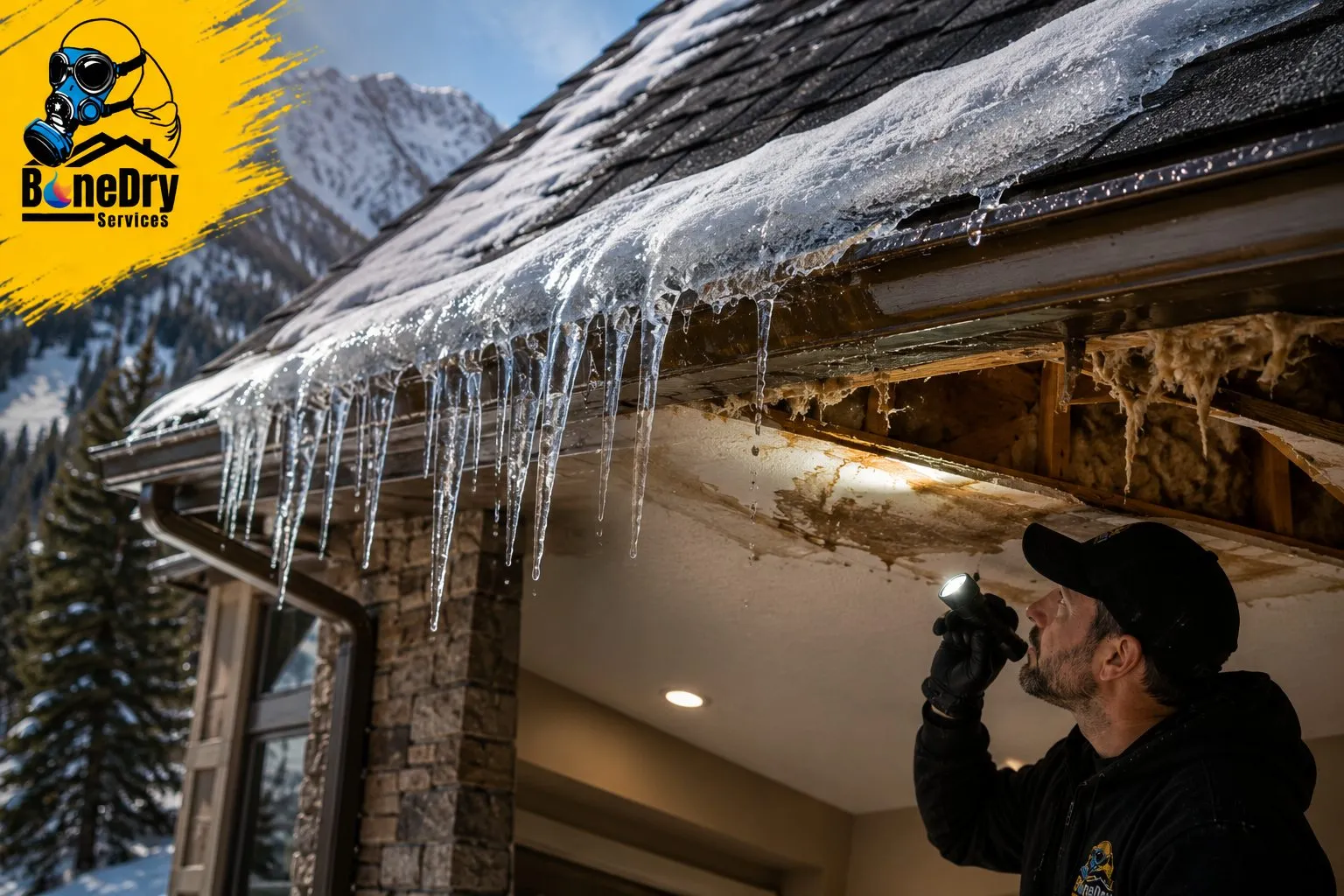
When a fire occurs in the winter, the structural integrity of your home is the first priority. Fire weakens wooden beams and drywall, but in Colorado, the cold adds a secondary threat. If water was used to extinguish the flames, it can quickly freeze inside your walls, leading to cracked foundations.
Professional restoration involves removing charred debris and assessing the "bones" of the house. Technicians use thermal imaging to find pockets of moisture trapped behind walls that could turn into ice. This process is often paired with professional water damage restoration to address both fire residue and the moisture left behind by firefighting efforts before they cause permanent structural failure.
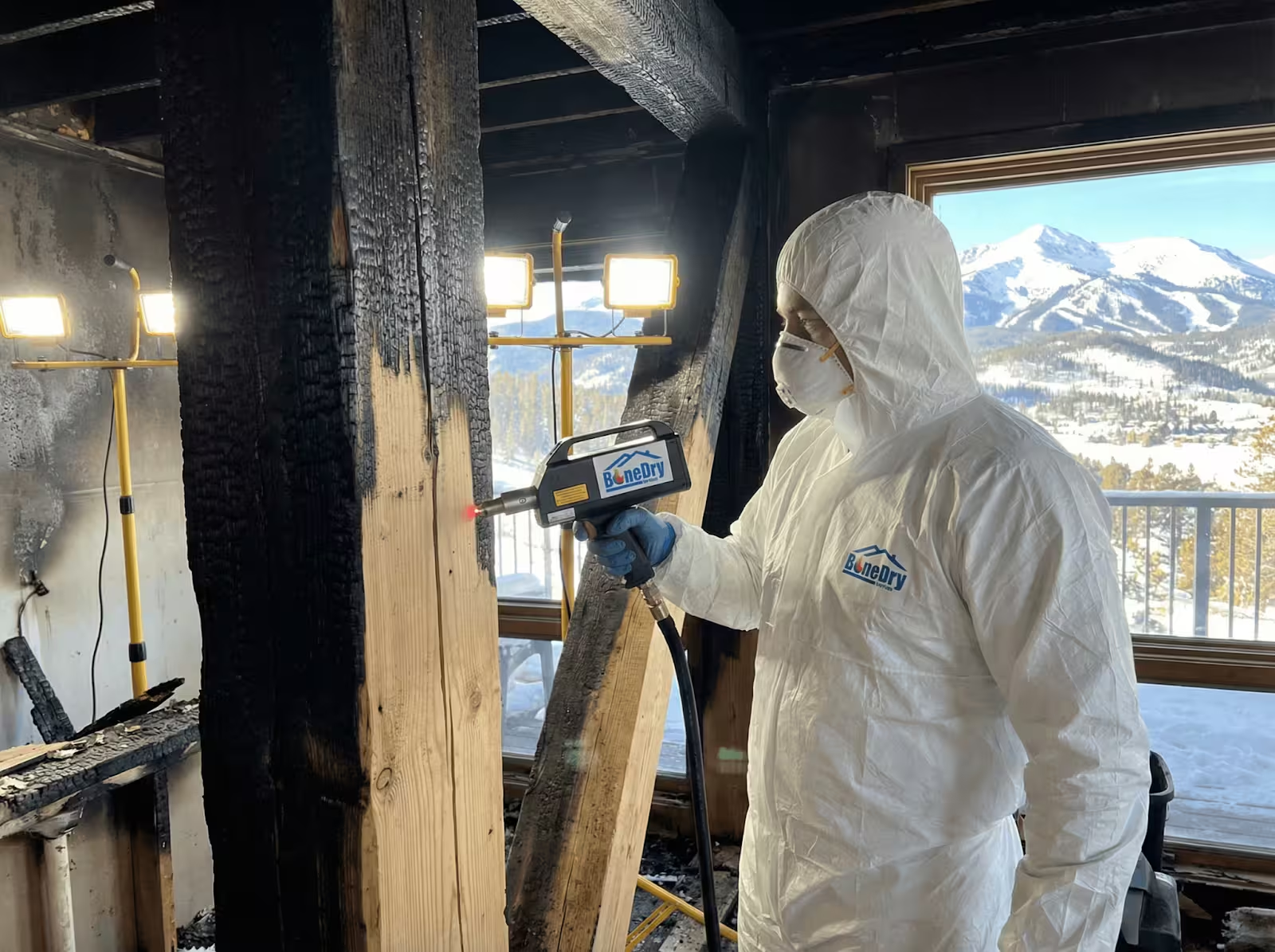
The Role of Soot Removal in Fire and Smoke Damage Restoration
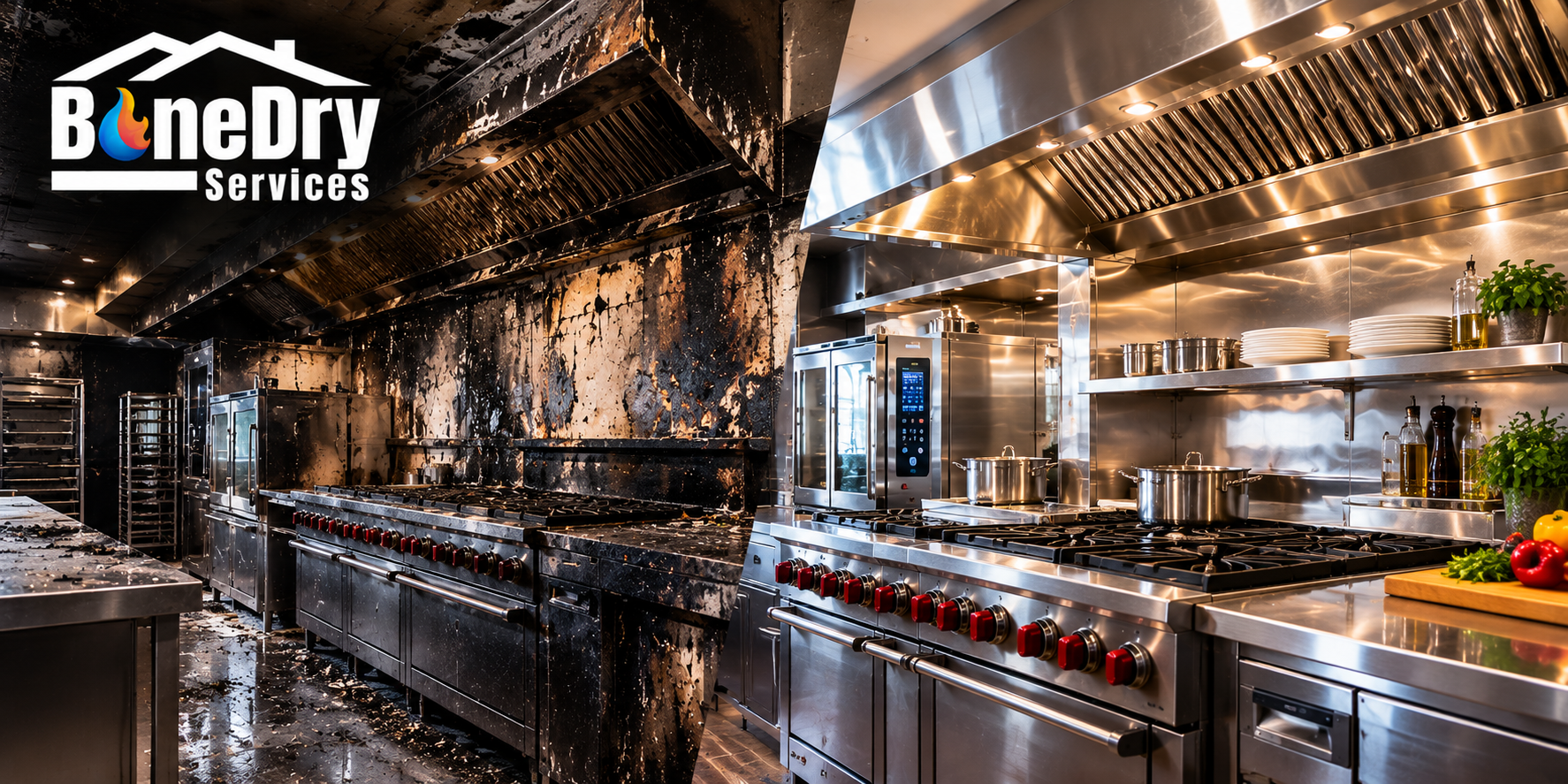
Soot is more than just an eyesore; it is a microscopic hazard. During a winter fire, soot often travels through the HVAC system as the heater runs, spreading oily residue into every room—even those untouched by flames.
There are different types of soot, ranging from dry powder to oily smears from furnace malfunctions. Using the wrong cleaning method can permanently stain your walls. Experts utilize HEPA vacuums and chemical sponges to lift soot without rubbing it deeper into the paint. Because winter homes are sealed tight, soot concentration can be much higher, making professional contents restoration vital for your furniture and clothing.
Eliminating Odors During Fire and Smoke Damage Restoration
One of the biggest complaints after a winter fire is the persistent smell. Whether the fire was caused by a fireplace backup or a malfunctioning furnace, the burnt smell can linger for months. This happens because smoke particles are driven deep into porous materials by the heat.
Masking the smell with candles or sprays does not work. True odor removal requires molecular neutralization. Professionals use ozone generators or hydroxyl machines to break down the odor-causing molecules. This is especially important for winter fires involving protein smoke, which is invisible but leaves a pungent, greasy odor that requires specific enzymatic treatments to eliminate.

Immediate Steps for Emergency Fire and Smoke Damage Restoration
If you experience a fire during the Colorado winter, your timeline for restoration is much shorter due to the freezing weather.
- Call for an Emergency Board-Up: Exposed windows or roof holes will lead to frozen pipes within hours.
- Do Not Turn on the Heat: If your HVAC system contains soot, turning it on will blast contaminants throughout the house.
- Limit Movement: Walking through the house can ground soot into the carpets.
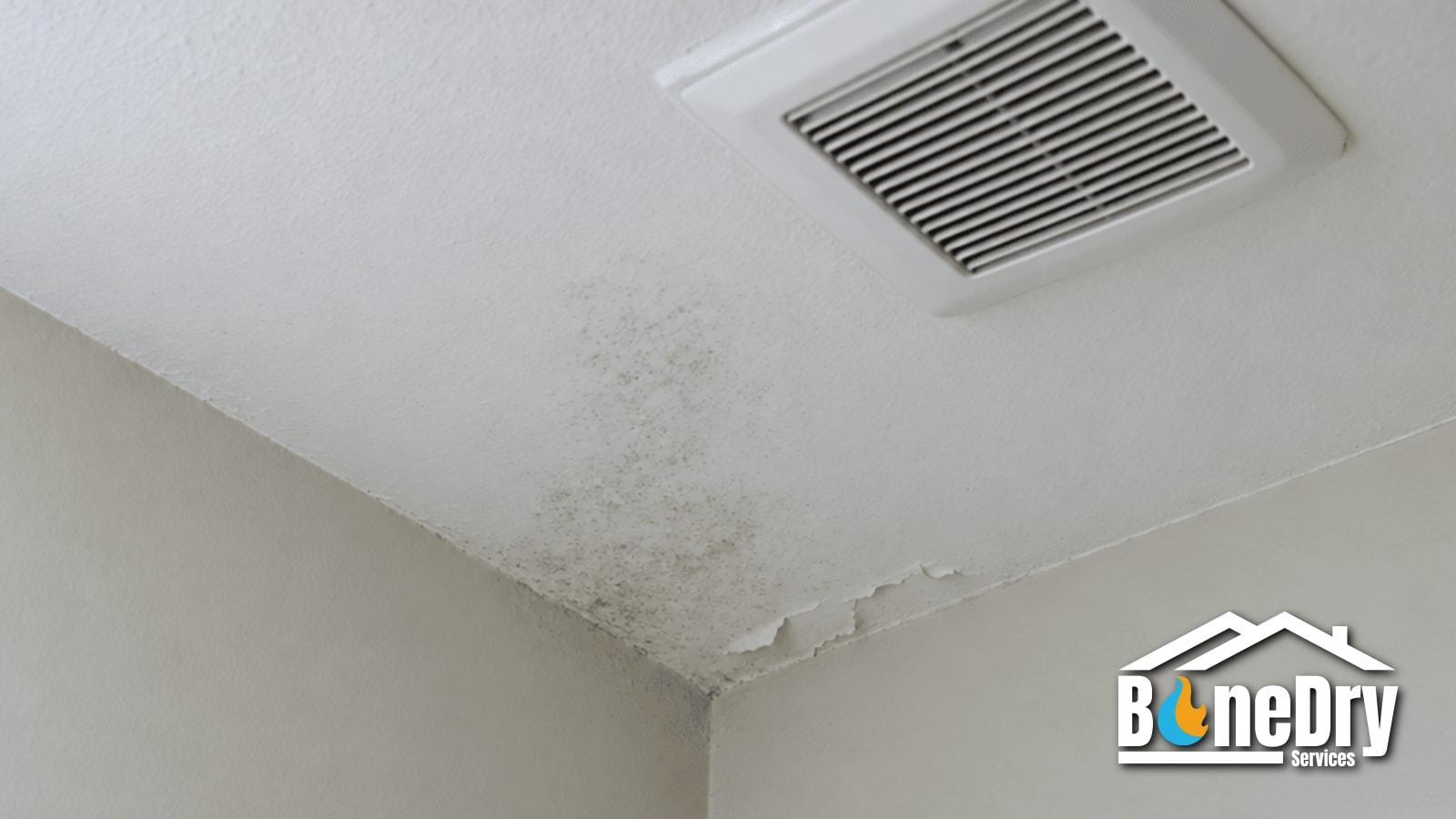
- Contact BoneDry Services: Immediate professional intervention prevents secondary water damage and mold.

Partner with Colorado’s Experts in Fire and Smoke Damage Restoration
Don't let a winter fire freeze your progress or ruin your property's value. BoneDry Services provides a 90-minute arrival guarantee to secure your home, remove hazardous soot, and eliminate stubborn smoke odors immediately. Our team handles everything from 24/7 emergency board-ups to full structural reconstruction.
Your home deserves a fresh start and we are here to provide it.
📞 Call us now at (303) 276-4163 to schedule your free inspection and begin the restoration process today.
FAQ
Q1: What is fire damage restoration? It is the professional process of cleaning, decontaminating, and rebuilding a home after a fire. This includes removing soot, extracting firefighting water, and neutralizing smoke odors to make the property livable again.
Q2: How much does fire damage restoration cost? Costs range from a few thousand dollars for minor smoke cleanup to over $50,000 for structural repairs. Because it’s a covered peril, most homeowners only pay their insurance deductible while we handle the rest with the adjuster.
Q3: How to restore fire damage? The process involves five main steps: securing the site (board-up), drying out water damage, removing soot with specialized equipment, neutralizing odors at a molecular level, and final structural reconstruction.
Q4: Does fire smoke smell ever go away? Yes, but only if you neutralize the molecules. Household sprays just mask the scent; professionals use ozone or hydroxyl generators to permanently break down smoke particles embedded in walls and furniture.
Q5: What is the 30/30/30 rule for fire? It’s a danger threshold for fire spread: humidity below 30%, winds above 30 mph, and temperatures above 30°C. In these conditions, fires ignite easily and spread rapidly, increasing the risk of total loss.
Q6: How hard is it to fix fire damage? Extremely. It requires handling toxic soot, stabilizing weakened structures, and cleaning hidden damage inside HVAC ducts. Due to health and safety risks, it is not a DIY-friendly project.
Q7: Is it bad to buy a house that had fire damage? Not if it was professionally restored and certified. However, if the cleanup was a DIY job, the house may have hidden structural issues or odors that resurface in the heat. Always check for restoration permits.