Fire Damage Repair in Colorado: Matching Custom Finishes & Architecture
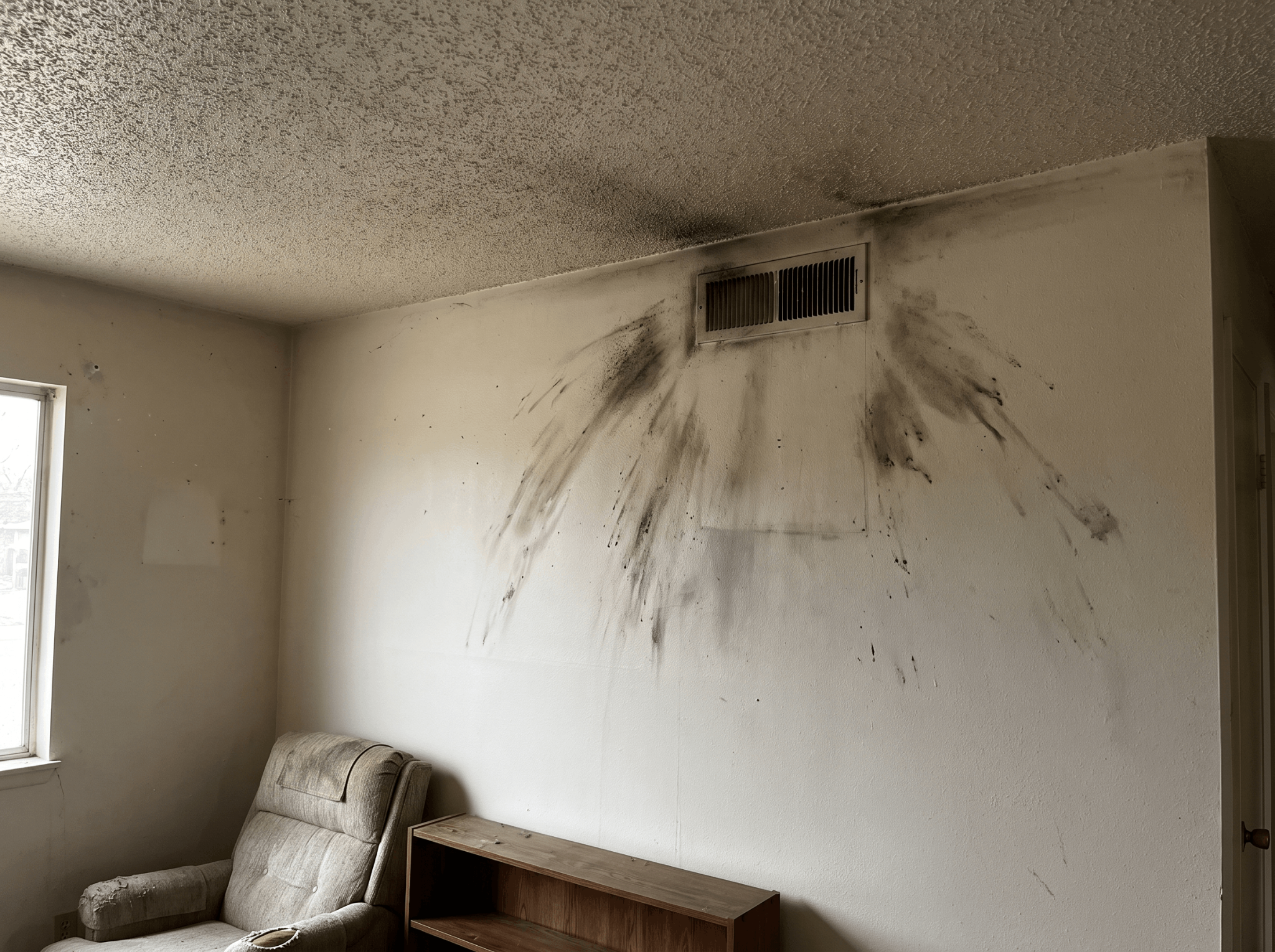
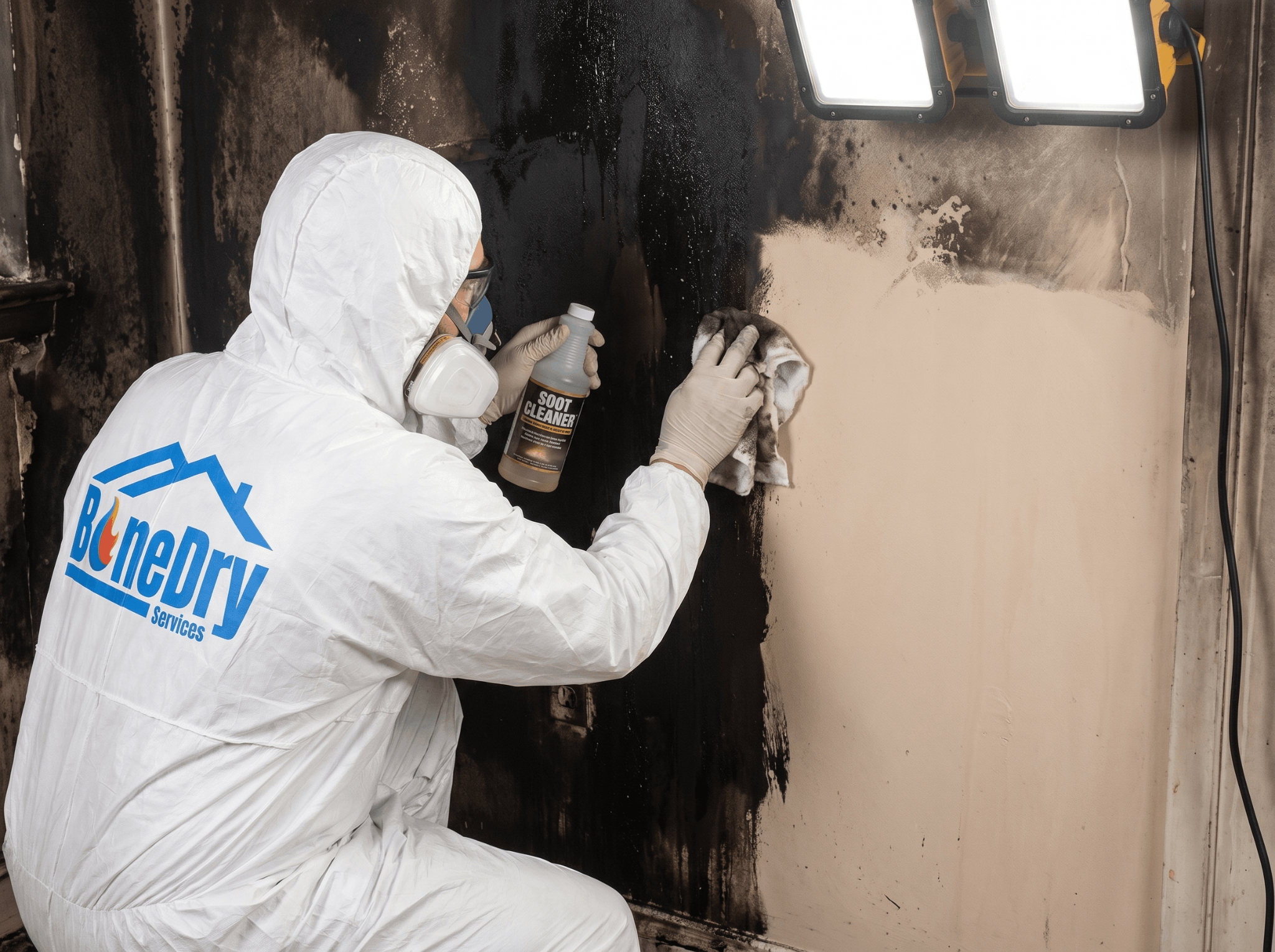
When a fire moves through a high-value Colorado home, the flames are only part of the story. The smoke, soot, and water used to extinguish the blaze leave behind a property that needs far more than a coat of paint. True fire damage repair begins where mitigation ends—the moment the structure is stabilized and dried, the real challenge becomes rebuilding it to look exactly as it did before. For estates with custom stains, hand-built crown molding, and bespoke cabinetry, that rebuild is where craftsmanship matters most.
At BoneDry Services, we treat the reconstruction phase as the heart of the recovery, not an afterthought. Anyone can demolish a damaged room. Restoring one so that its architecture, finishes, and character are indistinguishable from the original takes a different level of skill—and it is the difference between a repaired house and a fully restored home.
From Mitigation to Rebuild: The fire damage repair Transition
Every successful recovery moves through two distinct phases. Mitigation comes first—extracting water, removing soot, neutralizing odor, and drying the structure to halt ongoing damage. Reconstruction comes second, rebuilding what was lost or removed. The handoff between these two phases is where many projects falter, because the team that demolishes is often not the team that rebuilds.
A seamless fire damage repair process keeps both under one roof, so nothing is lost in translation.
This continuity matters enormously in high-end homes. When the same company that documented the original millwork also rebuilds it, the details survive. The crew already knows which cabinet doors were salvageable, which crown profile ran through the dining room, and which stain matched the library shelving—because they were there from the first hour. That institutional memory is impossible to recreate when a property changes hands mid-project.
Why a Clean Handoff Protects Custom Work
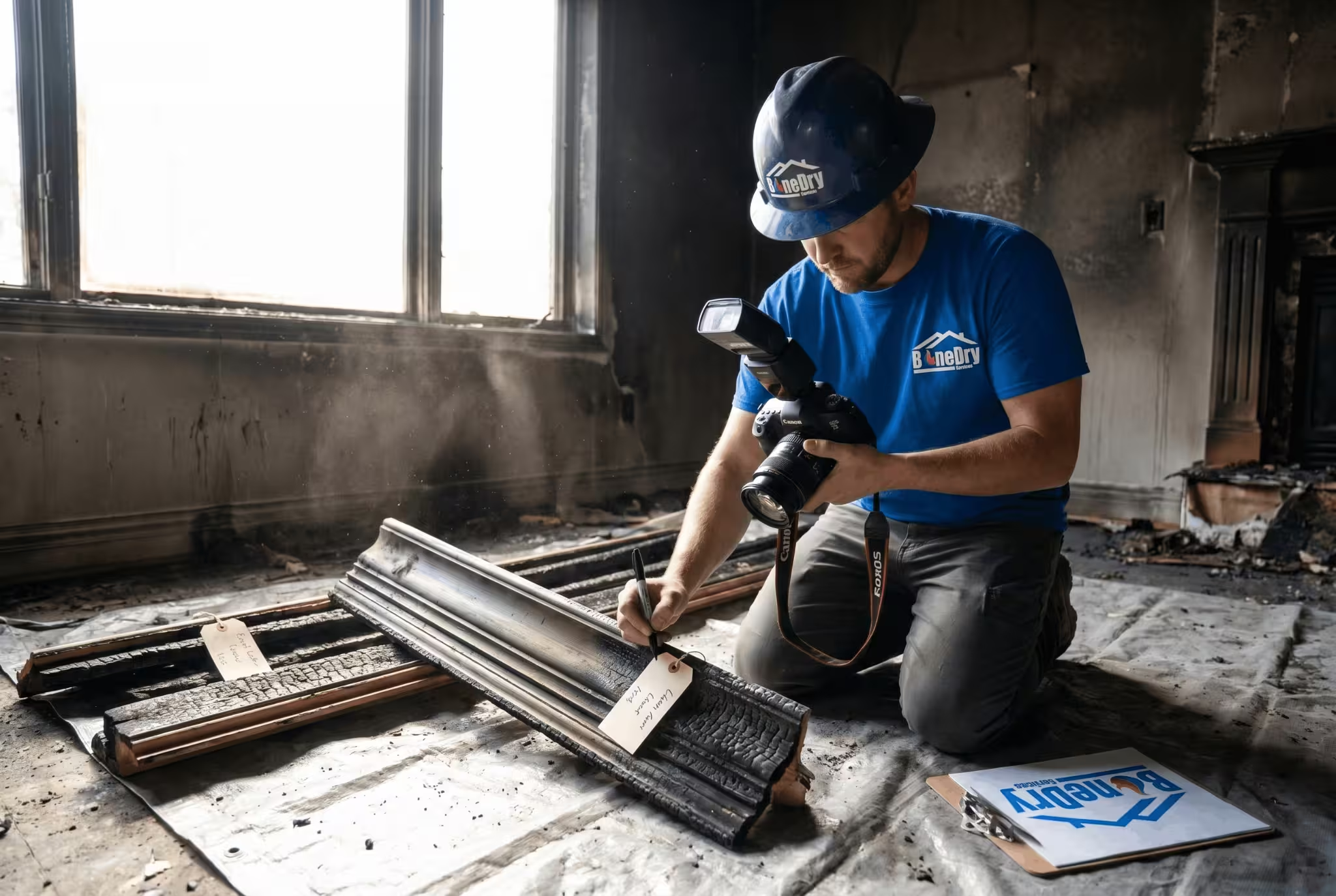
In the gap between drying out a home and rebuilding it, irreplaceable details are easily lost. Salvageable trim gets discarded as debris, finish samples vanish, and the architectural intent behind a custom space is forgotten. A coordinated transition preserves these elements deliberately. Before demolition, our teams photograph, label, and catalog the finishes worth saving, so the reconstruction phase starts with a complete record rather than guesswork.
Documenting Before Anything Is Removed
Thorough documentation is the foundation of an accurate rebuild. We record stain colors, molding profiles, cabinetry hardware, and tile layouts before a single board is pulled. This becomes the blueprint for matching—and it also supports the insurance claim, since custom finishes carry replacement values that standard estimates routinely undervalue. The more detail captured up front, the more faithful the final result.
Matching Custom Stains in fire damage repair
Few elements reveal a rushed rebuild faster than a mismatched wood stain. Custom stains are rarely off-the-shelf colors—they are layered, hand-applied finishes that respond to the specific grain of the wood beneath them. Matching them during fire damage repair is part science, part art, and it begins with understanding exactly how the original finish was built. Smoke residue and heat can also alter surrounding wood tones, which makes precise color reading essential.
Our finishers approach stain matching the way a conservator approaches a painting. Test panels are prepared on the same species of wood, finishes are layered and adjusted under the home's actual lighting, and the result is compared against undamaged sections of the original work. Only when the match is invisible does the finish go onto the rebuilt millwork. When fire is paired with water from suppression efforts, our 24/7 water damage restoration team ensures the wood is fully dried and stable before any new finish is applied.
Reading the Original Finish
Before any matching can happen, the original finish has to be understood. Was it a single stain or a glaze over a base coat? Was it sealed with oil or lacquer? These choices change how light reflects off the surface and how the color reads across the grain. Our team examines protected, undamaged sections—inside a cabinet, behind a baseboard—to identify the true original tone before fire and smoke altered it.
Blending New Work Into Old
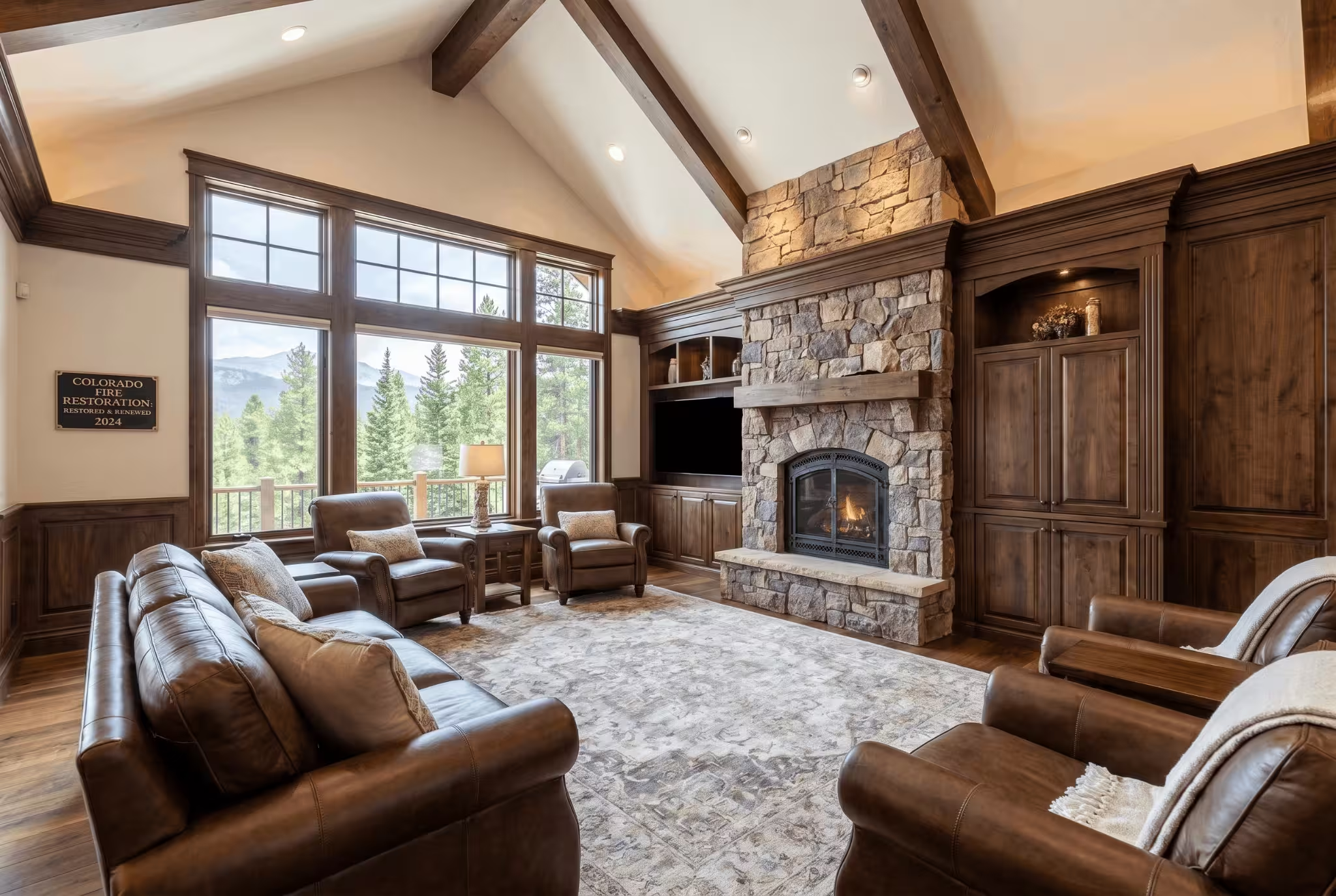
Even a perfect color match can fail if the new work sits next to weathered original wood. Skilled finishers feather and blend the transition so that repaired sections flow naturally into untouched ones. Where partial replacement is necessary, the new piece is aged and toned to harmonize with its neighbors. The objective is a surface where no one can point to where the damage stopped and the repair began.
Rebuilding Crown Molding and High-End Cabinetry
Custom crown molding and built-in cabinetry are often the most architecturally significant elements in a luxury home—and the most difficult to replace. Stock profiles from a home center will never match a custom run milled decades ago, and a generic cabinet box destroys the proportions of a bespoke kitchen or library. Quality fire damage repair treats these features as architecture to be reproduced, not commodities to be swapped out.
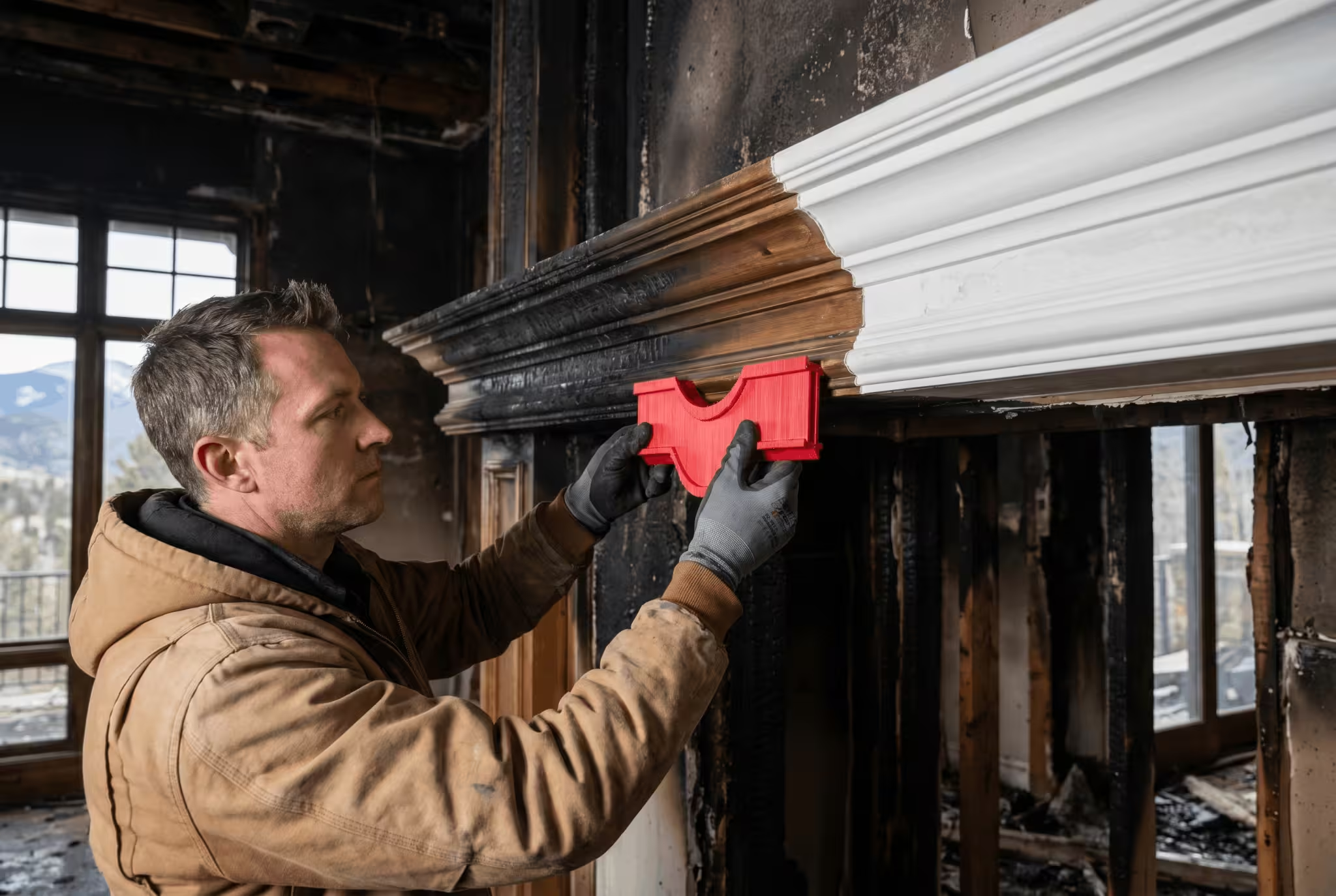
Where original millwork can be salvaged, we restore it. Where it cannot, we replicate it—custom-milling molding to match the original profile and rebuilding cabinetry to the original dimensions, joinery, and finish. This is slower and more demanding than installing off-the-shelf replacements, but it is the only way to preserve the home's design integrity and its value.
Custom-Milling Molding to Match
When a section of crown molding is destroyed, we take a profile of a surviving piece and have new molding milled to match it exactly. The new run is then primed, painted, or stained to blend seamlessly with the rest of the room. This attention to the original profile—the precise curves and reveals that give a molding its character—is what keeps a restored ceiling line from looking subtly, distractingly wrong.
Restoring vs. Replacing Cabinetry
Not every smoke-exposed cabinet needs to be torn out. Many can be cleaned, deodorized, refinished, and rehung, preserving the original craftsmanship. When a unit is beyond saving, we rebuild it to match its neighbors in wood species, door style, and finish. Lingering smoke odor trapped in cabinetry is addressed through professional odor removal, so the restored kitchen smells as clean as it looks.
The fire damage repair Reconstruction Sequence
A faithful rebuild follows a disciplined order. Skipping or rushing a step is where matching errors creep in. These are the five stages we follow on every high-end fire damage repair reconstruction:
- Confirm structural drying and stability — No finish work begins until the structure and substrate are verified dry, so new materials are not applied over hidden moisture.
- Catalog and source matching materials — Stains, molding profiles, cabinetry, and hardware are matched against documentation and sourced before installation begins.
- Rebuild structural and architectural elements — Framing, drywall, and custom millwork are reconstructed to the original dimensions and design intent.
- Apply and blend finishes — Stains, paints, and topcoats are layered and feathered so repaired areas merge invisibly with original surfaces.
- Final inspection and walkthrough — The homeowner reviews the completed work against the pre-loss record to confirm the home is truly restored.
This sequence keeps the rebuild accountable and ensures that every custom element is addressed deliberately rather than improvised at the end.
What Sets High-End fire damage repair Apart
Reconstruction on a luxury estate demands capabilities that a standard rebuild simply does not. The features that distinguish executive-level fire damage repair are less about speed and more about precision and preservation:
- Specialized material sourcing — Rare woods, custom profiles, and bespoke hardware are matched and sourced rather than substituted with generic equivalents.
- In-house craftsmanship — Finishers, millworkers, and cabinet builders work under one roof, keeping the rebuild consistent and accountable.
- Finish-matching expertise — Stains and topcoats are reproduced under the home's actual lighting, not approximated from a fan deck.
- Insurance documentation support — Custom finishes are valued and recorded accurately so the claim reflects true replacement cost.
When a property suffers both fire and the water damage that follows suppression, this full-service depth becomes essential—our fire damage restoration teams carry a project from the first emergency call through the final finished surface without handing it off.
Restore Your Home to Its Original Character
A fire is a profound disruption, but it does not have to mean losing the craftsmanship that made your home unique. With the right reconstruction team, custom stains, crown molding, and cabinetry can be brought back so faithfully that the loss leaves no trace.
As Colorado's largest privately owned, family-operated restoration company, BoneDry Services delivers the patience, skill, and accountability that high-end reconstruction requires.
📞 Call BoneDry Services at (303) 276-4163 today for expert fire damage repair that matches your home's custom finishes and architecture.
FAQ
What are the guidelines for fire mitigation in Colorado?
Colorado fire mitigation centers on creating defensible space around the home, hardening the structure, and managing fuels nearby. That means clearing dry vegetation, keeping a non-combustible zone within the first five feet, thinning trees, and using fire-resistant roofing and siding. State and local agencies also urge homeowners to follow seasonal fire restrictions and Red Flag warnings. After a fire, professional fire damage repair extends mitigation indoors—removing soot and odor and rebuilding to current safety standards.
What is the 30/30/30 rule for fire?
The 30-30-30 rule is a quick guideline for extreme wildfire risk. It warns that when temperatures reach about 30°C (86°F) or higher, relative humidity drops to 30 percent or lower, and winds blow at 30 km/h (roughly 19 mph) or stronger, fires can behave erratically and become very hard to control. Forecasters call this the “crossover” point. It is a ballpark warning rather than an exact threshold, but in Colorado's dry, windy conditions it signals when to be especially cautious.
How long will it take to rebuild after fire?
Timelines vary widely with the extent of damage and the complexity of the finishes involved. A contained, single-room loss may be rebuilt in a few weeks, while a major loss in a luxury home with custom millwork and cabinetry can take several months. Fire damage repair on high-end properties takes longer precisely because matching stains, milling molding, and rebuilding bespoke cabinetry cannot be rushed. A clear scope and accurate insurance documentation up front help keep the schedule realistic and on track.
What are the mitigation strategies for fires?
Effective fire mitigation works in layers. Around the home, that includes defensible space, fuel reduction, and fire-resistant building materials. On the structure, it means hardening roofs, vents, and exteriors against embers. During high-risk periods, homeowners should heed local fire restrictions and have an evacuation plan ready. After a fire occurs, mitigation shifts to rapid containment of smoke, soot, and water damage so that more of the home—and its custom finishes—can be saved during reconstruction.
What is a stage 2 fire restriction in Colorado?
A Stage 2 fire restriction is a near-total ban on outdoor fire activity, more severe than Stage 1. Under Stage 2, open fires, campfires, charcoal grills, fireworks, and similar ignition sources are prohibited, and activities like chainsaw use, welding, and outdoor smoking are heavily restricted. The exact terms vary by county, and some prohibitions extend even to private residences. These restrictions are imposed during periods of extreme fire danger to reduce the risk of human-caused wildfires.
_converted.avif)