

Vaulted Ceiling Fire Damage Repair Colorado: Timber Drying
The soaring vaulted ceilings and exposed timber of a Colorado mountain home are architectural showpieces — and when a fire strikes, vaulted ceiling fire damage repair becomes one of the most challenging jobs in restoration. The water used to fight the fire, combined with smoke and soot, saturates high roof decks and heavy structural beams that sit twenty feet or more overhead. Proper fire damage repair in these homes demands specialized reach, equipment, and technique that ordinary drying simply cannot provide.
The challenge is twofold: the damage is high up and hard to reach, and the materials involved—thick structural timber and roof decking—hold moisture deep within them. Firefighting water doesn't just wet the surface; it drives into the wood and collects in the roof assembly, where it can quietly cause rot, warping, and mold long after the visible water is gone. Reaching and drying these areas correctly is a job of both height and precision.
At BoneDry Services, we understand the architecture of luxury Colorado mountain homes and what it takes to restore them after a fire. Understanding why vaulted ceilings and heavy timber are so difficult to dry—and how specialized access and drying gear solve the problem—explains why professional fire damage repair is essential when the damage is overhead.
Why Vaulted Ceilings Complicate Fire Damage Repair
The defining challenge of fire damage repair in a home with vaulted ceilings is simple to state and hard to solve: the damage is far overhead, and the materials are massive. Both factors work against a quick or conventional recovery.
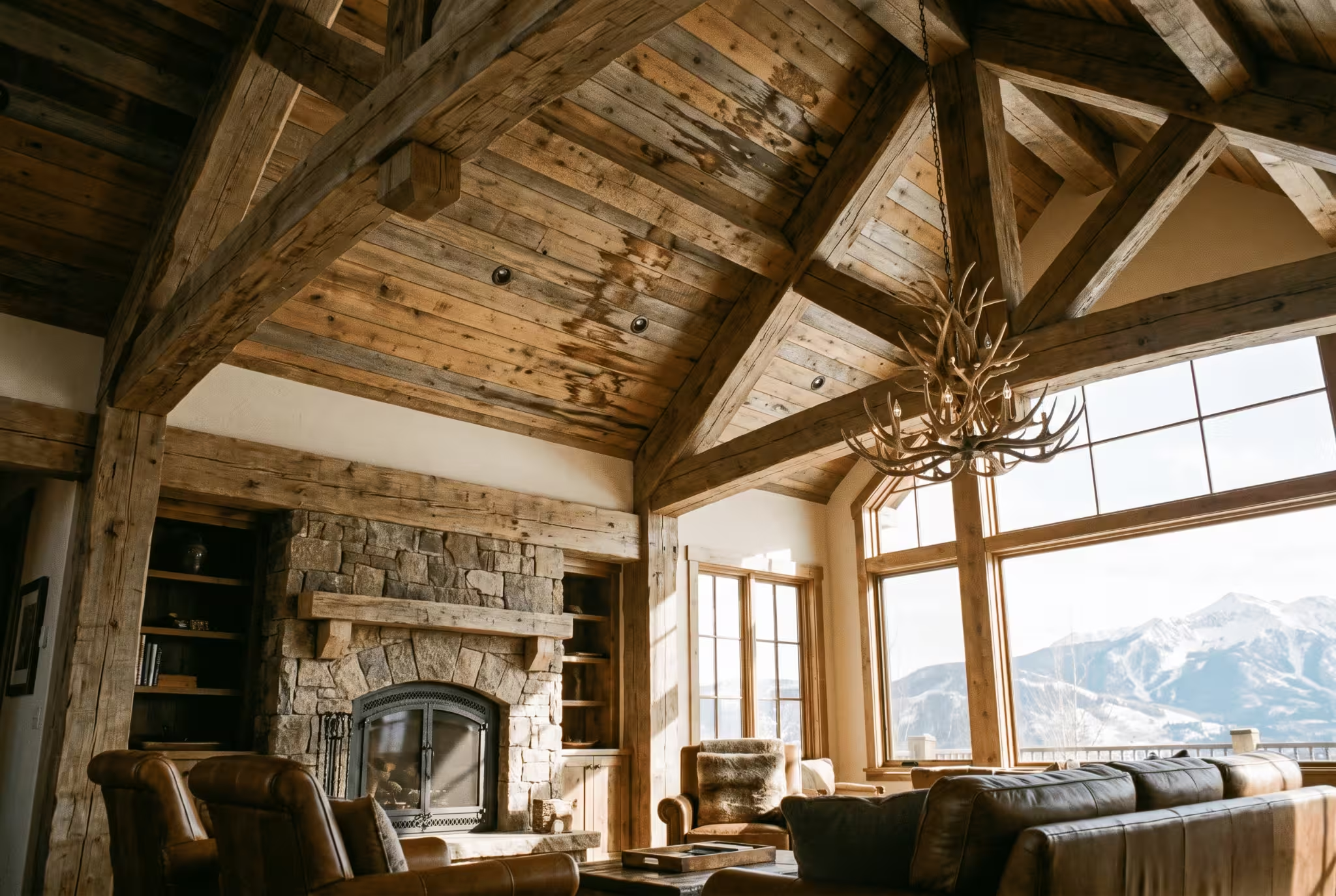
A standard ceiling is within easy reach of a technician on a short ladder. A vaulted ceiling in a mountain home can rise twenty feet or more, often over an open great room, placing the saturated roof deck and beams well beyond normal access. Simply reaching the damage to assess and treat it requires specialized scaffolding or high-reach equipment. Compounding this, the structural timber and decking involved are thick and dense, so they absorb and hold far more water than drywall, and they release it slowly. This means the drying process is not only harder to reach but also takes longer and demands more powerful, precisely directed equipment.
These combined difficulties are why overhead fire damage in luxury homes is not a do-it-yourself situation. It requires the height, the gear, and the drying expertise that define professional fire damage restoration, where saving irreplaceable architectural timber is a priority rather than an afterthought.
The Challenge of Height and Access
Before any drying can begin, technicians have to safely reach damage that may be two or three stories up. In an open-plan mountain home with a dramatic vaulted ceiling, that means erecting specialized scaffolding or using high-reach equipment to access the roof deck and beams. This is a significant undertaking in itself, requiring planning and safety measures that a typical ceiling repair never involves. Without proper access, hidden moisture in the upper structure simply cannot be found or treated, which is why professional fire damage repair begins with solving the reach problem.
Why Structural Timber Holds Moisture
Heavy timber beams and thick roof decking are dense, and that density means they absorb a large volume of water and give it up slowly. Unlike drywall, which can be removed and replaced, structural timber is both load-bearing and, in an exposed-beam home, a central aesthetic feature—so the goal is to dry it in place rather than replace it. Moisture driven deep into the wood by firefighting efforts can linger for a long time, and if it isn't drawn out, it leads to rot, warping, and mold within the structure. Drying dense timber thoroughly is one of the more demanding tasks in fire damage repair.
How Specialized Equipment Drives Fire Damage Repair at Height
Restoring a saturated vaulted ceiling depends on equipment built for both reach and deep drying—the core tools of high-elevation fire damage repair. Getting to the damage is only half the task; drawing moisture out of massive timber is the other.
Reaching the work zone safely relies on specialized scaffolding and high-reach drying gear that let technicians access and treat surfaces far overhead. Once access is established, the drying itself uses professional air movers and dehumidifiers positioned to promote evaporation from the roof deck and beams, while moisture is continuously removed from the air so it can't resettle. Because dense timber releases water slowly, this process is monitored over time to confirm the wood is drying through its full depth, not just at the surface. It is the same disciplined drying science behind our structural drying and dehumidification work, applied to the uniquely demanding geometry of a vaulted ceiling.
This equipment-driven approach is what makes it possible to save architectural timber that would otherwise be at risk. Rushing the process, or relying on household fans aimed at a ceiling twenty feet up, cannot draw moisture from deep within structural wood—only properly positioned professional equipment can.
Scaffolding and High-Reach Access
Specialized scaffolding provides a stable platform for technicians to work safely at the height of a vaulted ceiling, while high-reach equipment extends the ability to position drying gear and treat surfaces overhead. This access infrastructure is essential—it is what allows the crew to place air movers, direct airflow precisely, and monitor the upper structure closely. In effect, solving the access challenge turns an unreachable problem into a manageable drying project, which is why it is a foundational step in overhead fire damage repair.
Directed Drying for Dense Wood
Drying heavy timber is not a matter of general airflow; it requires equipment positioned to move air across the wood and dehumidification to pull the released moisture out of the environment. Because the water is held deep within dense beams and decking, the drying must be sustained and monitored so evaporation continues drawing moisture from within rather than sealing it inside. This directed, monitored approach is what dries structural timber thoroughly and protects it from the rot and warping that hidden moisture would otherwise cause.
The Fire Damage Repair Process for Vaulted Ceilings and Roof Decks
Recovering a fire-damaged vaulted ceiling follows a deliberate sequence built around safe access, deep drying, and protecting the timber. Skipping steps—or failing to reach the upper structure—leaves moisture behind to cause long-term damage. This is the order we follow on overhead fire damage repair:
- Assess the full extent of damage — The roof deck, beams, and surrounding structure are evaluated, including moisture driven deep into the timber where it isn't visible.
- Establish safe access — Specialized scaffolding or high-reach equipment is set up so technicians can safely reach and work on the vaulted surfaces.
- Address soot and surface contamination — Smoke and soot on the timber and decking are treated so residue isn't sealed in during drying.
- Deploy directed drying — Air movers and dehumidifiers are positioned to draw moisture from the roof deck and dense beams and remove it from the air.
- Monitor and verify dryness — Moisture levels in the timber are tracked over time until the wood is confirmed dry through its full depth before restoration.
Following this sequence ensures the hidden moisture in the upper structure is actually removed and the architectural timber is protected, rather than left to rot behind a surface that merely looks dry.
What Vaulted Ceiling Fire Damage Repair Protects in Colorado Homes
Properly drying a vaulted ceiling and its timber protects far more than the visible surface. The benefits of professional fire damage repair at height include:
- Preserved architectural timber — Drying beams and decking in place saves irreplaceable exposed woodwork that defines a mountain home's character.
- Prevented structural damage — Removing deep moisture protects load-bearing timber from the rot and warping that hidden water causes over time.
- Mold prevention — Thorough drying of the roof assembly stops the mold growth that follows trapped moisture in enclosed structure.
- Protected home value — A fully dried, structurally sound ceiling preserves the property's value, with documentation to support an insurance claim.
Because a fire in a mountain home affects far more than the ceiling, a complete recovery treats the whole property. When smoke and soot settle into furnishings and the air below, our contents restoration teams clean and restore affected belongings alongside the overhead drying so the home is recovered as a whole.
📞 Call BoneDry Services at (303) 276-4163 today for professional Fire Damage Repair that dries vaulted ceilings and structural timber in Denver, Boulder, and Colorado mountain communities.
Frequently Asked Questions
Can wet structural timber be dried instead of replaced?
In most cases, yes — and it usually should be. Heavy structural timber and exposed beams are both load-bearing and a defining architectural feature, so the goal of professional fire damage repair is to dry them in place rather than replace them. Because dense wood holds moisture deep within, this requires directed air movers, dehumidification, and monitoring over time to confirm the timber is dry through its full depth. Caught promptly, saturated timber can typically be saved; left wet, it risks the rot and warping that force costly replacement.
Does a ceiling need to be replaced if it gets wet?
Not necessarily. Whether a wet ceiling can be saved depends on the material, how much water it absorbed, and how quickly it is dried. Drywall that has become saturated and structurally compromised often needs replacement, while a ceiling that is dried promptly and thoroughly can sometimes be preserved. Exposed structural timber in a vaulted ceiling is typically dried in place rather than replaced, since it is both load-bearing and a valued feature. Professional moisture assessment determines what can be dried and saved versus what must be replaced.
How do you dry a vaulted ceiling after a fire?
Drying a vaulted ceiling starts with safe access — specialized scaffolding or high-reach equipment to reach a roof deck and beams that may sit twenty feet or more overhead. Once technicians can reach the structure, professional air movers and dehumidifiers are positioned to draw moisture out of the dense timber and roof assembly, while moisture is continuously removed from the air. Because the wood releases water slowly, the drying is monitored over days until the timber is verified dry through its full depth. For Colorado mountain homes, this high-reach fire damage repair is what saves architectural timber from hidden rot.
How long does soot stay in the air after a fire?
Fine soot particles can remain suspended in the air for an extended period after a fire—potentially days or longer—because they are extremely small and lightweight. They also settle onto surfaces and infiltrate the HVAC system, where they can be recirculated back into the air each time the system runs. This is why simply waiting for the air to clear is not enough. Professional air scrubbing with HEPA filtration is used to actively capture and remove airborne soot, rather than relying on it to settle or disperse on its own.
What does minor water damage on a ceiling look like?
Minor water damage on a ceiling often shows up as discoloration—yellowish or brownish stains or rings—along with possible bubbling or peeling paint and faint sagging. A musty smell may accompany it. The difficulty is that surface signs can understate the moisture held above, especially in a structural roof assembly or dense timber, where water lingers out of sight. Because visible staining may be only part of the problem, a professional moisture assessment is the reliable way to gauge the true extent and prevent hidden rot or mold.