Blog

Mold Remediation Denver: Preventing Cross-Contamination

Parker Brown

CEO of BoneDry Services

Jun 29

5 minutes

In this article

    Mold Remediation Denver: Preventing Cross-Contamination

    When mold is discovered in one room of a home, the biggest hidden risk is not the visible growth—it is the spores that escape during cleanup and settle elsewhere. Professional mold remediation in Denver is built around one core principle: contain the problem so it never spreads to clean parts of the house.

    Disturbing mold without proper containment releases millions of microscopic spores into the air, and those spores can travel through hallways and HVAC systems to colonize new areas. Done correctly, remediation isolates the work zone completely, so the rest of the home stays safe throughout the project.

    At BoneDry Services, we want homeowners to understand exactly how that protection works. Two tools do most of the heavy lifting—negative air pressure and HEPA-filtered containment zones—and once you see how they fit together, it is clear why proper containment is the difference between solving a mold problem and accidentally spreading it.

    Why Cross-Contamination Is the Central Risk in Mold Remediation Denver

    Mold reproduces by releasing spores—tiny, lightweight particles that float easily on air currents. While undisturbed mold stays mostly in place, the act of removing it stirs those spores into the air by the millions. Without containment, the cleanup itself becomes the cause of a larger problem, spreading mold to rooms that were perfectly clean before the work began. This is why every responsible mold remediation project in Denver treats containment as the very first step, not an afterthought.

    The stakes are higher in larger Denver-area homes, where open floor plans and shared HVAC systems give spores an easy path to travel. A small bathroom or basement colony, if disturbed carelessly, can seed new growth on the other side of the house within days. Proper containment breaks that chain by sealing the work area off from the rest of the home and controlling exactly where the air—and the spores in it—can go.

    How Mold Spores Travel Through a Home

    Spores move wherever air moves. Open doorways, return vents, foot traffic, and even the airflow from a furnace can carry them from an affected room into clean living spaces. Once they land on a damp surface elsewhere, they can establish a new colony. Understanding this airflow is the foundation of effective mold remediation in Denver—you cannot contain what you do not understand, so the first task is always controlling how air moves through the work zone.

    The Cost of Skipping Containment

    Cutting corners on containment turns a contained, single-room job into a whole-home problem. Homeowners who attempt removal themselves—or hire crews who skip these steps—often find new mold appearing weeks later in rooms that were never affected. What could have been a focused remediation becomes a far larger, costlier project. Proper containment is not an upsell; it is the safeguard that keeps the original problem from multiplying.
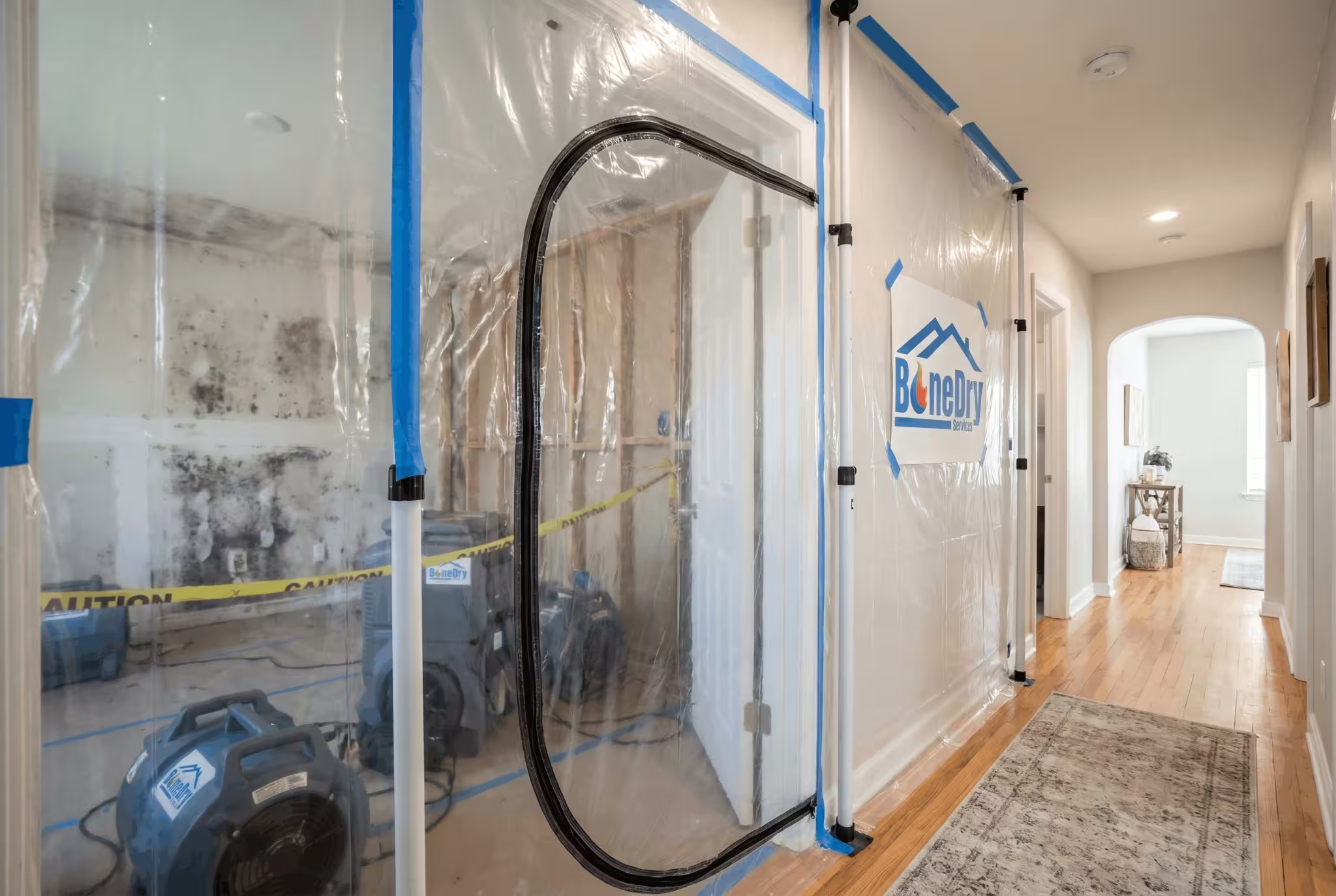
    HEPA containment barrier sealing a work zone during mold remediation in a Denver home.

    How Negative Air Pressure Protects the Rest of Your Home

    Negative air pressure is the single most important tool for preventing cross-contamination. The idea is simple: by continuously pulling air out of the sealed work zone and filtering it, the room is kept at slightly lower pressure than the surrounding space. Because air always flows from higher pressure to lower pressure, clean air flows into the work zone—and contaminated air can never push out of it. This containment principle is at the heart of the professional mold remediation Denver homeowners rely on.

    This is achieved with an air scrubber or negative air machine fitted with a HEPA filter. The machine draws air from inside the containment, captures the spores in the filter, and exhausts the cleaned air, usually outside the home. The result is a work zone that is effectively sealed in terms of airflow, even while crews move in and out. When mold follows a water event, our mold removal & remediation teams set up this containment before any affected material is disturbed.

    What “Negative Air” Actually Means

    “Negative air” simply means the air pressure inside the containment is lower than the pressure outside it. You can often see it working: the plastic sheeting on the containment walls is gently sucked inward rather than billowing out. That inward pull is the visible proof that air, and any spores in it, is being drawn into the filtration system rather than escaping into the clean parts of the home. It is a continuous, mechanical guarantee of containment.

    The Role of HEPA Filtration

    HEPA filters are the workhorses of mold containment. A true HEPA filter captures the vast majority of particles as small as mold spores, trapping them so they cannot recirculate. As the negative air machine pulls air through the filter, the spores are captured and the air leaving the unit is dramatically cleaner. Pairing HEPA filtration with negative air pressure is what makes it possible to work safely in one room without contaminating the rest of the house.

    How We Set Up Containment for Mold Remediation Denver Projects

    Effective containment follows a deliberate sequence. Each step builds on the last to keep spores locked inside the work zone from start to finish. This is the order we follow on a typical mold remediation containment setup in Denver:

    1. Seal the work zone — The affected room is isolated with plastic sheeting over doorways, vents, and any openings to adjacent spaces.
    2. Establish negative air pressure — A HEPA-filtered negative air machine pulls air from inside the containment and exhausts the filtered air outside.
    3. Shut down and seal HVAC — Heating and cooling are turned off and vents covered so the system cannot carry spores to other rooms.
    4. Remove mold within containment — Affected materials are removed and bagged inside the sealed zone, never carried openly through clean areas.
    5. Clean, dry, and verify — Surfaces are HEPA-vacuumed and dried, and air is filtered until the zone is verified clean before containment comes down.

    Following this sequence ensures the spores stirred up during removal stay inside the work zone and are captured by filtration, never reaching the living spaces beyond it.
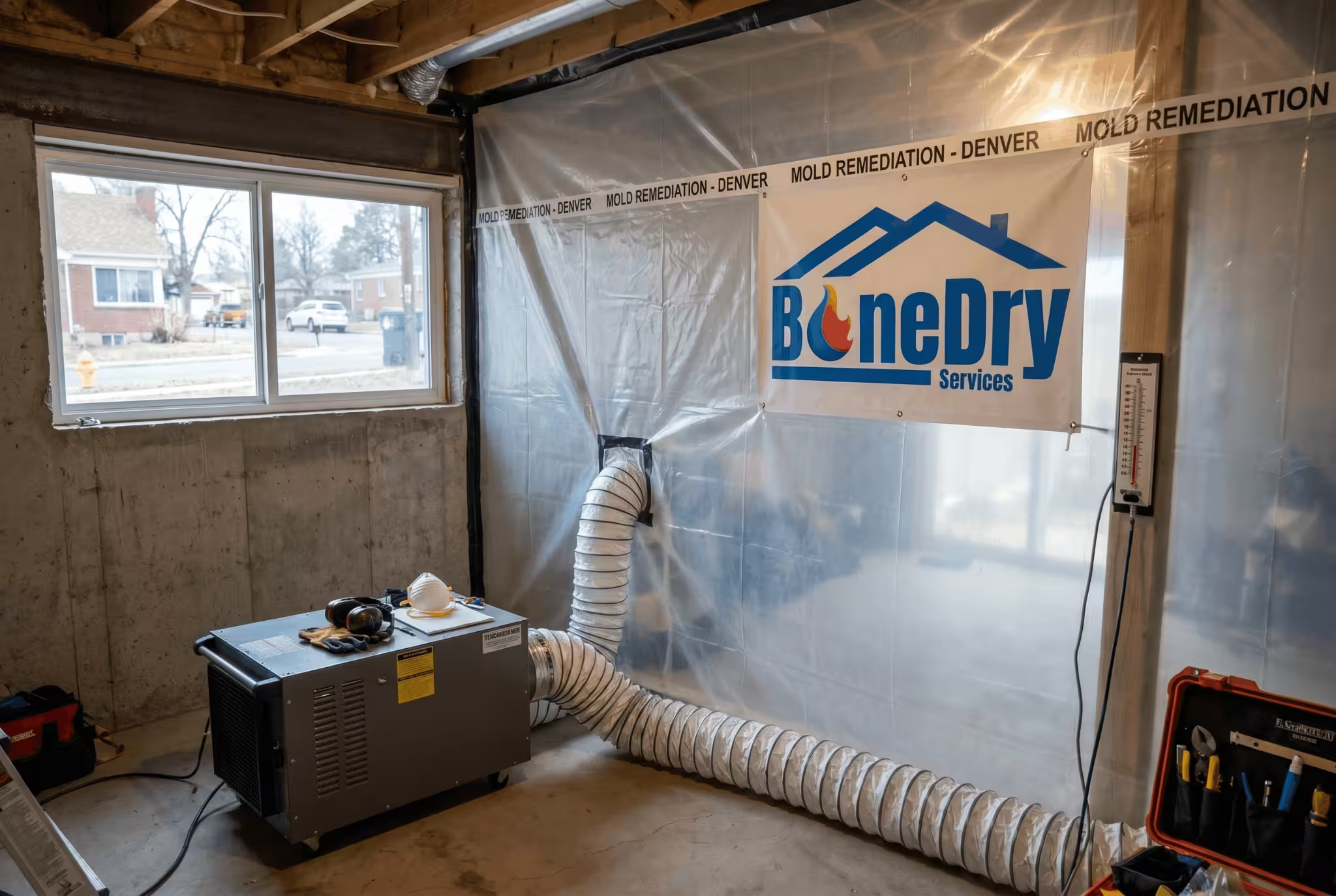
    Negative air machine with HEPA filtration running during mold remediation containment in Denver.

    What Proper Containment Protects in Your Home

    Done correctly, containment does more than keep one room clean—it protects the entire household while the work is underway. The benefits of professional mold remediation containment in Denver include:

    • Clean living spaces stay usable — Containment lets your family keep using the rest of the home safely while remediation continues in the sealed zone.
    • Indoor air quality is protected — Negative air pressure and HEPA filtration keep airborne spores out of the air your household breathes.
    • HVAC systems stay clean — Shutting down and sealing the system prevents spores from being distributed throughout the house through the ductwork.
    • The problem stays contained — Isolating the work zone prevents a single-room issue from turning into recurring growth elsewhere in the home.

    Mold frequently starts with a hidden water source, so a complete solution addresses both. When a leak or flood is behind the growth, our 24/7 water damage restoration teams find and resolve the moisture problem so the mold does not simply return after remediation.
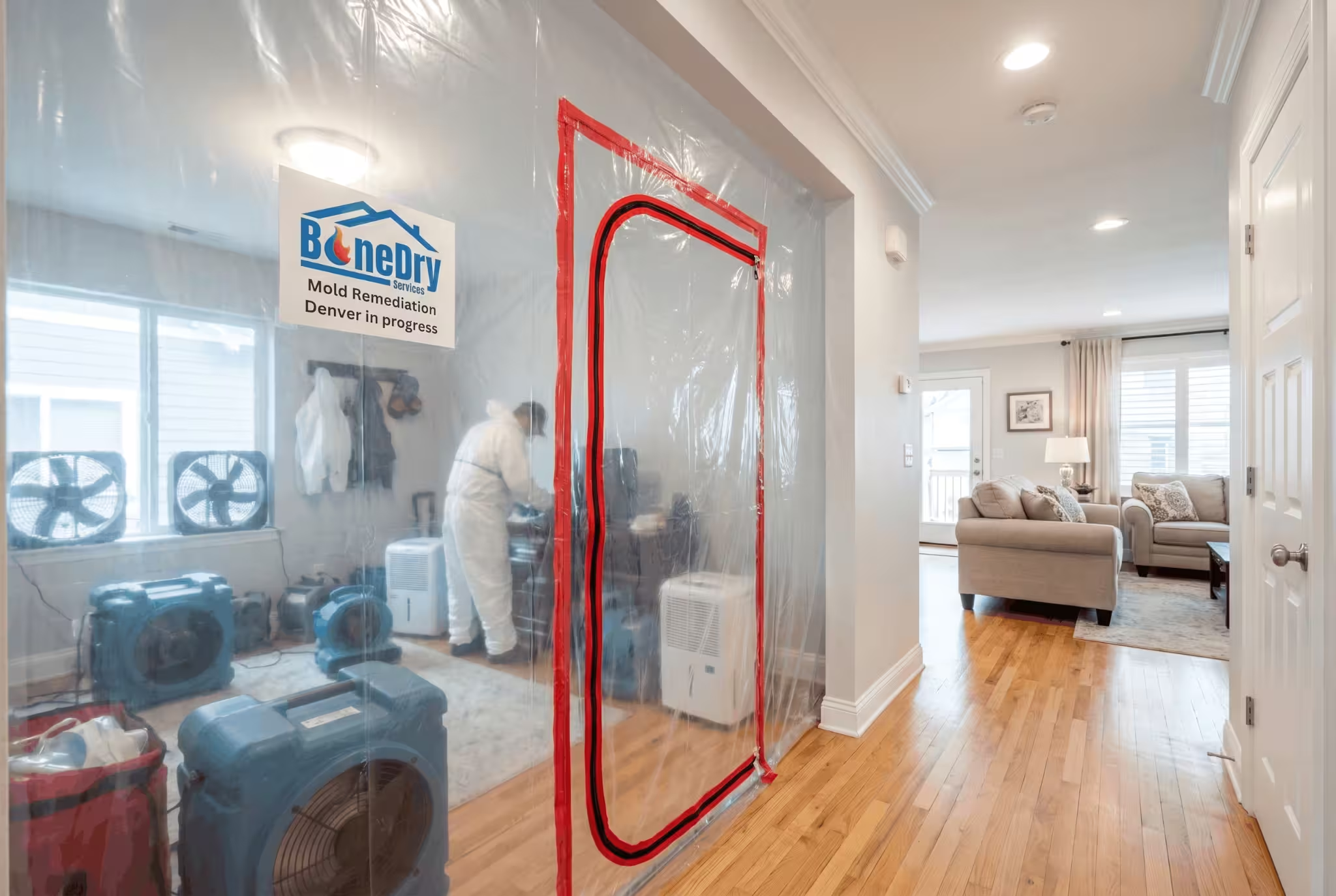
    Sealed containment dividing the work zone from clean living space during mold remediation in Denver.

    Keep Your Whole Home Safe During Remediation

    Mold in one room does not have to mean mold throughout the house. With proper containment—negative air pressure, HEPA filtration, and sealed work zones—the problem stays isolated while your family continues living safely in the rest of the home. As Colorado's largest privately owned, family-operated restoration company, BoneDry Services brings the equipment and disciplined process that safe, contained remediation requires.

    📞 Call BoneDry Services at (303) 276-4163 today for professional Mold Remediation Denver that keeps the rest of your home safe from cross-contamination.

    FAQ

    What is negative air pressure in mold remediation?

    Negative air pressure means the sealed work zone is kept at a slightly lower air pressure than the surrounding rooms. Because air always flows from higher to lower pressure, clean air flows into the containment while contaminated air cannot escape. This is created with a HEPA-filtered negative air machine that pulls air out of the zone and exhausts it, usually outside. It is the core mechanism that prevents mold spores from spreading during the work.

    Can I stay in my home during mold remediation?

    In most cases, yes, because proper containment isolates the affected room from the rest of the house. With the work zone sealed and negative air pressure in place, spores stirred up during removal are captured rather than spread. Your family can typically continue using the unaffected living spaces safely. Whether to relocate temporarily depends on the size of the affected area and any health sensitivities in the household, which we assess case by case.

    How do HEPA filters help during mold remediation?

    HEPA filters capture the vast majority of particles as small as mold spores, trapping them so they cannot recirculate into the air. Inside a negative air machine, the filter cleans the air being pulled out of the containment zone before it is exhausted. This keeps airborne spore levels in check during removal and is what makes it possible to work safely in one room. Pairing HEPA filtration with negative air pressure is the standard for safe containment.

    Why does the HVAC system need to be shut off?

    A running HVAC system can pull mold spores from the affected room and distribute them throughout the entire house through the ductwork. Shutting it down and sealing the vents in the work zone prevents this, keeping the containment effective. It is one of the most important steps in stopping cross-contamination. Once remediation is complete and the area is verified clean, the system can be safely returned to normal operation.

    How do you know the area is clean before removing containment?

    Before containment comes down, surfaces are HEPA-vacuumed and cleaned, affected materials are removed, and the area is dried to remove the moisture mold needs. The air is filtered until spore levels are brought back down. In many projects, independent verification or testing is used to confirm the area meets a clean standard. Only once the zone passes that check is the containment safely dismantled, so nothing is released back into the home.

    Recent Articles

    29 Jun 2026
    5 minutes

    Mold Remediation Denver: Preventing Cross-Contamination

    How professional mold remediation in Denver stops cross-contamination with negative air pressure & HEPA containment. BoneDry Services keeps your home safe.
     read more

    Mold Remediation Denver: Preventing Cross-Contamination

    When mold is discovered in one room of a home, the biggest hidden risk is not the visible growth—it is the spores that escape during cleanup and settle elsewhere. Professional mold remediation in Denver is built around one core principle: contain the problem so it never spreads to clean parts of the house.

    Disturbing mold without proper containment releases millions of microscopic spores into the air, and those spores can travel through hallways and HVAC systems to colonize new areas. Done correctly, remediation isolates the work zone completely, so the rest of the home stays safe throughout the project.

    At BoneDry Services, we want homeowners to understand exactly how that protection works. Two tools do most of the heavy lifting—negative air pressure and HEPA-filtered containment zones—and once you see how they fit together, it is clear why proper containment is the difference between solving a mold problem and accidentally spreading it.

    Why Cross-Contamination Is the Central Risk in Mold Remediation Denver

    Mold reproduces by releasing spores—tiny, lightweight particles that float easily on air currents. While undisturbed mold stays mostly in place, the act of removing it stirs those spores into the air by the millions. Without containment, the cleanup itself becomes the cause of a larger problem, spreading mold to rooms that were perfectly clean before the work began. This is why every responsible mold remediation project in Denver treats containment as the very first step, not an afterthought.

    The stakes are higher in larger Denver-area homes, where open floor plans and shared HVAC systems give spores an easy path to travel. A small bathroom or basement colony, if disturbed carelessly, can seed new growth on the other side of the house within days. Proper containment breaks that chain by sealing the work area off from the rest of the home and controlling exactly where the air—and the spores in it—can go.

    How Mold Spores Travel Through a Home

    Spores move wherever air moves. Open doorways, return vents, foot traffic, and even the airflow from a furnace can carry them from an affected room into clean living spaces. Once they land on a damp surface elsewhere, they can establish a new colony. Understanding this airflow is the foundation of effective mold remediation in Denver—you cannot contain what you do not understand, so the first task is always controlling how air moves through the work zone.

    The Cost of Skipping Containment

    Cutting corners on containment turns a contained, single-room job into a whole-home problem. Homeowners who attempt removal themselves—or hire crews who skip these steps—often find new mold appearing weeks later in rooms that were never affected. What could have been a focused remediation becomes a far larger, costlier project. Proper containment is not an upsell; it is the safeguard that keeps the original problem from multiplying.

    HEPA containment barrier sealing a work zone during mold remediation in a Denver home.

    How Negative Air Pressure Protects the Rest of Your Home

    Negative air pressure is the single most important tool for preventing cross-contamination. The idea is simple: by continuously pulling air out of the sealed work zone and filtering it, the room is kept at slightly lower pressure than the surrounding space. Because air always flows from higher pressure to lower pressure, clean air flows into the work zone—and contaminated air can never push out of it. This containment principle is at the heart of the professional mold remediation Denver homeowners rely on.

    This is achieved with an air scrubber or negative air machine fitted with a HEPA filter. The machine draws air from inside the containment, captures the spores in the filter, and exhausts the cleaned air, usually outside the home. The result is a work zone that is effectively sealed in terms of airflow, even while crews move in and out. When mold follows a water event, our mold removal & remediation teams set up this containment before any affected material is disturbed.

    What “Negative Air” Actually Means

    “Negative air” simply means the air pressure inside the containment is lower than the pressure outside it. You can often see it working: the plastic sheeting on the containment walls is gently sucked inward rather than billowing out. That inward pull is the visible proof that air, and any spores in it, is being drawn into the filtration system rather than escaping into the clean parts of the home. It is a continuous, mechanical guarantee of containment.

    The Role of HEPA Filtration

    HEPA filters are the workhorses of mold containment. A true HEPA filter captures the vast majority of particles as small as mold spores, trapping them so they cannot recirculate. As the negative air machine pulls air through the filter, the spores are captured and the air leaving the unit is dramatically cleaner. Pairing HEPA filtration with negative air pressure is what makes it possible to work safely in one room without contaminating the rest of the house.

    How We Set Up Containment for Mold Remediation Denver Projects

    Effective containment follows a deliberate sequence. Each step builds on the last to keep spores locked inside the work zone from start to finish. This is the order we follow on a typical mold remediation containment setup in Denver:

    1. Seal the work zone — The affected room is isolated with plastic sheeting over doorways, vents, and any openings to adjacent spaces.
    2. Establish negative air pressure — A HEPA-filtered negative air machine pulls air from inside the containment and exhausts the filtered air outside.
    3. Shut down and seal HVAC — Heating and cooling are turned off and vents covered so the system cannot carry spores to other rooms.
    4. Remove mold within containment — Affected materials are removed and bagged inside the sealed zone, never carried openly through clean areas.
    5. Clean, dry, and verify — Surfaces are HEPA-vacuumed and dried, and air is filtered until the zone is verified clean before containment comes down.

    Following this sequence ensures the spores stirred up during removal stay inside the work zone and are captured by filtration, never reaching the living spaces beyond it.

    Negative air machine with HEPA filtration running during mold remediation containment in Denver.

    What Proper Containment Protects in Your Home

    Done correctly, containment does more than keep one room clean—it protects the entire household while the work is underway. The benefits of professional mold remediation containment in Denver include:

    • Clean living spaces stay usable — Containment lets your family keep using the rest of the home safely while remediation continues in the sealed zone.
    • Indoor air quality is protected — Negative air pressure and HEPA filtration keep airborne spores out of the air your household breathes.
    • HVAC systems stay clean — Shutting down and sealing the system prevents spores from being distributed throughout the house through the ductwork.
    • The problem stays contained — Isolating the work zone prevents a single-room issue from turning into recurring growth elsewhere in the home.

    Mold frequently starts with a hidden water source, so a complete solution addresses both. When a leak or flood is behind the growth, our 24/7 water damage restoration teams find and resolve the moisture problem so the mold does not simply return after remediation.

    Sealed containment dividing the work zone from clean living space during mold remediation in Denver.

    Keep Your Whole Home Safe During Remediation

    Mold in one room does not have to mean mold throughout the house. With proper containment—negative air pressure, HEPA filtration, and sealed work zones—the problem stays isolated while your family continues living safely in the rest of the home. As Colorado's largest privately owned, family-operated restoration company, BoneDry Services brings the equipment and disciplined process that safe, contained remediation requires.

    📞 Call BoneDry Services at (303) 276-4163 today for professional Mold Remediation Denver that keeps the rest of your home safe from cross-contamination.

    FAQ

    What is negative air pressure in mold remediation?

    Negative air pressure means the sealed work zone is kept at a slightly lower air pressure than the surrounding rooms. Because air always flows from higher to lower pressure, clean air flows into the containment while contaminated air cannot escape. This is created with a HEPA-filtered negative air machine that pulls air out of the zone and exhausts it, usually outside. It is the core mechanism that prevents mold spores from spreading during the work.

    Can I stay in my home during mold remediation?

    In most cases, yes, because proper containment isolates the affected room from the rest of the house. With the work zone sealed and negative air pressure in place, spores stirred up during removal are captured rather than spread. Your family can typically continue using the unaffected living spaces safely. Whether to relocate temporarily depends on the size of the affected area and any health sensitivities in the household, which we assess case by case.

    How do HEPA filters help during mold remediation?

    HEPA filters capture the vast majority of particles as small as mold spores, trapping them so they cannot recirculate into the air. Inside a negative air machine, the filter cleans the air being pulled out of the containment zone before it is exhausted. This keeps airborne spore levels in check during removal and is what makes it possible to work safely in one room. Pairing HEPA filtration with negative air pressure is the standard for safe containment.

    Why does the HVAC system need to be shut off?

    A running HVAC system can pull mold spores from the affected room and distribute them throughout the entire house through the ductwork. Shutting it down and sealing the vents in the work zone prevents this, keeping the containment effective. It is one of the most important steps in stopping cross-contamination. Once remediation is complete and the area is verified clean, the system can be safely returned to normal operation.

    How do you know the area is clean before removing containment?

    Before containment comes down, surfaces are HEPA-vacuumed and cleaned, affected materials are removed, and the area is dried to remove the moisture mold needs. The air is filtered until spore levels are brought back down. In many projects, independent verification or testing is used to confirm the area meets a clean standard. Only once the zone passes that check is the containment safely dismantled, so nothing is released back into the home.
    24 Jun 2026
    7 minutes

    Stone Water Damage Restoration in Colorado: Flood Silt Removal on Natural Stone

    Stone water damage restoration in Colorado. BoneDry Services gently removes flood silt from porous stone & high-end masonry without harming the finish.
     read more

    Stone Water Damage Restoration in Colorado: Flood Silt Removal on Natural Stone

    When a flash flood recedes from a Colorado property, it leaves behind more than water—it leaves silt. This fine, gritty sediment settles into the pores of natural stone patios, masonry entryways, and travertine walkways, and if it is cleaned the wrong way, it can permanently scar surfaces that cost a fortune to install. 

    Effective water damage restoration on high-end stone is not about pressure-washing the mess away. It is about understanding how abrasive flood silt behaves and removing it with methods gentle enough to protect the finish while thorough enough to leave the stone truly clean.

    At BoneDry Services, we treat porous stone and luxury masonry as the irreplaceable architectural features they are. A flood does not just dirty these surfaces—it threatens their integrity, their color, and their value. The right approach restores them without leaving a trace of the damage.

    Why Flood Silt Makes Stone Water Damage Restoration So Demanding

    Flood silt is deceptively destructive. It looks like ordinary mud, but under magnification it is a mix of fine mineral particles, sand, organic matter, and grit carried in from streets, soil, and debris. As floodwater drains away, this material settles into every crevice and pore. On smooth tile it might wipe off easily, but on porous natural stone it lodges deep, and that is where stone water damage restoration becomes a specialized task rather than a simple cleanup.

    The danger is twofold. First, the silt itself is abrasive—drag it across a polished or honed surface and it acts like sandpaper, etching micro-scratches that dull the finish permanently. Second, floodwater is rarely clean; it carries contaminants and staining agents that soak into stone if left in place. Removing both the grit and the contamination, without grinding the abrasive particles into the surface, is the central challenge of restoring high-end masonry after a flood.

    The Abrasive Nature of Settled Silt

    The instinct after a flood is to grab a stiff brush or a pressure washer and scrub. On luxury stone, that instinct causes damage. The trapped silt particles are harder than they look, and forcing them across the surface under pressure drives them into the stone, leaving a hazy, scratched finish that no amount of polishing fully restores. The first principle of proper stone water damage restoration is to lift the silt away, not grind it in.

    How Porous Stone Holds Contamination

    Natural stone such as travertine, limestone, and sandstone is full of microscopic pores that readily absorb both water and whatever it carries. Floodwater contaminants—soil tannins, oils, and organic matter—wick into these pores and can stain from within if not addressed quickly. This is why surface cleaning alone is never enough; the stone has to be drawn clean from inside its pore structure, then properly dried before any sealing or finishing work begins.

    Flood silt covering a luxury stone entryway floor inside a Colorado home before stone water damage restoration.

    Specialized Cleaning Methods for High-End Masonry

    Restoring flood-damaged stone safely depends entirely on matching the cleaning method to the material. A finish that survives gentle, controlled treatment will be ruined by aggressive blasting, so professional stone water damage restoration starts by identifying the stone type, its finish, and how the silt has bonded to it. Only then can the right combination of extraction, low-pressure rinsing, and pH-appropriate cleaning agents be applied.

    The process generally begins by extracting standing water and loose sediment before it dries and hardens, since dried silt is far more difficult and risky to remove. When flooding affects the interior as well, our 24/7 water damage restoration teams handle extraction and drying across the whole property so that masonry, subfloors, and structure are all stabilized together rather than in isolation.

    Gentle Extraction Before Anything Dries

    Timing is everything with flood silt. While it is still wet and suspended, it can be flushed and vacuumed away with relatively low risk to the finish. Once it dries, it cakes and bonds into the pores, and removing it becomes a far more delicate operation. Rapid, gentle extraction—using soft tools and controlled water flow rather than high pressure—removes the bulk of the sediment before it has a chance to set.

    Matching the Cleaner to the Stone

    Different stones demand different chemistry. Acidic cleaners that work on some masonry will etch and dull calcium-based stones like marble, limestone, and travertine almost instantly. Professional stone water damage restoration uses pH-balanced, stone-safe cleaners chosen for the specific material, applied with dwell times that lift contamination without attacking the finish. Test patches in inconspicuous areas confirm the approach before it is applied to the full surface.

    The Water Damage Restoration Process for Flood-Damaged Stone

    A safe, repeatable sequence protects the finish at every step. Skipping ahead—especially scrubbing before extraction—is where most stone damage happens. These are the five stages we follow on flood-silt water damage restoration for high-end stone and masonry:

    1. Extract standing water and loose silt — Remove suspended sediment while it is still wet, before it dries and hardens into the pores.
    2. Identify the stone and test methods — Confirm the material and finish, then test cleaners and tools on an inconspicuous area first.
    3. Apply stone-safe, pH-balanced cleaning — Lift embedded silt and contamination using gentle agents and low-pressure rinsing matched to the stone.
    4. Dry the stone thoroughly — Draw moisture out of the pore structure with controlled drying before any sealing begins.
    5. Reseal and restore the finish — Re-apply sealer and, where needed, polish or hone to return the surface to its pre-flood condition.

    Following this order keeps the abrasive silt away from the finish and ensures the stone is genuinely clean and stable before it is sealed back up.

    What Sets Professional Stone Water Damage Restoration Apart

    Restoring luxury masonry after a flood takes more than a willing crew and a power washer. The capabilities that distinguish expert stone water damage restoration are about protecting the finish as much as cleaning the surface:

    • Material-specific knowledge — Crews identify each stone type and adjust methods so calcium-based surfaces are never exposed to damaging chemistry.
    • Low-pressure, abrasion-aware technique — Silt is lifted and flushed rather than scrubbed in, preventing the micro-scratching that dulls finishes.
    • Controlled drying of pore structure — Moisture is drawn out of the stone itself, not just the surface, before sealing traps anything inside.
    • Sealing and finish restoration — Sealers and polishing return the stone to its original protection and appearance, closing the loop on the repair.

    Flooding rarely stops at the patio. When storms drive water into a home, our storm damage restoration teams address the full scope—exterior masonry, interior structure, and everything in between—so the property is restored as a whole rather than in disconnected pieces.

    Restoration technician gently extracting flood silt from a travertine floor inside a luxury Colorado living room during stone water damage restoration.

    Protect Your Stone Before the Damage Sets

    Flood silt does its worst damage in the hours after the water recedes, as it dries and bonds into porous stone. The faster a skilled team begins gentle extraction, the more of your patio, entryway, or masonry can be saved without permanent scarring. As Colorado's largest privately owned, family-operated restoration company, BoneDry Services brings the material knowledge and careful technique that high-end stone demands.

    📞 Call BoneDry Services at (303) 276-4163 today for expert Water Damage Restoration that removes flood silt and protects your porous stone and high-end masonry.

    FAQ

    Can I just pressure-wash flood silt off my stone patio?

    It is risky and usually a mistake on high-end stone. Pressure washing drives the abrasive silt particles across and into the surface, etching micro-scratches that permanently dull polished and honed finishes. It can also force water and contamination deeper into the pores. Professional stone water damage restoration instead lifts and flushes the silt with low-pressure, stone-safe methods. This removes the sediment thoroughly while protecting the finish you paid to install.

    Why is flood silt so damaging to porous stone?

    Flood silt is a gritty mix of fine minerals, sand, and organic matter, and it is harder and more abrasive than it looks. On porous stone like travertine and limestone, it settles deep into the pores rather than staying on the surface. It also carries staining contaminants from soil and debris that soak in if not removed quickly. Cleaning it incorrectly grinds the grit into the finish, which is why specialized methods matter so much.

    How quickly should silt be cleaned after a flood?

    As quickly as possible, ideally while the silt is still wet and suspended. In that state it can be gently flushed and vacuumed away with minimal risk to the finish. Once it dries, it cakes and bonds into the pore structure, making removal far more difficult and far more likely to damage the stone. Prompt stone water damage restoration is the single biggest factor in saving flood-affected masonry.

    Will flood damage ruin the sealer on my stone?

    Flooding often compromises the sealer, letting water and contaminants reach the stone beneath. That is why resealing is a standard final step in proper restoration. Once the stone has been cleaned and fully dried through its pore structure, a fresh sealer is applied to restore its protection and appearance. Skipping the drying step and sealing too early can trap moisture and contamination inside, so timing and sequence are important.

    Can different types of stone all be cleaned the same way?

    No, and treating them the same is a common cause of damage. Calcium-based stones such as marble, limestone, and travertine are etched by acidic cleaners that may be fine on other masonry. Each material needs cleaners and techniques matched to its chemistry and finish. Professional stone water damage restoration identifies the stone first and tests methods on an inconspicuous area before treating the full surface, ensuring the right approach for every material.

    23 Jun 2026

    Biohazard Cleanup Denver: The Science of Molecular Sanitization

    Learn how BoneDry Services uses medical-grade protocols for biohazard remediation, chemical spill cleanup, and trauma scene restoration in Denver.
     read more

    Biohazard Cleanup Denver: Professional Sanitization for Luxury Properties 

    When a property is affected by biological contaminants—whether from a sewage backup, a chemical spill cleanup, or a traumatic event—the stakes for restoration are at their highest. Professional biohazard cleanup Denver is not merely an aesthetic exercise; it is a critical public health intervention. Standard household cleaning methods are fundamentally incapable of addressing the microscopic pathogens that linger within porous building materials. To ensure a luxury environment is truly restored to a "pre-loss" safety standard, a molecular-level approach to biohazard remediation is required from a trusted provider like BoneDry Services.

    The Myth of Household Bleach in Biohazard Remediation

    A common misconception in property management is that high concentrations of bleach are sufficient for disinfecting a contaminated site. In professional biohazard cleanup Denver, bleach is often avoided or used only as a secondary step for several technical reasons. When dealing with hazardous material cleanup, the limitations of grocery-store chemicals become dangerously apparent.

    Organic Load Neutralization and Protein Barriers

    Bleach is easily neutralized by organic matter. If blood or sewage is present, the bleach reacts with the proteins before it can kill the underlying pathogens. In a trauma scene cleanup, this means the surface might look clean, but the infectious agents remain active beneath a layer of neutralized chemical.

    Surface Tension and Material Penetration

    Bleach has high surface tension, preventing it from penetrating the microscopic pores of wood, grout, or drywall where bacteria hide. Furthermore, for high-end finishes, bleach can cause irreversible damage to metals, stone, and delicate fabrics, making it an impractical tool for luxury restoration.

    Microscopic view of dormant bacteria remaining after improper Biohazard Cleanup.

    4 Critical Factors for Effective Biohazard Cleanup Sanitization

    Successful decontamination relies on the "Sinner’s Circle" of cleaning—a balance of four variables that our technicians calibrate for every hazardous waste cleanup project to ensure medical-grade results.

    • Chemical Concentration: Ensuring the antimicrobial is mixed to the exact parts-per-million (PPM) required for the specific pathogen.
    • Mechanical Action: The physical agitation or scrubbing required to break through the "biofilm" that protects colonies of bacteria.
    • Temperature Control: Many professional-grade disinfectants perform significantly better when applied at specific thermal ranges.
    • Dwell Time: The most overlooked factor; the chemical must remain "wet" on the surface for a predetermined number of minutes to achieve a total kill.

    Breaking the Biofilm Barrier in Trauma Scene Cleanup

    One of the most significant challenges in high-level sanitization is the "Biofilm." This is a slimy, protective layer that colonies of bacteria secrete to shield themselves from external threats. Professional biohazard cleanup requires the use of specialized enzymatic cleaners that act like molecular scissors, cutting through the biofilm to expose the bacteria. Once this shield is dissolved, our EPA-approved disinfectants can reach the target and achieve a true 99.9999% kill rate, which is vital during any trauma scene cleanup.

    Utilizing EPA-Approved Antimicrobials for Biohazard Remediation

    At BoneDry Services, our biohazard cleanup Denver protocols utilize medical-grade, EPA-registered antimicrobials designed for healthcare environments. These broad-spectrum disinfectants are engineered to remain stable in the presence of organic soil and have a documented "kill claim" against specific hardy pathogens like MRSA, C. diff, and Norovirus. This level of biohazard remediation ensures that the property is safe for immediate re-occupancy.

    The Role of Specialized Surfactants in Hazardous Material Cleanup

    In a luxury home, contaminants don't just sit on the surface; they migrate into subfloors and wall cavities. Standard cleaners lack the "wetting agents" needed to follow this path. During hazardous material cleanup, we use surfactants that:

    1. Reduce the surface tension of the liquid, allowing it to "wick" into the same cracks where the bio-load traveled.
    2. Encapsulate odor-causing molecules rather than just masking them with perfumes.
    3. Emulsify fats and proteins found in biological fluids, making them easier to extract from delicate fibers.

    Addressing the Risk of Dormant Bacteria

    One of the most dangerous aspects of a biohazard loss is the ability of certain bacteria to enter a dormant state. When a surface is "cleaned" but not properly sanitized, moisture from a standard 24/7 water damage restoration event can actually reactivate these pathogens weeks later. This is why our biohazard cleanup Denver process is so rigorous; we eliminate the biological load entirely to prevent future outbreaks.

    The BoneDry Verification Process: ATP Testing

    We utilize ATP (Adenosine Triphosphate) testing to verify our results. ATP is a molecule found in all living cells; by swabbing a surface after our biohazard cleanup Denver process, we get a digital readout of the remaining organic matter.

    Digital ATP verification testing used to prove clinical cleanliness after Biohazard Cleanup.

    If the "Relative Light Units" (RLU) exceed a medical-grade threshold, the area is treated again. This data-driven approach ensures that your home is not just visually clean, but clinically sterile.

    Precision Sanitization for High-Value Substrates

    Luxury properties often contain expensive, semi-porous materials that require a "low-moisture" sanitization approach. During our emergency response, we utilize electrostatic sprayers. These devices give the antimicrobial particles a positive charge, causing them to wrap around complex surfaces—ensuring 360-degree coverage without saturating the material. This is particularly useful during a chemical spill cleanup where sensitive electronics or finishes are nearby.

    Negative Pressure and Aerosol Containment

    During the physical agitation and cleaning phase of hazardous waste cleanup, there is a high risk of "aerosolization"—where microscopic contaminants become airborne and drift into unaffected parts of the home. To prevent this, BoneDry Services utilizes HEPA-filtered air scrubbers to create a negative pressure environment. By sealing off the affected room and constantly scrubbing the air, we ensure that every cubic foot of oxygen is filtered through a 0.3-micron medical-grade filter.

    Electrostatic spraying technology being used for professional Biohazard Cleanup in a luxury home.

    The Psychological Peace of Mind in Biohazard Remediation

    Beyond the physical safety, there is a psychological component to restoration. Knowing that a team has utilized the same grade of sanitization used in surgical suites provides a level of comfort that "DIY" cleaning cannot match. Whether you require trauma scene cleanup or hazardous material cleanup, we provide a full "Certificate of Sanitization" upon completion, documenting the chemicals used and the testing results achieved.

    📞 Call BoneDry Services at (303) 276-4163 for professional Biohazard Cleanup and biological disinfection today.

    FAQ

    What are the 5 steps to clean and sanitize a surface?

    The professional standard involves five distinct phases: (1) Pre-cleaning to remove bulk organic matter, (2) Washing with a surfactant to break down surface tension, (3) Rinsing to clear away debris, (4) Applying an EPA-registered sanitizer with the appropriate "dwell time," and (5) Final air-drying or wiping with a sterile cloth. In Biohazard Cleanup, skipping the "dwell time" is the most common reason for sanitization failure.

    What is biohazard cleaning?

    Biohazard Cleanup is the specialized process of removing, cleaning, and disinfecting materials that pose a biological risk to humans. This includes blood, bodily fluids, sewage, animal remains, and chemical spills. Unlike standard janitorial work, biohazard technicians must use Personal Protective Equipment (PPE) and follow strict OSHA and CDC guidelines.

    What are the 7 steps in the cleaning process in order?

    For high-level remediation, the seven steps are: (1) Site Assessment and PPE donning, (2) Containment and air filtration setup, (3) Bulk removal of bio-hazardous waste, (4) Detailed HEPA vacuuming, (5) Application of antimicrobial surfactants, (6) Mechanical agitation/scrubbing, and (7) Final ATP verification testing. Following these steps in order is vital for a successful Biohazard Cleanup outcome.

    What surface must be clean and sanitized?

    In a post-loss environment, any surface that has come into direct or indirect contact with biological agents must be treated. This includes "high-touch" surfaces like doorknobs and light switches, but also "hidden" surfaces like the subfloor beneath a carpet or the internal wall cavities. Professional Biohazard Cleanup assumes that if the air was contaminated, every horizontal surface in the containment zone requires sanitization.

    What chemicals are used in biohazard cleaning?

    We utilize a rotation of "Hospital-Grade" disinfectants, including Phenolics, Quaternary Ammonium compounds, and stabilized Hydrogen Peroxide solutions. These chemicals are chosen specifically for their ability to kill bloodborne pathogens and viruses while remaining safe for the occupants once the "off-gassing" period is over. In every Biohazard Cleanup project, we match the chemical to the specific substrate.

    23 Jun 2026

    Desiccant vs Refrigerant Dehumidification Pros and Cons | Denver

    Compare desiccant vs refrigerant dehumidification pros and cons for Denver homes. BoneDry Services explains the science of high-altitude structural drying.
     read more

    Desiccant vs Refrigerant Dehumidification Pros and Cons for Water Damage 

    When a luxury property in Denver suffers from moisture intrusion, the choice of drying technology is the most critical decision a technician makes. In the world of high-end restoration, not all dehumidifiers are created equal. While many standard companies rely on basic refrigerant units, the unique climate of the Front Range—characterized by high altitude and low ambient humidity—often requires a more sophisticated approach. Understanding the desiccant vs refrigerant dehumidification pros and cons is essential for protecting the structural integrity of your home’s high-value finishes and ensuring comprehensive structural drying and dehumidification

    The Science of Refrigerant Technology in Water Damage Restoration

    Standard refrigerant dehumidifiers, specifically Low Grain Refrigerant (LGR) units, work by cooling the air to condense moisture into liquid droplets. This technology is a staple in the industry because it is highly effective in warm, humid environments.

    How it Works: The Condensation Process

    Moist air is pulled over internal cooling coils, causing water to bead up and drop into a collection pump. For this to work efficiently, there must be a significant temperature difference between the air and the coils.

    Internal cooling mechanism of an LGR dehumidifier used in professional Water Damage Restoration.

    Best Use Case for LGR Units

    LGR units excel in Category 1 water losses—such as a clean water pipe burst—where temperatures are maintained above 70°F and the affected materials are relatively porous, such as standard drywall or synthetic carpeting. They are the "workhorses" of the industry for initial bulk water removal.

    The GPP Floor: Limitations of LGR Units

    In the technical language of restoration, we measure the amount of water in the air using Grains Per Pound (GPP). Standard refrigerant dehumidifiers generally hit a "floor" once the air reaches approximately 34 to 40 GPP. In the humid climates of coastal states, this is often sufficient.

    The Risk of Stalled Drying in Denver

    In a luxury Denver estate where we are trying to pull moisture out of dense subfloors or specialized cabinetry, staying at 40 GPP is simply not enough. If the air in the room isn't significantly drier than the moisture trapped inside the material, the drying process stalls. This "stalled drying" is a primary cause of secondary issues, often requiring professional mold removal and remediation.

    Why Desiccant Drying is Superior for Colorado Restoration

    Colorado presents a unique challenge due to our high elevation and naturally dry air. When evaluating Refrigerant-Based vs. Desiccant Dehumidification Systems, the fundamental mechanics of the equipment become the deciding factor for success.

    How Does a Desiccant Dehumidifier Work?

    Desiccant dehumidifiers do not use cooling coils; instead, they use a chemical attraction to "pull" moisture out of the air using a silica gel rotor.

    Industrial desiccant dehumidifier deployed for high-end Water Damage Restoration in a luxury library.

    As the rotor turns, it passes through two air streams: the process air (which is dried) and the reactivation air (which removes the moisture from the rotor and vents it outside). This allows the machine to work independently of the ambient temperature or humidity levels.

    Key Advantages for High-Altitude Environments

    • Low Humidity Performance: Desiccants can achieve single-digit GPP levels, which is necessary for pulling moisture from the "deep tissue" of a building.
    • Vapor Pressure Mastery: By creating extremely dry air, desiccants create a massive vapor pressure differential, forcing water out of specialized materials like lath and plaster or stone.
    • Cold Weather Efficiency: Refrigerant units lose efficiency as temperatures drop, whereas desiccants perform perfectly in the cooler crawlspaces and basements common in Colorado luxury homes.

    Understanding the Vapor Pressure Differential

    The true magic of desiccant restoration lies in the creation of a "vapor pressure vacuum." Physics dictates that moisture will always move from an area of high pressure (your wet walls) to an area of low pressure (the ultra-dry air from a desiccant).

    Deep-Core Structural Integrity

    Because a desiccant can drop the GPP of a room into the single digits, it creates a massive "pull" that forces water molecules to leave the center of a 10-inch thick structural beam. Without this pressure differential, the exterior of your wall might feel dry to a touch-test, but the inner core remains saturated, leading to structural rot or hidden microbial growth over the coming months.

    Targeted Restoration for Dense Building Materials

    Luxury homes often feature materials that act as "moisture traps." If your home has 12-inch thick masonry, rare marble tiles, or multilayered hardwood, standard refrigerant units may fail to reach the core. At BoneDry Services, we utilize desiccant technology to ensure these materials are dried from the inside out.

    The Desiccant Advantage for High-End Finishes

    • Hardwood Preservation: Desiccants pull moisture from the "bottom-up," helping to prevent the cupping and crowning of expensive wood floors.
    • Plaster and Stone: These dense materials require the ultra-low humidity that only a desiccant rotor can provide.
    • Mold Prevention: By dropping the relative humidity faster than a refrigerant unit, desiccants minimize the window of opportunity for mold to take root.

    Psychrometrics and the BoneDry "Dry Standard"

    We don't guess when a project is finished; we use psychrometric science to prove it. Every project we oversee involves establishing a "Dry Standard" by measuring an unaffected area of the home.

    Faster Recovery and Reduced Disruption

    We use high-precision sensors to ensure the affected materials have reached equilibrium. By utilizing desiccant technology, we can reach these dry standards up to 40% faster than competitors using standard refrigerant units. This reduced "Cycle Time" means less disruption to your lifestyle and a faster return to the comfort of your home.

    Technical comparison of drying rotors for professional Water Damage Restoration.

    The BoneDry Approach to Precision Restoration

    We don't believe in a "one-size-fits-all" solution. Our team evaluates the specific psychrometric conditions of your home before deploying our fleet. In cases where structural damage is severe, we may even provide emergency board-up services to secure the property while the scientific drying process begins.

    Our Specialized Hybrid Strategy

    In many cases, we utilize a "hybrid" approach—analyzing the desiccant vs refrigerant dehumidification pros and cons for your specific layout. Often, we use LGR units for initial bulk moisture removal and transition to desiccants for the technical drying of structural beams and dense substrates. This scientific precision ensures your home is returned to a pre-loss condition without unnecessary and costly demolition.

    Experience the Science of Deep Structural Drying

    Don't settle for "surface dry" when the integrity of your luxury finishes is at stake. Ensure your home reaches a true scientific dry standard with our advanced desiccant technology and psychrometric monitoring. BoneDry Services is dedicated to providing the most advanced drying solutions in the Front Range.

    📞 Call BoneDry Services at (303) 276-4163 for precision Water Damage Restoration and high-altitude drying expertise today.

    FAQ

    Is a desiccant dehumidifier better than a refrigerant?

    In the context of Water Damage Restoration in Colorado, a desiccant is often superior for structural drying. While refrigerant units are great for general air drying, desiccants can achieve the ultra-low humidity levels required to pull moisture out of dense hardwoods and thick plaster. For high-end homes with specialty materials, the desiccant is the preferred tool for a non-invasive recovery.

    Is desiccant dehumidification better than mechanical refrigeration?

    "Better" depends on the environment, but for deep-tissue Water Damage Restoration, desiccant technology has the edge. Mechanical refrigeration (LGR) struggles once the air becomes relatively dry, essentially hitting a "floor" where it can no longer pull water. Desiccants have no such floor, allowing them to continue drying until the structural materials reach a true dry standard.

    What are the disadvantages of a desiccant dehumidifier?

    The primary disadvantage is the complexity of the setup; desiccants require "reactivation" air to be ducted outside of the home, which requires more technical expertise. They also tend to be larger and more expensive to operate than standard refrigerant units. However, in professional Water Damage Restoration, these minor logistical hurdles are a small price to pay for the superior drying results they provide.

    Do desiccant dehumidifiers contain refrigerant?

    No, desiccant dehumidifiers do not use compressors or refrigerant gases to remove moisture. Instead, they use a desiccant material (typically silica gel) on a rotating wheel to adsorb water vapor directly from the air. This makes them a more environmentally stable choice for certain Water Damage Restoration projects and allows them to operate in much colder temperatures than refrigerant-based machines.

    What is a potential disadvantage of using a refrigerant dehumidifier?

    A major disadvantage in Water Damage Restoration is that refrigerant units lose their effectiveness as the room gets drier or colder. If the ambient temperature drops below 60°F or the humidity drops below a certain point, the coils can freeze or simply stop condensing water. This leaves the "deep" moisture inside your walls untouched, which can lead to long-term structural rot or mold growth.

    23 Jun 2026

    Structural Water Damage Restoration: Saving Load-Bearing Beams

    Protect your home's structural integrity. BoneDry Services provides technical structural water damage restoration to prevent wicking and sagging in luxury beams.
     read more

    Structural Water Damage Restoration: Preserving Load-Bearing Beams

    Preserving a luxury estate requires more than just surface-level drying; it requires a deep understanding of the home’s skeletal health. When a moisture crisis occurs, the primary concern for most homeowners is the visible damage to custom cabinetry or designer flooring. However, the true threat often hides within the structural envelope. Professional structural water damage restoration must address the load-bearing beams that support your home's vertical load. If moisture is allowed to dwell within timber framing, the structural repercussions—from floor sagging to compromised headers—can be catastrophic.

    The Physics of Wicking in Structural Water Damage Restoration

    Wood is a naturally porous, cellular material designed by nature to transport fluids. Even after it has been milled into construction-grade timber, it retains these "vascular" qualities. Through a process known as capillary action or "wicking," water does not simply sit at the base of a beam; it climbs.

    The Difference Between Softwood and Hardwood Wicking

    Not all structural elements react to moisture in the same way. In many luxury Denver homes, architectural designs may include both functional softwood framing and decorative or structural hardwood beams.

    • Softwoods (Pine/Douglas Fir): Often used for internal framing, these are highly porous and wick water rapidly, acting like a straw that pulls moisture into the ceiling.
    • Hardwoods (Oak/Walnut): While denser, they are prone to severe "checking" and splitting if the structural water damage restoration process is too aggressive or too slow.

    BoneDry Services tailors the drying temperature to the specific species of wood to ensure the internal moisture is removed without causing the exterior to crack or warp.

    How Wicking Compromises a Home

    In a high-end residential setting, a basement flood or a hidden pipe leak can result in moisture traveling several feet upward. Effective structural water damage restoration requires identifying this vertical migration before the wood fibers undergo these three stages of degradation:

    1. Cellular Swelling: The wood fibers expand, putting pressure on surrounding fasteners and drywall.
    2. Fiber Saturation: The point where the wood can no longer hold moisture, leading to "soft spots."
    3. Lateral Weakening: The beam loses its ability to resist bending, which leads to visible floor sagging.
    Technical 3D visualization of capillary action and wicking in structural timber during structural water damage restoration.

    Key Indicators for Structural Water Damage Restoration

    Simply "airing out" a room is insufficient when dealing with heavy-duty load-bearing members. At BoneDry Services, our structural drying protocols involve deep-tissue moisture extraction. During our initial inspection, we look for specific red flags:

    • Checking: New longitudinal cracks appearing in the grain of the wood.
    • Fastener Corrosion: Rust appearing on the steel bolts or joist hangers.
    • Compression Failure: Signs that the wood is "crushing" under the weight it used to support easily.
    • Dimensional Instability: Doors or windows in the rooms above that no longer close properly.

    The Financial Impact of Delayed Structural Drying

    Ignoring the skeletal moisture in a property can lead to a "Secondary Loss." This occurs when the initial water damage is managed, but the structural dampness leads to expensive long-term issues. From a structural water damage restoration perspective, it is much more cost-effective to deploy high-capacity desiccants for three days than it is to replace a load-bearing header six months later.

    When a beam loses its "Modulus of Rupture" (the limit of its strength), the repairs often require temporary shoring of the entire floor, the removal of all electrical and HVAC lines running through the joists, and extensive structural engineering permits and inspections. Our goal is to ensure your home never reaches this stage of invasive reconstruction.

    4 Steps to Preventing Floor Sagging

    Have you noticed a slight dip in your hardwood floors? These are often the "aftershocks" of improper restoration. To prevent permanent deformation (known as "creep"), we follow a rigid scientific process:

    1. Thermal Mapping: Using infrared technology to see exactly how high the water has wicked inside the wall.
    2. Moisture Equilibrium: Calculating the "Dry Standard" of your home to know our target moisture percentage.
    3. Targeted Airflow: Directing high-velocity air specifically at the affected structural junctions.
    4. Desiccant Dehumidification: Pulling deep-seated moisture out of the core of the timber that standard fans can't reach.
    BoneDry Services technician measuring moisture content in structural beams to ensure high-end structural water damage restoration.

    Specialized Equipment Used in Structural Water Damage Restoration

    Professional drying requires far more than standard floor fans because reaching the core of a thick load-bearing beam is a matter of vapor pressure. We utilize LGR Dehumidifiers that can pull moisture from the air even in very low humidity, which is essential for drawing water out of dense wood.

    This is supported by Axial Air Movers that are specifically designed to push air into the tight wall cavities where beams reside. For the most delicate or inaccessible areas, we employ Injectidry Systems which use small tubes inserted behind baseboards to deliver dry air directly to the sill plate and the base of vertical studs. This technical approach to structural water damage restoration ensures we are drying the very bones of the home rather than just the visible skin.

    The Role of Precision in Structural Water Damage Restoration

    To protect your home’s value, we avoid "exploratory demolition" whenever possible. Instead of tearing down an entire custom-built wall, we use our data to perform "surgical" drying. This may involve creating small, hidden injection points to pump dry air directly to the affected beam. This level of precision defines luxury restoration.

    The final phase of any structural project is verification. We provide documented proof that the load-bearing elements have returned to their pre-loss condition. This is essential for maintaining the resale value of your property, proving that no mold removal & remediation was necessary due to rapid intervention.

    Microscopic comparison of timber cell integrity before and after professional structural water damage restoration.

    Protect Your Home’s Structural Foundation

    Don't let hidden wicking and moisture saturation compromise the "bones" of your estate. Ensure your load-bearing beams are stabilized and dried to professional standards before permanent sagging or structural failure occurs.

    📞 Call BoneDry Services at (303) 276-4163 for expert Structural Drying and Water Damage Restoration in Denver today.

    FAQ

    Q1: Does wood get weaker when wet? 

    Yes, wood loses significant structural stiffness when its moisture content rises. Water acts as a lubricant between the wood fibers, making the beam more flexible and prone to "deflection" or sagging. Structural water damage restoration must begin immediately to prevent this loss of strength from becoming permanent.

    Q2: How does moisture content affect wood strength? 

    As moisture content increases toward the Fiber Saturation Point (around 30%), the "Modulus of Elasticity" decreases. Essentially, the wetter the wood, the less weight it can carry before it starts to bend.

    Q3: Is 17% moisture in wood bad? 

    While 17% is not "rotting" territory (which usually begins at 20%+), it is high for indoor structural timber, which should ideally sit between 9% and 12%. At 17%, the wood is in a state of expansion. A structural water damage restoration expert would recommend active drying to bring that number down to safe levels.

    Q4: How long can moisture stay in wood? 

    In a trapped environment like a wall cavity, moisture can remain in a heavy beam for months or even years. Because structural timber is dense, it does not give up deep-seated water easily on its own. This is why specialized equipment like desiccants and axial movers are required to "pull" the water out effectively.

    Q5: Does moisture destroy wood?

    Moisture itself causes swelling and weakening, but the secondary effects—rot and mold—are what truly "destroy" the wood's cellular structure. By utilizing rapid, high-tech Water Damage Restoration techniques, we remove the moisture before these biological agents can begin consuming the timber and compromising your home's safety.

    Q6: How long can moisture stay in wood?

    In a trapped environment like a wall cavity, moisture can remain in a heavy beam for months or even years. Because structural timber is dense, it does not give up deep-seated water easily on its own. This is why specialized Water Damage Restoration equipment, like desiccants and axial movers, is required to "pull" the water out effectively.

    Contact Us

    Get Immediate Help

    We’re available 24/7. Our team responds quickly and handles everything with care and discretion.
    Thank you! Your submission has been received!
    Oops! Something went wrong while submitting the form.

    24/7 Water Damage Restoration

    Mold Removal & Remediation

    Fire Damage Restoration

    Biohazard Cleanup

    Storm Damage Restoration

    Sewage Cleanup

    Emergency Board-Up

    Structural Drying & Dehumidification

    Contents Restoration

    Odor Removal