

The 48-Hour Window: Essential Water Damage Restoration to Prevent Secondary Damage
In the restoration industry, time is the most volatile variable. When a pipe burst or groundwater intrusion occurs in a Denver home, a literal countdown begins. Most property owners focus on the visible standing water, but the true threat is the "incubation window"—the 48-hour period where stagnant moisture transforms into a biohazard. At BoneDry Services, we prioritize rapid response for Mold Remediation Denver because waiting even three days can turn a simple drying job into a full-scale structural tear-out of your home’s skeleton.
The Science of the Incubation Window and Mold Growth
Fungal spores are omnipresent in the Denver environment, but they remain dormant until they meet a specific set of criteria: a food source (cellulose), a temperature range, and moisture. Within 24 to 48 hours of a water event, these spores begin to germinate on porous materials like drywall, baseboards, and carpet padding. This is why professional mold remediation is not just about cleaning visible spots; it is about stopping the biological "bloom" before it colonizes the internal wall cavities where it can grow undetected for months.
How Humidity Spikes Trigger Fungal Growth
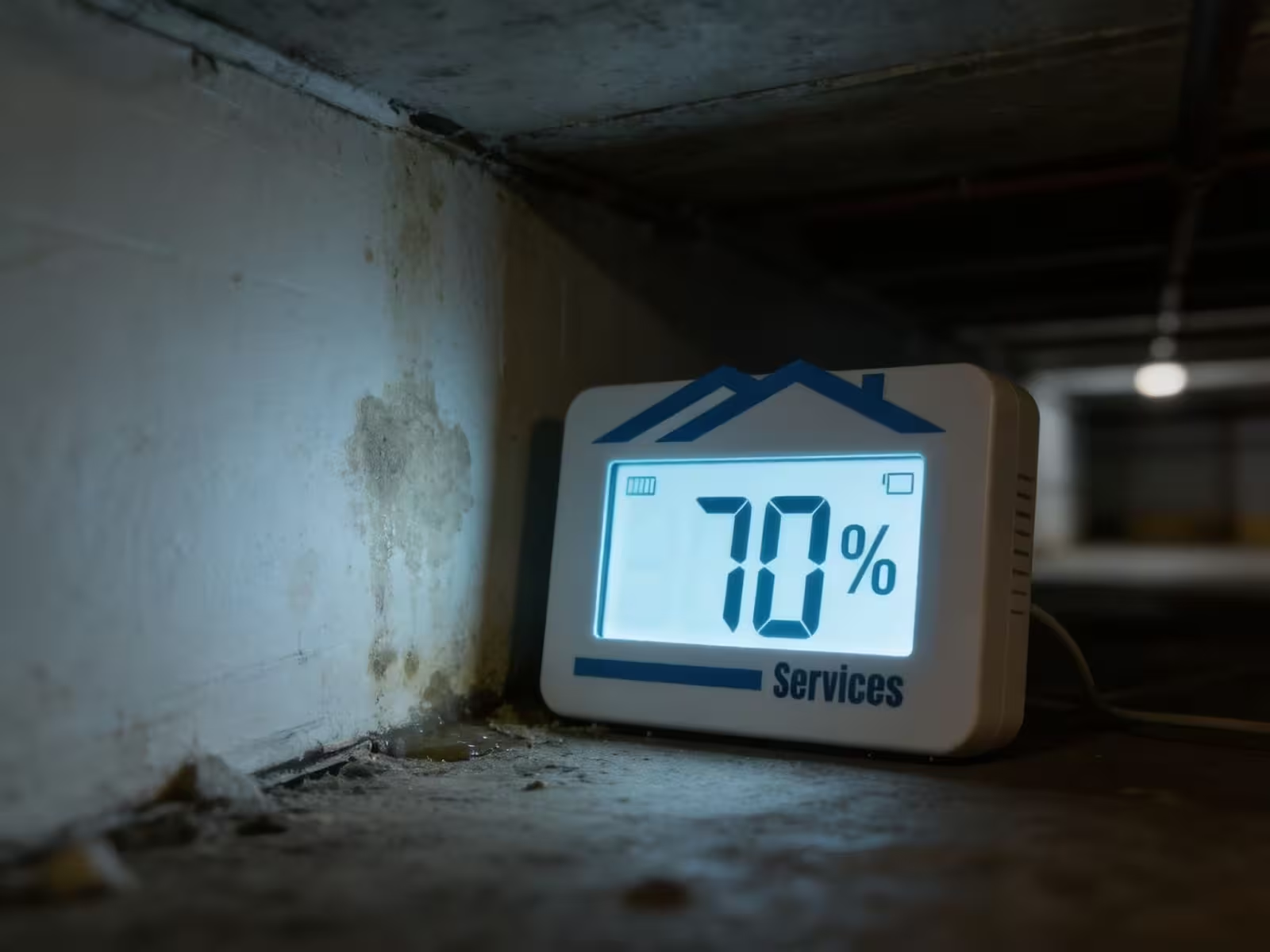
Denver’s high-altitude air is naturally dry, which often gives homeowners a false sense of security. However, when water is trapped in a closed basement, the relative humidity (RH) can spike from 20% to over 70% in a matter of hours. This creates a "greenhouse effect" where the air becomes saturated. To provide effective Mold Remediation Denver residents can rely on, we must manage this humidity immediately to prevent the air itself from feeding the mold colonies.
Why Air Exchange is More Important Than Heat
A common mistake in DIY restoration is turning up the furnace to "dry out" a room. While heat can increase the rate of evaporation, without proper air exchange, you are simply creating a warm, humid incubator for spores. Professional mold remediation in Denver utilizes a specific "Air Changes per Hour" (ACH) calculation to ensure the environment stays hostile to mold.
The Technical Pillars of Air Management
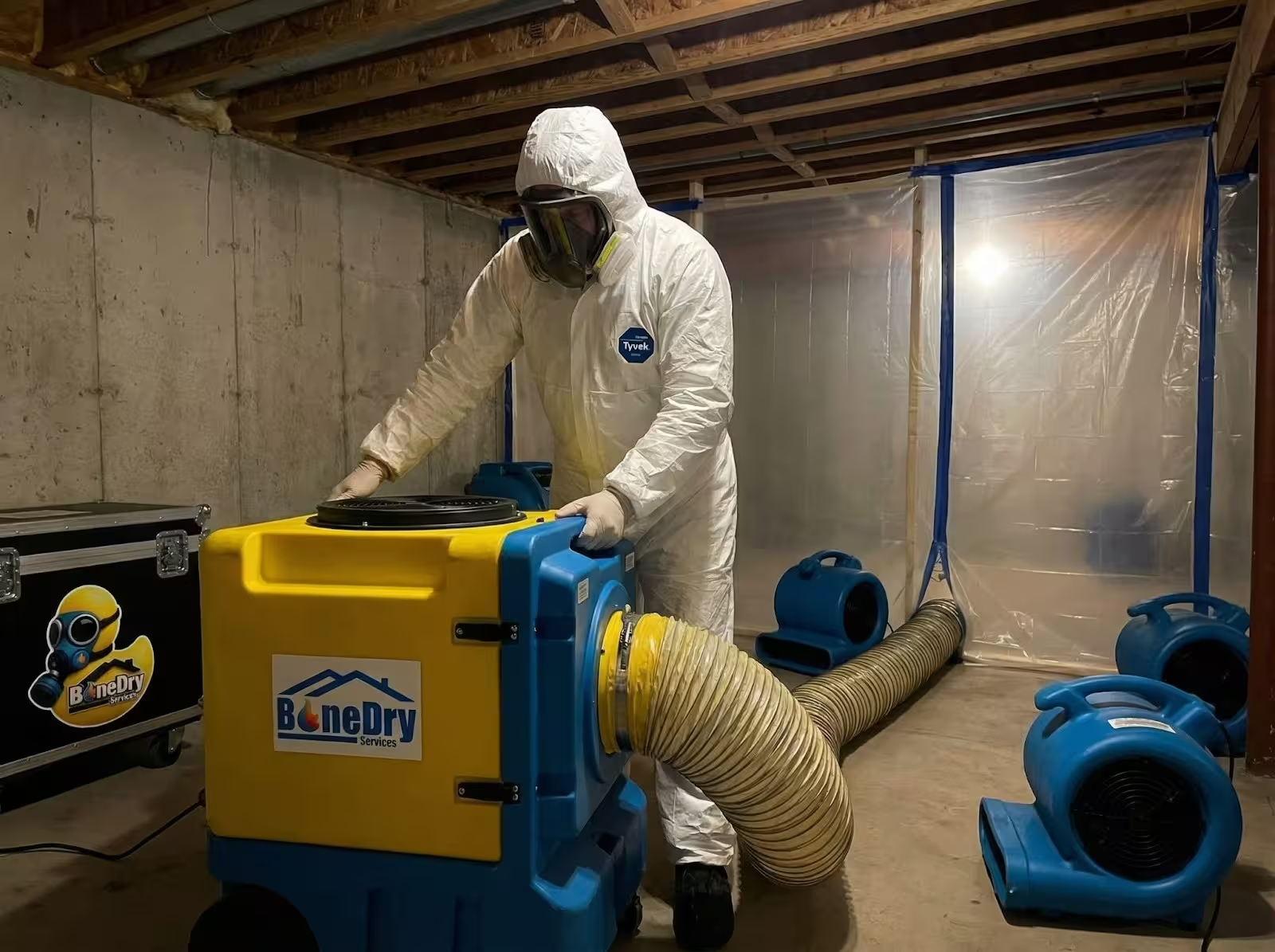
- Vapor Pressure Management: By using LGR dehumidifiers, we create a pressure differential that pulls "bound water" out of dense materials like structural studs.
- HEPA Filtration Systems: As we dry the environment, we must ensure that any disturbed mold spores are captured by 99.97% efficient filters rather than being blown into the HVAC system.
- Balanced Evaporation Rates: If the surface dries too fast while the core remains wet, the material can "case harden," trapping moisture inside and leading to internal rot.
- Negative Pressure Containment: In high-risk areas, we seal off the affected zone with 6-mil poly sheeting to ensure that contaminated air does not migrate to the living quarters.
Understanding Secondary Damage in Closed Denver Basements
Secondary damage is the destruction caused by the environment rather than the liquid water itself. This includes warped hardwood floors, sagging ceilings, and peeling wallpaper in rooms that were never even touched by the flood. Our Water Damage Restoration protocols are designed to stabilize the entire property’s atmosphere, not just the "wet" room, to avoid the need for extensive secondary mold remediation in unaffected areas.
The Role of Hygroscopic Materials in Water Events
Materials like wood, insulation, and drywall are "hygroscopic," meaning they actively absorb water vapor from the air. Even if your floor is dry, your walls may be "drinking" the humidity from the air, causing them to swell and lose structural integrity.
- Drywall Degradation: Once drywall absorbs 15% moisture, it loses its structural bond and becomes a primary food source for mold.
- Structural Stud Saturation: Deep moisture in 2x4 studs can lead to "dry rot" if the moisture isn't extracted via professional mold remediation.
- Adhesive Breakdown: High humidity destroys the glue in plywood and engineered flooring, leading to permanent delamination and the need for floor replacement.
Closing the Loop with Technical Drying Standards
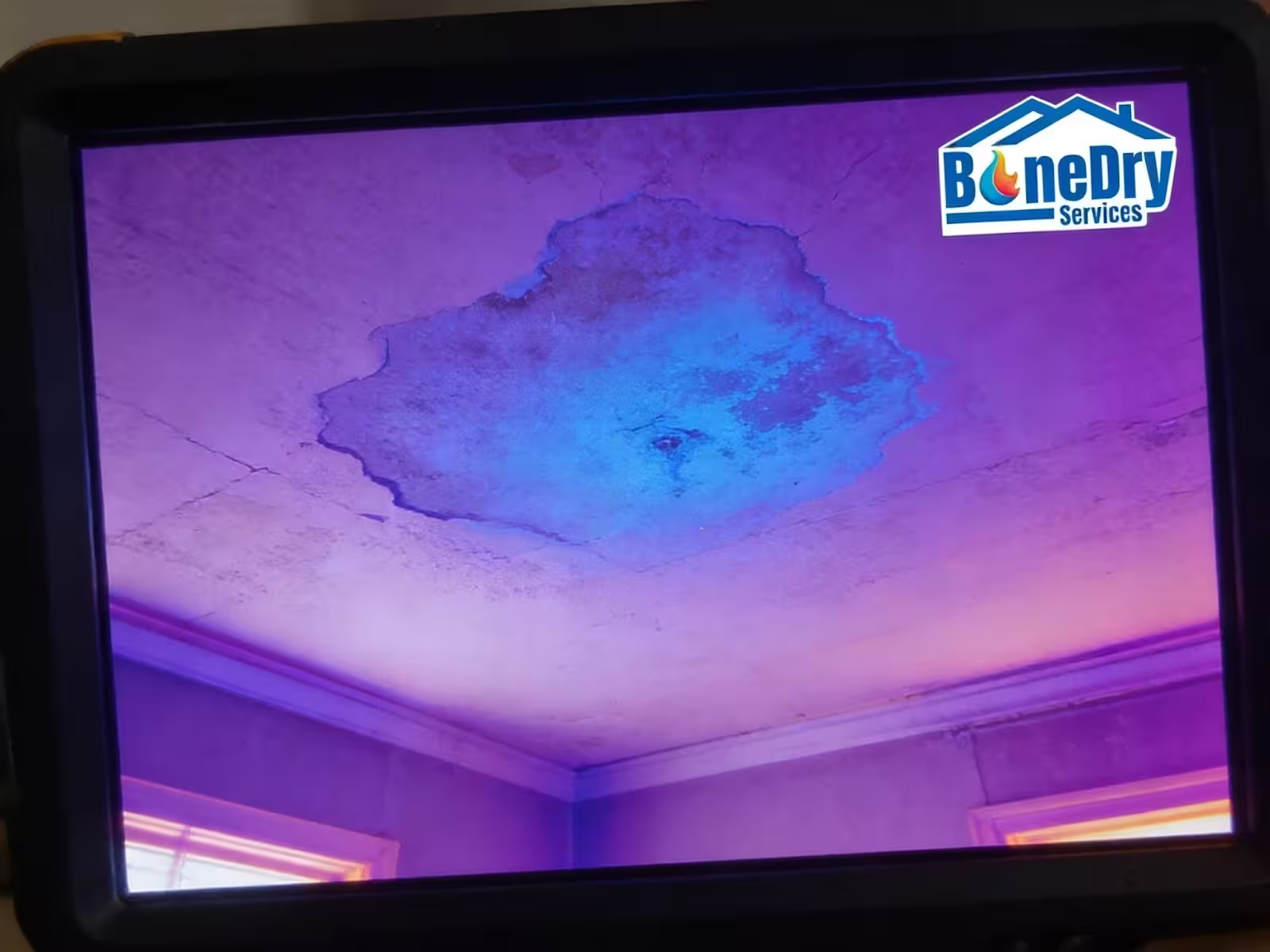
To ensure a property is truly safe, we adhere to the IICRC S520 standards for mold. This involves reaching a "Dry Standard," which is a pre-determined moisture level based on an unaffected part of the home. Without reaching this standard, any sewage cleanup or drying effort is incomplete, and the mold will simply return once the fans are turned off. We use non-invasive moisture meters and thermal imaging to confirm every inch of the substrate is below the mold-growth threshold.
📞 Is your 48-hour clock ticking? Contact BoneDry Services at (303) 276-4163 for a professional moisture inspection and start your Mold Remediation Denver today.
FAQ
Q1: What is a water line causing secondary damage?
A water line is the visible mark of standing water, but secondary damage often occurs above it. Through "wicking," water can climb 24 inches up a drywall sheet from the floor. This creates a hidden damp zone behind your paint where mold remediation becomes necessary, even if the floor was dried quickly.
Q2: Does water damage get worse over time?
Yes, it is a progressive condition. Within hours, materials swell; by 48 hours, microbial growth becomes active. This transitions a project from simple drying into a complex mold remediation job involving containment and specialized chemicals. Delaying mitigation often triples the eventual restoration costs.
Q3: What is an example of secondary damage?
A common example is "cupping" in hardwood floors in a room adjacent to a leak. The wood absorbs high humidity from the air, causing the edges to rise higher than the center. Other examples include mold on ceilings caused by basement floods or the corrosion of electronics due to localized humidity.
Q4: Can water damage be claimed on insurance?
Most "sudden and accidental" damage is covered by homeowners' insurance. However, if you wait too long and mold develops, policies may limit coverage for mold remediation due to "neglect." Immediate professional documentation is critical to ensure your claim is fully approved and paid.
Q5: How to tell if water damage is serious?
Damage is serious if it involves "Category 3" water (sewage) or if it has remained unaddressed for over 24 hours. Musty odors, bubbling paint, or soft subfloors indicate moisture has reached the structural substrate. Any dampness lasting over 48 hours requires a mold remediation specialist's evaluation.