Blog

Water Damage Restoration Denver for Older Metro Homes

Parker Brown

CEO of BoneDry Services

Feb 25

In this article

    Water Damage Restoration Denver and Common Causes of Water Damage in Older Metro Homes

    Owning a historic or older home in the Denver metro area comes with a unique set of challenges, particularly when it comes to moisture. From Congress Park to Highland, older properties possess character but often hide aging infrastructure that leads to sudden emergencies. When a leak occurs, immediate Water Damage Restoration Denver is essential to prevent permanent structural rot and toxic mold growth.

    Aging Plumbing Systems and the Need for Water Damage Restoration Denver

    Many older homes in Denver still contain their original plumbing, which may include galvanized steel or even lead pipes. Over several decades, these materials corrode from the inside out, leading to pinhole leaks hidden behind lath and plaster walls.

    When these pipes finally burst, the volume of water can be catastrophic. Our team specializing in Water Damage Restoration Denver often finds that these leaks have been slow-dripping for months, requiring extensive structural drying and dehumidification to save the original woodwork and framing.

    Common Signs of Plumbing Failure Requiring Water Damage Restoration Denver

    • Discolored Water: Rusty or brown water indicating pipe corrosion.
    • Visible Wall Stains: Yellow or brown rings on ceilings and walls.
    • Drop in Water Pressure: Often caused by sediment buildup or active leaks.
    Corroded plumbing causing the need for professional Water Damage Restoration Denver in a historic property.

    Foundation Cracks and External Water Damage Restoration Denver Risks

    Denver’s soil is known for being "expansive," meaning it shifts significantly between wet and dry seasons. In older homes, foundations have had decades to settle, often resulting in deep cracks. During heavy spring rain or rapid snowmelt, water is forced through these fissures into your basement or crawl space.

    Without professional Water Damage Restoration Denver, this groundwater can compromise the stability of your home. We use thermal imaging to detect moisture paths through the foundation, ensuring that our mold removal and remediation protocols are applied to every affected area before the cracks are sealed.

    Protecting Your Foundation With Water Damage Restoration Denver

    Groundwater entry is particularly dangerous in older Denver homes because it can lead to foundation erosion. Our specialized Water Damage Restoration Denver process ensures that water is not only removed but that the structural integrity of the concrete is preserved.

    Strategic Drainage for Long-Term Protection

    Comprehensive Water Damage Restoration Denver identifies why moisture entered in the first place. In many historic neighborhoods, clogged gutters or improper soil grading funnel thousands of gallons of runoff toward your foundation. Our team evaluates these external factors, recommending solutions like French drains or sump pump upgrades. By addressing the root cause, our Water Damage Restoration Denver process ensures your basement stays dry long after the initial cleanup is complete.

    Sewer Line Aging and Emergency Water Damage Restoration Denver

    In older Denver neighborhoods, many homes are still connected to the city's main lines via original clay sewer pipes. Over time, tree roots from mature maples and oaks penetrate these pipes, causing blockages and collapses. This leads to the most "category 3" (black water) emergencies we see.

    Health Hazards Addressed by Water Damage Restoration Denver

    A sewage backup requires specialized Water Damage Restoration Denver because the water is highly contaminated. Our sewage cleanup experts address:

    • Pathogen Elimination: Neutralizing E. coli and other harmful bacteria.
    • Odor Neutralization: Removing the pungent smells associated with sewer failures.
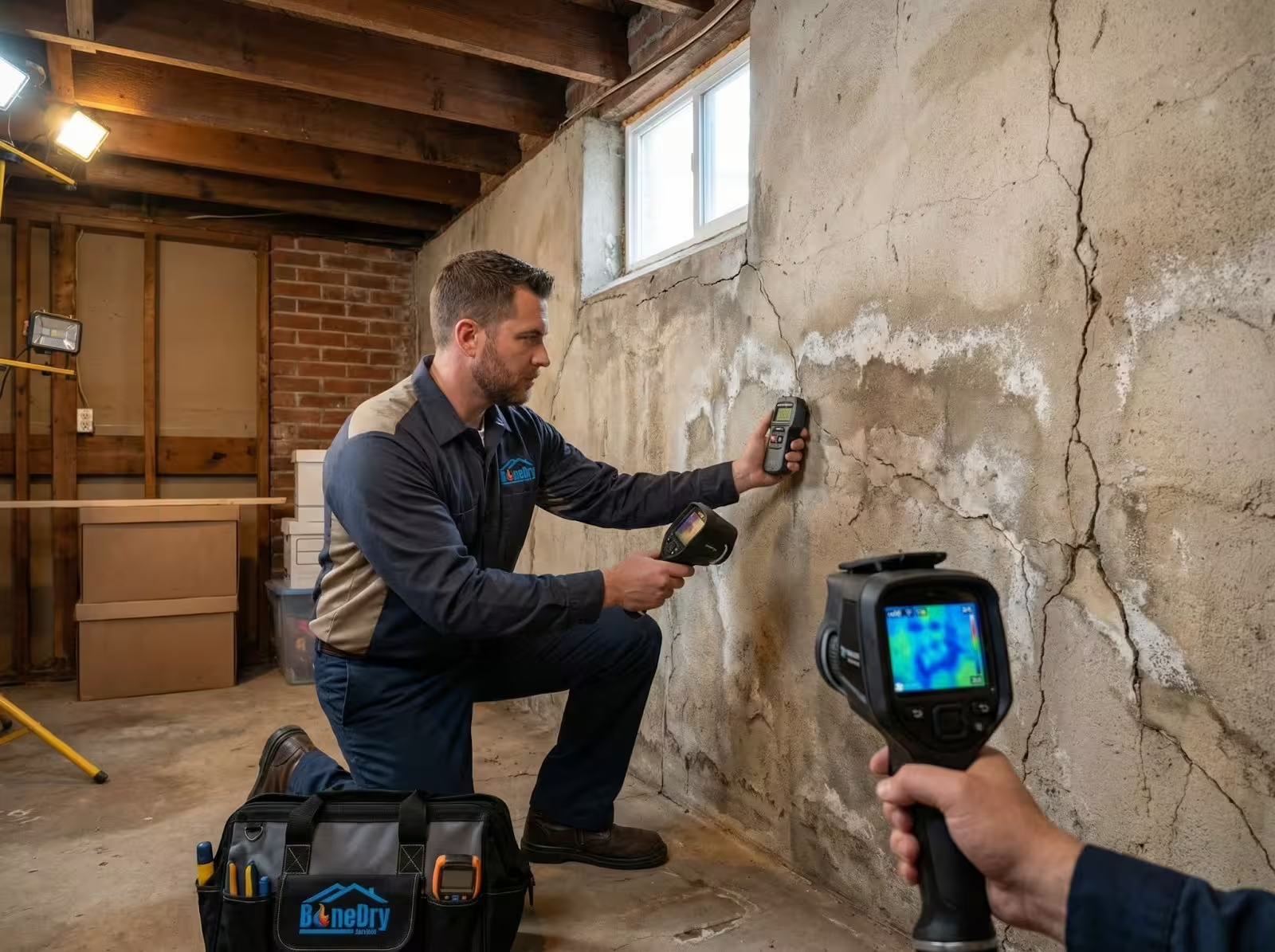
    Technician performing Water Damage Restoration Denver to identify moisture entry points in an old foundation.

    The Proven Process for Water Damage Restoration Denver in Older Homes

    Rapid Extraction for Water Damage Restoration Denver

    The first step is always removing the standing water. In older homes with porous materials like hardwood or lath, every minute counts to prevent the materials from warping beyond repair or suffering permanent saturation.

    Scientific Drying and Water Damage Restoration Denver Monitoring

    Older Denver properties often contain hidden wall cavities or "dead air" spaces that trap moisture behind thick plaster. We utilize high-velocity air movers and specialized targeted ventilation systems to force dry air into these internal voids, providing a critical level of precision in comprehensive Water Damage Restoration Denver.

    Ensuring Safety Through Water Damage Restoration Denver Inspections

    Once the drying is complete, we conduct a final safety inspection. We ensure that the unique architectural elements of your Denver property—from historic trim to original plaster—are stabilized and ready for the reconstruction phase.
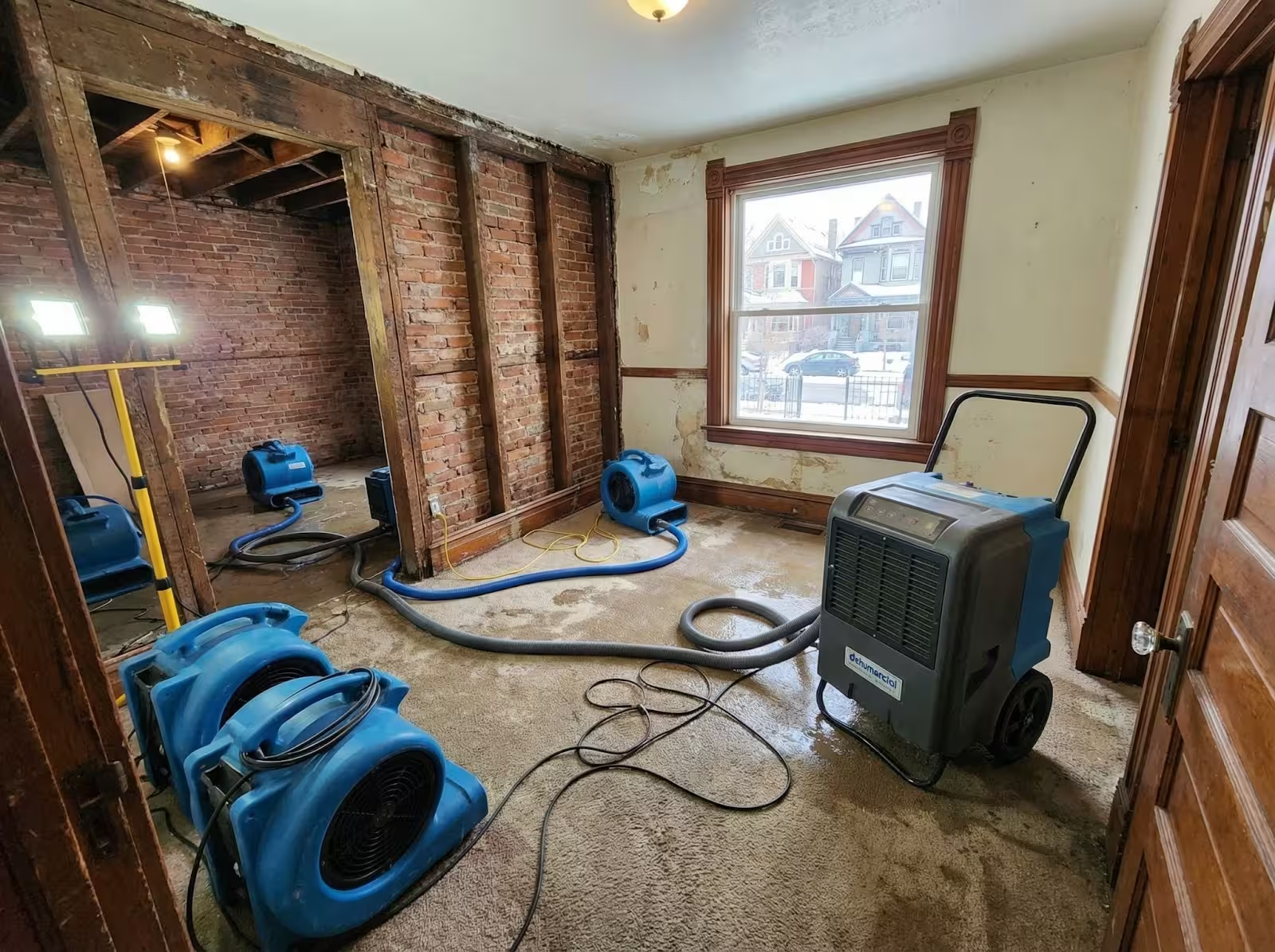
    Industrial equipment used during Water Damage Restoration Denver to prevent mold and structural rot.

    Contact BoneDry Services for Expert Water Damage Restoration Denver

    If your older Denver home is showing signs of a leak, foundation moisture, or plumbing failure, don't wait. BoneDry Services offers a 90-minute arrival guarantee to provide the most reliable Water Damage Restoration Denver available. We understand the architecture of Denver’s historic homes and treat your property with the respect it deserves.

    📞 Call us now at (303) 276-4163 to schedule your free inspection and begin the restoration process today.

    FAQ

    Q1: Can water damage be repaired?

    Yes. Professional Water Damage Restoration Denver can save most structures and contents if the extraction and drying process begins within 24–48 hours.

    Q2: How quickly does mold grow after water damage?

    Mold typically begins to colonize within 24 to 48 hours. Professional Water Damage Restoration Denver is essential to dry the property before spores can spread.

    Q3: How much does mold remediation cost in Denver?

    In the Denver area, small remediation projects usually range from $1,500 to $3,500, while extensive structural mold removal can exceed $6,000 depending on the damage.

    Recent Articles

    04 Mar 2026

    Substrate Saturation: The Science of Water Damage Restoration in Denver

    Don't let hidden moisture rot your home. BoneDry Services uses scientific Water Damage Restoration to dry your property from the inside out.
     read more

    Substrate Saturation: The Science of Water Damage Restoration in Denver

    When a property suffers a leak or flood, the most dangerous moisture is the kind you cannot see. Many Denver property owners assume that once the carpets feel dry, the recovery process is complete. However, "touch-dry" is a dangerous myth.

    True restoration requires addressing substrate saturation—the moisture trapped deep within structural studs, subfloors, and masonry that leads to long-term rot. At BoneDry Services, we don't just dry your surfaces; we provide the advanced Water Damage Restoration Denver residents need to protect their home’s structural integrity.

    Why "Touch-Dry" is a Myth for Water Damage Restoration Denver Homes

    Surface dryness is often an illusion. You might run a shop vac and a household fan, but professional evidence proves that moisture remains trapped in porous materials. This is known as "bound water." Without industrial-grade equipment to create a vapor pressure differential, this moisture remains stagnant. This is particularly dangerous in Denver's climate, where seasonal shifts can cause trapped moisture to cycle through freeze-thaw patterns, accelerating structural decay and rapid fungal growth.

    A high-tech moisture meter showing high saturation levels in a wooden structural stud during professional Water Damage Restoration.

    The Risks of Old Plumbing and Sewer Aging in Denver

    Many established neighborhoods in Denver feature old plumbing systems that are reaching the end of their lifespan. Galvanized steel and cast iron pipes are prone to internal corrosion, leading to pinhole leaks that saturate wall substrates for months before they are discovered. Furthermore, sewer aging is a major contributor to "Category 3" water losses. When an aging sewer line backs up, it introduces highly porous building materials to pathogens and excessive moisture. In these cases, our sewage cleanup team focuses on deep-cleaning the substrate to ensure no biological contaminants remain trapped.

    Addressing Foundation Cracks and Subfloor Saturation

    Denver’s expansive clay soil is notorious for shifting, which often results in foundation cracks. These cracks act as highways for groundwater to seep into your basement or crawlspace. Once water enters through the foundation, it doesn't just sit on the floor; it undergoes capillary action, pulling moisture upward into the drywall and wall studs. Effective Water Damage Restoration Denver must account for the "dry standard" of the specific material by monitoring capillary suction and hygroscopic absorption.

    Advanced Technology for Water Damage Restoration Denver: Moisture Mapping

    To ensure a property is truly safe, we utilize moisture mapping. Water restoration without mapping is merely guesswork. By identifying the exact boundaries of the moisture pocket, our team can target specific areas rather than tearing out entire rooms unnecessarily. We utilize Infrared (IR) Cameras to detect temperature differences caused by evaporative cooling. These cameras reveal blue "cool" spots where water is hiding behind a seemingly dry coat of paint.

    A thermal imaging camera showing hidden blue moisture spots behind a dry wall during the Water Damage Restoration process.

    Specialized Structural Drying Equipment and Psychrometrics

    We don't use standard household fans. Our team utilizes high-velocity air movers and LGR (Low Grain Refrigerant) dehumidifiers. These are the heavy hitters of structural drying and dehumidification. By lowering the "grains per pound" (GPP) of the air, we create a vapor pressure differential. This acts as a vacuum for moisture: because the air is so dry, the water trapped inside the dense wooden studs is "pulled" out into the air where it can be processed by the dehumidifier.

    Heavy-duty industrial air movers and LGR dehumidifiers working in a flooded room to provide deep Water Damage Restoration.

    Choosing BoneDry Services for Technical Restoration

    Don't settle for a surface-level clean that leaves your home's skeleton vulnerable to decay. Whether you are dealing with a pipe burst, foundation cracks, or a failing sewer line, you need the technical expertise of BoneDry Services. We provide the most thorough Water Damage Restoration Denver has to offer, going beneath the surface to protect your home.

    📞 Call BoneDry Services now at (303) 276-4163 to schedule your scientific moisture inspection and start your water damage restoration today.

    FAQ

    Q1: Does water damage dry on its own?

    Technically, water will eventually evaporate, but it rarely does so fast enough to prevent permanent damage. In a typical home environment, stagnant moisture trapped behind drywall or under floorboards creates a greenhouse effect. This leads to mold growth within 24–48 hours and the degradation of structural adhesives and wood fibers. Professional intervention is required to manipulate the environment’s temperature and humidity to force evaporation before structural rot or toxic mold colonies take hold.

    Q2: Can water damage stop a touch screen?

    Yes, water damage is a frequent culprit for touchscreen failure in smart home hubs and appliances. Moisture can seep behind the glass and interfere with the capacitive layer that detects your finger's electrical charge. If the water contains minerals or contaminants—common in pipe bursts or flood scenarios—it can create "parasitic capacitance" or short-circuit the internal ribbon cables. Professional drying helps, but often the corrosion caused by the water requires the replacement of the interface panel itself.

    Q3: How many days for water damage to dry?

    On average, a professional drying cycle takes between 3 to 5 days, but this timeline depends heavily on the materials involved. Highly porous materials like drywall dry quickly, while dense materials like hardwood, concrete, or "Class 4" materials require much longer durations and specialized equipment. If the substrate is fully saturated due to foundation cracks or aging plumbing, we may need to use targeted heat drying or floor mat systems to reach the "dry standard," which can extend the process to over a week.

    Q4: How to dry out water damage?

    The most effective way to dry water damage is through a process called "In-Place Drying" using psychrometric science. This involves using high-velocity air movers to break the "boundary layer" of air on a surface and LGR dehumidifiers to remove the moisture from the air. By creating a high vapor pressure differential, we pull the water out of the structural elements. Simply opening windows or using household fans is insufficient, as it doesn't address the bound water trapped deep within the building's subfloors and wall studs.

    Q5: How to tell if water damage is still wet?

    You cannot accurately tell if a material is wet by touch alone, as many materials feel dry to the hand while their core remains saturated. Professionals use two primary tools: non-invasive moisture meters and thermal imaging cameras. Moisture meters measure the electrical conductivity or impedance within a material to provide a percentage of saturation. Thermal cameras detect "cool spots" created by evaporative cooling, which clearly show the boundaries of where water is still hiding behind seemingly dry surfaces.

    Q6: Is water dry until you touch it?

    This is a common misconception; water is never "dry," but it can be "bound" within a material's cellular structure. In the restoration industry, we distinguish between free water (surface liquid) and bound water (moisture absorbed by the material). Even if a wall looks perfectly normal and feels dry to the touch, it can hold enough bound water to support mold growth and wood rot. This is why we use scientific "Dry Standards" to compare the affected area to a known dry part of your home to ensure true restoration.

    Water damage restoration in Denver
    25 Feb 2026

    Water Damage Restoration Denver for Older Metro Homes

    Protect your historic Denver property from aging pipes and foundation leaks. BoneDry Services provides 24/7 Water Damage Restoration Denver with a 90-minute arrival.
     read more

    Water Damage Restoration Denver and Common Causes of Water Damage in Older Metro Homes

    Owning a historic or older home in the Denver metro area comes with a unique set of challenges, particularly when it comes to moisture. From Congress Park to Highland, older properties possess character but often hide aging infrastructure that leads to sudden emergencies. When a leak occurs, immediate Water Damage Restoration Denver is essential to prevent permanent structural rot and toxic mold growth.

    Aging Plumbing Systems and the Need for Water Damage Restoration Denver

    Many older homes in Denver still contain their original plumbing, which may include galvanized steel or even lead pipes. Over several decades, these materials corrode from the inside out, leading to pinhole leaks hidden behind lath and plaster walls.

    When these pipes finally burst, the volume of water can be catastrophic. Our team specializing in Water Damage Restoration Denver often finds that these leaks have been slow-dripping for months, requiring extensive structural drying and dehumidification to save the original woodwork and framing.

    Common Signs of Plumbing Failure Requiring Water Damage Restoration Denver

    • Discolored Water: Rusty or brown water indicating pipe corrosion.
    • Visible Wall Stains: Yellow or brown rings on ceilings and walls.
    • Drop in Water Pressure: Often caused by sediment buildup or active leaks.
    Corroded plumbing causing the need for professional Water Damage Restoration Denver in a historic property.

    Foundation Cracks and External Water Damage Restoration Denver Risks

    Denver’s soil is known for being "expansive," meaning it shifts significantly between wet and dry seasons. In older homes, foundations have had decades to settle, often resulting in deep cracks. During heavy spring rain or rapid snowmelt, water is forced through these fissures into your basement or crawl space.

    Without professional Water Damage Restoration Denver, this groundwater can compromise the stability of your home. We use thermal imaging to detect moisture paths through the foundation, ensuring that our mold removal and remediation protocols are applied to every affected area before the cracks are sealed.

    Protecting Your Foundation With Water Damage Restoration Denver

    Groundwater entry is particularly dangerous in older Denver homes because it can lead to foundation erosion. Our specialized Water Damage Restoration Denver process ensures that water is not only removed but that the structural integrity of the concrete is preserved.

    Strategic Drainage for Long-Term Protection

    Comprehensive Water Damage Restoration Denver identifies why moisture entered in the first place. In many historic neighborhoods, clogged gutters or improper soil grading funnel thousands of gallons of runoff toward your foundation. Our team evaluates these external factors, recommending solutions like French drains or sump pump upgrades. By addressing the root cause, our Water Damage Restoration Denver process ensures your basement stays dry long after the initial cleanup is complete.

    Sewer Line Aging and Emergency Water Damage Restoration Denver

    In older Denver neighborhoods, many homes are still connected to the city's main lines via original clay sewer pipes. Over time, tree roots from mature maples and oaks penetrate these pipes, causing blockages and collapses. This leads to the most "category 3" (black water) emergencies we see.

    Health Hazards Addressed by Water Damage Restoration Denver

    A sewage backup requires specialized Water Damage Restoration Denver because the water is highly contaminated. Our sewage cleanup experts address:

    • Pathogen Elimination: Neutralizing E. coli and other harmful bacteria.
    • Odor Neutralization: Removing the pungent smells associated with sewer failures.
    Technician performing Water Damage Restoration Denver to identify moisture entry points in an old foundation.

    The Proven Process for Water Damage Restoration Denver in Older Homes

    Rapid Extraction for Water Damage Restoration Denver

    The first step is always removing the standing water. In older homes with porous materials like hardwood or lath, every minute counts to prevent the materials from warping beyond repair or suffering permanent saturation.

    Scientific Drying and Water Damage Restoration Denver Monitoring

    Older Denver properties often contain hidden wall cavities or "dead air" spaces that trap moisture behind thick plaster. We utilize high-velocity air movers and specialized targeted ventilation systems to force dry air into these internal voids, providing a critical level of precision in comprehensive Water Damage Restoration Denver.

    Ensuring Safety Through Water Damage Restoration Denver Inspections

    Once the drying is complete, we conduct a final safety inspection. We ensure that the unique architectural elements of your Denver property—from historic trim to original plaster—are stabilized and ready for the reconstruction phase.

    Industrial equipment used during Water Damage Restoration Denver to prevent mold and structural rot.

    Contact BoneDry Services for Expert Water Damage Restoration Denver

    If your older Denver home is showing signs of a leak, foundation moisture, or plumbing failure, don't wait. BoneDry Services offers a 90-minute arrival guarantee to provide the most reliable Water Damage Restoration Denver available. We understand the architecture of Denver’s historic homes and treat your property with the respect it deserves.

    📞 Call us now at (303) 276-4163 to schedule your free inspection and begin the restoration process today.

    FAQ

    Q1: Can water damage be repaired?

    Yes. Professional Water Damage Restoration Denver can save most structures and contents if the extraction and drying process begins within 24–48 hours.

    Q2: How quickly does mold grow after water damage?

    Mold typically begins to colonize within 24 to 48 hours. Professional Water Damage Restoration Denver is essential to dry the property before spores can spread.

    Q3: How much does mold remediation cost in Denver?

    In the Denver area, small remediation projects usually range from $1,500 to $3,500, while extensive structural mold removal can exceed $6,000 depending on the damage.

    Professional Biohazard Cleanup Denver and Certified Expert Services
    25 Feb 2026

    Professional Biohazard Cleanup Services in Colorado

    From unattended deaths to hoarding, BoneDry Services provides discreet and certified biohazard remediation with a 90-minute arrival guarantee.
     read more

    Professional Biohazard Cleanup Denver and Certified Expert Services

    Biohazard situations are among the most sensitive scenarios a property owner can face. Unlike standard cleaning, biohazard cleanup Denver involves the removal and disinfection of hazardous materials that pose significant health risks. In Colorado, where extreme weather and remote mountain properties can complicate discovery, professional intervention is a safety requirement.

    Handling these environments without specialized training and equipment can lead to the spread of infectious diseases. This guide covers why professional help is necessary for biohazard cleanup and what to expect from the remediation process.

    Identifying Environments That Require Biohazard Cleanup Denver

    A biohazard is any biological substance that threatens human health. When these substances seep into porous materials, household cleaners are insufficient. Professional biohazard cleanup Denver ensures every trace of contamination is neutralized. This often requires structural drying and dehumidification if fluids have saturated the building's framework.

    The Importance of Professional Certification for Denver Biohazard Cleanup

    • Pathogen Neutralization: Eliminating bloodborne pathogens like Hepatitis B and HIV.
    • Legal Compliance: Disposing of hazardous waste according to Colorado OSHA regulations.
    • Structural Safety: Preventing biological fluids from causing permanent rot or requiring mold removal and remediation.
    Professional biohazard remediation specialist sealing a contaminated room for safe cleaning.

    Critical Situations for Biohazard Cleanup Denver and Trauma Remediation

    In Colorado, certain scenarios require more than a standard cleaning crew. To protect your health and property value, professional biohazard cleanup is essential for the following situations.

    Trauma Scene and Unattended Death Biohazard Cleanup Denver

    When a death goes undiscovered, decomposition releases contaminants that penetrate floorboards. Our experts use enzyme-based cleaners to break down biological matter and industrial odor removal treatments to eliminate smells at a molecular level.

    Hoarding and Extreme Filth Biohazard Cleanup Denver

    Hoarding often hides secondary hazards. If the property has also suffered from sewage cleanup issues or animal waste, professional intervention is vital for:

    • Animal Waste: Neutralizing ammonia and zoonotic diseases.
    • Hidden Sharps: Safely disposing of needles or glass buried in clutter.

    Fentanyl and Drug Lab Biohazard Cleanup Denver

    A rising concern in the Front Range is drug residue. Even microscopic amounts of fentanyl can be lethal. We provide specialized decontamination to ensure the property is safe and legally compliant for occupancy.

    The BoneDry Certified Process for Biohazard Cleanup Denver

    Industrial electrostatic sprayer being used for precision sanitization during a biohazard cleanup.

    Initial Assessment and Denver Property Containment

    Technicians identify affected areas and set up physical barriers to prevent cross-contamination. If the property was damaged during an incident, we may provide an emergency board-up to secure the structure.

    Advanced Removal and Hospital Grade Sanitization

    • Safe Disposal: Saturated items are removed as regulated medical waste via our contents restoration protocols.
    • Deep Scrubbing: Surfaces are treated with hospital-grade biocides.
    • Final Restoration: We return the home to its original state through reconstruction services.

    Trust BoneDry Services for Discreet Biohazard Cleanup Denver

    Dealing with a biohazard is emotionally and physically taxing. BoneDry Services provides compassionate remediation across Colorado. Our certified technicians arrive within 90 minutes to secure the scene, ensuring your property is safe and fully restored.

    BoneDry Services team providing a certificate of sanitization after a successful biohazard cleanup.

    📞 Call us at (303) 276-4163 to speak with a specialist and schedule an immediate inspection.

    FAQ

    Q1: Is biohazard cleanup covered by insurance?

    In many cases, yes. Most homeowners' policies cover remediation for trauma or sudden loss. We help with documentation for your claim.

    Q2: Can I clean a biohazard scene myself?

    It is not recommended. Without industrial-grade disinfectants and PPE, you risk exposure to infectious diseases that household cleaners cannot kill.

    Q3: How long does the cleanup process take?

    Most projects are completed within 24 to 72 hours, though extreme hoarding cases may take longer.

    Q4: Is the cleanup process discreet?

    Yes. We operate with the utmost respect for your privacy and use professional vehicles to maintain a low profile in your neighborhood.

    Q5: What happens to the items that are removed?

    All biohazardous waste is transported and disposed of at a licensed medical waste facility according to federal regulations.

    Colorado Springs Basement Flooding Water Damage Restoration
    25 Feb 2026

    Colorado Springs Water Damage Restoration and Flood Guide

    Protect your home during a Colorado Springs basement flooding spike. Expert water damage restoration tips and 24/7 help from Bone Dry Services.
     read more

    Colorado Springs Basement Flooding Spike What Homeowners Should Prepare For

    A sudden basement flood is a homeowner’s nightmare and in Colorado Springs these incidents often come in spikes rather than steady occurrences. Whether it is a rapid spring thaw from Pikes Peak snowmelt or a sudden summer downpour typical of the Front Range the risk to your home is constant.

    When water enters your home the clock starts ticking. Without immediate water damage restoration a small puddle can quickly evolve into a structural crisis or a hazardous mold outbreak within just 24 to 48 hours. This guide explores why Colorado Springs is prone to these spikes and how you can protect your property.

    Why Colorado Springs Basements Flood More Often Right Now

    Living at the foot of the Rockies creates unique environmental pressures on residential foundations. Homeowners in neighborhoods from Briargate to Old Colorado City often face flooding due to several common local factors.

    1. Hydrostatic Pressure from Snowmelt As heavy snow on the mountains melts the soil becomes oversaturated. This creates hydrostatic pressure literally pushing groundwater through microscopic cracks in your basement’s concrete floor or walls.
    2. The Front Range Flash Floods Colorado Springs is famous for intense short duration rainstorms. When the ground is hard-packed it cannot absorb water quickly leading to surface water rushing toward window wells.
    3. Sump Pump Overload During a weather spike sump pumps work overtime. If yours is older or lacks a battery backup a mechanical failure during a storm can lead to an instant flood.
    4. Frozen Pipe Bursts Our rapid temperature swings cause pipes to freeze and thaw quickly. A pipe that cracks in the middle of the night can dump hundreds of gallons of water into your basement before you wake up.

    Pro Tip If you notice damp spots on your basement walls or a musty odor don't wait for a flood. Early mold remediation can save you thousands in structural repairs later.

    Bone Dry Services technician performing emergency water damage restoration in a Colorado Springs basement

    What to Do the Moment You Find Water in Your Basement

    If you find standing water in your basement, your priority is safety and mitigation. Follow these steps to minimize the need for extensive water damage restoration and keep your family safe.

    • Kill the Power Never walk into a flooded basement if the water has reached electrical outlets or your circuit breaker is located downstairs.
    • Stop the Flow If the flood is caused by a burst pipe shut off the main water valve immediately.
    • Document for Insurance Before you move anything, take photos and videos. This documentation is vital for your insurance claim.

    Call the Experts Contact a certified team for 24/7 water damage restoration to begin the professional drying process.

    Using thermal imaging for water damage restoration to find hidden leaks in Colorado Springs homes

    Using Household Fans for Flood Cleanup Is Not Enough

    Many homeowners believe that a few shop-vacs and household fans are enough to handle a basement flood. Unfortunately surface level drying often leaves moisture trapped in wall cavities insulation and wooden floor joists.

    This trapped moisture is the primary cause of wood rot and black mold. Professional water damage restoration involves industrial-grade dehumidifiers and high-velocity air movers that pull moisture out of the very structure of your home, not just the surface.

    A properly installed sump pump with battery backup a key step in preventing the need for water damage restoration

    From Extraction to Reconstruction: We Do It All

    We Do It All Most cleaning companies suck the water out and leave you with a gutted basement. Bone Dry Services is a full-service restoration firm. We handle the dirty work of cleanup and the skilled work of rebuilding your basement to its original beauty.

    • One Point of Contact: No need to juggle plumbers, cleaners, and contractors.
    • Advanced Tech: We use thermal moisture mapping to find hidden water.
    • Guaranteed Results: We don't leave until your home is Bone Dry and fully restored.


    Contact Bone Dry Services for Immediate Help

    If you are experiencing a basement flood or suspect hidden water damage in your Colorado Springs home call the experts at Bone Dry Services immediately. We provide free inspections and work with all major insurance carriers to get your life back to normal.

    📞 Call Now for a Free Inspection (303) 276-4163


    FAQs

    1. How much will insurance pay for a flooded basement?

    It depends on the source of the water:

    • Burst Pipes/Appliance Failure: Usually covers the full cost of restoration and repairs (minus your deductible).
    • Sump Pump/Sewer Backup: Only covered if you have a specific "rider." These typically have caps of $5,000 to $25,000.
    • Rain/Snowmelt: Standard policies pay $0. You need separate Flood Insurance for weather-related groundwater.

    2. Is it worth going through insurance for water damage?

    • Yes: If the damage is extensive (wet drywall, soaked carpets, or sewage) and the cost is significantly higher than your deductible.
    • No: If the repair is minor. Filing a claim can increase your premiums for several years.
    • The Pro Tip: If the estimate is less than double your deductible, it is often cheaper in the long run to pay out of pocket.

    3. How much does it cost to fix basement flooding?

    In 2026, most homeowners will spend between $2,000 and $7,000 for cleanup.

    • Minor (Clean water/small area): $1,500 – $3,000
    • Moderate (Drywall & floor damage): $4,000 – $8,000
    • Severe (Sewage/Black water): $10,000 – $15,000+

    Note: These prices cover the cleanup (mitigation). Putting back new carpet and drywall (reconstruction) can double these totals.

    25 Feb 2026

    Sewage Backups During Freezes in Colorado Springs: The Dangers

    Deep freezes in Colorado Springs can cause toxic frozen sewer lines. Learn the warning signs and why professional sewage cleanup is vital for health and safety.
     read more

    Sewage Cleanup Denver and Colorado Springs Homeowners Should Watch For During Freezes

    When a deep freeze settles over Colorado Springs, most homeowners worry about bursting fresh water supply pipes. However, there is a nastier, more hazardous winter plumbing threat that rarely gets discussed until it happens: frozen sewer lines.

    While less common than supply line freezes, a frozen sewer lateral (the pipe connecting your home to the city main) is a catastrophic event. When the exit route for your home’s wastewater freezes shut, everything you flush or drain has nowhere to go but back into your home. This is a biohazard emergency requiring immediate, professional sewage cleanup.

    Do Sewer Lines Freeze and Require Sewer Line Cleaning in Colorado Springs

    It seems counterintuitive—sewastewater is usually warm, so how does it freeze?

    In Colorado Springs, the frost line (the depth to which the ground freezes) can reach several feet deep during sustained periods of sub-zero temperatures. While flowing sewer water usually stays liquid, issues arise when:

    1. Low Flow Volumes: If a faucet is dripping slowly to prevent fresh water freezes, that small amount of water can slowly turn to ice layers in the main sewer line before reaching the city connection.
    2. Shallow Pipes or Settling: In older Front Range homes, sewer pipes may have shifted upward over time due to soil movement, bringing them closer to the freezing surface zone.
    3. Uninsulated Exit Points: The most vulnerable point is often where the sewer pipe leaves the home's foundation and enters the frozen ground.
    Snow covering a residential sewer clean out area where pipes are vulnerable to freezing during a Colorado Springs deep freeze.

    The Mechanics of Backed Up Sewage Pressure and The Plug

    Once an ice dam forms inside your sewer line, it creates an immovable plug. The immediate danger is pressure buildup.

    Every time a toilet is flushed, a shower is run, or the washing machine drains, gallons of water enter the system behind the ice blockage. This hydraulic pressure seeks the path of least resistance. Unfortunately, that path is usually back up through the lowest drains in your home—typically basement floor drains, utility sinks, or downstairs showers.

    Severe Dangers of Sewage Contamination and the Need for Sewage Restoration

    The most critical thing for homeowners to understand is that this water is not clean. In the restoration industry, sewage is classified as Category 3 Water, also known as "black water."

    It is highly contaminated with fecal matter, urine, harsh chemicals, and countless pathogenic bacteria, viruses, and parasites (such as E. coli, Salmonella, and Hepatitis).

    DIY cleanup is dangerous and ineffective. Standard household cleaners are insufficient for sanitizing porous materials like concrete, drywall, and framing lumber that have absorbed sewage. Failing to perform professional sewage cleanup immediately can lead to:

    • Severe long-term health risks for your family.
    • Permanent structural damage to the home’s foundation.
    • Rapid development of toxic mold that feeds on the organic waste matter.
    Backed up sewage water flooding a basement floor drain due to a frozen line requiring professional extraction.

    Warning Signs You Need Sewer Line Cleaning or Emergency Help

    Catching a frozen sewer line early can save you from a massive cleanup operation. During a severe Colorado Springs cold snap, watch for these signs:

    1. Gurgling Sounds Lower in the Home

    If you flush an upstairs toilet and hear loud gurgling or bubbling coming from a basement toilet or floor drain, air is trapped in the line due to a forming blockage.

    2. Multiple Slow Drains Simultaneously

    If the kitchen sink, bathroom shower, and laundry tub all start draining slowly at the exact same time during freezing weather, the main exit line is likely obstructed by ice.

    3. Foul Odors

    The smell of raw sewage near floor drains or utility sinks suggests water traps have dried out or waste is backing up near the surface.

    4. Water Backing Up into Odd Places

    The classic sign: You flush a toilet, and filthy water immediately backs up into the shower tub next to it. This indicates a complete blockage downstream.

    Immediate Steps to Take for Sewage Cleanup Denver and Colorado Springs

    If you suspect a sewer freeze and backup is occurring:

    1. Stop Using Water Immediately: Do not flush toilets, run sinks, or use appliances like dishwashers. You are only adding to the mess that will eventually end up on your floor.
    2. Evacuate the Area: Keep children, pets, and anyone with compromised immune systems away from the affected level of the home.
    3. Do Not Touch the Water: Avoid any contact with the sewage.

    Call Professionals: You need BoneDry Services for emergency sanitation and extraction.

    BoneDry Services technicians performing professional sewage cleanup Denver and Colorado Springs residents trust.

    Why Professional Sewer Clean Out Services and Restoration are Non Negotiable

    When a sewer line freezes and backs up, the restoration process is far more complex than typical water damage. It requires specialized sanitation protocols to ensure the home is safe for habitation.

    At BoneDry Services, a sewer backup is more complex than standard water damage restoration. It requires:

    • Containment: Setting up negative air pressure to keep contaminants from spreading.
    • Industrial Sanitation: Using hospital-grade disinfectants to sanitize porous materials.
    • Scientific Drying: Ensuring no moisture is trapped behind walls to prevent mold.

    Professional Restoration

    If you suspect a frozen sewer line, stop using water immediately and call the experts. BoneDry Services provides rapid, 24/7 sewage cleanup in Colorado Springs. We don't just "mop up"—we sanitize, dry, and restore your home to a safe, healthy condition.

    📞 Call now for immediate service: (303) 276-4163

    FAQ Section

    1. How do I know if my sewer line is frozen or just clogged?

    If you have multiple drains backing up at once—specifically on the lowest level of your home—it is likely a frozen main line. If flushing a toilet causes water to bubble up in your shower or floor drain during a cold snap, you have a sewer freeze emergency.

    2. Will homeowners insurance cover a sewage backup?

    Standard policies often require a specific "Sewer and Drain Backup" rider. Without this add-on, many companies will not cover the cost of sewage cleanup or restoration. Always check your policy before the winter season hits.

    3. Can I clean up a sewage backup myself with bleach?

    No. Bleach kills some surface bacteria but cannot reach the biohazards absorbed by porous concrete or wooden wall studs. Professional restoration is required to scientifically sanitize the structure and ensure the air is safe to breathe.

    4. How fast does mold grow after a sewage backup?

    In the damp, nutrient-rich environment of a sewage spill, mold can begin to colonize in 24 to 48 hours. Rapid extraction and professional drying are the only ways to prevent a secondary mold infestation.

    5. Can I pour antifreeze down the drain to prevent a freeze?

    Never use automotive antifreeze; it is toxic to the environment. However, you can use non-toxic "RV Antifreeze" in floor drains that aren't used often to prevent the water in the trap from freezing and cracking the pipe.

    Contact Us

    Get in Touch with Us

    Whether you need emergency restoration services or have a question, our team is just a message away. Let us know how we can assist you.
    Thank you! Your submission has been received!
    Oops! Something went wrong while submitting the form.

    24/7 Water Damage Restoration

    Mold Removal & Remediation

    Fire Damage Restoration

    Biohazard Cleanup

    Storm Damage Restoration

    Sewage Cleanup

    Emergency Board-Up

    Structural Drying & Dehumidification

    Contents Restoration

    Odor Removal