

IICRC S500 Standards: Why Technical Rigor Protects Your Home Value in Water Damage Restoration
When a pipe bursts or a storm floods your basement, the immediate reaction is often "get the water out." However, professional Water Damage Restoration is a complex science governed by strict international protocols. At BoneDry Services, we strictly adhere to the IICRC S500 Standard for Professional Water Damage Restoration. These guidelines are not just suggestions; they are the blueprint for ensuring your home is returned to a pre-loss condition while protecting its long-term structural integrity and market value.
The Gold Standard of Water Damage Restoration: What is IICRC S500?
The Institute of Inspection, Cleaning and Restoration Certification (IICRC) publishes the S500, which is the "bible" of the industry. This document defines the procedural standards and common terminology used in professional Water Damage Restoration. Following these standards ensures that every technician on your property is using evidence-based methods rather than "guessing" if a wall is dry.
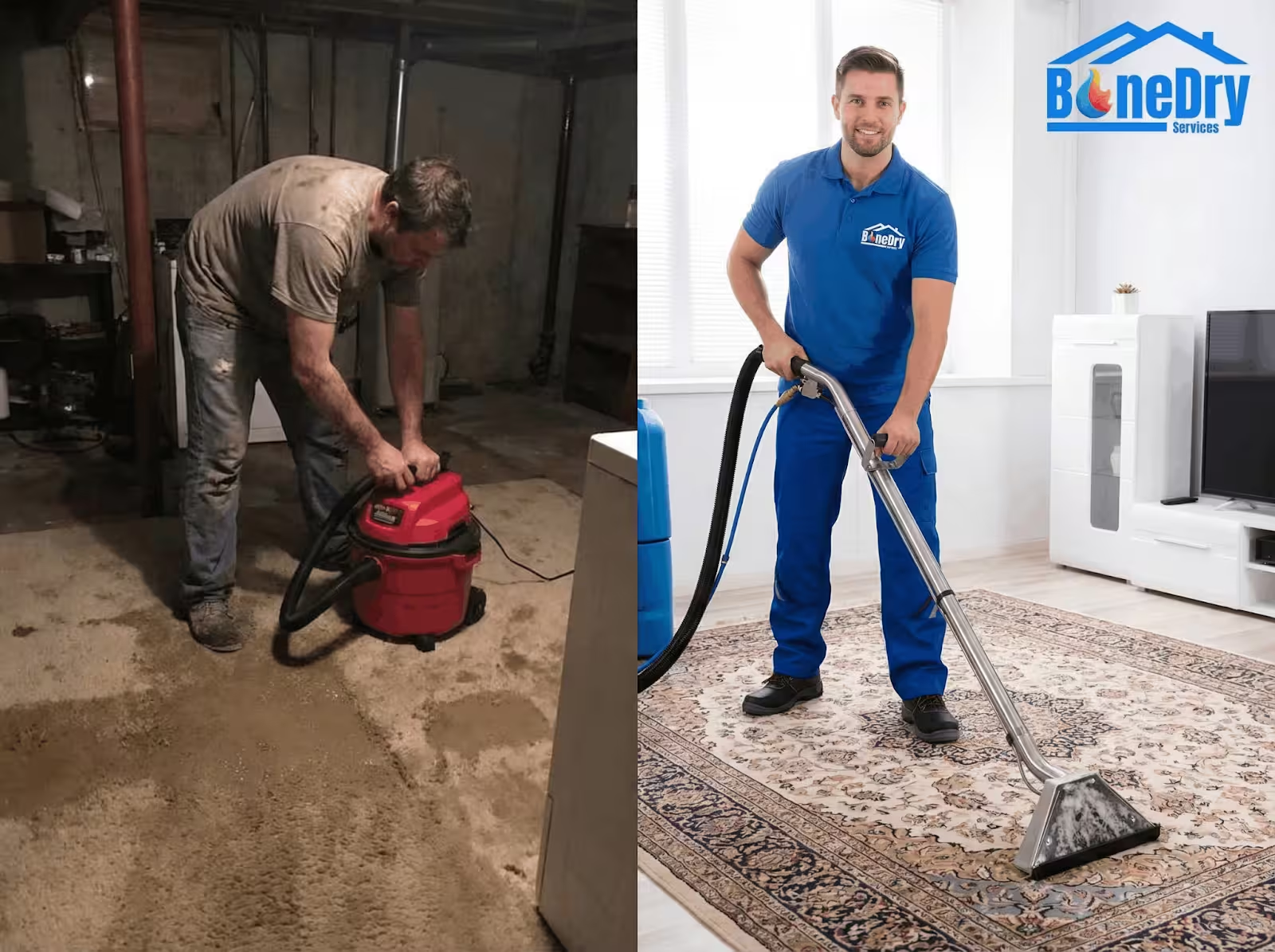
Why "Just a Shop-Vac" Fails Water Damage Restoration Standards
Many homeowners attempt DIY drying with a shop-vac and a few household fans. According to S500 standards, this is fundamentally insufficient for several reasons:
- Sub-Surface Entrapment: Shop-vacs only remove standing surface water. They cannot extract moisture trapped in subflooring, insulation, or sill plates.
- Psychrometrics: Professional Water Damage Restoration requires controlling the air's temperature and relative humidity to "pull" moisture out of dense materials.
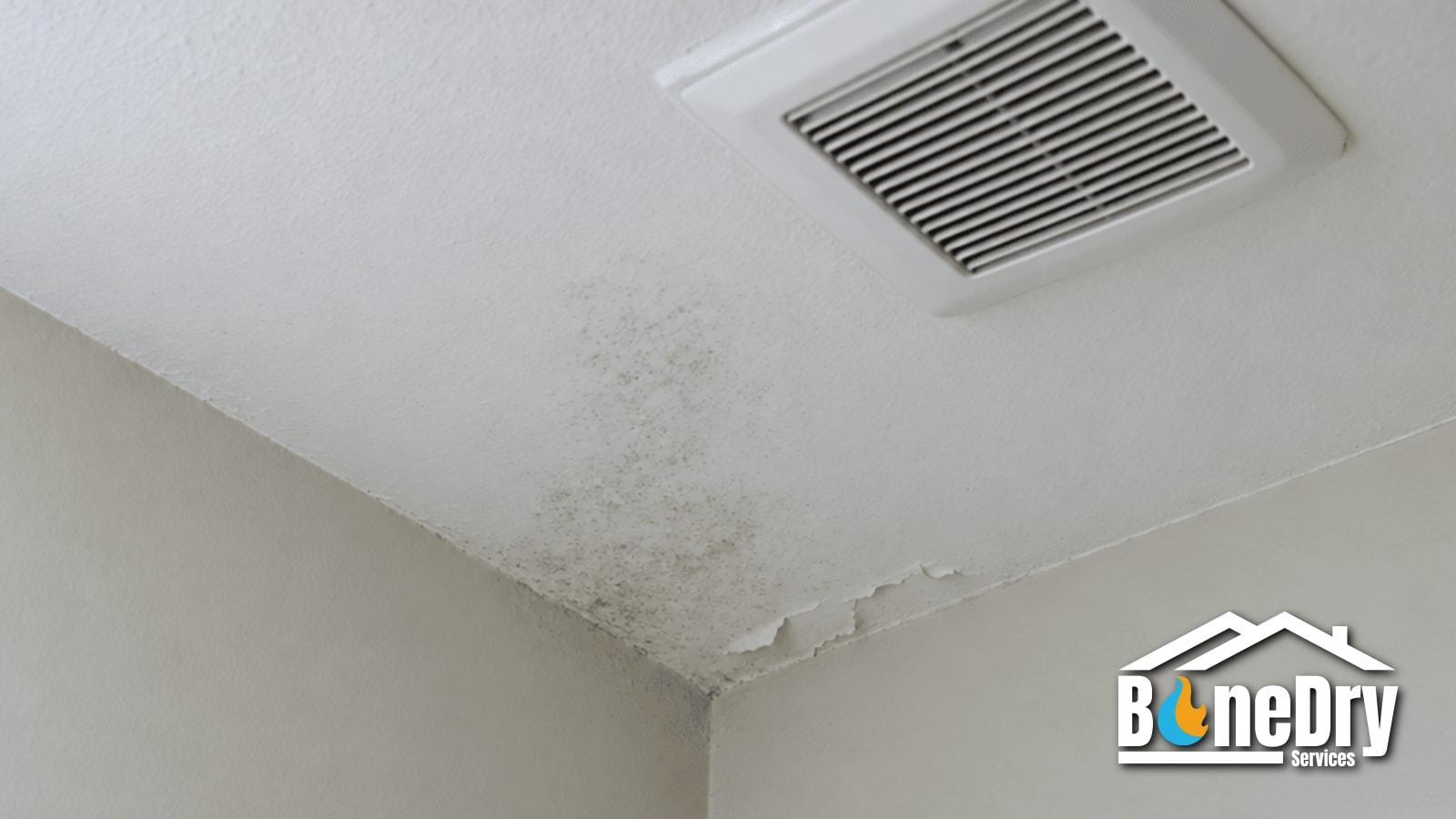
- Microbial Growth: Without the industrial-grade dehumidification required by IICRC standards, mold can begin to colonize within 24 to 48 hours in hidden wall cavities.
Categorizing the Risk: The Science Behind Water Damage Restoration
The IICRC S500 breaks down every project into "Categories" and "Classes." This classification dictates the safety protocols and drying equipment needed for effective Water Damage Restoration.
Categorizing Water Purity (Category 1, 2, and 3)
- Category 1 (Clean Water): Water from a broken supply line. It poses no immediate threat to humans.
- Category 2 (Gray Water): Water with significant contamination (e.g., dishwasher or washing machine overflow).
- Category 3 (Black Water): Grossly contaminated water (sewage, rising river water). This requires specialized Sewage Cleanup protocols to ensure health and safety.
Classifying the Rate of Evaporation
The "Class" refers to the amount of water and the porosity of the materials. A Class 4 loss involves "deeply held moisture" in materials like hardwood or concrete, requiring specialized injection drying systems—a staple of high-end Water Damage Restoration.
Advanced Psychrometrics: The Physics of Professional Water Damage Restoration
To truly understand why the IICRC S500 is the benchmark for Water Damage Restoration, we must look at Psychrometrics—the study of the thermodynamic properties of moist air. Standard restoration is not just about blowing air; it is about managing the relationship between temperature, humidity, and atmospheric pressure to force moisture out of structural materials.
The Role of Vapor Pressure in Water Damage Restoration
When a high-end home suffers a leak, water is driven deep into porous materials like hardwood or drywall. Professional Water Damage Restoration technicians use LGR (Low Grain Refrigerant) dehumidifiers to create an environment with very low vapor pressure.
- High Vapor Pressure: Exists inside the wet building material.
- Low Vapor Pressure: Created in the room’s air by our equipment.
The Result: Moisture is naturally "pulled" from the material into the air, where it is then condensed and pumped out of the building.
Environmental Health & Safety (EHS) in Water Damage Restoration
The IICRC S500 places a heavy emphasis on occupant safety. Water Damage Restoration is not just a construction project; it is a bio-remediation project. If a technician ignores the "Category" of the water, they risk cross-contaminating the entire home with pathogens or mold spores.
Engineering Controls and Containment
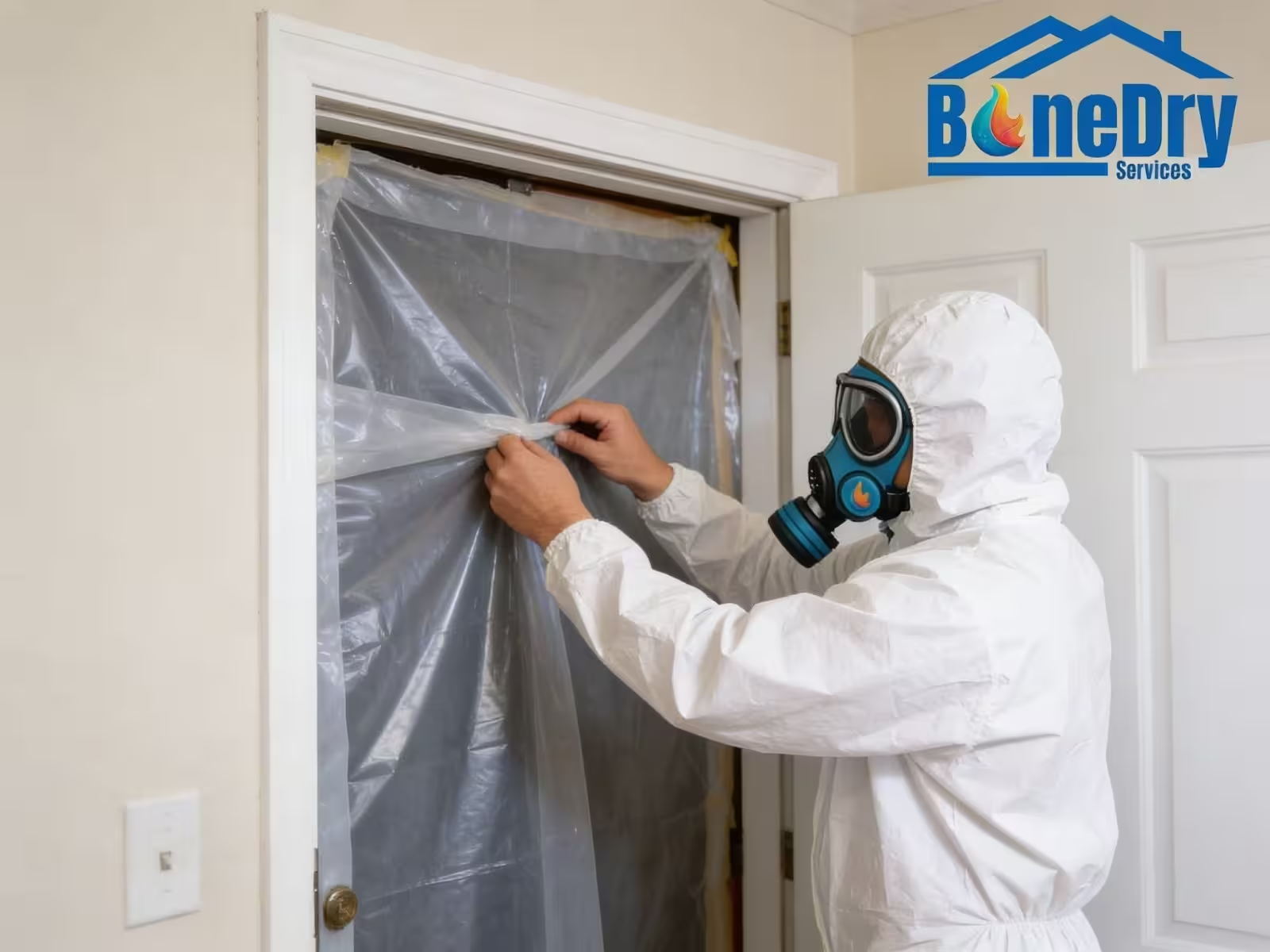
During a complex Water Damage Restoration project, BoneDry Services sets up "Engineering Controls." This includes:
- Decontamination Chambers: Ensuring technicians don't track contaminants from a "Category 3" area into clean living spaces.
- Negative Air Pressure: Using HEPA-filtered air scrubbers to ensure that any dust or microbial growth disturbed during the Water Damage Restoration process is captured rather than inhaled by your family.
- Anti-Microbial Application: Applying EPA-registered botanicals to prevent Mold Remediation needs during the drying phase.
The Administrative Side: Why Standards Matter for Insurance
One of the most overlooked aspects of Water Damage Restoration is the documentation required for insurance reimbursement. Insurance adjusters look for "S500 Compliance." If your restoration company cannot provide moisture maps, daily atmospheric logs, and psychrometric charts, your claim may be denied or underpaid.
BoneDry’s Comprehensive Documentation Suite
When you hire BoneDry for Storm and Wind Damage or interior flooding, we provide a digital trail of evidence:
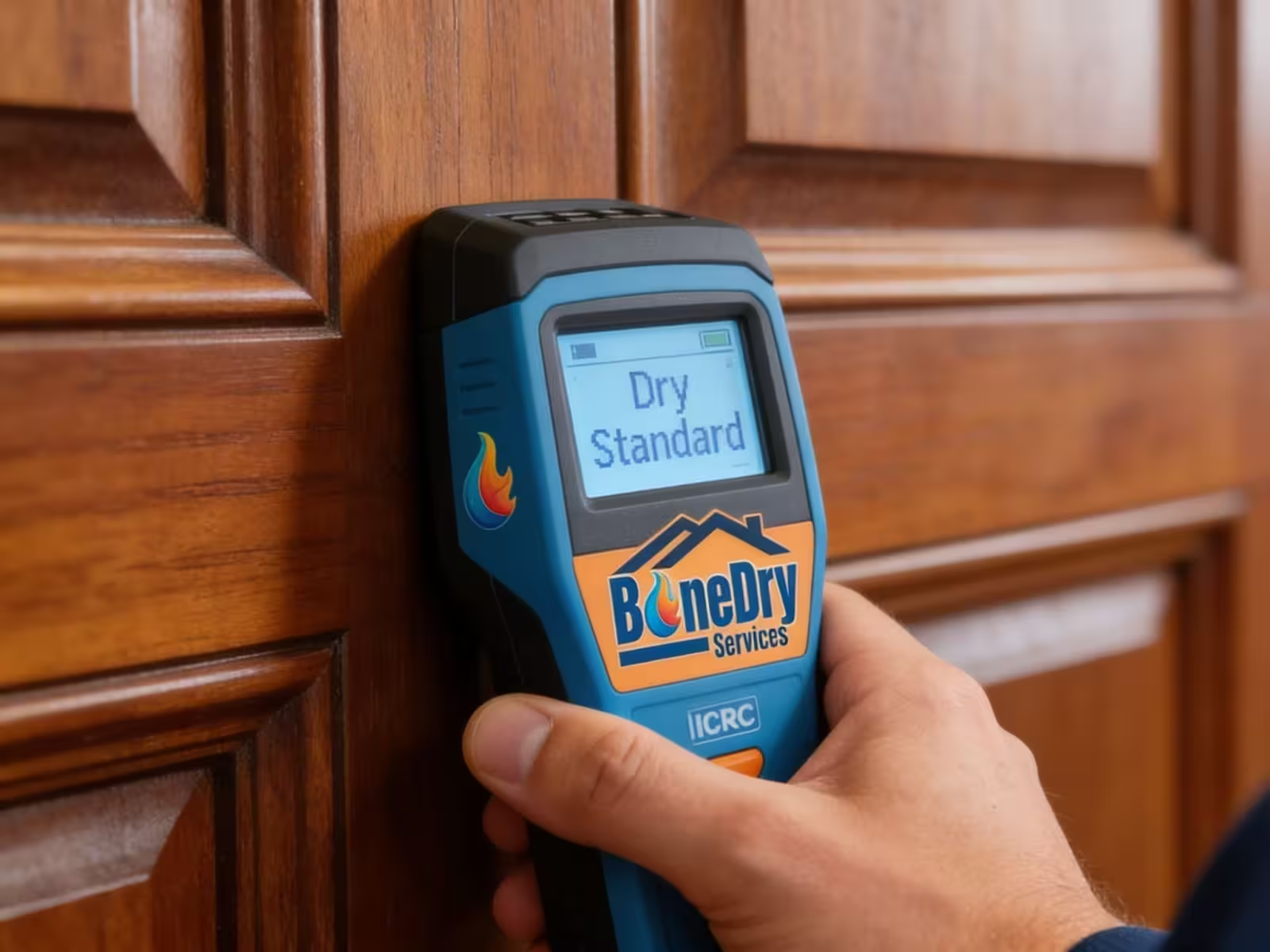
- Moisture Readings: Proof that the home reached its "Dry Standard."
- Photo Documentation: Before, during, and after shots of the Water Damage Restoration progress.
- Standardized Estimating: We use Xactimate to ensure our pricing aligns with insurance expectations for Fire and Smoke Damage and water losses.
📞 Call (303) 276-4163 for an immediate response.
FAQs
Q1: What is the IICRC standard for water damage?
The IICRC S500 is the procedural standard for professional Water Damage Restoration. It establishes the foundation for scientific drying, ensuring technicians use evidence-based methods rather than guesswork. Adhering to this standard protects your property's structural integrity and ensures health and safety throughout the restoration process.
Q2: What is the classification of water damage in the IICRC?
IICRC classifies water into four "Classes" based on the evaporation rate and material porosity. Class 1 involves minimal water absorption, while Class 4 involves deeply held moisture in materials like concrete or hardwood. Correct classification is critical for selecting the right equipment and achieving a successful Water Damage Restoration outcome.
Q3: What is the IICRC water damage restoration test?
The IICRC WRT (Water Damage Restoration Technician) test is a certification exam that verifies a professional's mastery of the S500 standards. It covers psychrometrics, antimicrobial use, and structural drying physics. Hiring a certified BoneDry technician means your home is in the hands of a verified, industry-tested expert.
Q4: What is the S500 protocol?
The S500 protocol is a sequence of mandatory steps for Water Damage Restoration, including inspection, water extraction, equipment setup, and daily moisture monitoring. Following this protocol ensures that a project reaches its "dry standard" safely. This systematic approach is what prevents secondary damage like mold or wood rot in high-end homes.
Q5: How to measure water damage?
Technicians measure moisture using non-penetrating moisture meters, thermal imaging cameras, and thermo-hygrometers. These tools allow us to visualize hidden leaks and calculate the exact specific humidity of the air. This data-driven approach ensures that every pocket of moisture is identified and dried during the Water Damage Restoration process.