Mold can compromise your health and damage your property. BoneDry’s certified specialists respond 24/7 to inspect, remove, and prevent mold growth.


Mold spreads quickly and can cause serious structural and health issues. BoneDry combines fast response, certified remediation methods, and insurance support to keep your home safe.

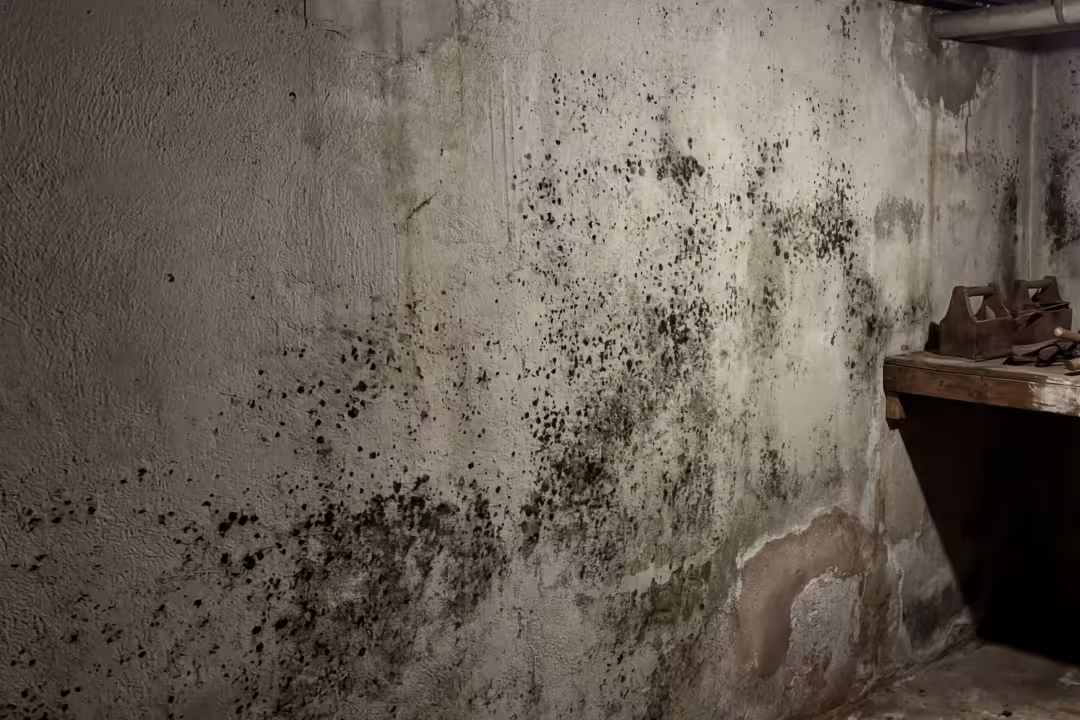
Moisture-related mold in basements and crawl spaces
Toxic mold remediation for health safety
Mold removal from hidden areas
Mitigation after water intrusion
Mold removal after water damage or leaks
Office and business property remediation
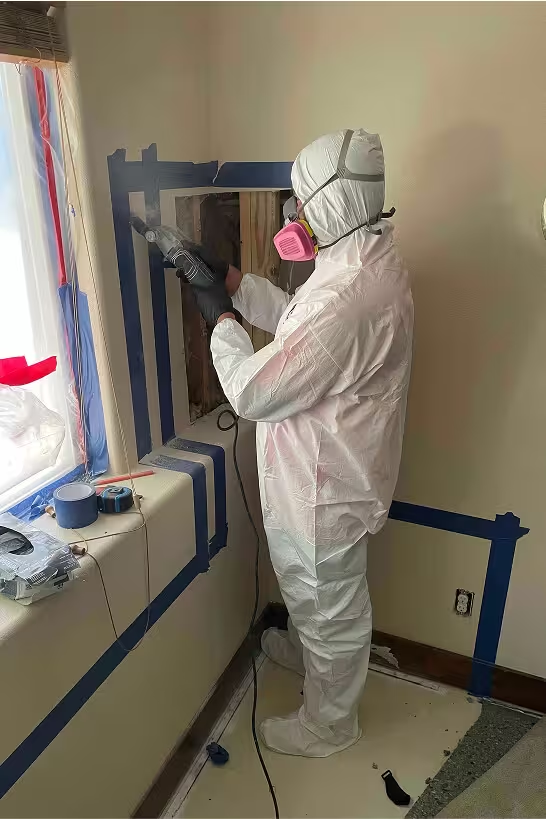
Mold can spread quickly and impact health if not addressed immediately. Our certified team inspects, contains, and removes mold effectively using advanced techniques. We treat surfaces, clean affected areas, and ensure moisture control to prevent future growth. BoneDry provides reliable, safe, and thorough mold remediation for your home or business.
We identify the source and extent of mold growth using professional tools. Our inspections help create a precise remediation plan tailored to your property.
Our experts remove mold using industry-standard practices, ensuring your space is safe, sanitized, and ready for restoration or renovation.
Our certified team inspects, removes, and mitigates mold, ensuring your home or business is safe, healthy, and fully restored.
Quick site assessment to identify mold growth and risks.
Determine affected areas and mold severity for an action plan.
Safely eliminate mold, spores, and contaminated materials.
Restore affected structures and prevent future growth.
Document work, finalize restoration, and assist with claims.
Mold develops in basements, attics, crawl spaces, and water-damaged walls. Quick remediation is essential to protect property and health.
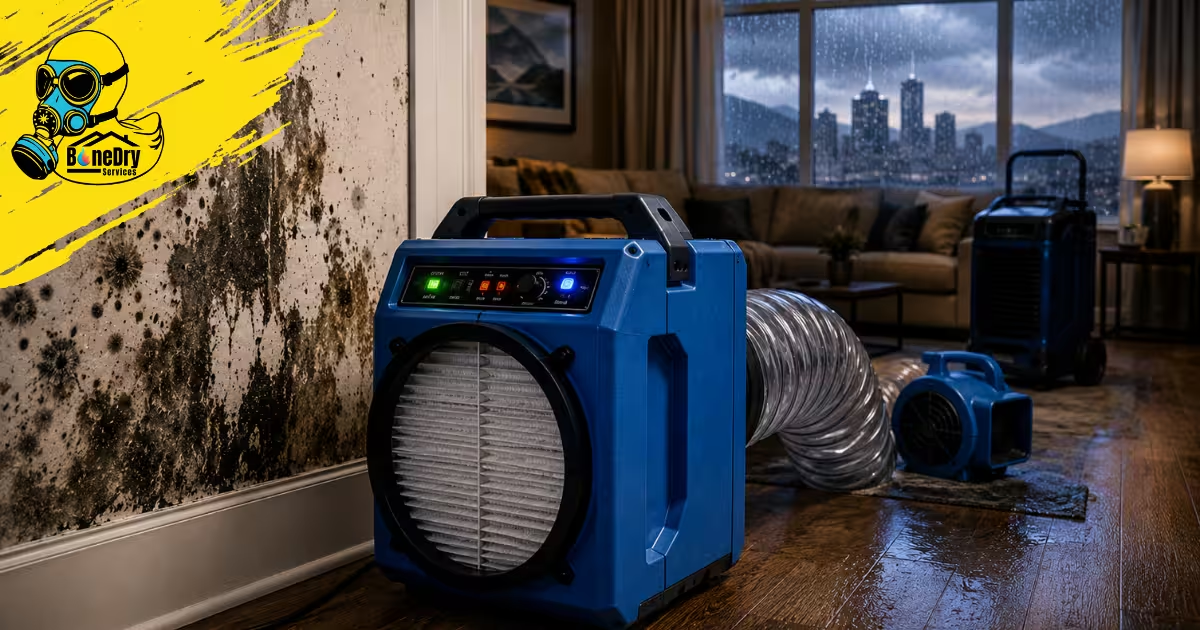
A wet Denver summer leaves more behind than puddles and saturated lawns. Weeks of monsoon humidity can quietly degrade the air inside your home, raising moisture levels, feeding mold growth, and loading the air with allergens and fine particulates long after the storms pass.
This is where Denver homeowners often discover an unexpected truth: the most damaging effects of a wet season are frequently invisible, settling into indoor air and surfaces rather than appearing as obvious water damage. Addressing that lingering air quality problem—through proper drying, air scrubbing, and particulate removal—is just as important as cleaning up any visible moisture.
At BoneDry Services, we see the after-effects of wet Denver summers play out in homes across the metro every year. Elevated humidity and the mold and allergens it encourages do not always announce themselves, but they can affect comfort, health, and the long-term condition of a home. Understanding how to restore clean indoor air is the key to undoing the damage a rainy season leaves behind.
Mold needs three things to thrive: moisture, organic material to feed on, and time. A wet Denver summer supplies all three. Weeks of elevated humidity keep indoor surfaces damp enough for spores to take hold, and the materials in any home—drywall, wood, fabric, dust—give them plenty to grow on. By late summer, homes that never saw a single flood can still develop the conditions that lead to indoor air quality problems, simply from sustained ambient moisture.
The effects extend beyond mold itself. Damp conditions raise the concentration of allergens like dust mites and mold spores in the air, and fine particulates that would normally settle out stay suspended longer in humid environments. The result is indoor air that feels heavy, smells musty, and can aggravate allergies and respiratory sensitivities. Restoring that air to a healthy state is about more than removing visible growth—it means addressing the moisture and the airborne particles together.
Indoor humidity is the hidden driver of most seasonal mold problems. When relative humidity stays elevated for long stretches, moisture condenses on cooler surfaces and soaks into porous materials, creating exactly the damp footholds spores need. You may never see standing water, yet mold can flourish behind furniture, inside closets, and in basements. Controlling humidity is therefore the foundation of effective indoor air quality control—without it, growth simply returns.
Denver's climate is generally dry, which leads many homeowners to assume indoor humidity is never a concern. But during a wet monsoon season, moisture gets trapped inside well-sealed modern homes, and basements in particular hold dampness long after the weather clears. The contrast between a dry outdoor reputation and a humid indoor reality is exactly why post-storm air quality issues catch so many Denver households by surprise.

When a wet season degrades indoor air, the solution is to physically remove the contaminants suspended in it. Air scrubbing does exactly that. An air scrubber pulls air through a series of filters—including a HEPA stage that captures mold spores, allergens, and fine particulates—and returns cleaned air to the room. Run over time, it steadily lowers the concentration of airborne contaminants, which is why air scrubbing is a core part of restoring indoor air quality after a wet season.
Particulate removal works hand in hand with moisture control. There is little point in cleaning the air while the conditions that produced the contamination persist, so drying and dehumidification go alongside filtration. When humidity has fed active growth, our mold removal & remediation teams combine source removal with air scrubbing so both the visible mold and the airborne particles it released are addressed together.
An air scrubber works by continuously cycling a room's air through its filtration stages. Larger particles are caught first, while the HEPA filter traps the smallest and most problematic ones, including mold spores and many common allergens.
Because the unit processes the air repeatedly over hours or days, it gradually reduces the airborne contaminant load far below what passive settling would achieve. The cleaner the air leaving the unit, the healthier the room becomes with each cycle.
A humid summer raises levels of allergens that sensitive household members feel keenly—mold spores, dust, and other fine particles that linger in moist air. These particulates are too small to remove by dusting or ordinary ventilation. HEPA-based air scrubbing captures them at the source, easing the musty smell and the allergy symptoms that often accompany a wet season. Pairing this with humidity control keeps the relief from being temporary.
Restoring healthy indoor air after a wet summer follows a logical order, addressing the cause before polishing the result. This is the sequence we follow on a typical post-storm indoor air quality project:
Following this order ensures the air is not just temporarily cleaned but kept clean, because the moisture conditions that caused the problem have been corrected.

Restoring indoor air after a wet season delivers benefits that go well beyond a fresher smell. Professional indoor air quality care in Denver protects health, comfort, and the home itself:
Lingering humidity often traces back to a moisture source that needs fixing, not just managing. When a leak or seasonal water intrusion is feeding the problem, our structural drying & dehumidification teams dry the structure thoroughly so the air stays healthy for the long term.

The lingering humidity, mold, and allergens left by a rainy season do not have to settle into your home for good. With proper moisture control, source removal, and HEPA air scrubbing, your indoor air can be restored to a clean, healthy state. As Colorado's largest privately owned, family-operated restoration company, BoneDry Services brings the equipment and expertise to address both the moisture and the air it affects.
Yes. Mold only needs sustained moisture, organic material, and time, and a humid Denver summer supplies all three without any flooding at all. Weeks of elevated indoor humidity keep surfaces damp enough for spores to take hold behind furniture, in closets, and in basements. You may never see standing water, yet mold can still develop. This is why air quality and humidity matter as much as visible water damage after a wet season.
An air scrubber continuously pulls room air through filtration stages, including a HEPA filter that captures mold spores, allergens, and fine particulates. Cleaned air is returned to the room, and because the unit cycles the air repeatedly over hours or days, contaminant levels steadily drop. This removes airborne particles that dusting and normal ventilation cannot. It is a core tool for restoring healthy indoor air after a humid season has degraded it.
A musty smell is usually a sign of elevated humidity and the mold or microbial growth it encourages, often in hidden or poorly ventilated areas. The odor comes from compounds released by that growth and from damp materials holding moisture. Simply masking the smell does not solve it. Addressing both the moisture source and the airborne particles—through drying and HEPA air scrubbing—is what actually clears the odor for good.
It is worth watching, especially during monsoon season. While Colorado's outdoor climate is dry, moisture gets trapped inside well-sealed modern homes during wet stretches, and basements hold dampness long after the weather clears. That trapped humidity is enough to encourage mold and degrade air quality. Keeping indoor humidity in a healthy range during and after a wet summer is a simple, effective way to protect your air and your home.
It depends on the size of the space and how degraded the air has become, but air scrubbing works gradually rather than instantly. Because the unit cycles the air repeatedly, contaminant levels fall over hours and days of continuous operation. Pairing it with humidity control speeds and sustains the improvement. A professional assessment can estimate the timeline for your specific situation and confirm when the air has reached a healthy state.

When mold is discovered in one room of a home, the biggest hidden risk is not the visible growth—it is the spores that escape during cleanup and settle elsewhere. Professional mold remediation in Denver is built around one core principle: contain the problem so it never spreads to clean parts of the house.
Disturbing mold without proper containment releases millions of microscopic spores into the air, and those spores can travel through hallways and HVAC systems to colonize new areas. Done correctly, remediation isolates the work zone completely, so the rest of the home stays safe throughout the project.
At BoneDry Services, we want homeowners to understand exactly how that protection works. Two tools do most of the heavy lifting—negative air pressure and HEPA-filtered containment zones—and once you see how they fit together, it is clear why proper containment is the difference between solving a mold problem and accidentally spreading it.
Mold reproduces by releasing spores—tiny, lightweight particles that float easily on air currents. While undisturbed mold stays mostly in place, the act of removing it stirs those spores into the air by the millions. Without containment, the cleanup itself becomes the cause of a larger problem, spreading mold to rooms that were perfectly clean before the work began. This is why every responsible mold remediation project in Denver treats containment as the very first step, not an afterthought.
The stakes are higher in larger Denver-area homes, where open floor plans and shared HVAC systems give spores an easy path to travel. A small bathroom or basement colony, if disturbed carelessly, can seed new growth on the other side of the house within days. Proper containment breaks that chain by sealing the work area off from the rest of the home and controlling exactly where the air—and the spores in it—can go.
Spores move wherever air moves. Open doorways, return vents, foot traffic, and even the airflow from a furnace can carry them from an affected room into clean living spaces. Once they land on a damp surface elsewhere, they can establish a new colony. Understanding this airflow is the foundation of effective mold remediation in Denver—you cannot contain what you do not understand, so the first task is always controlling how air moves through the work zone.
Cutting corners on containment turns a contained, single-room job into a whole-home problem. Homeowners who attempt removal themselves—or hire crews who skip these steps—often find new mold appearing weeks later in rooms that were never affected. What could have been a focused remediation becomes a far larger, costlier project. Proper containment is not an upsell; it is the safeguard that keeps the original problem from multiplying.

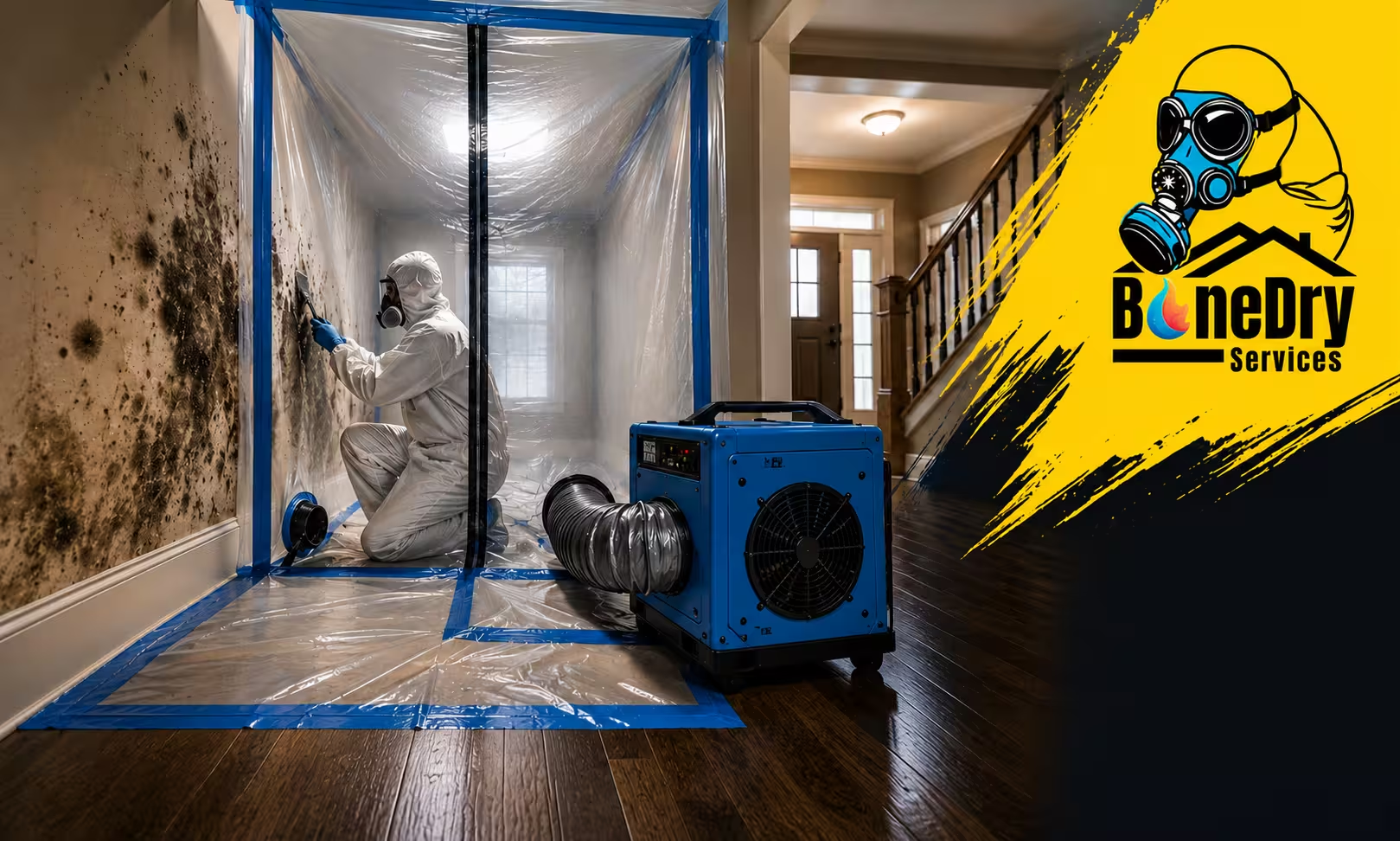
Negative air pressure is the single most important tool for preventing cross-contamination. The idea is simple: by continuously pulling air out of the sealed work zone and filtering it, the room is kept at slightly lower pressure than the surrounding space. Because air always flows from higher pressure to lower pressure, clean air flows into the work zone—and contaminated air can never push out of it. This containment principle is at the heart of the professional mold remediation Denver homeowners rely on.
This is achieved with an air scrubber or negative air machine fitted with a HEPA filter. The machine draws air from inside the containment, captures the spores in the filter, and exhausts the cleaned air, usually outside the home. The result is a work zone that is effectively sealed in terms of airflow, even while crews move in and out. When mold follows a water event, our mold removal & remediation teams set up this containment before any affected material is disturbed.
“Negative air” simply means the air pressure inside the containment is lower than the pressure outside it. You can often see it working: the plastic sheeting on the containment walls is gently sucked inward rather than billowing out. That inward pull is the visible proof that air, and any spores in it, is being drawn into the filtration system rather than escaping into the clean parts of the home. It is a continuous, mechanical guarantee of containment.
HEPA filters are the workhorses of mold containment. A true HEPA filter captures the vast majority of particles as small as mold spores, trapping them so they cannot recirculate. As the negative air machine pulls air through the filter, the spores are captured and the air leaving the unit is dramatically cleaner. Pairing HEPA filtration with negative air pressure is what makes it possible to work safely in one room without contaminating the rest of the house.
Effective containment follows a deliberate sequence. Each step builds on the last to keep spores locked inside the work zone from start to finish. This is the order we follow on a typical mold remediation containment setup in Denver:
Following this sequence ensures the spores stirred up during removal stay inside the work zone and are captured by filtration, never reaching the living spaces beyond it.

Done correctly, containment does more than keep one room clean—it protects the entire household while the work is underway. The benefits of professional mold remediation containment in Denver include:
Mold frequently starts with a hidden water source, so a complete solution addresses both. When a leak or flood is behind the growth, our 24/7 water damage restoration teams find and resolve the moisture problem so the mold does not simply return after remediation.

Mold in one room does not have to mean mold throughout the house. With proper containment—negative air pressure, HEPA filtration, and sealed work zones—the problem stays isolated while your family continues living safely in the rest of the home. As Colorado's largest privately owned, family-operated restoration company, BoneDry Services brings the equipment and disciplined process that safe, contained remediation requires.
Negative air pressure means the sealed work zone is kept at a slightly lower air pressure than the surrounding rooms. Because air always flows from higher to lower pressure, clean air flows into the containment while contaminated air cannot escape. This is created with a HEPA-filtered negative air machine that pulls air out of the zone and exhausts it, usually outside. It is the core mechanism that prevents mold spores from spreading during the work.
In most cases, yes, because proper containment isolates the affected room from the rest of the house. With the work zone sealed and negative air pressure in place, spores stirred up during removal are captured rather than spread. Your family can typically continue using the unaffected living spaces safely. Whether to relocate temporarily depends on the size of the affected area and any health sensitivities in the household, which we assess case by case.
HEPA filters capture the vast majority of particles as small as mold spores, trapping them so they cannot recirculate into the air. Inside a negative air machine, the filter cleans the air being pulled out of the containment zone before it is exhausted. This keeps airborne spore levels in check during removal and is what makes it possible to work safely in one room. Pairing HEPA filtration with negative air pressure is the standard for safe containment.
A running HVAC system can pull mold spores from the affected room and distribute them throughout the entire house through the ductwork. Shutting it down and sealing the vents in the work zone prevents this, keeping the containment effective. It is one of the most important steps in stopping cross-contamination. Once remediation is complete and the area is verified clean, the system can be safely returned to normal operation.
Before containment comes down, surfaces are HEPA-vacuumed and cleaned, affected materials are removed, and the area is dried to remove the moisture mold needs. The air is filtered until spore levels are brought back down. In many projects, independent verification or testing is used to confirm the area meets a clean standard. Only once the zone passes that check is the containment safely dismantled, so nothing is released back into the home.

In the scenic communities of Littleton and the greater Denver area, homeowners often overlook the dark, cramped space beneath their feet. However, the dirt floor of a traditional crawlspace is a constant source of moisture. Without professional Mold Remediation Denver experts intervening, this dampness migrates upward, compromising your home’s structural integrity and the very air your family breathes.
Understanding why your home needs Mold Remediation Denver starts with a phenomenon known as the "Stack Effect." Your house acts like a giant chimney; as warm air rises and escapes through the upper levels, it creates a vacuum that pulls air from the lowest point—the crawlspace—up into your living areas.
In Colorado, this means up to 50% of the air on your first floor originated in your crawlspace. If that space is harboring damp soil, open vents, or rotting organic matter, you aren't just breathing air; you are breathing fungal spores and soil gases. This is why Mold Remediation Denver is often a reactive necessity rather than a proactive choice. By the time you smell that "musty basement" scent in your Littleton living room, the Stack Effect has already distributed mold spores throughout your HVAC system.

While Colorado is known for its semi-arid climate, the localized geography of Littleton—near the South Platte River—and heavily irrigated residential landscapes create specific humidity traps. These factors accelerate the need for professional Mold Remediation Denver services.
When the relative humidity in a crawlspace exceeds 60%, mold begins to colonize organic materials like wooden floor joists and paper-faced insulation. Our Mold Remediation Denver specialists frequently find that Littleton homes with open foundation vents actually pull in more humid air during the summer, worsening the problem.
The clay-heavy soils common in the Denver area retain water long after the spring runoff has ended. This "hydrostatic pressure" forces moisture through porous foundation walls. Once the wood becomes saturated, it is only a matter of time before a homeowner requires Mold Remediation Denver to address structural rot. If this moisture leads to a larger flood event, you may also need to call for 24/7 Water Damage Restoration to stabilize the property before remediation begins.
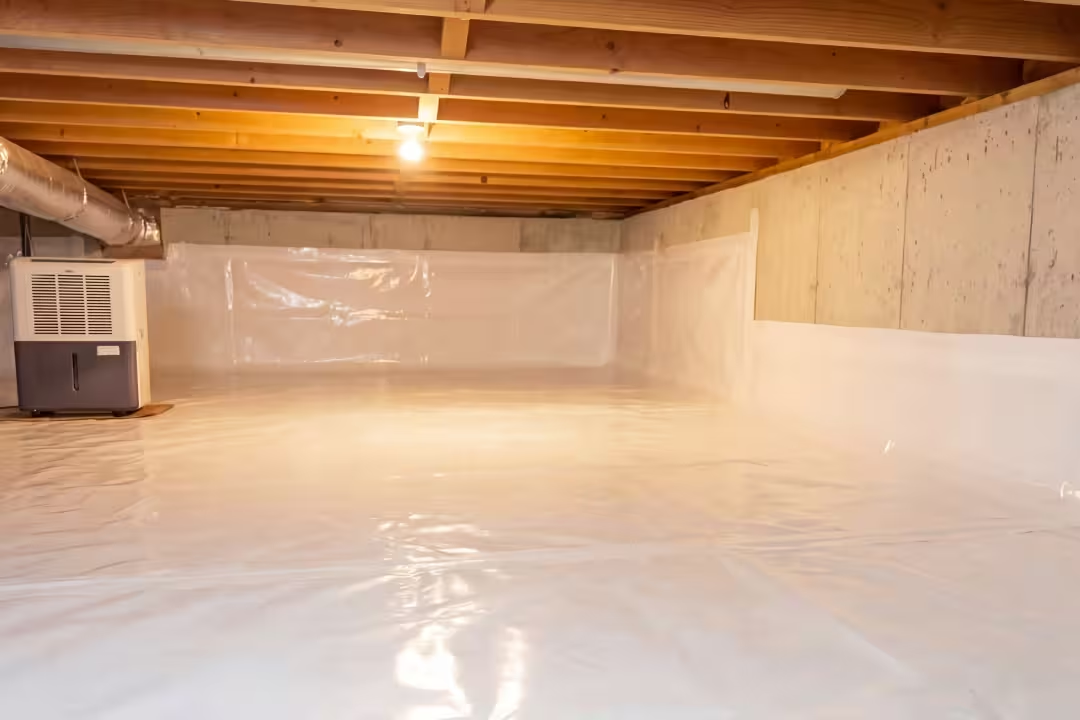
To permanently solve the moisture issue, we recommend a combination of expert Mold Remediation Denver and a full crawlspace encapsulation system. This process transforms a damp, dirty crawlspace into a clean, dry, and conditioned part of your home.

Ignoring a damp crawlspace in Littleton is a gamble with your property value. Beyond the health risks of breathing in spores, the structural components of your home—the floor joists and subflooring—will eventually lose their load-bearing capacity.
When moisture is trapped behind foundation walls, it creates a perfect environment for more than just fungi. Saturated environments often lead to secondary damage that requires specialized expertise to resolve. For instance, if a sewage line leaks into this damp environment, you will need immediate Sewage Cleanup in addition to your Mold Remediation Denver protocol to neutralize pathogens.
When moisture is trapped in the dark, it creates a perfect environment for fungal growth. Our team provides comprehensive Mold Removal & Remediation to ensure that your home's air quality is not compromised by the damp conditions caused by the Stack Effect.

When the Stack Effect wins and your home starts to smell of mildew, you need a team that understands the unique geography of the Front Range. Our Mold Remediation Denver protocol begins with high-volume HEPA air scrubbing. We don't just "clean" the mold; we change the environment that allowed it to grow in the first place. By using LGR dehumidifiers as part of our Mold Remediation Denver service, we pull deep-seated moisture out of masonry and structural timber, ensuring it returns to a "dry standard."
The health of your home starts from the ground up. If you suspect that moisture is infiltrating your crawlspace or if you have noticed a musty odor in your Littleton home, do not wait for the damage to become structural. BoneDry Services specializes in the complex needs of Colorado homes, providing the most reliable Mold Remediation Denver and encapsulation services in the region. Our family-owned team is dedicated to restoring your property and your peace of mind with 24/7 emergency availability and a 90-minute arrival guarantee.
Yes, reducing humidity is the most effective way to stop mold growth. Fungi require moisture to thrive, so keeping your crawlspace or basement below 50% relative humidity creates a "kill zone." Our Mold Remediation Denver experts use industrial dehumidifiers to ensure these dry levels are maintained permanently.
While Colorado is semi-arid, mold is extremely common in crawlspaces and basements due to snowmelt and high water tables. The "Stack Effect" pulls this moisture upward, often leading to hidden growth behind drywall or under floors. Many homeowners in Littleton require Mold Remediation Denver specifically for these subterranean moisture issues.
To permanently remove humidity-driven mold, you must combine physical removal with environmental control. Our team performs professional Mold Remediation Denver by scrubbing surfaces with antimicrobials and then installing a vapor barrier. This "encapsulation" prevents the humidity from returning and feeding new spores.
Mold typically begins to grow when relative humidity levels consistently stay above 60%. In a dark, unventilated crawlspace, even a small amount of seepage can spike these levels quickly. We recommend Mold Remediation Denver assessments for any space that feels damp or registers above 55% humidity.
Yes, 70% humidity is dangerously high and will almost certainly lead to rot and fungal issues. At this level, condensation forms on windows and wooden structural beams, creating an immediate need for Mold Remediation Denver. Ideal indoor humidity should stay between 30% and 50% for health and safety.
Warning signs include chronic coughing, sneezing, skin rashes, persistent headaches, and fatigue. You may also experience "brain fog," itchy eyes, shortness of breath, sinus congestion, or a metallic taste in your mouth. If you notice these symptoms, a Mold Remediation Denver air quality test is highly recommended.

In the restoration industry, time is the most volatile variable. When a pipe burst or groundwater intrusion occurs in a Denver home, a literal countdown begins. Most property owners focus on the visible standing water, but the true threat is the "incubation window"—the 48-hour period where stagnant moisture transforms into a biohazard. At BoneDry Services, we prioritize rapid response for Mold Remediation Denver because waiting even three days can turn a simple drying job into a full-scale structural tear-out of your home’s skeleton.
Fungal spores are omnipresent in the Denver environment, but they remain dormant until they meet a specific set of criteria: a food source (cellulose), a temperature range, and moisture. Within 24 to 48 hours of a water event, these spores begin to germinate on porous materials like drywall, baseboards, and carpet padding. This is why professional Mold Remediation Denver is not just about cleaning visible spots; it is about stopping the biological "bloom" before it colonizes the internal wall cavities where it can grow undetected for months.
Denver’s high-altitude air is naturally dry, which often gives homeowners a false sense of security. However, when water is trapped in a closed basement, the relative humidity (RH) can spike from 20% to over 70% in a matter of hours. This creates a "greenhouse effect" where the air becomes saturated. To provide effective Mold Remediation Denver residents can rely on, we must manage this humidity immediately to prevent the air itself from feeding the mold colonies.

A common mistake in DIY restoration is turning up the furnace to "dry out" a room. While heat can increase the rate of evaporation, without proper air exchange, you are simply creating a warm, humid incubator for spores. Professional Mold Remediation Denver utilizes a specific "Air Changes per Hour" (ACH) calculation to ensure the environment stays hostile to mold.
Secondary damage is the destruction caused by the environment rather than the liquid water itself. This includes warped hardwood floors, sagging ceilings, and peeling wallpaper in rooms that were never even touched by the flood. Our Water Damage Restoration protocols are designed to stabilize the entire property’s atmosphere, not just the "wet" room, to avoid the need for extensive secondary Mold Remediation Denver in unaffected areas.

Materials like wood, insulation, and drywall are "hygroscopic," meaning they actively absorb water vapor from the air. Even if your floor is dry, your walls may be "drinking" the humidity from the air, causing them to swell and lose structural integrity.
To ensure a property is truly safe, we adhere to the IICRC S520 standards for mold. This involves reaching a "Dry Standard," which is a pre-determined moisture level based on an unaffected part of the home. Without reaching this standard, any sewage cleanup or drying effort is incomplete, and the mold will simply return once the fans are turned off. We use non-invasive moisture meters and thermal imaging to confirm every inch of the substrate is below the mold-growth threshold.

A water line is the visible mark of standing water, but secondary damage often occurs above it. Through "wicking," water can climb 24 inches up a drywall sheet from the floor. This creates a hidden damp zone behind your paint where Mold Remediation Denver becomes necessary, even if the floor was dried quickly.
Yes, it is a progressive condition. Within hours, materials swell; by 48 hours, microbial growth becomes active. This transitions a project from simple drying into a complex Mold Remediation Denver job involving containment and specialized chemicals. Delaying mitigation often triples the eventual restoration costs.
A common example is "cupping" in hardwood floors in a room adjacent to a leak. The wood absorbs high humidity from the air, causing the edges to rise higher than the center. Other examples include mold on ceilings caused by basement floods or the corrosion of electronics due to localized humidity.
Most "sudden and accidental" damage is covered by homeowners' insurance. However, if you wait too long and mold develops, policies may limit coverage for Mold Remediation Denver due to "neglect." Immediate professional documentation is critical to ensure your claim is fully approved and paid.
Damage is serious if it involves "Category 3" water (sewage) or if it has remained unaddressed for over 24 hours. Musty odors, bubbling paint, or soft subfloors indicate moisture has reached the structural substrate. Any dampness lasting over 48 hours requires a Mold Remediation Denver specialist's evaluation.
JD got our small job patching a hole sorted out really quickly. His team was efficient and communicated with us really well through the whole process. You would never be able to tell there was a hole in the ceiling. Highly recommend!

We had an unexpected water issue that flooded part of our basement on super bowl sunday and Bone Dry Services came to the rescue. From start to finish, the experience was professional, efficient, and stress-free.

Roman and Francisco worked for two days on my place. The were hardworking and very polite. Excellent communication skills and kept me updated on everything that was happening. Bone dry services has two great employees.

JD got our small job patching a hole sorted out really quickly. His team was efficient and communicated with us really well through the whole process. You would never be able to tell there was a hole in the ceiling. Highly recommend!

Roman and Francisco worked for two days on my place. The were hardworking and very polite. Excellent communication skills and kept me updated on everything that was happening. Bone dry services has two great employees.

JD got our small job patching a hole sorted out really quickly. His team was efficient and communicated with us really well through the whole process. You would never be able to tell there was a hole in the ceiling. Highly recommend!

I am going to steal a comment from the previous review - J.D. Stewart went above and beyond for me; That absolutely sums up my sentiment. While unlike the previous review, honestly I was not totally happy with the initial progress. JD was able to change my view of BoneDry. I acknowledge that every company has problems, but the important thing is to address them decisively and correct them rapidly. BoneDry did that with irreplaceable from JD. Because of that I am willing to overlook their (resolved) problems and recommend their services to anyone.
Bone Dry Services were great to work with. From Heidi always being available to communicate and answer our questions super quickly. To Ana, Burke, and Lina doing great work with a detailed cleaning. Jorge made sure everything was done to top quality, taking care of our house as if it was his own. And then JD, Manuel, and their team did a great carpet installation, making sure we were super happy with how it turned out. We definitely recommend!
Roman and Francisco worked for two days on my place. The were hardworking and very polite. Excellent communication skills and kept me updated on everything that was happening. Bone dry services has two great employees.
My water heater flooded my home back in May 2025 and a plumber from AAA Service Plumbing, Heating, and Electric came out to replace it. When the plumber was at my home, he told me about Bone Dry Services and called them to come out. Bone Dry immediately came to my home and assessed the damages. And they immediately set up fans and dehumidifiers for mitigation of the water damages. I had already had a water damage claim opened up with my insurance carrier and so the process got started between Bone Dry and my insurance company.
JD got our small job patching a hole sorted out really quickly. His team was efficient and communicated with us really well through the whole process. You would never be able to tell there was a hole in the ceiling. Highly recommend!
I can’t recommend Bone Dry Services enough! From start to finish, their team went above and beyond to ensure my water damage issue was handled professionally and efficiently.
Tyson assessed the situation with expertise, not only identifying the problem but also taking the time to educate me on what to look for and how to better understand the issue. His knowledge and willingness to explain everything made a huge difference.
Maria and Karen were wonderful! I would definitely have Bone Dry out again if we need this type of cleaning. We had concrete dust covering everything after some restoration work, but these two ladies did a great job cleaning all my walls and floors. It feels a lot better in my house now.
The whole Bonedry team really stepped up to help us with an entire bathroom restoration so we could close on our house in time! Brandon from the restoration team really stood out! He communication the entire time really went above and beyond. He was attentive and efficient! Thank you Brandon and Bonedry!
We had an unexpected water issue that flooded part of our basement on super bowl sunday and Bone Dry Services came to the rescue. From start to finish, the experience was professional, efficient, and stress-free. A huge shout out to Bryan R and Sara. Bryan was incredibly knowledgeable and thorough with the mitigation process, and Sara was so helpful and communicative throughout. They made a tough situation much easier to handle. Highly recommend Bone Dry Services for anyone dealing with water damage!
John, Santiago and JJ were all wonderful to work with. Very knowledgeable, prompt, and kind. They didn't rush, took time to explain the process. I'd definitely recommend BoneDry Services. They even brought my trash can up from the road.
I’m so grateful for the help, attention to detail and customer service that Bone Dry has provided. It’s never convenient to have a pipe burst, but working with a company that has been kind, transparent and helped explain every step of the process has us given such peace of mind.
I run a plumbing company and needed help from a restoration company on a Sunday. They answered right away and were on the job site in less then an hour....... on a SUNDAY. Even though my customer was understandably upset, they dealt and worked with him and explained the restoration process. Colton and Connor are the best. If I ever need a restoration company they are going to be the only ones I call. Thanks guys. 🌟🌟🌟🌟🌟
Our certified team is available 24/7 and can arrive promptly to assess the extent of mold growth, contain affected areas, and begin remediation to protect your property and health.
Coverage varies by policy, but BoneDry works directly with your insurance provider, providing documentation and detailed reports to support claims and help reduce your out-of-pocket costs.
The timeline depends on the severity of the infestation. Minor mold issues can often be resolved in a day or two, while extensive growth requiring structural remediation may take several days to a week.
BoneDry implements thorough moisture control, drying, and preventive measures during remediation to minimize the risk of mold returning, ensuring your property stays safe and healthy.
Yes, we provide mold inspection and remediation services for homes, offices, and commercial spaces across Colorado, restoring all affected areas safely and effectively.