


24/7 Command Center: How BoneDry Manages Mass-Scale Freezes in Colorado
When a hard freeze sweeps across the Front Range and pipes burst by the hundreds in a single night, the difference between a fast response and a long wait comes down to capacity, and that is where Colorado emergency restoration is truly tested. A widespread freeze does not create one emergency; it creates fifty at once, all calling for help in the same few hours. Meeting that demand takes more than good intentions. It takes scale, coordination, and a command center built to dispatch crews across a region under pressure. That capability is the backbone of dependable Colorado emergency restoration.
The hard truth of a mass-scale freeze is that many restoration companies simply run out of capacity. They have a handful of crews and a limited supply of equipment, and once those are committed, everyone else joins a waitlist, sometimes for days, while their homes sit wet and the damage compounds. In a freeze event, that delay is not a minor inconvenience; it is the window in which water turns into structural rot and mold.
At BoneDry Services, as the largest privately owned restoration company in Colorado, we built our operation specifically so homeowners are not left waiting when disaster strikes at scale. Understanding how a 24/7 command center works, and why equipment and crew capacity matter so much during a mass freeze, explains what dependable emergency restoration really requires.
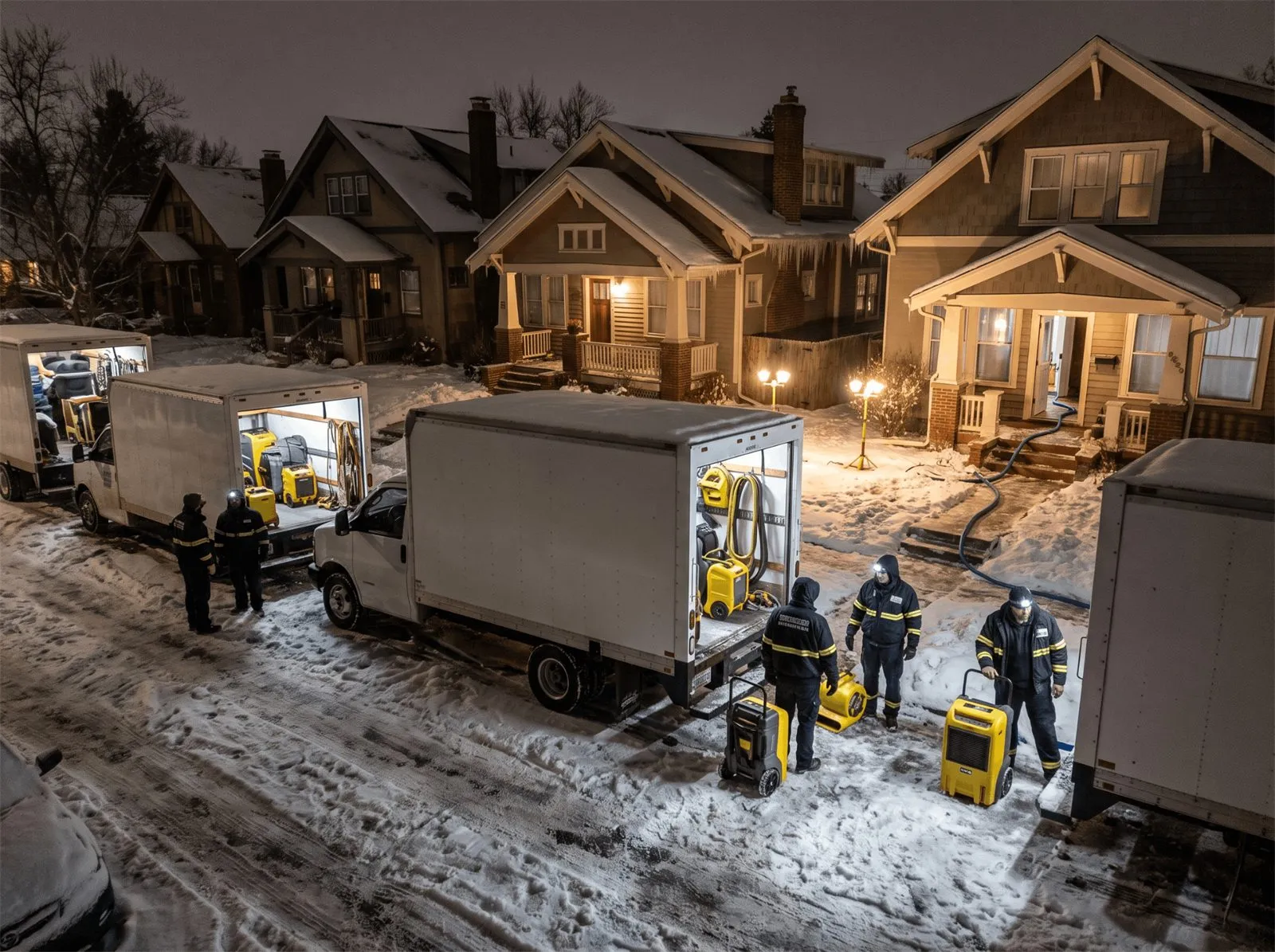
Why a Mass Freeze Overwhelms Ordinary Restoration Companies
A regional freeze event is a fundamentally different challenge from a single burst pipe, and it is one that ordinary Colorado emergency restoration operations are not built to absorb. The problem is one of simultaneous demand: when temperatures plunge across the Front Range, pipes fail everywhere at once, and the calls arrive in a flood rather than a trickle.
A company with a few trucks and a modest inventory of drying equipment can handle a normal day’s emergencies. But when dozens of homes need help in the same overnight window, that limited capacity is exhausted almost immediately. The first several callers get service; everyone after that is placed on a list to wait until crews and equipment free up. During a widespread freeze, that wait can stretch for days, because the backlog only grows as the cold continues and more pipes burst. Meanwhile, the water already in those waiting homes is soaking deeper into floors, walls, and framing, turning a manageable loss into a major one.
This is the hidden cost of insufficient capacity, and it is exactly what a large, coordinated operation is designed to prevent. Being able to respond at scale is not a luxury during a mass freeze; it is the entire point of Colorado emergency restoration.
The Problem of Simultaneous Demand
In routine conditions, emergencies are spread out, arriving one at a time and giving crews room to respond promptly to each. A mass freeze collapses that timeline, concentrating a huge number of emergencies into a few hours. It is the simultaneity that overwhelms, not the total number over a season. A company sized for the ordinary daily flow cannot suddenly serve dozens of homes at once, and the result is a queue that forms the moment demand spikes.
Why Waitlists Turn Water Losses Into Bigger Losses
Water damage worsens with time. Every hour that saturated materials sit undried, moisture wicks further into the structure, wood absorbs more water, and the conditions for mold develop. A home that could have been dried quickly becomes a home needing extensive repairs after days on a waitlist. This is why response speed is not just about convenience; during a freeze, the delay itself is what escalates the damage, and it is precisely what sufficient capacity prevents.
How a 24/7 Command Center Coordinates the Response
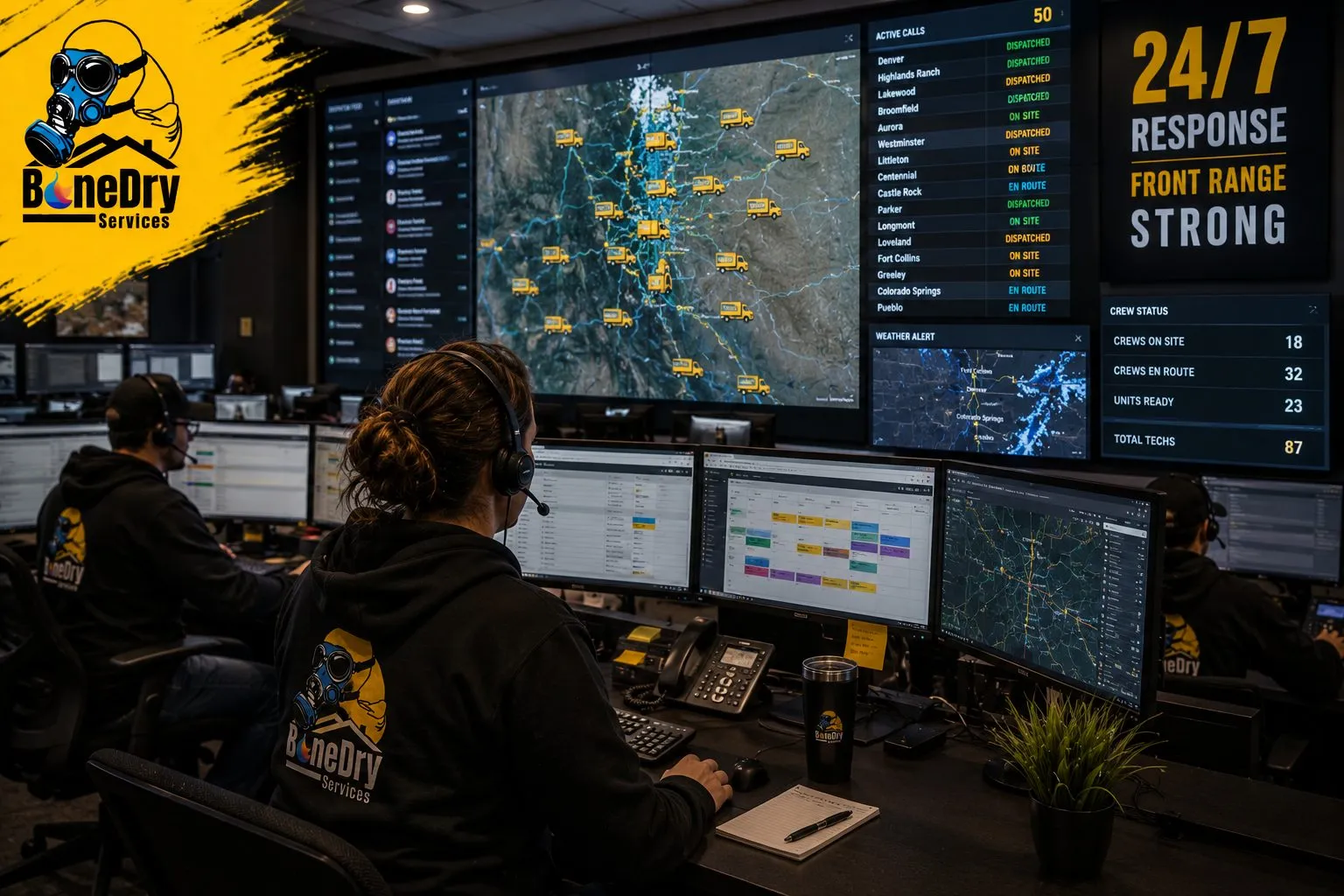
Responding to fifty emergencies at once is not simply a matter of having enough trucks; it requires a nerve center that can receive, prioritize, and dispatch across an entire region in real time. A 24/7 command center is what turns raw capacity into an organized response, and it is central to how large-scale Colorado emergency restoration actually functions.
When a freeze hits, the command center becomes the hub through which every call flows. Requests are logged and triaged, crews are matched to jobs by location and severity, and equipment is routed to where it is needed most. Because the operation runs around the clock, there is no gap between when a homeowner calls at three in the morning and when the response begins to organize. The center tracks where every crew and every piece of equipment is, so as jobs are completed, resources are redirected to the next home rather than sitting idle. This coordination is what allows many emergencies to be handled in parallel instead of one after another, dramatically shortening how long any given homeowner waits.
This kind of centralized dispatch is what stands behind the promise of a genuine 24/7 emergency response. It is the same commitment to fast, always-available help that defines our 24/7 water damage restoration, applied at the scale a regional freeze demands.
Triage and Dispatch Under Pressure
Not every emergency is equally urgent, and a command center’s job is to sort them intelligently. By assessing each call for severity and location, dispatchers can send the nearest available crew to the most pressing situations first, while scheduling others in an efficient sequence. This triage prevents the chaos of first-come-first-served during a surge and ensures that the homes at greatest risk are stabilized quickly, even when the total volume of calls is high.
Real-Time Coordination Across the Front Range
A freeze does not respect neighborhood boundaries, so the response has to work across the whole region at once. A command center maintains a live picture of crews and equipment spread across the Front Range, moving resources between areas as demand shifts and jobs wrap up. This regional view is what keeps the operation flexible, allowing it to concentrate effort where the freeze hit hardest rather than being locked into a fixed, local footprint.
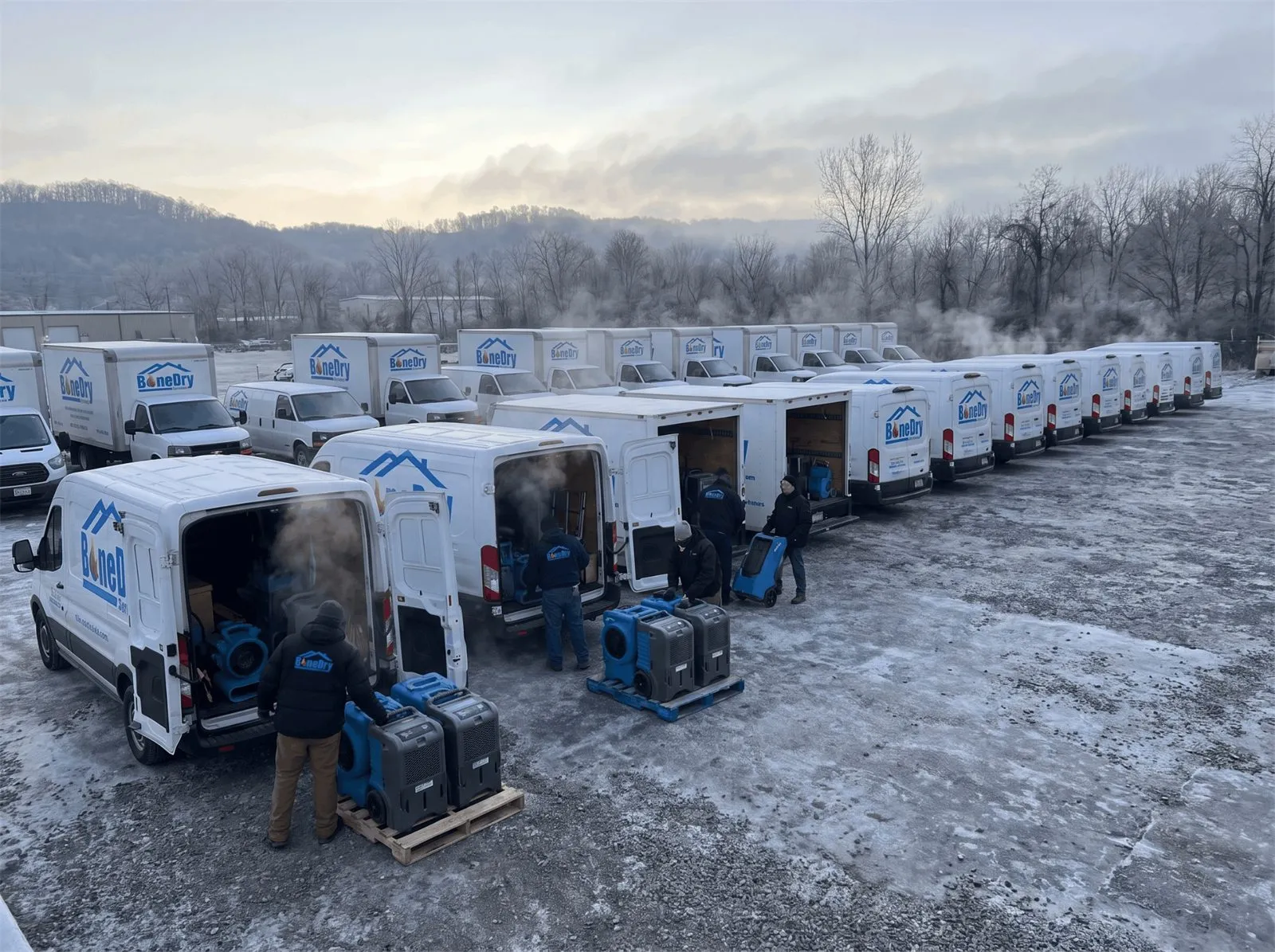
Why Equipment and Crew Scale Determine the Outcome
Coordination only works if there is enough to coordinate. Behind every fast response to a mass freeze is a deep inventory of equipment and a large roster of trained crews, and that scale is what ultimately determines whether homeowners are served quickly or left waiting. In Colorado emergency restoration, capacity is the foundation everything else rests on.
Drying a flooded home takes a specific set of equipment, air movers, dehumidifiers, and related gear, running for the days it takes to dry the structure properly. In a normal week, a company cycles that equipment from job to job. But during a mass freeze, dozens of homes need that equipment simultaneously, and it cannot be shared or rushed; each home needs its own set for the full drying period. A company with a large equipment fleet can outfit many homes at once, while a company with limited inventory can only serve a few before running dry. The same logic applies to crews: enough trained technicians must be available to be dispatched in parallel. Scale in both equipment and people is what makes a simultaneous, region-wide response physically possible.
This is why the size and resources of a restoration company matter so much in a disaster. As the largest privately owned restoration company in Colorado, BoneDry maintains the equipment inventory and crew capacity to respond when many homes need help at once, so homeowners are not waitlisted while their property deteriorates. It is a capability that spans every kind of large-scale event, from freezes to our storm damage restoration response when severe weather affects the region.
What BoneDry’s Scale Delivers for Colorado Homeowners
For a homeowner facing a burst pipe in the middle of a regional freeze, a restoration company’s scale is not an abstract statistic, it is the difference between fast relief and a long, damaging wait. The benefits of that capacity include:
- No waitlist during a surge — Large crew and equipment capacity means homeowners are served promptly even when many properties need help at once.
- Faster response, less damage — Reaching homes quickly stops water before it soaks deeper, limiting the loss and reducing repair costs.
- Around-the-clock availability — A 24/7 command center means the response begins the moment disaster strikes, day or night.
- Coordinated, region-wide help — Real-time dispatch across the Front Range concentrates resources where they are needed most during an event.
Because a mass freeze leaves behind exactly the trapped moisture that leads to long-term structural problems, a rapid response is only the beginning of a complete recovery. Once a home is stabilized, the same operation carries it through thorough drying with our structural drying and dehumidification work, so the property is fully restored rather than merely reached in time.
📞 Call BoneDry Services at (303) 276-4163 today for 24/7 Colorado Emergency Restoration backed by the scale to respond during mass-freeze events across Denver, Boulder, Colorado Springs, and the Front Range.
Frequently Asked Questions
How quickly can BoneDry respond to an emergency during a freeze?
BoneDry offers 24/7 emergency response and works to reach affected homes as quickly as possible, even during a widespread freeze. The key is capacity: because we are the largest privately owned restoration company in Colorado, our crew and equipment scale, coordinated through a round-the-clock command center, lets us respond to many emergencies in parallel rather than placing homeowners on a long waitlist. Response times can vary with the severity of an event, but our operation is built specifically to handle high-volume surges without leaving properties waiting.
Why do some restoration companies put homeowners on a waitlist?
Waitlists form when demand exceeds a company’s capacity. During a mass freeze, dozens of homes need help in the same few hours, and a company with only a few crews and limited drying equipment exhausts its resources quickly. Everyone beyond that gets queued until crews and equipment become available, which can take days during a prolonged cold event. This is a capacity problem, and it is why the size of a restoration company’s fleet and staff matters so much when disaster strikes at scale.
Why does the size of a restoration company matter in a disaster?
In a large-scale event, drying many homes at once requires a large inventory of equipment and enough trained crews to be dispatched simultaneously. Each flooded home needs its own air movers and dehumidifiers running for the full drying period, so equipment cannot be shared across jobs during a surge. A larger company can outfit and staff many homes at the same time, while a smaller one can only serve a few before running out. That capacity is what determines whether homeowners are helped quickly or left waiting.
What is a restoration command center?
A command center is the operational hub through which emergency calls are received, prioritized, and dispatched. During a surge, it logs and triages incoming requests, matches crews to jobs by location and severity, and routes equipment to where it is needed most, all in real time and around the clock. By tracking where every crew and piece of equipment is, it redirects resources as jobs finish and handles many emergencies in parallel. It is what turns raw capacity into an organized, region-wide response.
Does BoneDry handle insurance claims after a freeze event?
Yes. BoneDry works directly with insurance companies and adjusters, providing detailed documentation of the damage and the restoration work to support the claim. After a freeze event, thorough records, photos, and an itemized scope help the claims process move smoothly, even when many homeowners are filing at once. Our goal is to make both the response and the paperwork as seamless as possible, so homeowners can focus on getting their property restored rather than managing the claim on their own.