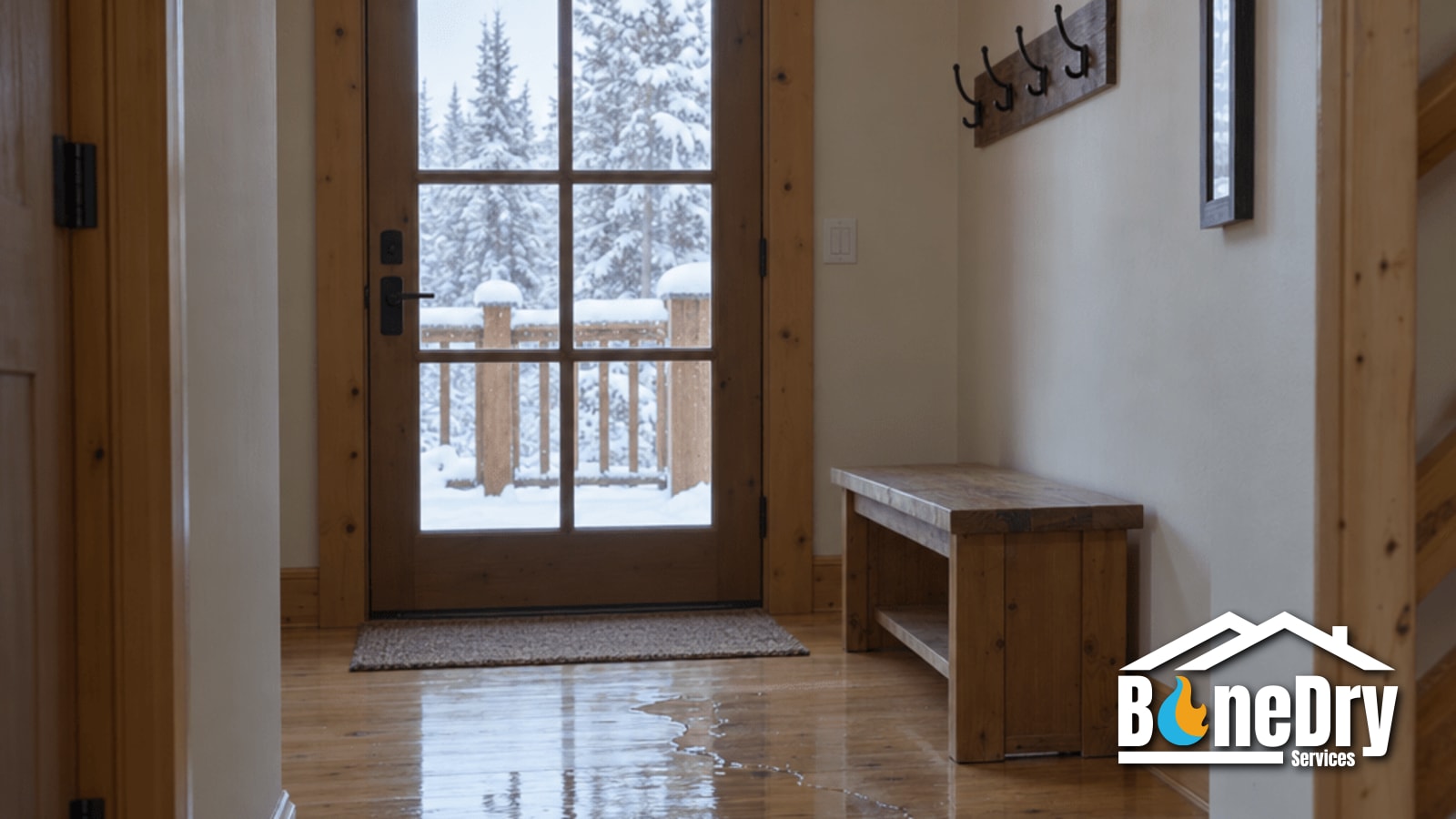



If a property manager, cleaner or guest finds vacation home water damage in Winter Park while you are out of state, have them shut off the water at the main, then call your insurer and a restoration company the same day. Everything after that, from photos to drying, can be organized from wherever you are.
A home that sits empty between ski weekends gives water time to travel. A slow drip or a pipe that froze and split can run for days before anyone opens the door, so the damage is usually wider than the puddle described on the phone. Our 24/7 water damage restoration page explains how that hidden water is found and dried.
At BoneDry Services, a family-owned, local restoration company with a location in Winter Park, we wrote this guide for owners who get that call far from the mountains. It covers who to call and in what order, what to ask the person on site to photograph, and how the job can run without you there.
Who to call first, and in what order
When the call comes, the order matters more than the speed of any one step. Water that is still running does the most harm, so it comes first, then the heat, then the people who will pay for and fix the damage.
Ask the person on site to shut off the water at the main valve. In many mountain homes it sits in a basement, crawlspace entry or mechanical room, and if your manager or caretaker does not know where yours is, that is worth settling before the next cold snap. Next, ask them to check that the furnace or boiler is running and the thermostat is where you left it, since a heating failure is one of the ways pipes freeze in an empty house.
Then make two calls yourself: one to your insurer to report the loss, and one to a restoration company. Both can be made from anywhere, and neither needs you in the house.
What to ask the person on site to photograph
Before anything is moved, ask for wide photos of every room with water in it, then close-ups of wet flooring, stains on walls and ceilings, damaged furniture and the spot where the water seems to come from. A short video walking through the house helps too. Ask them to note the time they arrived, the thermostat reading and whether water was still running, because your insurer will ask when and how the damage was found.
What to leave alone until it is documented
Wet drywall, soaked rugs and ruined furniture are tempting to haul out, but removing materials before they are photographed and measured can make the claim harder to support. Ask whoever is there to move valuables and electronics somewhere dry, stay off wet stairs and keep out of rooms where water reached outlets or light fixtures. The rest can wait for the restoration crew and the adjuster.
Why a leak found days later has spread farther than it looks
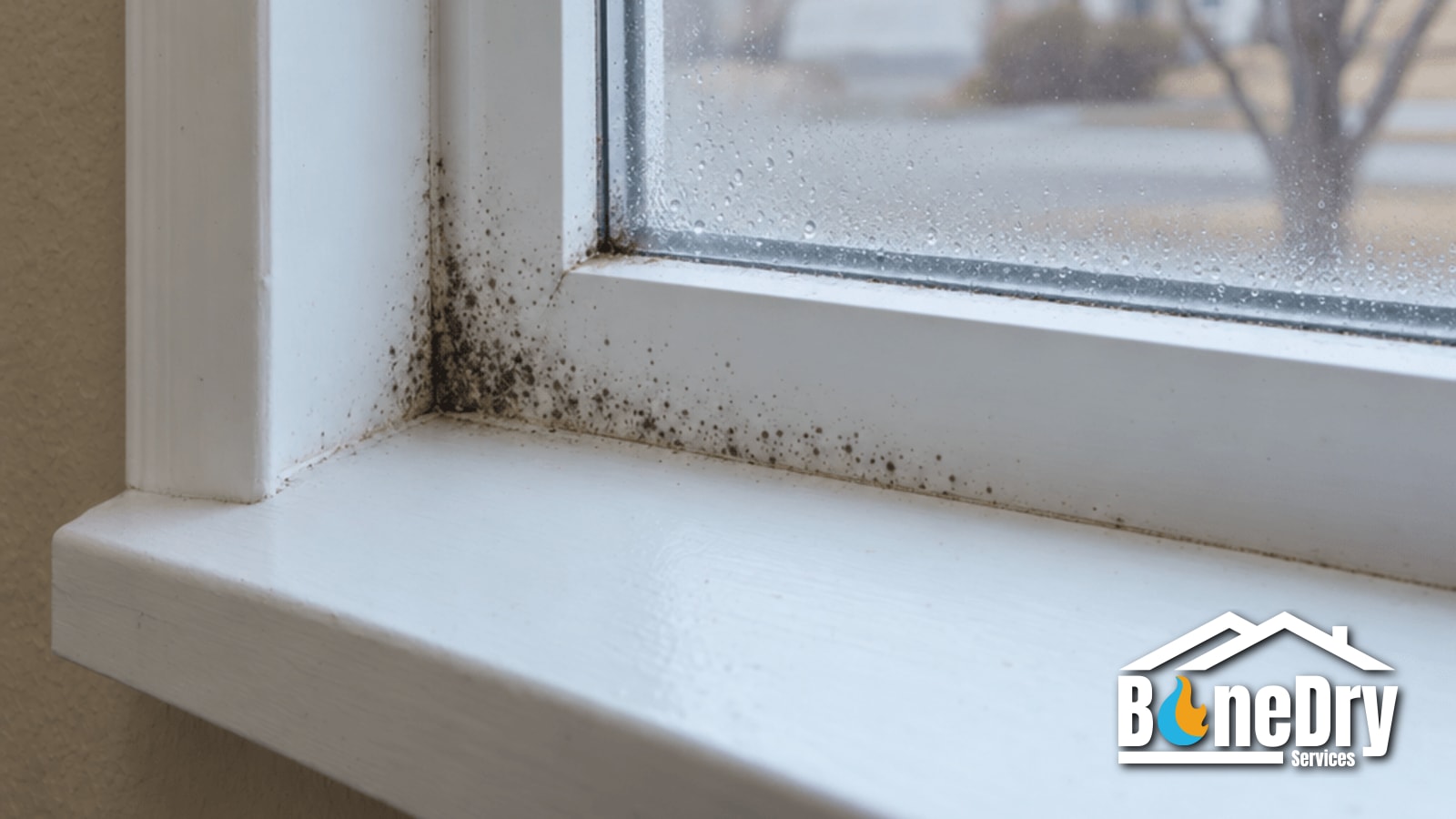
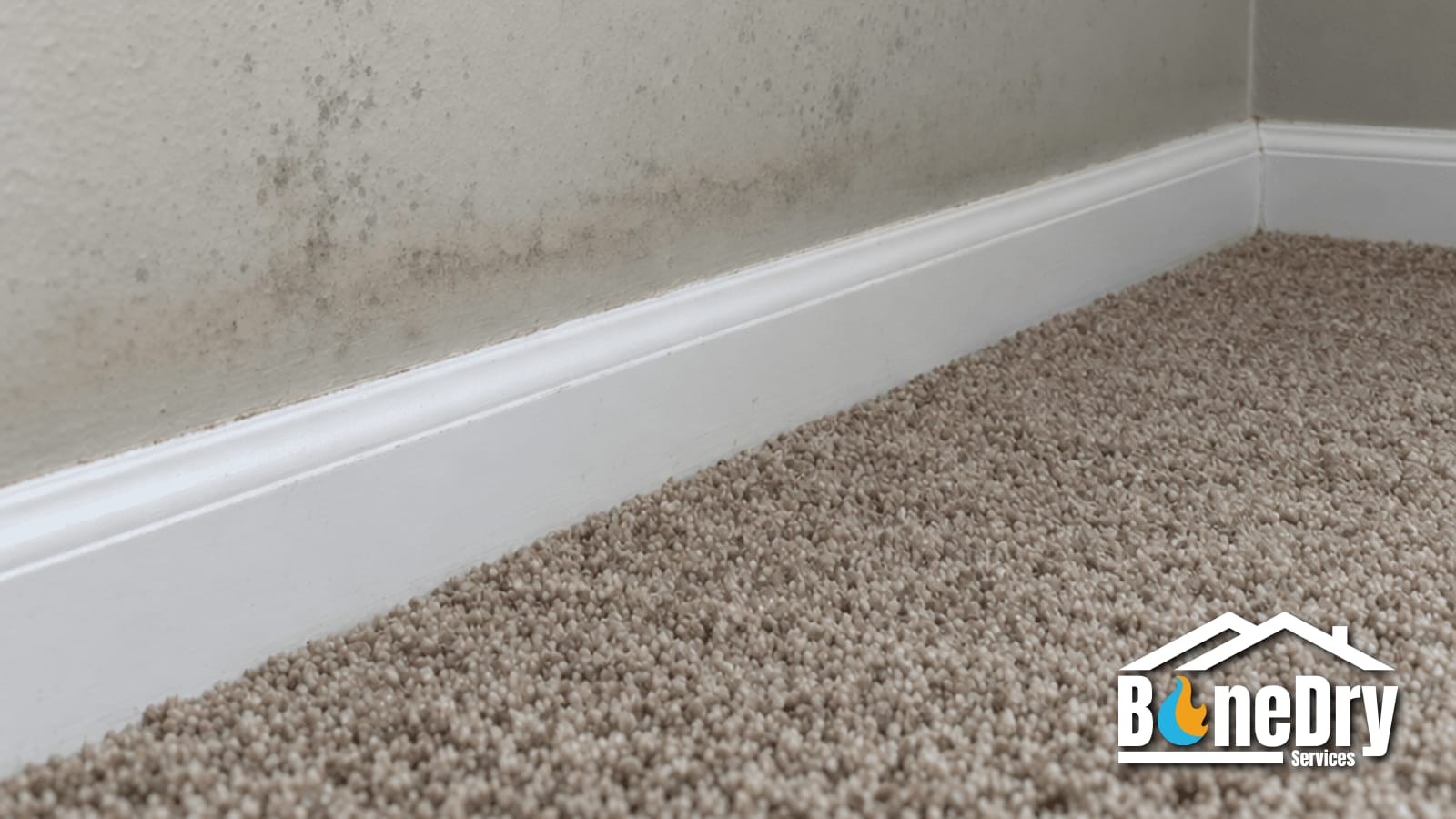
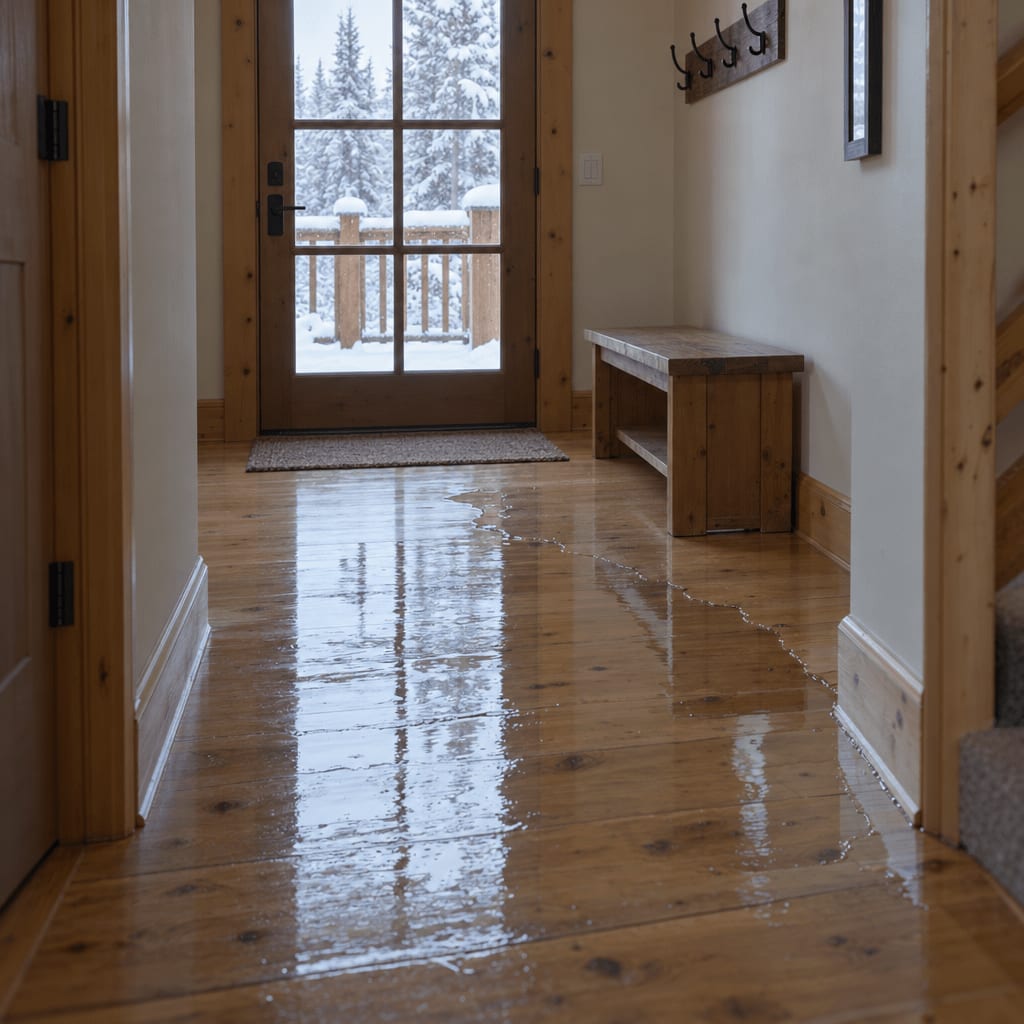
A leak found within the hour is a small job. A leak in a house that sat empty for a week has had time to run under flooring, into wall cavities and down through the ceiling of the floor below. By the time someone opens the door, the surface may even look dry while the materials underneath stay wet.
That is why the description you get over the phone is rarely the whole picture. A caretaker can see a stained ceiling or a damp rug, but nobody can tell how far water traveled inside the walls without moisture meters.
Where the water goes in an empty mountain home
Water follows framing and gravity, so in a two- or three-story mountain home it often shows up a floor below the source. It collects under hardwood and tile, in carpet pad, in the insulation of exterior walls and in the ceilings of lower rooms and garages. A home closed up for the season also has little air moving through it, so damp areas stay damp far longer than they would in a house someone lives in.
Questions to ask your insurer about a home that was empty
Some homeowners policies treat a home left unoccupied differently, especially when the damage comes from a frozen pipe. Ask whether your policy has vacancy or heat conditions, what they need to see to show the heat was on, whether a second home or short-term rental is covered on the same terms as a primary home, and what must be documented before anything is removed. Write down the claim number and the adjuster's name so the restoration company can work with them directly.
How the work is done while you are away
You do not need to be in the house for the job to move. Once the water is off and the claim is reported, the work follows a set order, and each step leaves a record you can review from wherever you are.
- Arrange access: we agree on entry with you and your property manager or caretaker, so no one has to drive over Berthoud Pass just to open the door.
- Inspect and map the moisture: the crew checks floors, walls and ceilings with moisture meters and, where useful, thermal imaging to find every area the water reached.
- Document the loss: photos, moisture readings and notes are recorded before anything is removed, so you and your insurer see the same picture of the damage.
- Remove what cannot be saved: soaked carpet pad, wet insulation and drywall that has lost its strength come out, while materials that can be dried stay in place.
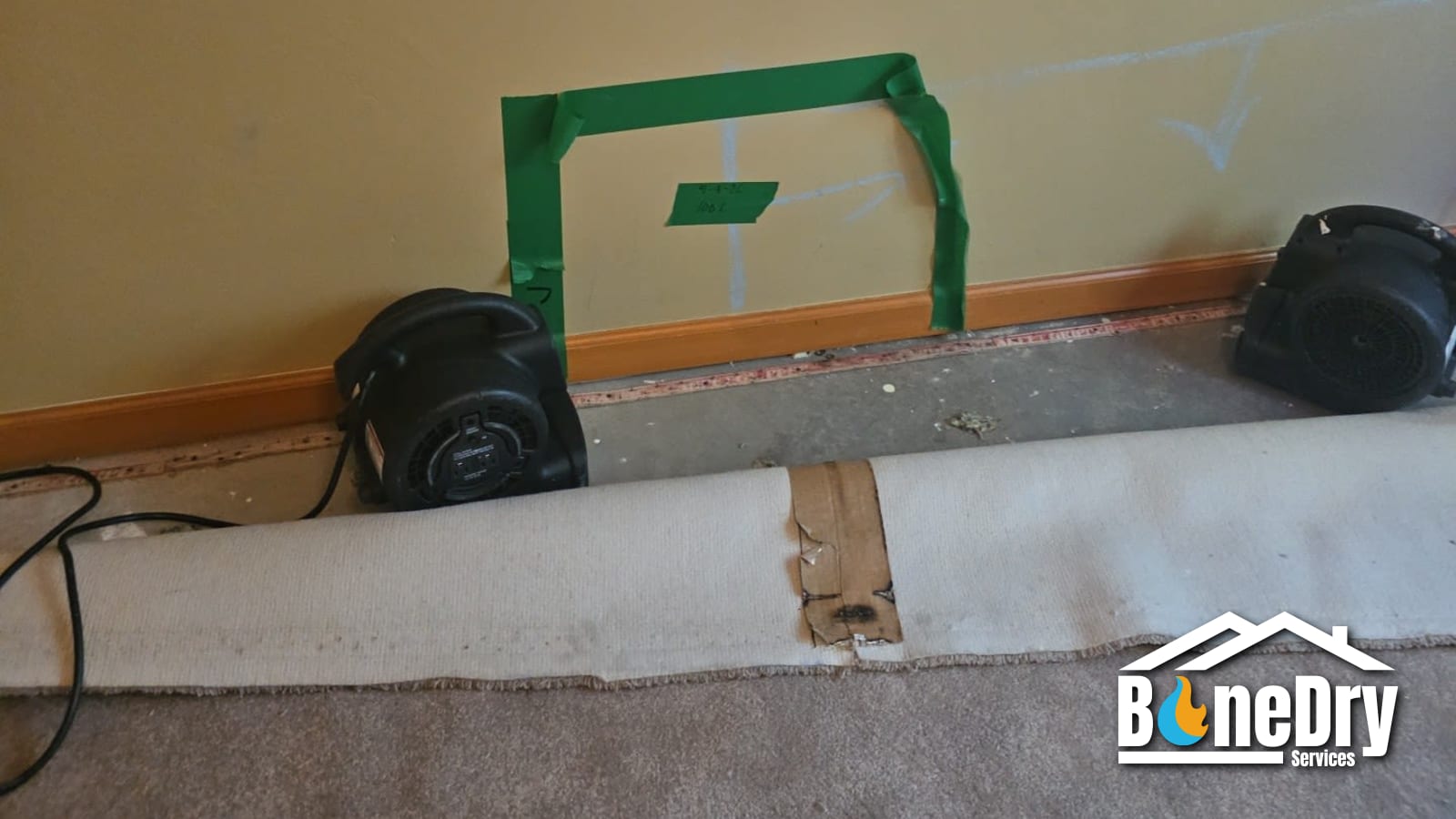
- Dry and monitor: dehumidifiers and air movers go where the structure is wet, and readings are taken on each visit until the materials are back to normal.
- Rebuild: once the home is dry, the same team replaces drywall, flooring and finishes, so you are not coordinating a second contractor from out of state.
Drying a closed-up mountain home takes steady monitoring. Our structural drying and dehumidification page explains how we dry walls, floors and framing without removing more than the job needs.
What acting promptly protects
Distance makes it tempting to wait for the next trip up. Calling a restoration company within the first 24 to 48 hours is what prevents mold and permanent structural damage, and acting in that window protects three things:
- Your insurance claim: prompt reporting and documentation of the date and cause make a sudden loss easier to show, which matters more when no one was living in the home.
- Your floors, walls and finishes: materials that are dried quickly can often be saved, while those left wet for weeks usually have to be replaced.
- Your next stay: a home that is dried and documented early is one you, your family or your guests can return to sooner.
Once the house is dry, the best protection is getting ready for the next freeze, and our guide to preventing frozen pipes in a Colorado mountain home covers that. Our Winter Park and Grand County pages show the mountain communities we serve, from Fraser to Granby.
📞 Call BoneDry Services at (303) 276-4163 today for water damage restoration across Denver, Boulder, and the Front Range.
Frequently Asked Questions
Can you manage the whole job if I live out of state?
Yes. We can arrange access with your property manager or caretaker, inspect and document the damage, work with your insurer, dry the home and rebuild what was removed without you traveling to Winter Park. You stay involved in the decisions that matter, such as approving the scope of work and talking with your adjuster. What you do not have to do is be in the house while the drying runs.
Will you work with my property manager, cleaner or a guest who is on site?
Yes. The person who found the water is often the best source on what happened, so we start by asking what they saw and when. Your property manager or caretaker can let the crew in and be your eyes on the ground between visits. You remain the decision maker, so nothing major happens without your say.
How do you handle a burst pipe found days after it froze?
The approach is the same as for any leak, but the inspection goes wider. Water that ran for days has usually reached farther than the visible damage, so the crew maps moisture across the rooms beside and below the break before deciding what to remove. A frozen pipe can split in more than one place, so have a plumber check the rest of the line before the water is turned back on. Drying then continues until readings show the materials are back to normal.
How will I know what is happening in the house while I'm away?
Every stage of the job is documented: photos of the damage before work starts, moisture readings from each visit, and notes on what was removed and why. That record is what your insurer uses to settle the claim, and it shows you how the drying is going without being there. Before work starts, tell us who should hear about each decision and how you would like to be reached.
Does insurance cover water damage in a second home that was empty?
Often it does when the damage comes from a sudden event, such as a pipe that bursts. Many policies have conditions for homes left unoccupied, such as keeping the heat on, and some treat a short-term rental differently from a second home you use yourself. Read your policy or ask your agent before winter, and report a loss promptly so the date and cause are documented. We work with all insurance companies and can walk through the claim with you and your adjuster.