


When a pipe bursts, the plumber stops the leak, but burst pipe water damage in Denver homes keeps going in the walls, subfloor and insulation the water already reached. The first hours after the repair are when that hidden water is easiest and least costly to deal with.
Fixing the pipe and drying the house are two separate jobs. The plumber's work ends when the water stops, and ours starts there: finding where the water went, documenting it for your insurer and drying the structure before it turns into a rebuild. Our Denver water damage and flood cleanup page explains that side of the job.
The first hard freezes of the season are when frozen pipes start to burst across the Front Range, often overnight or while a family is away. At BoneDry Services, a family-owned, local restoration company, we put together this guide so you know what to photograph, what to turn off, why fans and a shop vac are not enough, and when to call for help.
Why the water does not leave with the plumber
A burst supply line is under pressure, so it does not drip. It sprays and runs until someone shuts off the water, and in that time it travels. It runs across the subfloor, under baseboards and into the bottom of wall cavities, and it wicks upward through drywall the way a paper towel pulls up a spill.
Once the pipe is fixed and the puddles are mopped up, the room can look almost normal. The drywall may feel only slightly cool, and the carpet may seem dry on top. But the pad underneath, the insulation behind the wall and the wood framing can stay wet for a long time, because nothing is moving air through those spaces.
That trapped moisture is what turns a pipe repair into a bigger claim. Drywall softens and swells, wood floors start to cup, and the damp, dark spaces inside walls are exactly where mold gets started.
Where hidden water collects after a burst pipe
Check the places water reaches but eyes do not: the wall cavity below and beside the break, the carpet pad and tack strip, the subfloor under vinyl or hardwood, the ceiling of the room below if the pipe was upstairs, and the insulation in exterior walls. Water from a frozen pipe burst in Denver homes often shows up a room or a floor away from the break, because it follows framing and gravity rather than the shortest path.
Why fans and a shop vac are not enough
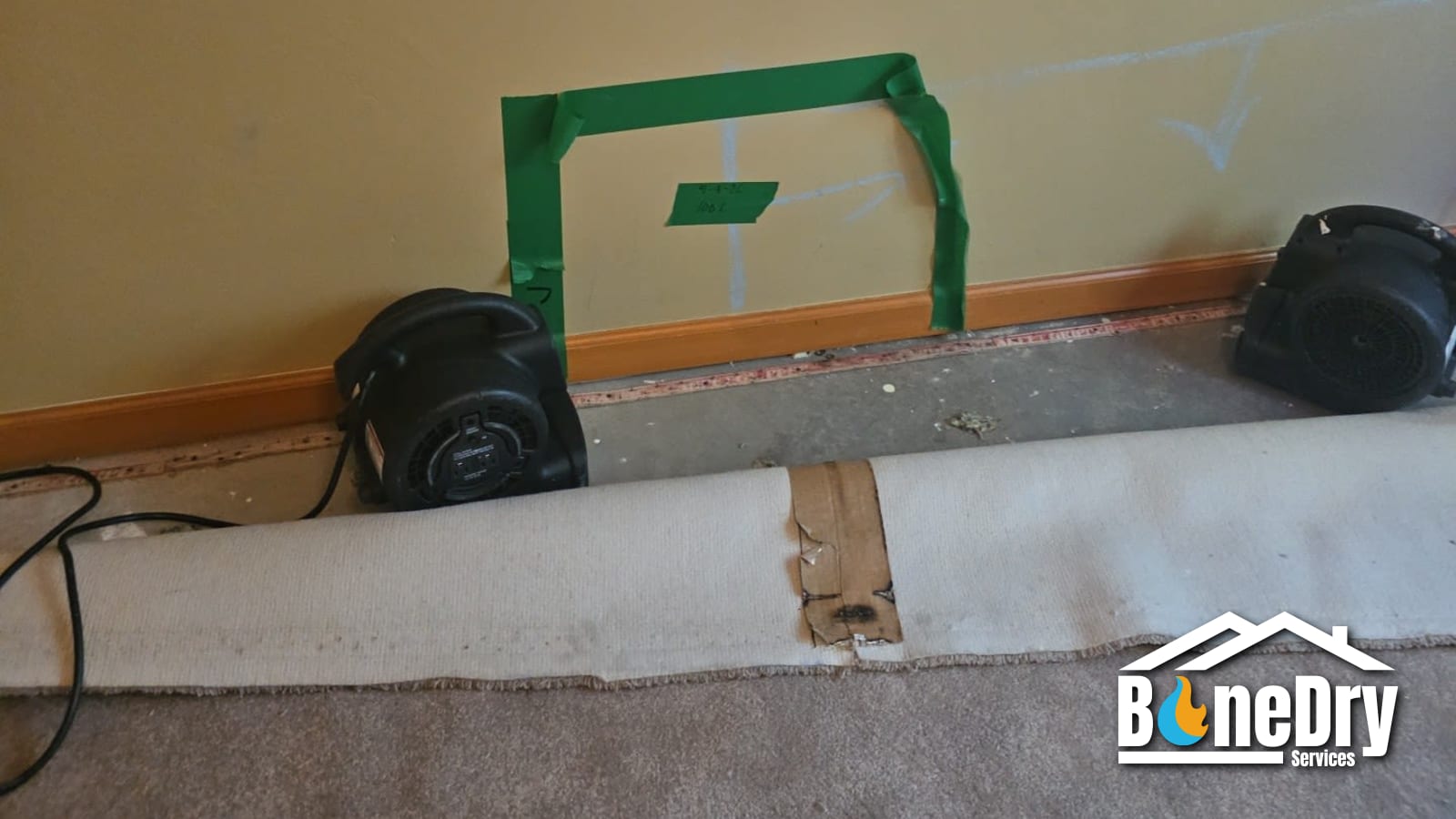
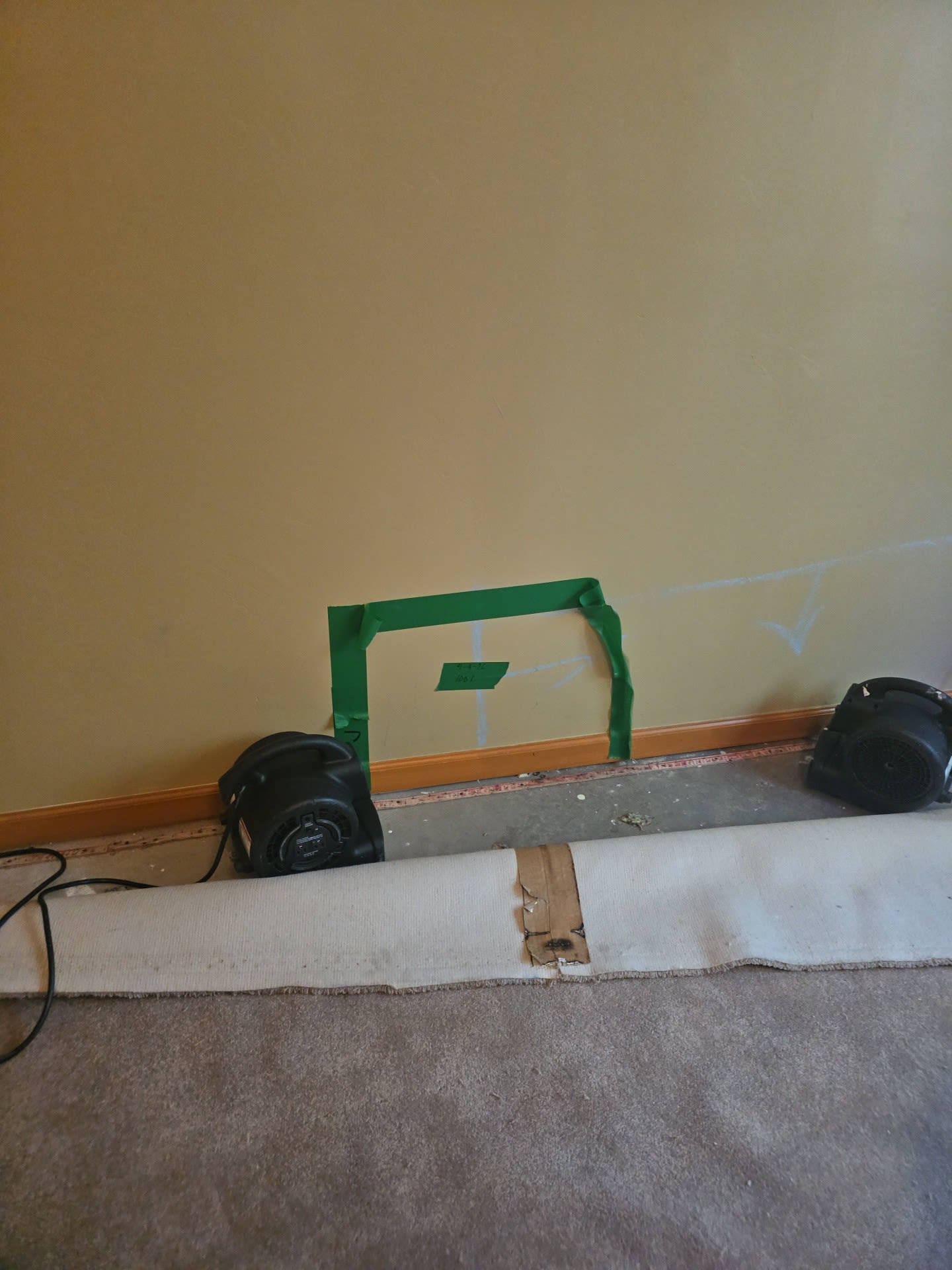
A shop vac and a few box fans pull up surface water and dry what you can touch, which is a reasonable first step. They do not reach moisture trapped in wall cavities and under floors, and blowing air across a damp wall can dry the paint while the drywall behind it stays wet. Professional drying starts with moisture meters to find the wet areas, then places dehumidifiers and air movers where the structure needs them, with readings taken until the materials are back to normal.
The first hours after the repair
The plumber has gone, the pipe is fixed, and you are standing in a wet room. What you do in the next few hours shapes both the damage and the insurance claim.
Start with safety. If water reached outlets, light fixtures or appliances, switch off power to that area at the breaker, but only if you can reach the panel without standing in water. Keep children and pets out of wet rooms, and take care on wet stairs and floors.
Then think about the claim. Your insurer will want to see what happened, and the best evidence is what the room looks like before anything is moved or thrown away.
What to photograph for the insurance claim
Take wide photos of every affected room, then close-ups of the water line on walls, wet flooring, damaged belongings and the ceiling below if the leak was upstairs. Photograph the broken section of pipe and keep it if the plumber left it behind, along with the plumber's invoice, since together they record the cause and the date. Write down when you found the leak and when the water was shut off. Report the loss to your insurer promptly, and ask what they need from you before anything is removed.
What to turn off and move
If the plumber's fix is temporary, leave the main water valve off until the permanent repair is done. Move rugs, furniture and boxes off wet floors, and put foil or wood blocks under furniture legs you cannot move so stains do not set into the carpet. Lift curtains and bedding off the floor, and take photos and important papers somewhere dry. Leave wet drywall and carpet where they are for now, because tearing out materials before they are documented can make the claim harder to support.
How the work is done
When you call us after a burst pipe, the work follows a set order. Each step is there to find all of the water, protect your claim and keep a dry-out from becoming a rebuild.
- Inspect and map the moisture: the crew checks walls, floors and ceilings with moisture meters and, where useful, thermal imaging to see how far the water traveled from the break.
- Document for your insurer: photos, moisture readings and notes are recorded before anything is removed, and we work with all insurance companies on the claim.
- Remove what cannot be saved: soaked carpet pad, wet insulation and drywall that has lost its strength come out, while materials that can be dried stay in place.
- Dry the structure: dehumidifiers and air movers are set up for the rooms and wall cavities that are wet, and readings are taken on each visit until the materials are back to normal.
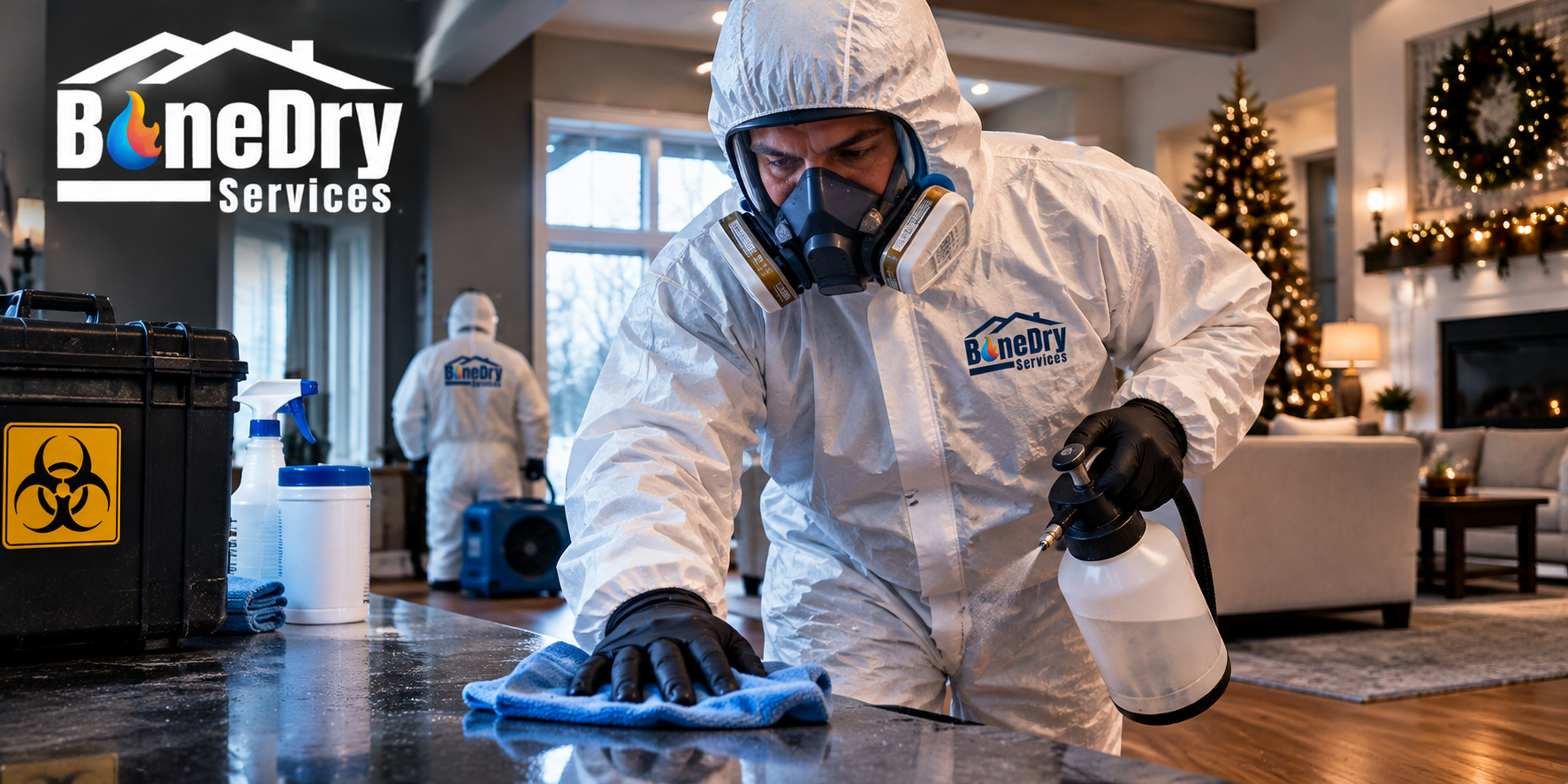
- Prevent mold: wet areas are cleaned and treated as they dry, so the damp spaces inside walls do not become a mold problem later.
- Rebuild: once everything is dry, the same team replaces drywall, flooring and finishes, so you are not handed off to another contractor.
Drying is the step most homeowners underestimate. Our structural drying and dehumidification page explains how we dry walls, floors and framing without tearing out more than the job needs.
What acting promptly protects
A burst pipe is stressful, but it is a problem with a clear fix when it is handled early. Call a restoration company within the first 24 to 48 hours to prevent mold and permanent structural damage. Acting within that window protects four things:
- Your insurance claim: a burst pipe is the kind of sudden event many homeowners policies cover, and prompt reporting and documentation make that cause easy to show.
- Your out-of-pocket cost: on a covered loss we bill your insurer directly and only collect what insurance settles, so there is no surprise bill at the end.
- Your floors and walls: drywall, carpet and wood that are dried quickly can often be saved, while materials left wet usually have to be replaced.
- The air in your home: drying the hidden spaces early keeps mold from starting inside walls and under floors, where it is hard to see and harder to remove.
If you notice a musty smell or spotting in the weeks after a leak, moisture was likely left behind. Our mold removal and remediation page explains how we find the source and clean it up safely.
📞 Call BoneDry Services at (303) 276-4163 today for water damage restoration across Denver, Boulder, and the Front Range.
Frequently Asked Questions
What should I do right after a pipe bursts?
Shut off the water at the main valve and call a plumber to repair the pipe. If water reached outlets or fixtures, turn off power to that area at the breaker, as long as you can reach the panel on dry ground. Photograph every affected room before you move anything, then move belongings off wet floors. Call a restoration company within the first 24 to 48 hours so the hidden water is found and dried.
Does homeowners insurance cover water damage from a burst pipe?
Many policies cover water damage from a pipe that bursts suddenly, including a frozen pipe. Coverage is often limited or denied when the damage comes from a slow leak over time, or when a policy requires heat to be kept on in a home that was left empty. The pipe repair itself may be treated differently from the damage the water caused. Read your policy or ask your adjuster, and report the loss promptly so the cause is documented.
Do you bill my insurance company directly?
Yes, on a covered loss. We work with all insurance companies, document the damage for the claim and bill your insurer directly. We only collect what insurance settles, so you are not left with a surprise bill for the difference. If you have questions about your claim, we can walk through it with you and your adjuster.
How long does it take to dry out a house after a burst pipe?
It depends on how much water was released, how long it sat and what it soaked into. Drywall and carpet pad dry differently from hardwood floors or a wet subfloor, and moisture trapped inside walls takes the longest to reach. Rather than guessing, the crew takes moisture readings on each visit and removes the equipment only when the materials are back to normal. Starting early shortens the drying and keeps more of your home in place.
How do you make sure mold does not grow after the water is cleaned up?
Mold needs moisture, so the most important step is getting the hidden water out of walls, floors and insulation, not just off the visible surfaces. We measure moisture to find every wet area, dry the structure until readings are back to normal, and clean and treat affected materials as they dry. Anything too wet to save is removed rather than closed up behind new drywall. If you notice a musty smell later, call us so we can check for moisture that was missed.