


Attic Frost in Denver: Why Cold Roofs Lead to Late-Fall Mold Spikes
Every late fall in Denver, a quiet problem forms in attics across the metro, and by the time it is discovered, mold remediation in Denver is often already necessary. It starts with something that sounds harmless, a thin layer of frost on the underside of the roof, but that frost is the visible beginning of a moisture cycle that can turn an attic into a mold-breeding environment. Understanding why cold roofs collect frost, and why it melts into a hidden problem, is the key to catching it before professional mold removal and remediation becomes unavoidable.
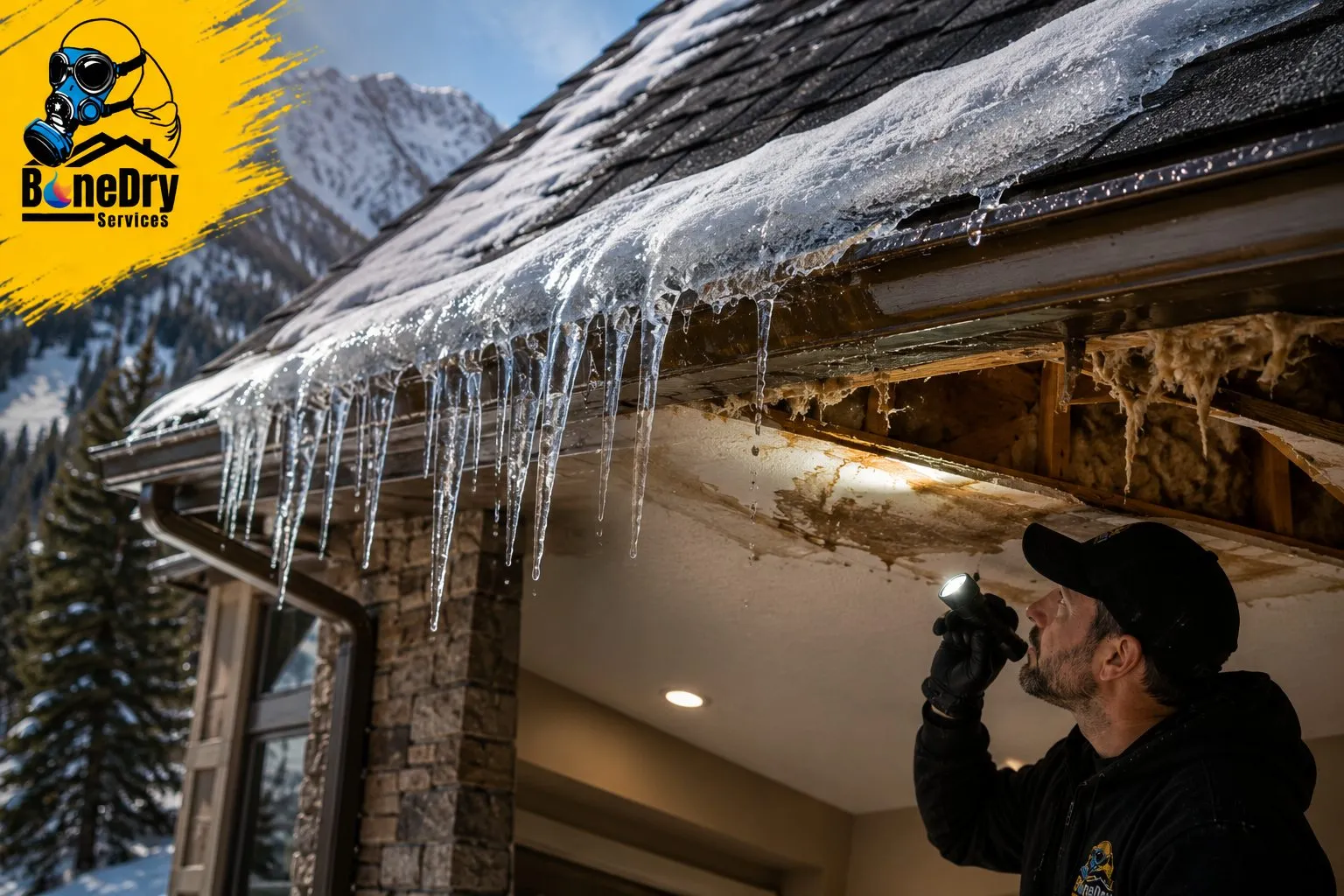
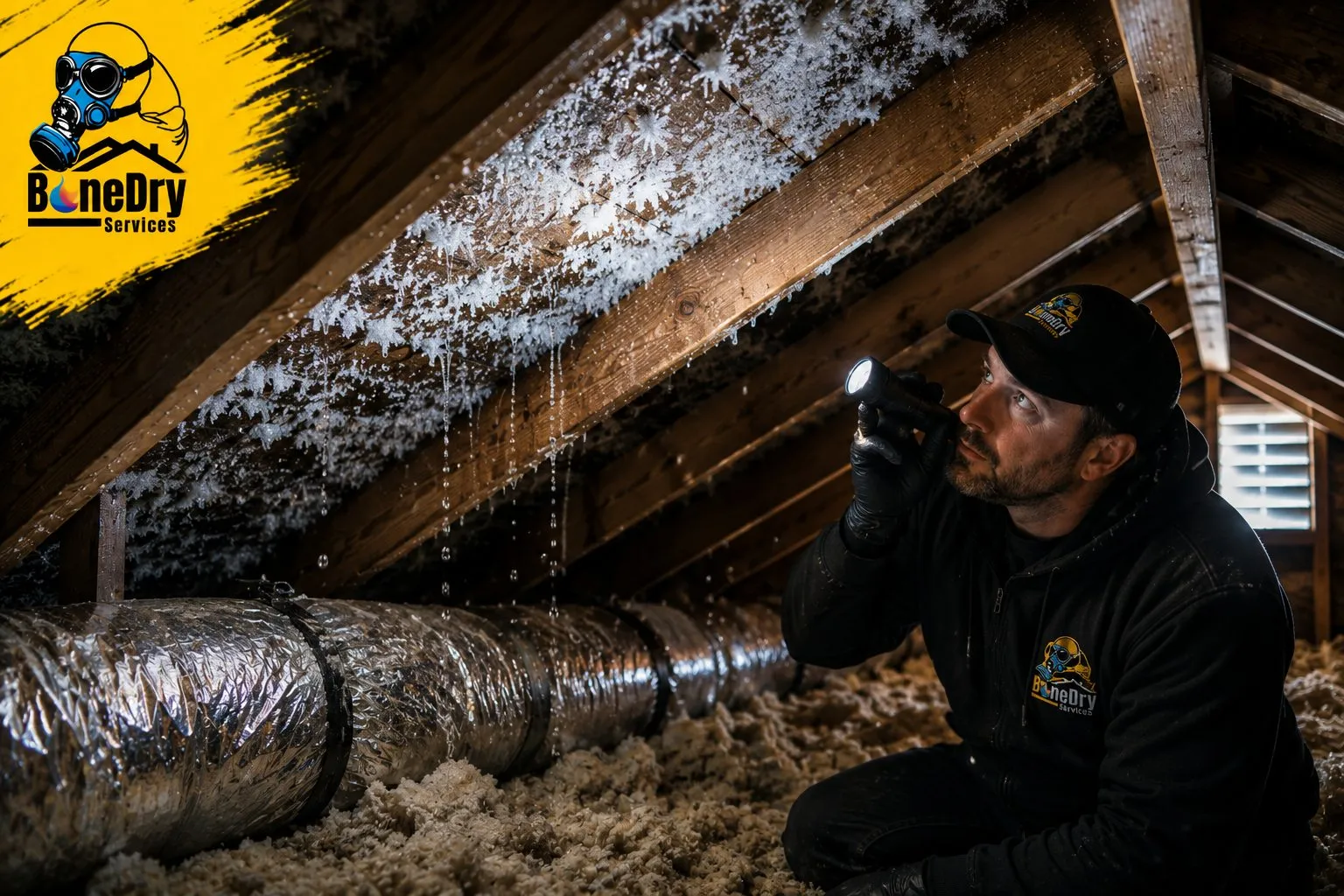
The phenomenon is sometimes called attic rain, and it catches homeowners off guard because it has nothing to do with a roof leak. The water comes from inside the house. Warm, humid indoor air rises into a cold attic, meets the frigid underside of the roof deck, and freezes there as frost. When temperatures climb, that frost melts, drips onto insulation and framing, and creates exactly the damp conditions mold needs to flourish.
At BoneDry Services, we see this pattern spike in the late-fall and early-winter transition, when indoor heating ramps up and roof decks turn cold. Understanding how warm air, cold surfaces, and poor ventilation combine to feed attic mold explains why prompt mold remediation, paired with fixing the underlying moisture, is what truly resolves the problem.
Why Cold Roofs Collect Frost in Late Fall
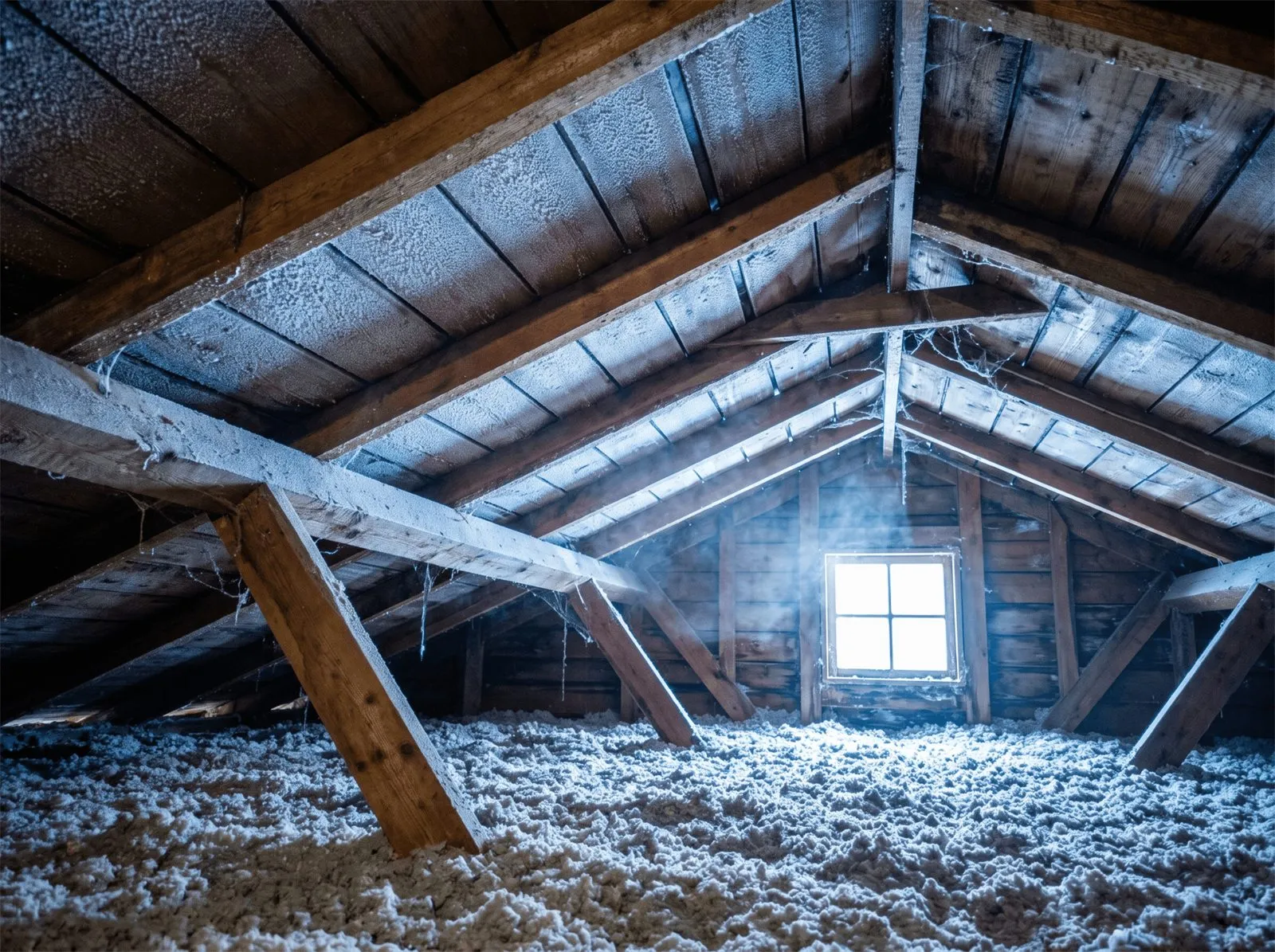
The reason frost forms on the underside of a roof deck comes down to a simple collision between warm, moist air and a cold surface. In late fall, as Denver homes switch on their heat, the indoor air becomes both warmer and more humid, and that air does not stay neatly in the living space. It finds its way up into the attic, where it meets a roof deck chilled by the cold night sky.
When warm, humid air touches a surface below freezing, the moisture in it does not just condense, it freezes, forming frost directly on the wood. This is the same physics that puts frost on a car windshield overnight, only it is happening inside the attic, on the structure of the home. The colder the roof deck and the more humid the air reaching it, the more frost accumulates. Late fall is the peak season for this because it combines newly heated interiors with roof decks that turn cold quickly at night, before the deep, dry cold of midwinter sets in.
Left unaddressed, this cycle repeats night after night, building up frost that will eventually melt. That melting is where the real trouble begins, and it is why what looks like a minor curiosity in the attic can lead to conditions that require professional mold removal and remediation.
How Warm Indoor Air Reaches the Attic
Warm, moist air is generated constantly inside a home by showers, cooking, laundry, and simply breathing, and in winter that air carries more humidity than homeowners realize. It rises, and wherever there are gaps, around light fixtures, attic hatches, plumbing penetrations, and poorly sealed ceilings, it escapes upward into the attic. This upward movement of warm air is sometimes called the stack effect, and it is the delivery system that carries household moisture to the cold roof deck where it can freeze.
Why the Roof Deck Turns Cold Enough to Freeze
A roof deck radiates heat to the open sky at night, and on a clear, cold Colorado evening it can drop below the surrounding air temperature. Without adequate insulation beneath it and ventilation to keep attic conditions in balance, the underside of the deck becomes a cold surface sitting directly above a stream of warm, humid air. That temperature difference is exactly what turns escaping household moisture into frost, and it is why attics with insulation and ventilation problems are the most prone to attic frost.
The Melt Cycle: How Attic Frost Becomes a Mold Problem
Frost on a roof deck is only the first half of the story. The damage happens when it melts, and that melt-and-refreeze cycle is what transforms a cold-weather quirk into a genuine mold problem that calls for mold remediation in Denver.
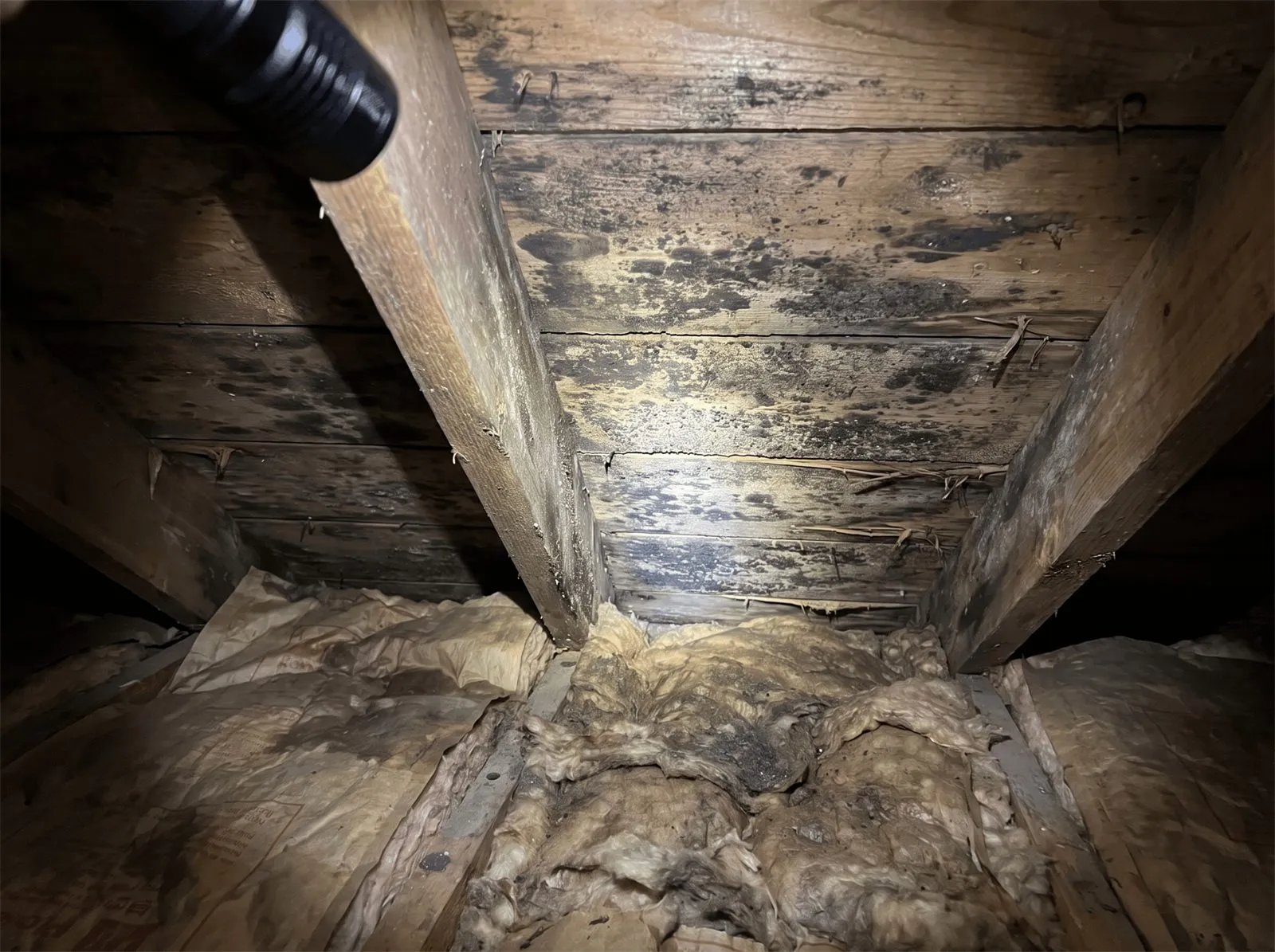
When daytime temperatures rise or the sun warms the roof, the accumulated frost thaws and turns to liquid water. That water drips down onto whatever sits below, the insulation, the ceiling framing, the top of the drywall, and soaks in. Because this happens above the ceiling, out of sight, homeowners rarely notice it directly. Instead, the moisture quietly saturates porous materials in a dark, enclosed space with limited airflow, which is a nearly ideal environment for mold. As the cycle repeats through late fall and winter, each thaw adds more moisture, and the attic stays damp long enough for mold to establish and spread.
This is why attic mold so often appears seemingly out of nowhere in winter. The source is not a dramatic leak but a slow, repeating drip from melting frost, feeding materials that never get a chance to dry. Resolving it means both removing the mold and correcting the moisture cycle that caused it, the combined approach that defines effective mold removal and remediation.
Why Wet Insulation Loses Its Value
Insulation works by trapping air, and when it becomes wet from melting frost, that structure collapses and its ability to insulate drops sharply. Wet insulation not only performs worse, letting even more heat escape into the attic and worsening the frost cycle, but it also holds moisture against the framing and becomes a reservoir for mold growth. Saturated insulation frequently needs to be removed and replaced as part of resolving an attic moisture problem, because it will not recover its performance and it keeps the area damp.
How Mold Takes Hold in a Damp Attic
Mold needs moisture, organic material, and still air, and a frost-affected attic supplies all three. The wood of the roof deck and framing provides food, the melting frost provides water, and the enclosed attic provides the undisturbed conditions mold prefers. Once established, mold on a roof deck can spread across the sheathing and rafters and release spores that travel down into the living space through the same gaps that let the warm air up. This is why an attic mold problem is not only a structural concern but an indoor-air-quality one, and why professional remediation addresses containment as well as removal.
How Professional Mold Remediation Resolves Attic Frost Damage
Truly fixing frost-driven attic mold takes more than wiping down the sheathing, because the mold is a symptom and the moisture cycle is the cause. Professional mold remediation in Denver addresses both, following a deliberate sequence that removes the growth safely and stops it from returning. This is the order the work generally follows:
- Inspect and identify the moisture source — The attic is assessed to confirm mold, map its extent, and trace the frost-and-melt cycle feeding it.
- Contain the affected area — Containment and negative air pressure keep spores from spreading into the living space while work is underway.
- Remove mold and saturated materials — Affected sheathing and framing are treated, and wet, unsalvageable insulation is removed.
- Dry the structure thoroughly — The attic and framing are dried so no residual moisture remains to feed new growth.
- Address ventilation and air sealing — Correcting the underlying moisture, better sealing and ventilation, is what prevents the frost cycle from starting again.
Following this sequence resolves both halves of the problem: the mold that has already grown and the recurring moisture that would otherwise bring it back. Because melting frost and hidden humidity so often lead to the kind of trapped moisture that damages a structure over time, this work overlaps with our structural drying and dehumidification expertise, ensuring the attic is genuinely dry before it is closed back up.
What Timely Mold Remediation Protects in Your Denver Home
Catching and correcting attic frost before it becomes an entrenched mold problem protects far more than the attic. The benefits of prompt, professional mold remediation include:
- Healthier indoor air — Removing attic mold and stopping spores from drifting down protects the air the household breathes.
- Preserved roof structure — Drying and treating the sheathing and rafters protects the wood from the rot that trapped moisture causes.
- Restored insulation performance — Replacing saturated insulation restores energy efficiency and helps break the frost cycle.
- Protected home value — A dry, mold-free attic protects the property’s value and condition, with documentation to support an insurance claim.
Because a damp attic can spread problems well beyond the roofline, a complete recovery treats the home as a whole. When lingering moisture or airborne spores affect the spaces below, our odor removal and air-quality work addresses the musty smell and particulate alongside the remediation, so the whole home is returned to a fresh, healthy condition.
📞 Call BoneDry Services at (303) 276-4163 today for professional Mold Remediation that resolves attic frost damage across Denver, Boulder, and the Front Range.
Frequently Asked Questions
What is attic rain and what causes it?
Attic rain is moisture that forms inside the attic rather than entering from outside. Warm, humid air from the living space rises into the attic and meets the cold underside of the roof deck, where the moisture freezes into frost. When temperatures rise, that frost melts and drips down onto insulation and framing, mimicking a leak. The cause is not the roof but a combination of indoor humidity, escaping warm air, and a cold, poorly ventilated attic, which is why it spikes in late fall and winter.
How do I know if I have mold in my attic?
Signs of attic mold include dark staining or discoloration on the roof sheathing and rafters, a persistent musty smell, damp or matted insulation, and sometimes frost or water stains on the underside of the roof in cold weather. Because attics are out of sight, the problem often goes unnoticed until it is advanced. A professional inspection is the reliable way to confirm mold, determine how far it has spread, and identify the moisture source feeding it before it worsens or spreads into the living space below.
Can I remove attic mold myself?
Small surface spots can sometimes be cleaned, but attic mold driven by a frost-and-melt cycle usually needs professional remediation, for two reasons. First, disturbing mold without containment can spread spores throughout the home, including down into living spaces. Second, cleaning the visible mold does nothing about the moisture cycle causing it, so it returns. Professionals contain the area, remove the mold and saturated materials safely, dry the structure, and address the underlying ventilation and humidity, which is what actually resolves the problem for good.
Why does attic mold get worse in winter?
Attic mold often worsens in the colder months because that is when the moisture cycle feeding it is most active. Indoor heating raises humidity, warm air escapes into the attic, and cold roof decks turn that moisture into frost that repeatedly melts and re-wets the materials below. Each thaw adds moisture to insulation and framing in a dark, still space, which is ideal for mold. The repeating late-fall and winter cycle keeps the attic damp long enough for mold to establish and spread.
Does insurance cover attic mold remediation?
Coverage depends on the policy and the cause of the moisture. Some policies cover mold that results from a sudden, covered event, while gradual moisture from ventilation or humidity issues may be treated differently. BoneDry works directly with insurance providers and documents the damage and remediation thoroughly to support a claim. Because coverage varies, homeowners should review their own policy, but detailed documentation of the cause and the work performed consistently helps when a claim is possible.