


Chef-Grade Kitchen Fire Damage Repair: Removing Grease and Smoke Residue
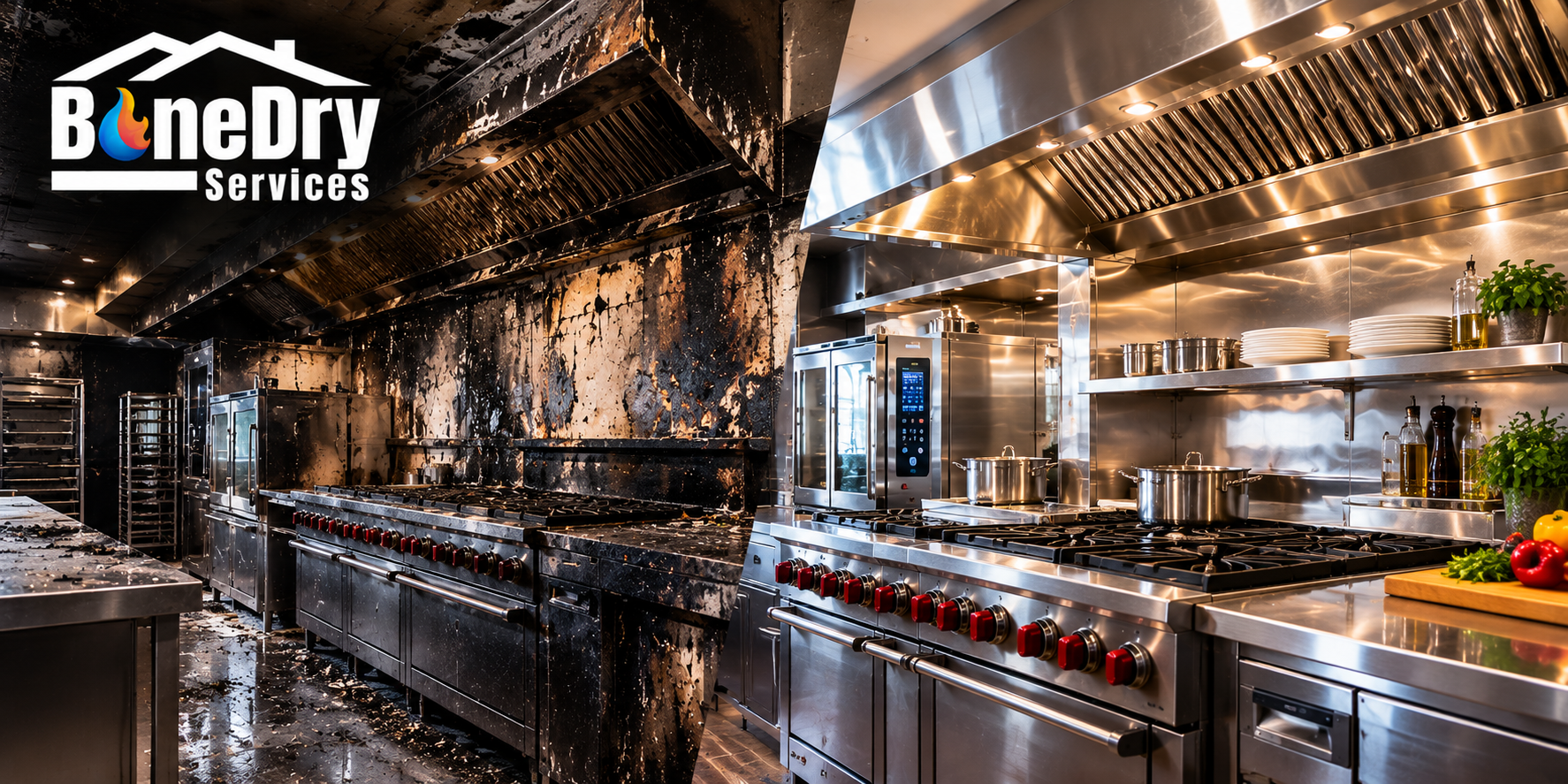
A kitchen fire rarely stays where it starts. A flare-up on a professional range can coat an entire chef-grade kitchen in a sticky film of grease and smoke within minutes, and the residue settles on everything from stone countertops to the touchscreen on a built-in oven. Restoring that space correctly is a specialized form of fire damage repair, because the materials in a high-end kitchen are as sensitive as they are expensive.
The challenge is that grease-laden smoke behaves differently from the dry soot of a typical house fire. It clings, it smears when wiped, and it carries an odor that works its way into cabinetry, hood ductwork, and porous surfaces long after the flames are out. Well-meaning cleanup with household products often makes things worse, spreading residue across lacquered finishes or pushing moisture into appliance electronics that were never designed to get wet.
At BoneDry Services, we approach a chef-grade kitchen as a collection of delicate systems rather than a single room. This guide explains why grease and smoke damage is so stubborn, how professional appliances and custom ventilation complicate the cleanup, the step-by-step restoration process, and what homeowners should and should not do in the first hours after a kitchen fire.
Why Grease and Smoke Damage Is Different in a Professional Kitchen
Not all smoke damage is the same, and the residue from a kitchen fire is among the most difficult to remove. When cooking oils and fats burn, they release a greasy, often nearly invisible film that bonds to surfaces rather than resting loosely on top of them. That is why kitchen fire damage repair demands a different approach from cleaning the dry, powdery soot left by burning wood or paper.
Grease-based smoke residue is oily and acidic. It smears instead of lifting, so wiping it with a damp cloth tends to spread it across a larger area and drive it into the texture of the surface. It also carries a sharp, rancid odor that lingers in soft materials and enclosed spaces. In a chef-grade kitchen, the problem is magnified by the sheer number of high-value surfaces in one room: stone countertops, stainless steel, custom millwork, glass-front cabinetry, specialty tile, and appliances worth tens of thousands of dollars.
Time matters as well. Acidic residue begins to etch and discolor sensitive finishes the longer it sits, which is why prompt, professional fire damage repair protects far more of the original kitchen than a delayed or improvised cleanup. We explore that chemistry in more detail in our guide to preventing pitting on marble and stainless after a soot event.
Protein and Grease Residue Explained
Professional restorers often distinguish between dry soot, oily soot, and protein residue. Burning meat, poultry, or fish produces protein residue, a yellowish, varnish-like film that is hard to see but impossible to miss by smell. Burning cooking oils produce a heavier, tacky grease film. Both require cleaning agents and techniques matched to their chemistry, because the wrong product can set the stain rather than remove it.
Why the Odor Lingers
Smoke particles from a kitchen fire are extremely small, and they travel on heated air into every gap they can find, including inside cabinets, drawer boxes, and the hood ductwork itself. Cleaning visible surfaces alone leaves those hidden reservoirs in place, so the smell returns every time the kitchen warms up. Lasting results depend on removing the residue at its source and treating the air, not masking the odor with fragrance.
Protecting High-End Appliances and Delicate Electronics
Modern chef-grade kitchens are full of electronics. Induction cooktops, steam ovens, smart refrigerators, built-in coffee systems, and range hoods with digital controls all rely on circuit boards and sensors that are vulnerable to both smoke residue and the moisture used to clean it. Careless cleaning is one of the most common ways a recoverable kitchen turns into a costly appliance replacement.
Professional fire damage repair treats every appliance as a sensitive object.
Exterior surfaces are cleaned with low-moisture methods and products suited to the specific finish, whether brushed stainless, enamel, glass, or a specialty coating. Control panels and vents are protected so cleaning solutions do not wick into the electronics behind them. Where residue or extinguisher powder may have entered an appliance's interior, the right course is often an inspection by a manufacturer-authorized technician before the unit is used again, and a professional restorer documents that need clearly for the insurance claim.
The extinguisher itself is part of the picture. Many household fire extinguishers use a dry chemical powder that is effective on a grease fire but corrosive to metals and electronics if it is left in place. That fine powder drifts into vents and seams, so removing it promptly and thoroughly is part of protecting the appliances, not an afterthought.
Stainless Steel, Stone, and Custom Finishes
Each surface in a premium kitchen has its own rules. Stainless steel should be cleaned along the grain with non-abrasive products to avoid scratching and staining. Natural stone such as marble is porous and sensitive to acids, so acidic soot has to be neutralized quickly and cleaned with stone-safe solutions. Lacquered or painted custom cabinetry can be dulled by aggressive solvents. A restorer who knows these differences cleans each material appropriately instead of applying one product to everything.
Custom Ventilation and Hood Systems
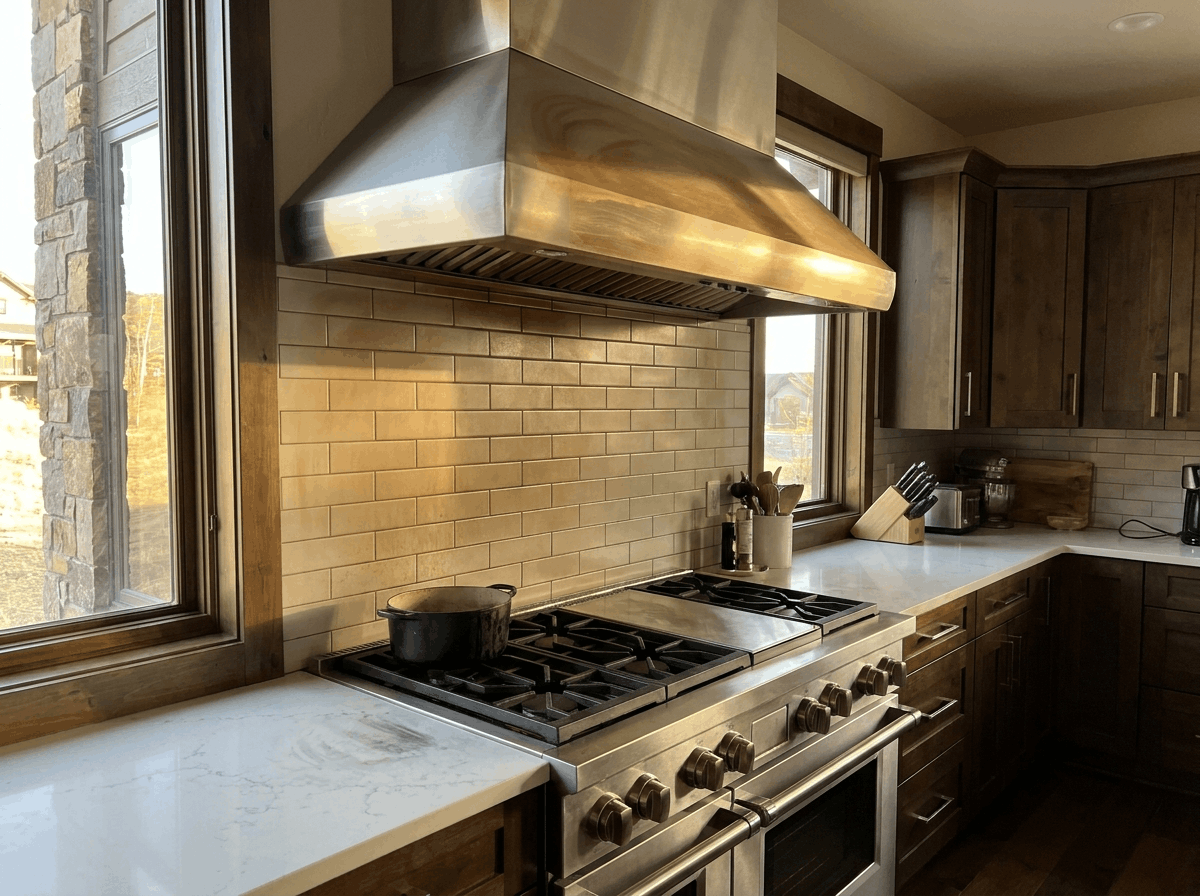
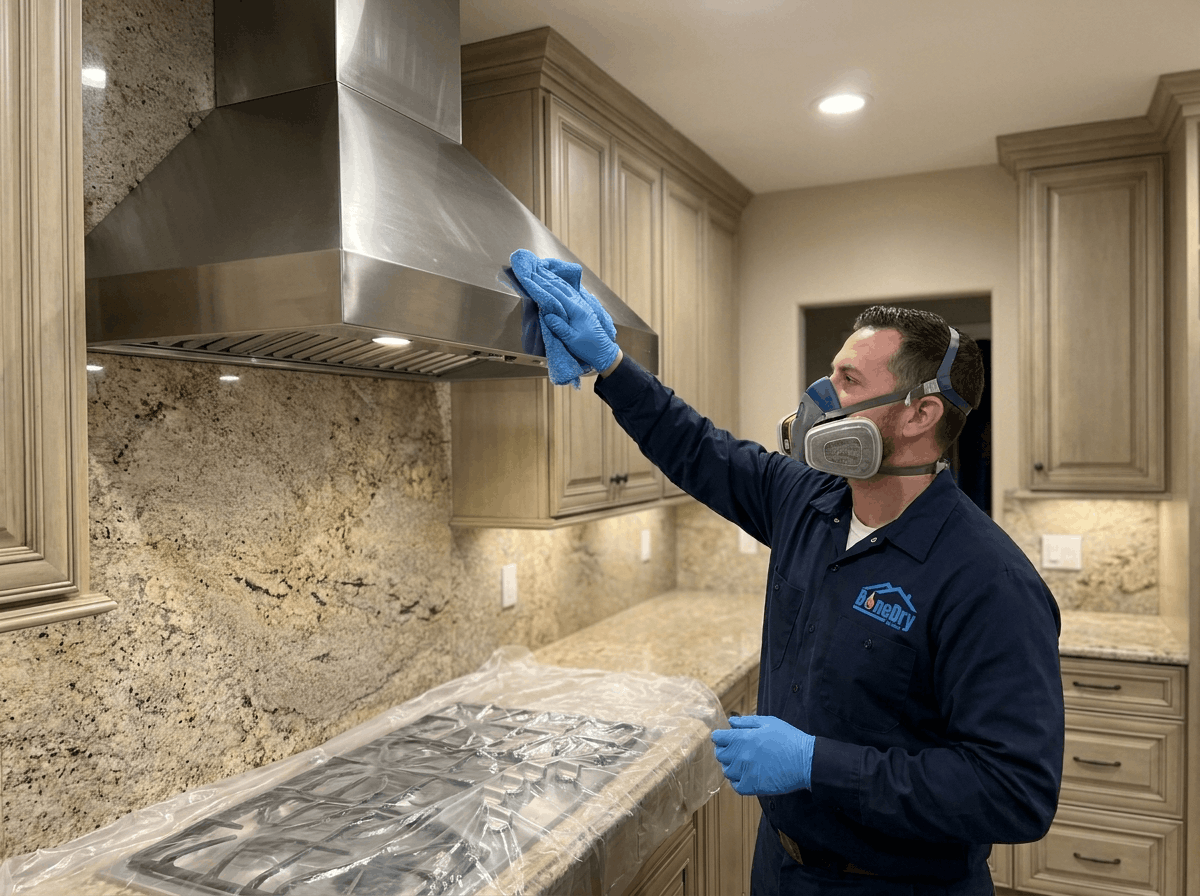
The range hood is designed to capture grease and smoke, which means it is also where a kitchen fire concentrates its residue. Baffle filters, the hood interior, and the ductwork leading outside can all be heavily coated after a flare-up. Because grease buildup in a duct is itself a fire hazard, the hood system needs to be inspected and cleaned before it goes back into service. When smoke has also traveled into the home's heating and air system, that ductwork needs attention too, a problem we explain in our article on how soot infiltrates and damages HVAC systems.
The Chef-Grade Kitchen Fire Damage Repair Process
Restoring a professional kitchen follows a careful sequence that removes residue at its source, protects sensitive surfaces, and eliminates odor rather than covering it. Every project is assessed individually, but the work generally follows this order:
- Assess and document the damage — The kitchen is inspected room by room, residue types are identified, and every affected surface and appliance is photographed and recorded for the insurance claim.
- Protect and stabilize — Unaffected areas are sealed off, sensitive electronics are protected, and air filtration is set up to capture airborne particles while work begins.
- Remove extinguisher residue and loose soot — Dry chemical powder and loose particles are removed with HEPA vacuums and dry methods before any wet cleaning, so nothing is smeared or pushed into seams.
- Clean each surface by material — Grease and protein residue are removed with products matched to stainless, stone, glass, millwork, and tile, working from the top of the room down.
- Clean inside cabinets, drawers, and the hood system — Hidden surfaces where smoke settled are cleaned so odor does not return once the kitchen is back in use.
- Deodorize the space — Air scrubbing and professional odor treatments neutralize smoke molecules in the air and in porous materials.
- Final inspection and handoff — The kitchen is reviewed surface by surface, and any items needing manufacturer service or replacement are documented.
Following this order prevents the most common mistake in kitchen cleanup: smearing residue into porous materials before the loose contamination has been removed. Smoke odor in particular is a separate discipline, and our odor removal work is what makes sure the kitchen smells like a kitchen again rather than a fire scene.
Saving Cookware, Dishes, and Kitchen Contents
A chef-grade kitchen is not only its built-in surfaces. Copper cookware, chef's knives, specialty small appliances, fine china, glassware, and pantry items all sit in the path of the smoke. Some of these items clean up beautifully with the right process; others, especially open food and porous packaging, should be discarded for safety.
Professional contents handling separates what can be restored from what cannot, documents both for the claim, and cleans salvageable items with methods suited to their material. Food that was exposed to smoke, heat, or extinguisher powder should never be kept, even if it looks fine. Items stored in sealed glass or metal may be salvageable after cleaning, while open containers, produce, and anything in cardboard or paper packaging are typically discarded.
For larger kitchen fires, moving belongings out of the space allows the room to be cleaned without working around them and protects the items from further exposure. Our contents restoration team inventories, packs, cleans, and returns kitchen belongings, so homeowners know exactly what was saved and what is part of the claim.
What to Do in the First Hours After a Kitchen Fire
The first decisions after a kitchen fire have a large effect on how much of the room can be saved. Once the fire is out and the fire department has cleared the home, these steps help protect a high-end kitchen while professional help is on the way:
- Never use water on a grease fire: Water can cause burning oil to splatter and spread the fire. Smother a small pan fire with a lid and turn off the heat, and call 911 for anything larger.
- Ventilate carefully: Open windows if it is safe to do so, but avoid running the HVAC system, which can pull smoke into ductwork throughout the home.
- Do not wipe surfaces: Wiping grease residue with a wet cloth smears it and can set stains on stone and stainless. Leave cleaning to professionals.
- Keep away from appliances: Do not run appliances that were exposed to smoke, heat, or extinguisher powder until they have been inspected.
- Discard exposed food: Throw away any open food, produce, or items in porous packaging that were in the kitchen during the fire.
- Document everything: Photograph the damage from several angles before anything is moved, and contact your insurance company to open a claim.
If the fire caused broken windows or damaged exterior openings, the property should be secured quickly to protect it from weather and intruders. Our emergency board-up crews can secure the home the same day while the cleanup is planned. When you are ready, you can contact us to schedule an inspection of the kitchen.
Why Professional Fire Damage Repair Protects Your Kitchen Investment
A chef-grade kitchen is often one of the most valuable rooms in the home, and it is built from materials that do not forgive the wrong cleaning method. Professional fire damage repair protects that investment by matching every technique to the surface in front of it, removing residue before it etches or stains, and dealing with the odor at its source.
The difference shows up in what can be saved. Prompt, specialized cleaning can often restore stone countertops, stainless appliances, and custom cabinetry that might otherwise be replaced, which shortens the timeline and keeps the kitchen's original character intact. Where replacement is needed, thorough documentation makes sure the insurance claim reflects the true scope of the damage.
As the largest privately owned restoration company in Colorado, BoneDry responds around the clock to kitchen fires of every size, from a contained stovetop flare-up to a fire that affects the entire home. When a kitchen needs rebuilding work after the cleanup, our guide to matching custom finishes and architecture explains how a damaged kitchen is brought back to its original standard.
📞 Call BoneDry Services at (303) 276-4163 today for 24/7 fire damage repair and chef-grade kitchen restoration across Denver, Boulder, Colorado Springs, and the Front Range.
Frequently Asked Questions
Can a kitchen be restored after a grease fire, or does it need to be gutted?
Many kitchens can be restored without a full tear-out, especially when cleanup starts quickly. Grease and smoke residue can usually be removed from stone, stainless steel, tile, and well-sealed cabinetry with the right products and techniques. Materials that were burned, warped, or heavily saturated may need replacement, and some appliances may need manufacturer inspection. A professional assessment identifies what can be cleaned and what cannot, so homeowners avoid replacing items that could have been saved.
Why does my kitchen still smell like smoke after cleaning?
Lingering odor usually means smoke residue remains in places that were not cleaned, such as inside cabinets and drawers, behind appliances, in the range hood ductwork, or in the home's HVAC system. Grease and protein residue are especially odorous and cling to these hidden surfaces. Air fresheners only mask the smell temporarily. Lasting odor removal requires cleaning residue at its source and treating the air and porous materials with professional deodorization methods.
Is it safe to use my appliances after a kitchen fire?
Appliances exposed to heat, smoke, or fire extinguisher powder should not be used until they have been checked. Residue and dry chemical powder can enter vents and seams and may damage electronics or create a safety hazard. Exterior surfaces can often be professionally cleaned, but internal components may need inspection by a manufacturer-authorized technician. Documenting each appliance's condition also helps support the insurance claim if repair or replacement is needed.
How do professionals clean smoke damage from stone countertops?
Natural stone such as marble and some granites is porous and sensitive to acid, so smoke residue should be neutralized and removed promptly with stone-safe cleaning agents. Professionals first remove loose particles with dry methods to avoid grinding soot into the surface, then use pH-appropriate cleaners suited to the specific stone. Harsh or acidic household products can etch the finish. If etching has already occurred, the stone may need professional polishing or refinishing.
Does homeowners insurance cover kitchen fire damage?
Many homeowners policies cover sudden, accidental fire damage, including smoke and soot cleanup, though coverage varies by policy. Thorough documentation is what helps most, including photos, an itemized list of affected surfaces and appliances, and records of the cleaning and restoration performed. BoneDry works directly with insurance companies and adjusters, providing detailed documentation to support the claim. Homeowners should review their own policy and open a claim as soon as possible after the fire.