


Fire Damage Repair: One Project Manager From Mitigation to Rebuild
After a house fire, most homeowners discover that the hardest part is not the cleanup itself but the coordination. One company boards up the windows, another dries out the water left by firefighting, a third cleans the soot, and a general contractor is supposed to rebuild, yet no one is responsible for making those pieces fit together. Every handoff becomes a gap, and those gaps are where weeks disappear. Coordinated fire damage repair under a single project manager is designed to close them.
The alternative is familiar to anyone who has been through a large loss. The homeowner becomes the general contractor by default, calling vendors, relaying information between them, chasing schedules, and trying to explain to an insurance adjuster why one company's scope does not match another's. Meanwhile, the house sits waiting between phases, and every idle week extends the time a family spends displaced.
At BoneDry Services, one project manager follows a fire loss from the first emergency call through final walkthrough. Our crews handle the emergency, mitigation, and cleaning work directly, and the rebuild is completed by trusted, local licensed contracting partners under the same project manager and the same plan. This guide explains why fragmented restoration loses time, what each phase of a fire recovery involves, how a single project manager connects them, and what that means for the homeowner and the insurance claim.
Why Fragmented Fire Restoration Costs Homeowners Weeks
A fire loss is not a single job. It is a chain of dependent tasks, and each one must finish before the next can start. When those tasks are split among unrelated companies, the chain breaks at every link, and fire damage repair takes far longer than the work itself requires.
The delays come from predictable places. A mitigation company finishes drying but has no reason to tell the rebuild contractor, who is not scheduled to start for another two weeks. A rebuild contractor arrives, finds that the scope from the cleaning company does not match what is actually needed, and has to wait for a revised estimate and insurance approval. Long-lead materials such as cabinetry, windows, or specialty flooring are not ordered until the rebuild contractor is finally on site, which adds another wait. Each of these gaps may seem small on its own, but together they commonly stretch a recovery by weeks.
There is also a cost beyond time. Separate companies produce separate documentation, often in different formats, which can make the insurance claim harder to review. When something goes wrong, each vendor can point to another. The homeowner, already dealing with the stress of a fire, is left managing all of it.
The Hidden Cost of Handoffs
Every handoff between companies requires the next team to learn the project from scratch: what was damaged, what was removed, what the adjuster approved, and what the homeowner expects. Information is lost along the way, and work is sometimes repeated or overlooked. A single project manager eliminates most of those handoffs because the person planning the rebuild is the same person who watched the damage being assessed and cleaned.
When the Homeowner Becomes the General Contractor
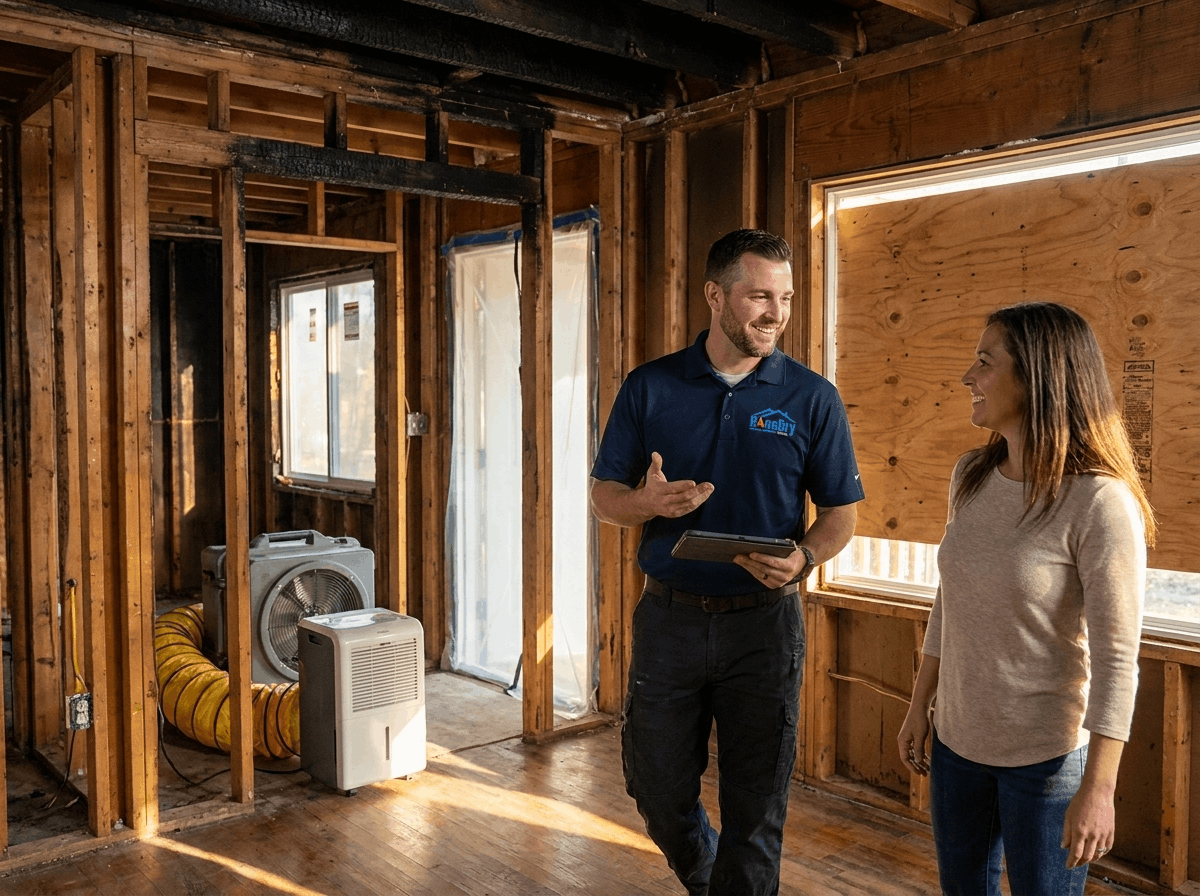
Without a coordinator, scheduling, communication, and claim follow-up fall to the homeowner. For a family living in a hotel or with relatives, that is an exhausting second job. A dedicated project manager takes that role back, so the homeowner has one person to call with questions instead of five.
The Phases of Fire Damage Repair, Start to Finish
Understanding the sequence of a fire recovery makes it clear why coordination matters. Each phase sets up the next, and a project manager's job is to make sure every phase starts the moment the previous one is ready. A typical fire loss moves through these stages:
- Emergency response and securing the property — Openings are boarded, the roof is tarped if needed, and the home is protected from weather and intruders. Our emergency board-up crews handle this immediately after the fire department clears the scene.
- Assessment and documentation — The project manager walks the property, documents fire, smoke, and water damage, and builds the scope the insurance adjuster will review.
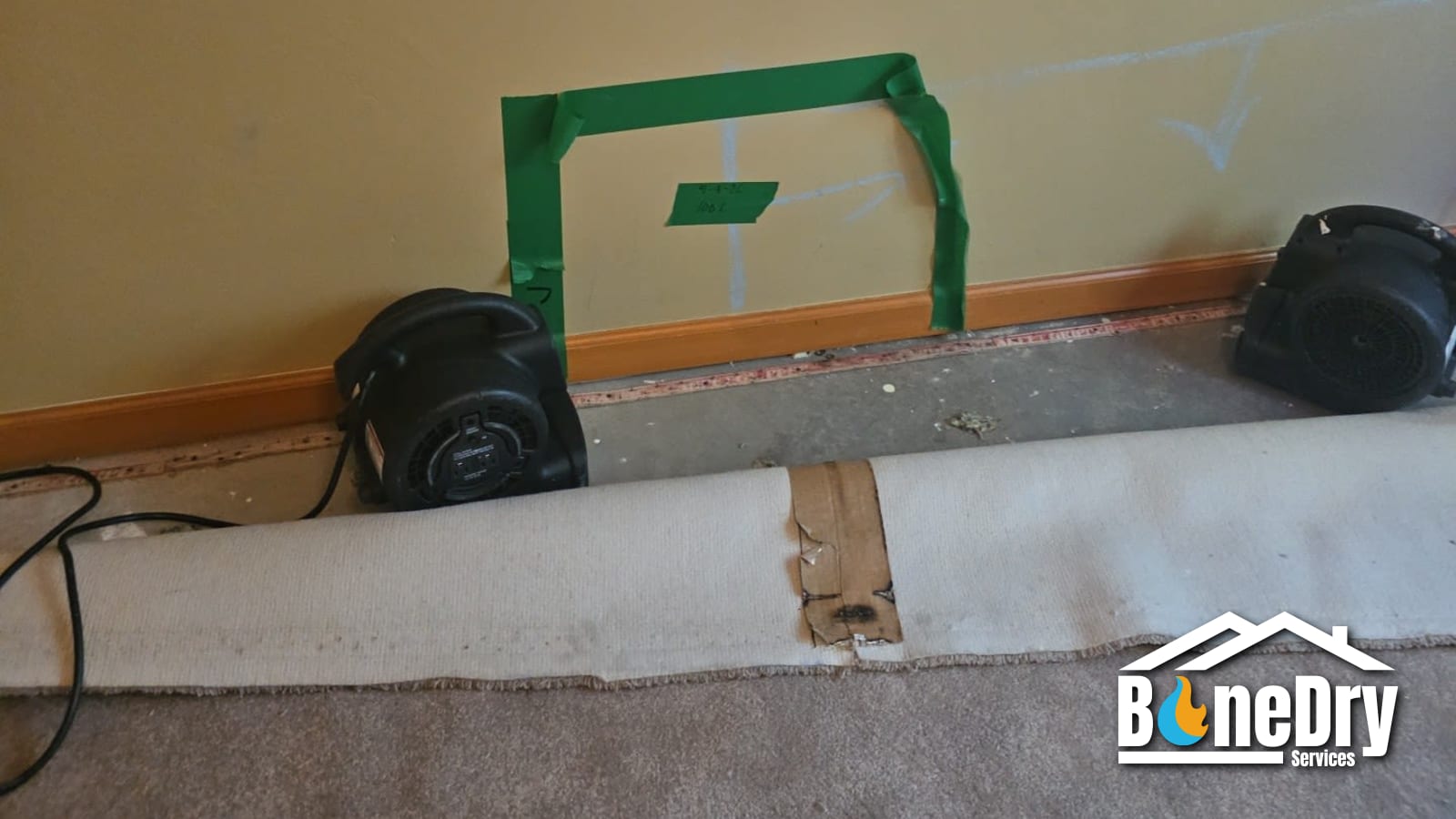
- Water mitigation — Water used to fight the fire is extracted, and walls, floors, and framing are dried to verified moisture levels.
- Contents pack-out — Salvageable belongings are inventoried, packed, and moved for cleaning and safekeeping.
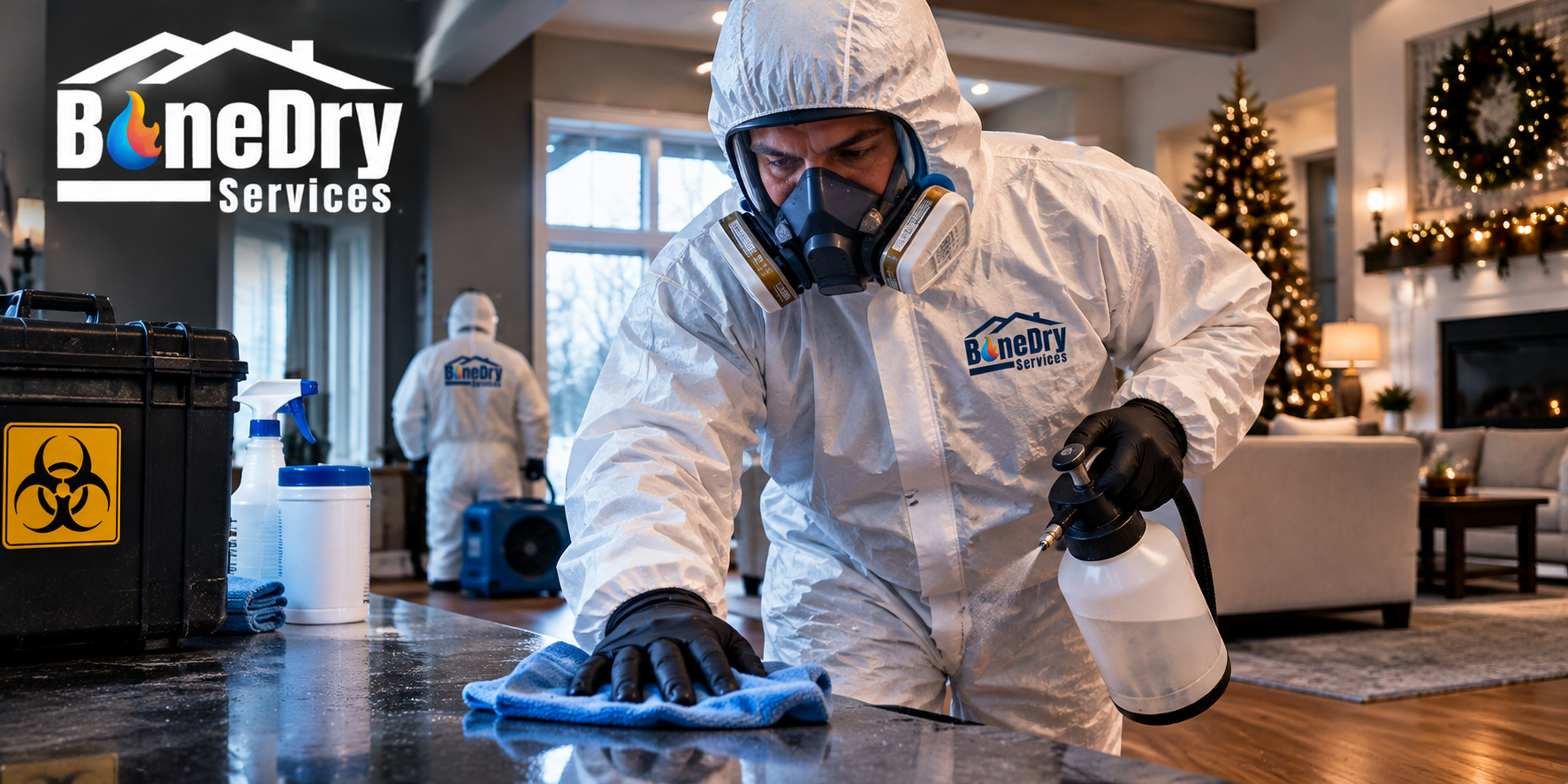
- Demolition and soot cleaning — Materials that cannot be saved are removed, and soot is cleaned from the remaining structure.
- Odor removal — Smoke odor is neutralized in the structure and air before anything is sealed behind new materials.
- Rebuild — Licensed contracting partners repair and rebuild the structure and finishes to the approved scope.
- Final walkthrough and contents return — The project manager reviews the completed work with the homeowner and coordinates the return of cleaned belongings.
The water left behind by firefighting is one of the most underestimated parts of a fire loss. It soaks into framing and subfloors and must be dried thoroughly before any rebuild begins, which is exactly the work our structural drying and dehumidification team performs. Skipping or rushing this step risks sealing moisture into new walls, where it can lead to mold.
How a Single Project Manager Connects Mitigation and Rebuild
The real advantage of having one project manager is not simply convenience. It is that the rebuild can be planned while the mitigation is still underway, so there is no dead time between the two. That overlap is where most of the time savings come from.
While crews are drying and cleaning, the project manager is already working on what comes next. Measurements for replacement cabinetry and millwork can be taken as soon as damaged materials are removed. Long-lead items can be identified early and ordered as soon as the insurance scope is approved. The rebuild partners can review the space before mitigation finishes, so their schedule is ready the moment the structure is cleared for work. Instead of the rebuild starting from zero weeks after cleanup ends, it begins as soon as the structure is ready.
The same continuity improves quality. The project manager knows exactly which walls were opened, where moisture was found, and which finishes the homeowner wants matched. That knowledge carries directly into the rebuild instead of being reconstructed from someone else's notes. For homes with custom finishes, our guide to matching custom finishes and architecture explains how that attention to detail shapes the final result.
One Schedule, One Point of Contact
A single project schedule shows every phase, every crew, and every dependency in one place. The homeowner has one point of contact who can answer questions about any part of the project, from when the dehumidifiers will be removed to when the new flooring arrives. Problems are solved by the person who can actually change the schedule rather than passed between companies.
Licensed Partners Working to One Plan
BoneDry subcontracts rebuild services to local licensed and professional contracting partners. Under a single project manager, those partners work from the same scope, schedule, and documentation as the mitigation crews. The homeowner gets the specialized skills of licensed trades with the coordination of one accountable team.

What Coordinated Fire Damage Repair Means for Your Insurance Claim
Insurance claims for fire losses are often large and complex, and they move fastest when the documentation is consistent from start to finish. A single project manager produces one continuous record that follows the property through every phase, which makes the claim far easier for an adjuster to review. The benefits for the homeowner include:
- Consistent documentation: Photos, moisture logs, and scope records follow one format from emergency response through rebuild, leaving fewer questions for the adjuster.
- No gaps or overlaps in scope: Because one person builds the full scope, items are not missed between vendors or billed twice.
- Faster supplements: When hidden damage is found during demolition, the project manager documents it and submits it right away, keeping the claim moving.
- Direct adjuster communication: One team works directly with the adjuster, so the homeowner does not have to relay information between companies.
Thorough records are one of the most reliable ways to keep a large claim on track, a topic we cover in detail in our article on how professional documentation speeds up large loss claims. Throughout the project, our contents restoration team keeps an itemized inventory of belongings, which supports the personal-property side of the claim.
Why Choosing One Team for Fire Damage Repair Matters
A fire takes enough from a family without adding months of coordination stress on top of it. Choosing one team to manage the entire recovery means fewer delays between phases, clearer communication, a cleaner insurance claim, and a single person accountable for the outcome.
It also protects the quality of the finished home. Smoke odor is handled before walls are closed, moisture is verified before new materials go in, and the rebuild reflects what was actually found during mitigation. Our odor removal work, for example, is completed before the rebuild so smoke smell is not trapped behind fresh drywall and paint.
As the largest privately owned restoration company in Colorado, BoneDry has the crews, equipment, and contracting relationships to carry a fire loss from the first night through the final walkthrough. When you are ready to talk through your situation, you can contact us to schedule an assessment with a project manager.
📞 Call BoneDry Services at (303) 276-4163 today for coordinated fire damage repair, from emergency response to rebuild, across Denver, Boulder, Colorado Springs, and the Front Range.
Frequently Asked Questions
What is the difference between fire mitigation and fire restoration?
Mitigation is the work done to stop damage from getting worse: securing the property, extracting water from firefighting, drying the structure, and removing unsalvageable materials. Restoration covers cleaning soot, removing odor, and rebuilding the home to its pre-loss condition. Both are essential, and they depend on each other. Coordinating them under one project manager lets rebuild planning start during mitigation, which reduces idle time between phases.
How long does fire damage repair usually take?
Timelines vary widely with the size of the fire, the extent of water and smoke damage, insurance approval, and the availability of replacement materials. A small kitchen fire may take a few weeks, while a fire affecting much of a home can take several months. Much of the delay in a typical fire recovery comes from gaps between separate companies, so coordinating mitigation and rebuild under one project manager is one of the most effective ways to shorten the overall timeline.
Does BoneDry do the rebuild after a fire?
BoneDry handles emergency services, mitigation, cleaning, odor removal, and contents restoration with our own crews. Rebuild services are subcontracted to local licensed and professional contracting partners, coordinated by the same BoneDry project manager who oversees the mitigation. This means the homeowner keeps one point of contact, one schedule, and one set of documentation from the first emergency call through the finished rebuild.
Why is there water damage after a house fire?
Firefighters often use large volumes of water to put out a fire, and that water soaks into floors, walls, insulation, and framing. Left in place, it can cause mold growth and structural damage on top of the fire damage. That is why water extraction and structural drying are an early and critical part of any fire recovery, and why moisture levels should be verified before rebuilding begins.
Can I choose my own contractor for the rebuild?
Yes. Homeowners always have the right to choose who works on their home. Keeping mitigation and rebuild under one coordinated team offers clear advantages in scheduling, communication, and documentation, but if you prefer a specific contractor for the rebuild, a good restoration company will provide thorough documentation of the mitigation work so that contractor can pick up the project with the information they need.