Copper Pipe Failure in Colorado: The Force of Expansion and Structural Leaks
When a copper pipe fails inside a Colorado wall, the damage is rarely where you would expect it, and water damage restoration often begins long before anyone sees a drop of water. Copper is prized for its durability, yet it fails in predictable places for predictable reasons, and understanding the physics of why it bursts is the first step toward stopping the structural rot that follows. Professional water damage restoration is what separates a quick, contained repair from months of hidden decay behind the drywall.
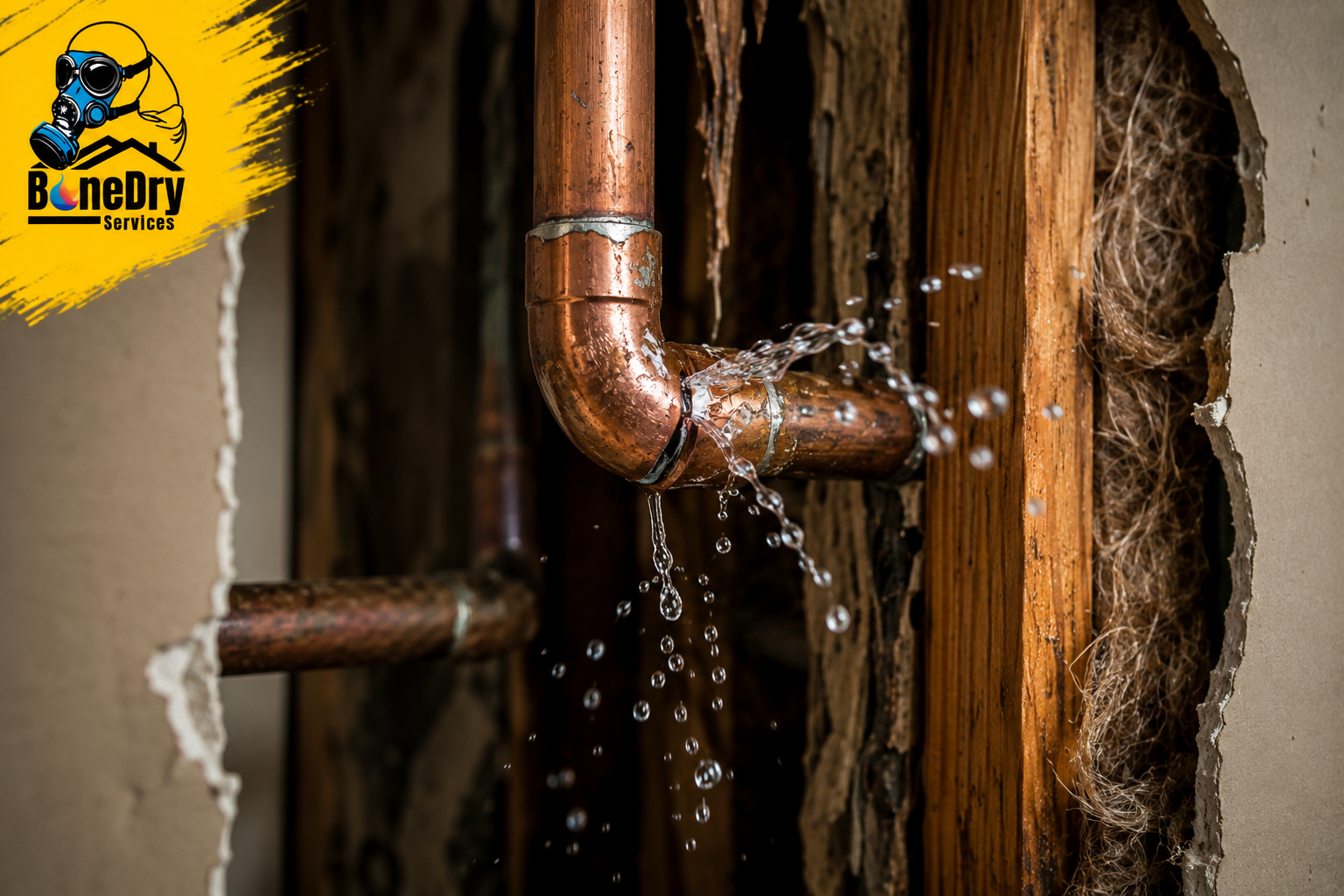
The trouble with a copper failure is that the pipe usually gives way at a joint or a bend, deep inside the structure, where the leak can run undetected for days. Water follows the framing, wicks into studs and subfloor, and quietly saturates the materials that hold the house up. By the time a stain appears on a ceiling or a floor feels soft underfoot, the moisture has often traveled well beyond the original break.
At BoneDry Services, we treat a copper pipe failure as both a plumbing event and a structural one. Understanding why copper bursts where it does, and what the immediate steps are to stop the rot, explains why fast, professional water damage restoration matters so much when the leak is hidden inside the walls.
Why Copper Pipes Burst at Joints and Bends
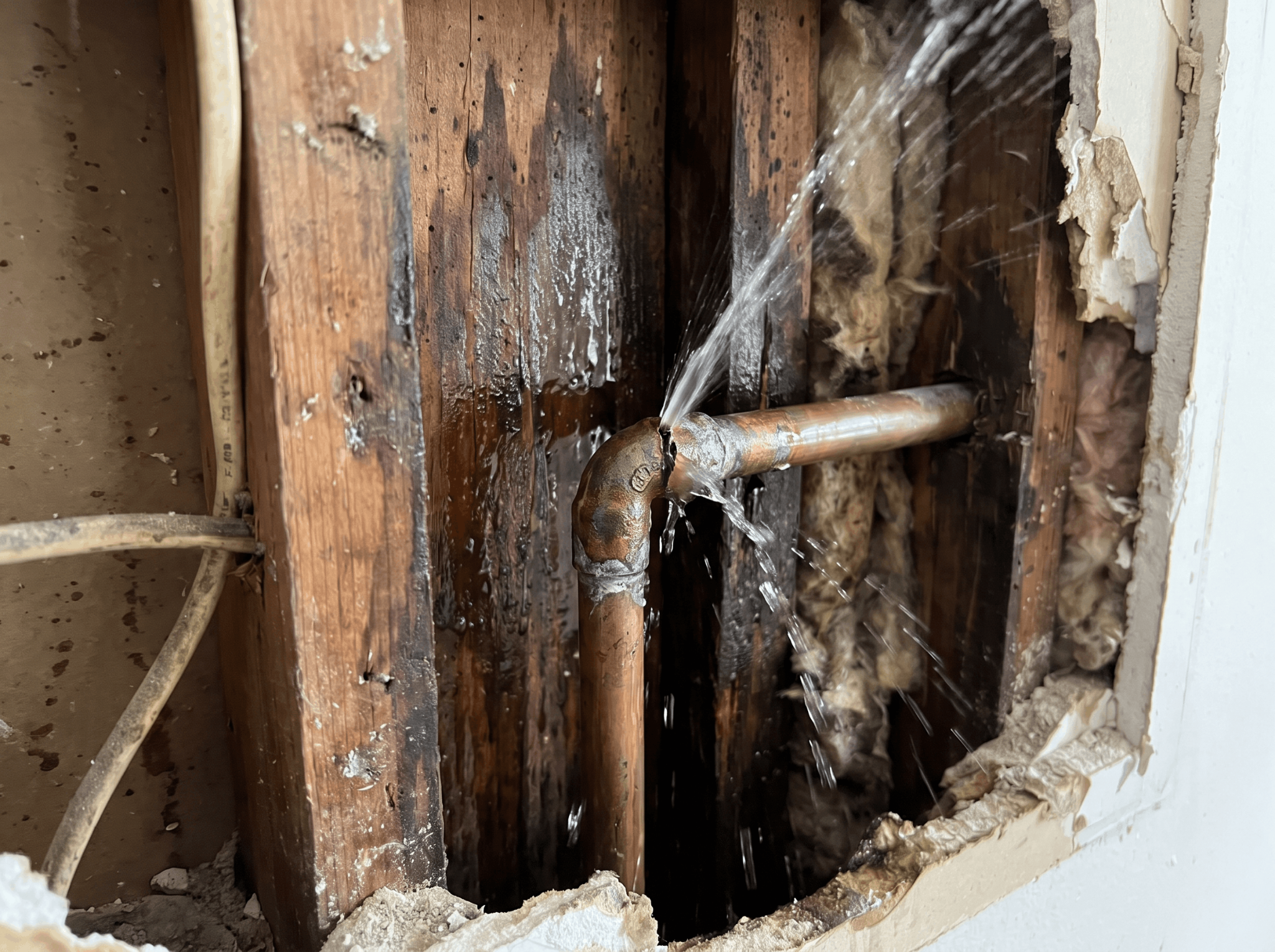
The reason a copper pipe almost always fails at an elbow, a tee, or a soldered joint comes down to stress. Copper expands and contracts with temperature, and when water inside it freezes, it expands with tremendous force. That pressure has to go somewhere, and it concentrates at the weakest points in the system, which are the fittings and the bends rather than the straight runs.
A straight length of pipe can flex slightly and distribute stress along its length. A joint cannot. Soldered connections and sharp bends are rigid, and they bear the brunt of every expansion cycle. Over time, repeated freezing, thermal movement, and water hammer fatigue the metal at exactly these points until it splits. In Colorado, where a cold snap can drop temperatures rapidly and pipes in exterior walls or unheated spaces are especially vulnerable, this is a common and costly failure.
This is why a copper failure is so often hidden. The joints most likely to burst are inside walls, under floors, and in ceilings, tucked into the framing where no one is looking. The result is a leak that runs into the structure itself, which is precisely the situation professional water damage restoration is built to address.
The Physics of Freezing and Expansion
Water is unusual in that it expands as it freezes, growing by roughly nine percent in volume. Inside a sealed pipe, that expansion generates enormous internal pressure, and it is that pressure, not the ice itself pressing outward at the freeze point, that ruptures the pipe, often at a joint some distance away. A single hard freeze can be enough to split a fitting that had been weakened by years of thermal cycling. Because copper conducts heat efficiently, it also loses heat quickly, so pipes in poorly insulated areas can freeze faster than homeowners expect.
Why Fatigue Concentrates at Fittings
Every time a copper system heats and cools, the metal moves. At a rigid soldered joint or a tight bend, that movement is resisted, and the resulting stress accumulates in the metal over time. This is metal fatigue, and it explains why an older home’s plumbing tends to fail at the fittings first. The joint that has survived thousands of expansion cycles is also the joint most likely to be the first to give way when a freeze pushes the system past its limit.
How a Hidden Copper Leak Causes Structural Rot
The real danger of a copper pipe failure is not the water you see but the water you don’t. When a joint splits inside a wall, the leak feeds directly into the structural materials, and the damage that follows is slow, hidden, and progressive, which is what makes early water damage restoration so important.
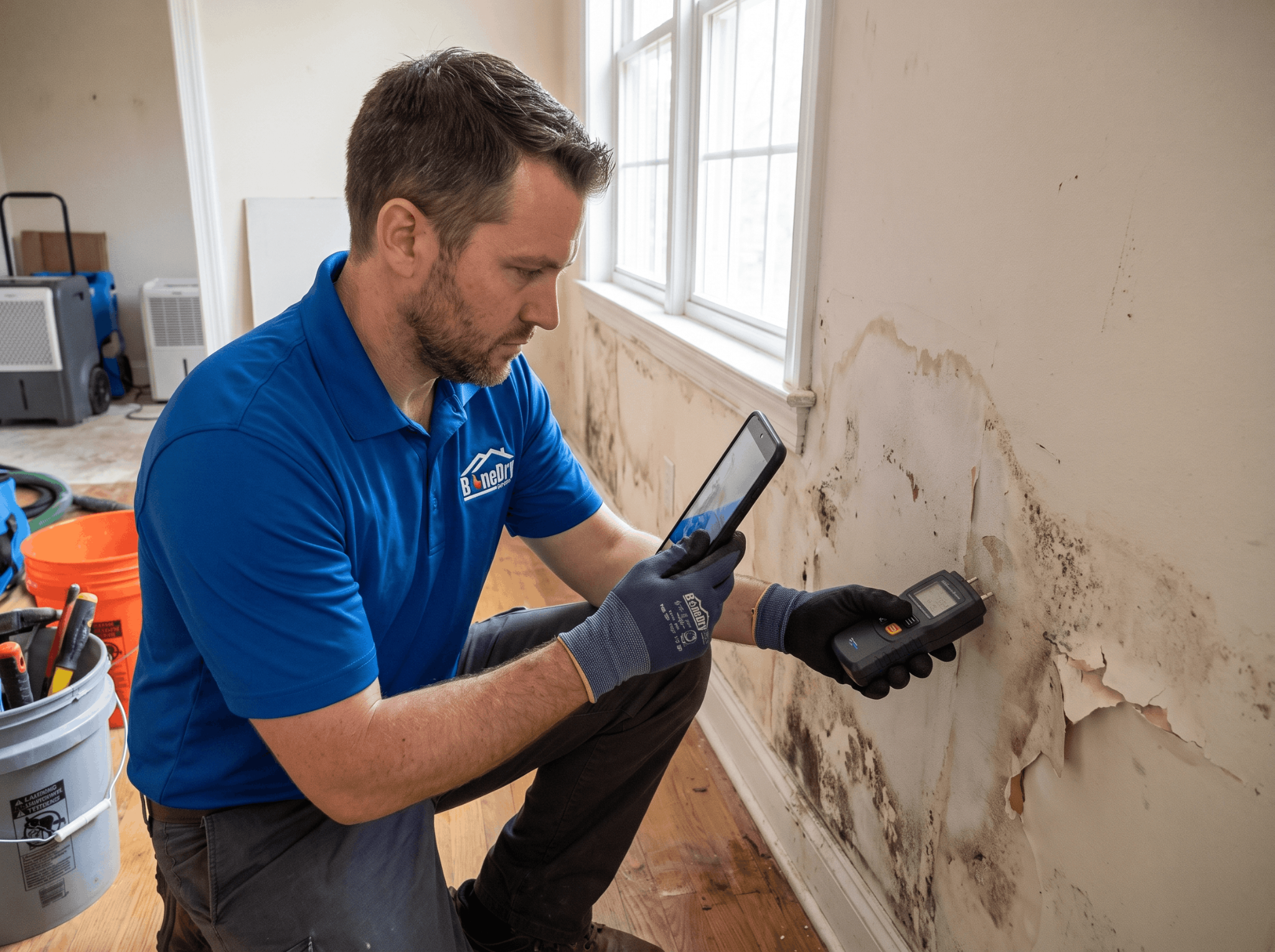
Water released inside a wall cavity does not simply pool at the bottom. It wicks upward and outward through porous wood, saturating studs, plates, and subfloor, and it collects in the framing where air cannot reach it to dry it out. Trapped in the dark, enclosed space of a wall, that moisture lingers, and over days and weeks it breaks down the wood, weakens fasteners, and creates the damp, still conditions that mold needs to take hold. The visible stain that finally appears is usually the last stage of a process that has been underway out of sight for some time.
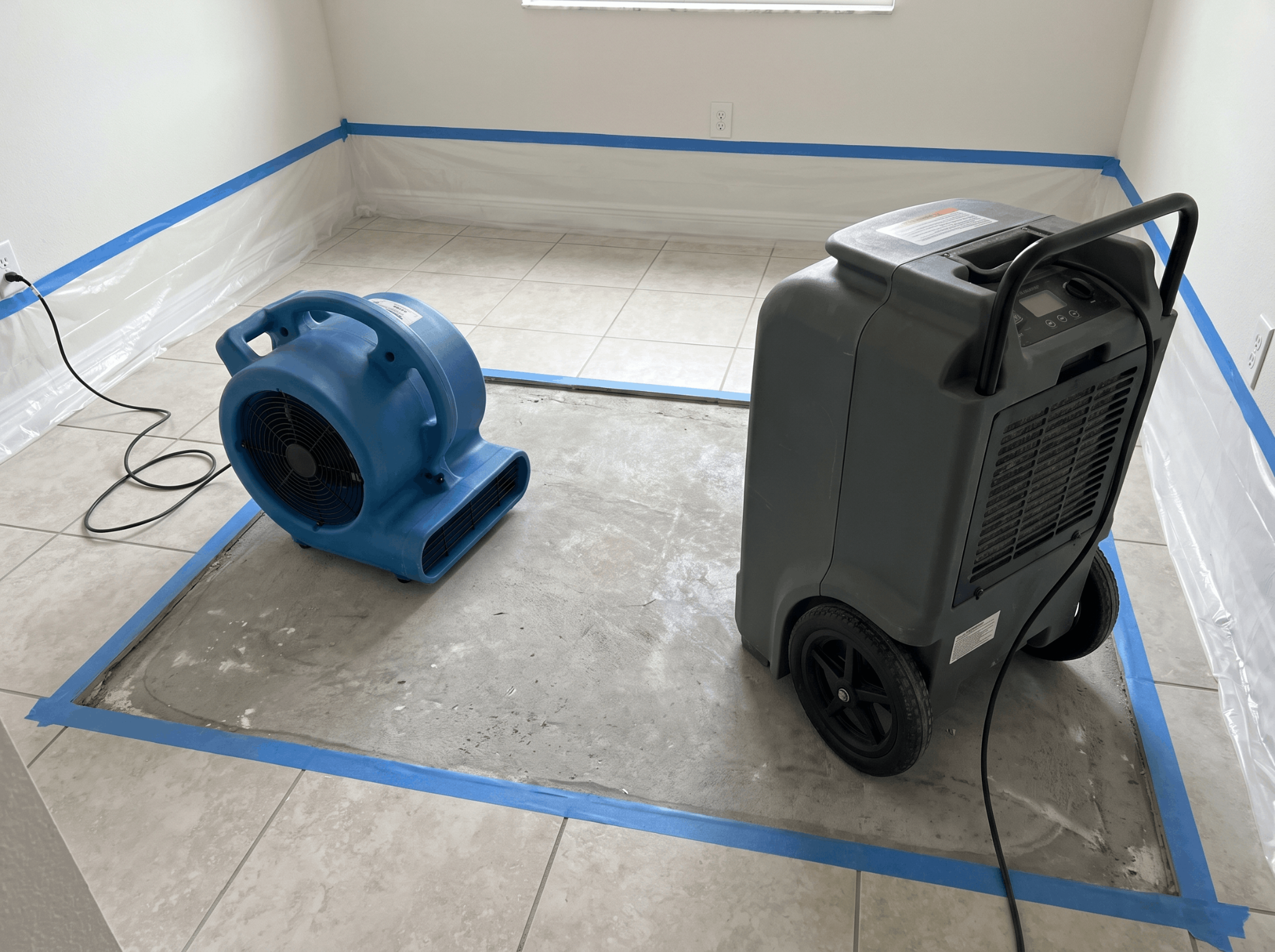
Because the moisture travels through the structure, addressing a copper failure means finding and drying everywhere the water reached, not just patching the pipe. That is the same disciplined approach behind our structural drying and dehumidification work, where the goal is to draw moisture out of the framing before it can cause lasting damage.
How Water Wicks Through Framing
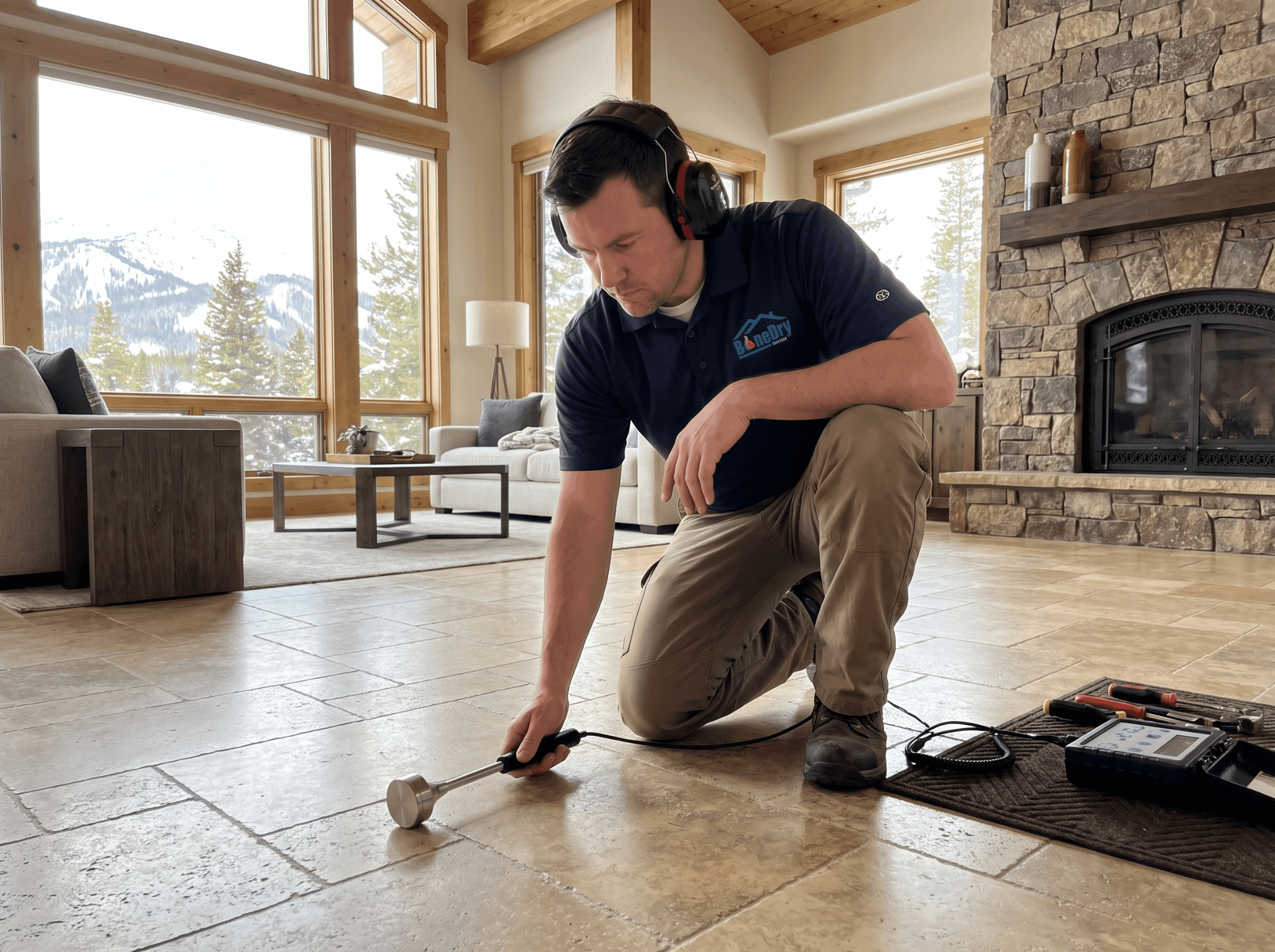
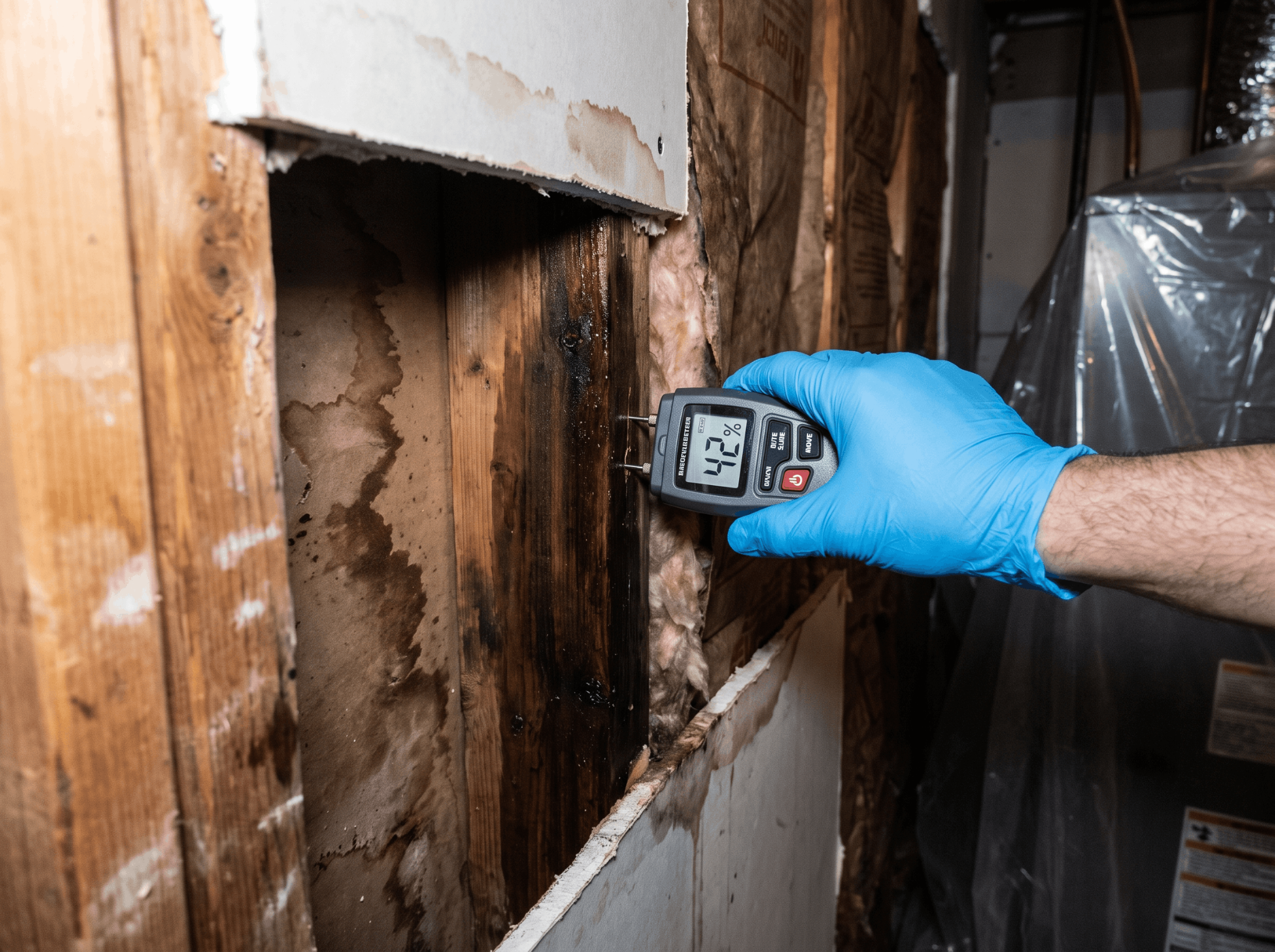
Wood is porous, and it draws water the way a sponge does, moving moisture along the grain far from the original leak. A split joint at the top of a wall can send water down through the studs and into the subfloor below, saturating materials several feet away from the break. This wicking is why the extent of a copper leak is almost always larger than it first appears, and why professional moisture mapping is used to trace the true reach of the water before drying begins.
Why Trapped Moisture Leads to Mold and Decay
Inside a closed wall, there is little airflow and little light, so moisture that soaks into the framing has no way to evaporate on its own. Those are the exact conditions that invite mold growth and wood rot. Left alone, the wood softens and loses strength, and mold can spread through the cavity and into the living space. Removing the moisture promptly and thoroughly is the only reliable way to prevent this decay, which is why a hidden copper leak should never be treated as a simple plumbing fix.
Immediate Steps to Stop the Damage After a Copper Pipe Failure
When a copper pipe fails, the first minutes matter, and a few immediate actions can dramatically limit how far the water damage spreads before professional water damage restoration begins. The priority is to stop the flow and reduce the moisture the structure absorbs.
- Shut off the water supply — Close the main water valve to stop the flow at its source, which is the single most important step in limiting the damage.
- Cut the power if needed — If water is near outlets, fixtures, or the electrical panel, turn off power to the affected area to keep the situation safe.
- Relieve pressure in the lines — Open the lowest faucets in the home to drain remaining water from the pipes and reduce ongoing leakage.
- Move belongings and document the damage — Move valuables away from the water and photograph everything for your insurance claim before cleanup begins.
- Call for professional restoration — Contact a restoration team promptly so hidden moisture in the structure is found and dried before rot sets in.
These steps buy time, but they do not resolve the moisture already inside the walls and floors. A copper failure at a hidden joint demands a professional assessment to locate every area the water reached. Because a burst pipe is an emergency that rarely waits for business hours, our 24/7 water damage restoration team responds quickly to stabilize the home and begin drying before the damage compounds.
What Professional Water Damage Restoration Protects
Addressing a copper pipe failure properly protects far more than the pipe itself. Thorough water damage restoration safeguards the structure, the home’s value, and the household’s health in ways a surface repair cannot. The benefits include:
- Preserved structural integrity — Drying saturated studs, plates, and subfloor before they weaken protects the framing that holds the house up.
- Mold prevention — Removing trapped moisture from wall cavities stops the mold growth that follows a hidden leak.
- Prevented secondary damage — Finding every area the water reached prevents the slow decay that surfaces months later as sagging floors or ruined finishes.
- Protected property value — A fully dried, structurally sound home retains its value, with documentation to support an insurance claim.
Because a hidden leak that goes untreated so often ends in mold, a complete recovery looks ahead to that risk. When moisture has lingered long enough to raise that concern, our mold removal and remediation teams assess and treat affected areas alongside the drying, so the home is protected as a whole rather than one problem at a time.
📞 Call BoneDry Services at (303) 276-4163 today for professional water damage restoration after a copper pipe failure. Serving Denver, Boulder, Colorado Springs, and communities across the Front Range.
Frequently Asked Questions
Why do copper pipes burst at the joints?
Copper pipes burst at joints because fittings and bends are the most rigid points in the system, so they absorb the most stress when the metal expands. When water freezes inside a pipe it expands with great force, and that pressure concentrates at soldered joints and sharp bends rather than along straight runs, where the pipe can flex slightly. Years of thermal cycling also fatigue the metal at these points. The combination of concentrated pressure and accumulated fatigue is why a joint is almost always the first place a copper pipe fails.
How do I know if I have a hidden water leak in my wall?
Common signs of a hidden leak include discoloration or staining on walls or ceilings, bubbling or peeling paint, a musty smell, a spot that feels damp or soft, or an unexplained rise in your water bill. The difficulty is that these signs often appear only after the moisture has traveled well beyond the leak, because water wicks through framing out of sight. When a hidden leak is suspected, a professional moisture assessment is the reliable way to confirm it and trace how far the water has reached before it causes structural rot.
What should I do immediately when a pipe bursts?
The first and most important step is to shut off the main water supply to stop the flow. If water is near electrical outlets or the panel, turn off power to that area for safety. Open the lowest faucets to drain the lines and relieve pressure, move belongings out of the water, and photograph the damage for your insurance claim. Then call a professional restoration team promptly, because a burst pipe at a hidden joint releases water into the structure, and only a proper assessment will find and dry everywhere the moisture reached.
Can water damage inside a wall be repaired without replacing everything?
Often, yes, if it is caught early. When saturated framing and materials are dried promptly and thoroughly with professional equipment, much of the structure can be saved rather than replaced. The outcome depends on how long the moisture was present and how far it spread, which is why fast response matters so much. Left too long, wet wood rots and mold takes hold, and at that point replacement becomes more likely. A professional moisture assessment determines what can be dried and preserved versus what must be removed.
Does homeowners insurance cover a burst copper pipe?
Many homeowners policies cover sudden and accidental water damage from a burst pipe, though coverage varies by policy and circumstances. What helps most is thorough documentation of the damage and the restoration work. BoneDry works directly with insurance companies, providing detailed records, photos, and an itemized scope to support the claim and keep it moving. Because policies differ, homeowners should review their own coverage, but strong documentation is consistently one of the best ways to support a claim after a copper pipe failure.
_converted.avif)