


Fire Damage Repair Colorado: HEPA Scrubbing to Eliminate Smoke Odor
A wildfire can be miles away and still leave its mark inside a Colorado home—a stubborn, acrid smoke smell that lingers for weeks after the sky clears. Homeowners try candles, sprays, and open windows, only to find the odor creeps back every time. Real fire damage repair in Colorado doesn’t mask that smell; it removes the microscopic particles causing it, and the science behind that removal comes down to air filtration and exchange.
The difference between covering up a smoke odor and actually eliminating it is the difference between a fragrance and physics. Smoke odor is caused by real, physical particles and volatile compounds suspended in the air and embedded in surfaces. Until those particles are captured and removed, the smell will persist no matter how much air freshener is used. This is where HEPA scrubbing and carbon filtration do the work that no household product can.
At BoneDry Services, we want homeowners to understand the science of odor removal so they know why professional equipment succeeds where consumer products fail. Understanding how air scrubbing captures particles—and how air exchange flushes a space—explains why molecular removal, not masking, is the foundation of genuine fire damage repair.
Why Masking Smells Fails in Fire Damage Repair
The most common mistake in post-fire fire damage repair is trying to cover an odor rather than eliminate its source. Air fresheners, scented candles, and ozone gimmicks promise a quick fix, but they fundamentally misunderstand what a smoke smell is.
Smoke odor is not an abstract quality hanging in the air—it is caused by physical matter. When materials burn, they release microscopic soot particles and volatile organic compounds, and these settle onto surfaces and remain suspended in the air. The smell your nose detects is your body sensing these actual particles. A fragrance product does nothing to remove them; it simply adds another scent on top, and once that fragrance fades, the smoke smell is still there because its source never left the room.
This is why masking is a losing battle. As long as the odor-causing particles remain in the air and embedded in porous materials, the smell returns the moment the cover-up dissipates. Genuine resolution requires physically capturing and removing those particles, which is exactly what professional odor removal is designed to accomplish—treating the cause instead of disguising the symptom.
What Smoke Odor Actually Is
At its core, a smoke smell is airborne and embedded particulate. Combustion produces a fine aerosol of carbon particles and a range of volatile compounds that off-gas from surfaces over time. These particles are small enough to penetrate soft furnishings, drywall, and ductwork, lodging in materials and slowly releasing odor back into the air. Because the smell is tied to physical matter rather than a lingering “vibe,” it can only be eliminated by removing that matter—a reality that shapes every step of effective fire damage repair.
Why Consumer Products Fall Short
Household odor products are built to add pleasant scents, not to capture microscopic particles or exchange the air in a room. A plug-in or spray masks perception for a few hours while doing nothing about the soot embedded in the carpet or the compounds off-gassing from the walls. Ozone machines marketed for smoke can create their own air-quality concerns and still fail to address particles trapped in materials. The result is temporary relief followed by the same persistent smell, because none of these tools remove the source.
How HEPA & Carbon Filtration Power Fire Damage Repair in Colorado
The heart of odor elimination in fire damage repair is a two-part filtration approach: HEPA filters to capture solid particles and activated carbon to trap the gaseous compounds. Together they address both halves of what makes smoke smell.
A HEPA filter is engineered to capture the vast majority of extremely fine particles—down to the size of the soot suspended after a fire. As an air scrubber pulls contaminated air through the filter, those particles are trapped in its dense fibers and removed from circulation. But smoke odor isn't only particulate; it also includes volatile organic compounds that exist as gases and slip through a particle filter. That is where activated carbon comes in. Carbon is extraordinarily porous, and it adsorbs these gaseous molecules, holding them so they can't return to the air. Running air through both stages removes the particles and the gases responsible for the smell.
This combination is what separates molecular odor removal from masking. The particles are physically captured, the odor-causing gases are chemically adsorbed, and the air leaving the machine is dramatically cleaner. It is the same rigor we bring to full fire damage restoration, where clean air is as important a deliverable as clean surfaces.
How HEPA Filtration Captures Particles
A HEPA filter works by forcing air through a dense mat of fine fibers that trap particles through a mix of interception, impaction, and diffusion. Particles as small as the soot from wildfire smoke are caught in this web and held, so they can't recirculate into the room. Inside an air scrubber, the filter continuously cleans the air being drawn through it, steadily lowering the concentration of airborne soot. This is the mechanism that removes the visible haze and the fine particulate carrying much of the smell.
Why Activated Carbon Removes Odor Molecules
Activated carbon addresses the part of smoke odor that a HEPA filter can't—the volatile compounds that exist as gas. Carbon is processed to have an immense internal surface area riddled with microscopic pores, and those pores adsorb gaseous molecules, binding them to the carbon. As air passes through a carbon stage, the odor-causing gases are captured and held rather than passing back into the room. Pairing carbon with HEPA filtration is what makes it possible to remove both the particulate and the molecular components of a smoke smell.
The Fire Damage Repair Process for Eliminating Smoke Odor
Removing wildfire smoke odor follows a deliberate sequence that combines air filtration with air exchange and surface treatment. Odor lives in the air, in porous materials, and in the ductwork, so each has to be addressed. This is the order we follow on a typical odor-focused fire damage repair:
- Assess the extent of contamination — We identify where smoke particles have settled—air, furnishings, surfaces, and the HVAC system—so nothing is missed.
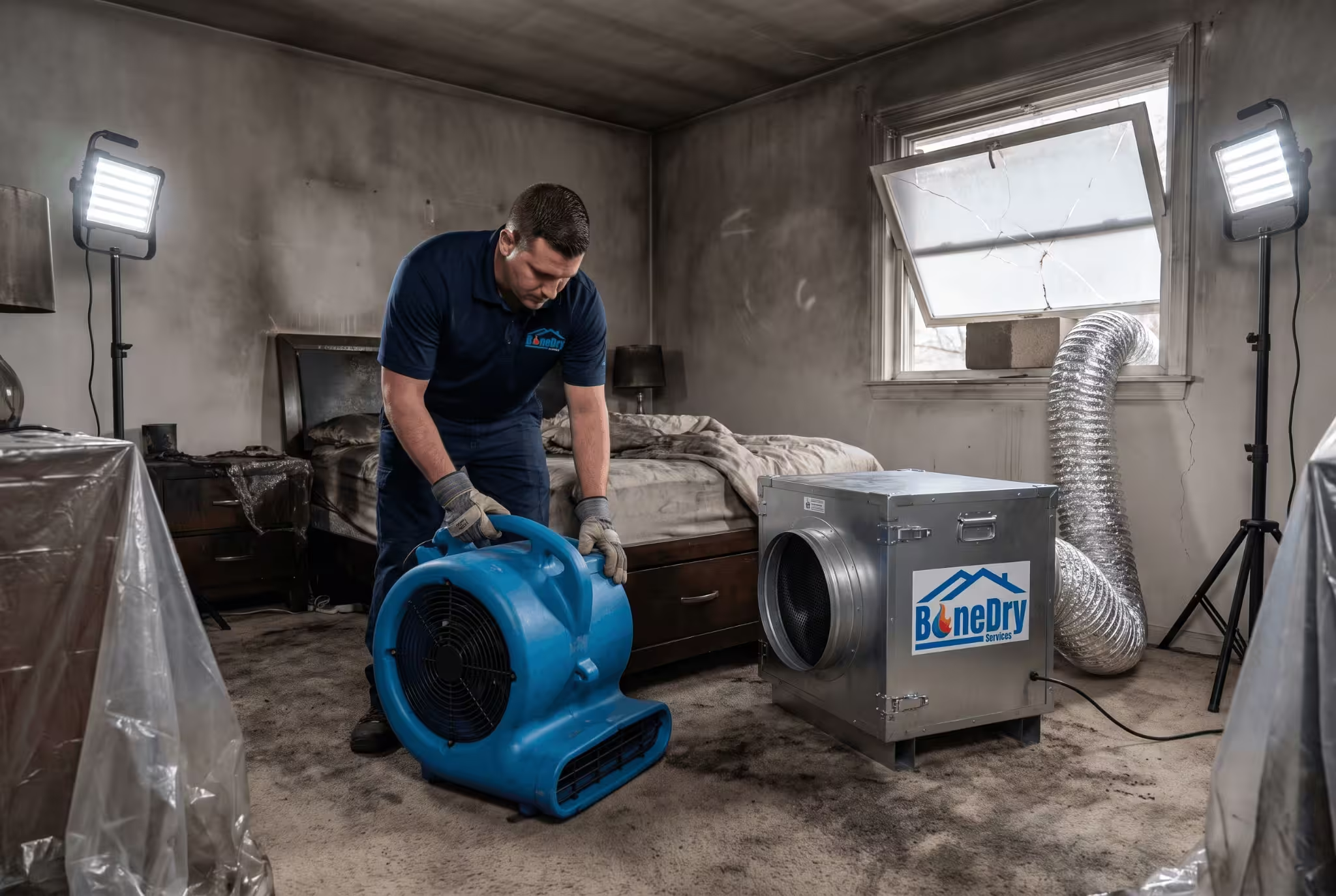
- Deploy HEPA air scrubbing — Air scrubbers with HEPA and carbon filtration run continuously to capture airborne particles and adsorb odor gases.
- Establish air exchange — Controlled air movement and exchange flush contaminated air out and replace it with clean air, accelerating the drop in odor.
- Treat embedded surfaces — Porous materials and surfaces holding trapped particles are cleaned so they stop off-gassing odor back into the space.
- Address the HVAC system — The ductwork and components are cleaned so the system doesn't recirculate soot and reintroduce the smell.
Following this sequence removes the odor at every source at once—air, materials, and mechanical system—so the smell is eliminated rather than temporarily suppressed.
What Professional Fire Damage Repair Delivers for Your Air
Molecular odor removal does more than make a home smell better—it restores the air itself. The benefits of professional fire damage repair for smoke odor include:
- Permanent odor elimination — Capturing and removing the particles and gases resolves the smell for good rather than masking it temporarily.
- Healthier indoor air — Removing fine soot particulate from the air reduces the irritants a household breathes after a smoke event.
- Clean HVAC operation — Treating the ductwork stops the system from recirculating odor every time it runs.
- Restored comfort and value — A genuinely odor-free home is comfortable to live in and protects property value, with documentation to support an insurance claim.
Because wildfire smoke rarely affects the air alone, a complete recovery treats the whole home. When smoke has settled into belongings and soft goods, our contents restoration teams clean and deodorize affected items alongside the air scrubbing so the entire property is returned to a fresh, healthy condition.
📞 Call BoneDry Services at (303) 276-4163 today for professional Fire Damage Repair that molecularly removes wildfire smoke odor from your Denver-area home.
Frequently Asked Questions
What neutralizes fire smoke smell?
Fire smoke smell is neutralized by physically removing the particles and gases that cause it, not by covering them with fragrance. Professionals run HEPA filtration to capture the fine soot particulate and activated carbon to adsorb the volatile odor gases, while air exchange flushes contaminated air out of the space. Embedded surfaces and the HVAC system are cleaned so they stop releasing odor. This combination eliminates the source of the smell, which is why it succeeds where sprays and candles fail.
Do air purifiers get rid of wildfire smoke?
A quality air purifier with a true HEPA filter can capture much of the fine particulate in wildfire smoke, and models with activated carbon also help adsorb some odor gases, so they can meaningfully improve indoor air during a smoke event. However, a consumer purifier alone usually can't resolve odor that has already embedded in carpets, drywall, and ductwork after smoke enters a home. Full elimination typically requires professional-grade air scrubbing, air exchange, and cleaning of the surfaces and HVAC system holding the residue.
How long does it take for the smell of fire smoke to go away?
Left untreated, smoke odor can linger for weeks or even months, because the particles and compounds causing it remain embedded in materials and continue off-gassing. With professional treatment—HEPA and carbon air scrubbing, air exchange, surface cleaning, and HVAC decontamination—the timeline shortens dramatically, often to a matter of days depending on the severity and how far the smoke penetrated. The key variable is whether the source particles are actually removed; until they are, the smell persists.
How toxic is smoke from a house fire?
Smoke from a house fire can be hazardous because it contains fine soot particulate and a mix of volatile compounds produced by burning synthetic materials, plastics, and finishes. These particles are small enough to be inhaled deeply and can irritate the respiratory system, and the residue they leave behind is acidic. This is why airing out a home is not enough after a fire and why professional remediation focuses on removing the particulate from the air, surfaces, and HVAC system rather than simply masking the smell.
How to get rid of fireplace smoke smell in house fast?
For a fast, lasting result, the smoke smell has to be removed at its source rather than covered up. The most effective approach is professional air scrubbing with HEPA and activated-carbon filtration to pull particles and odor gases from the air, combined with air exchange to flush the space and cleaning of any surfaces and ductwork holding residue. While ventilating the room and replacing HVAC filters can help temporarily, genuinely eliminating the smell quickly relies on capturing and removing the particulate causing it.