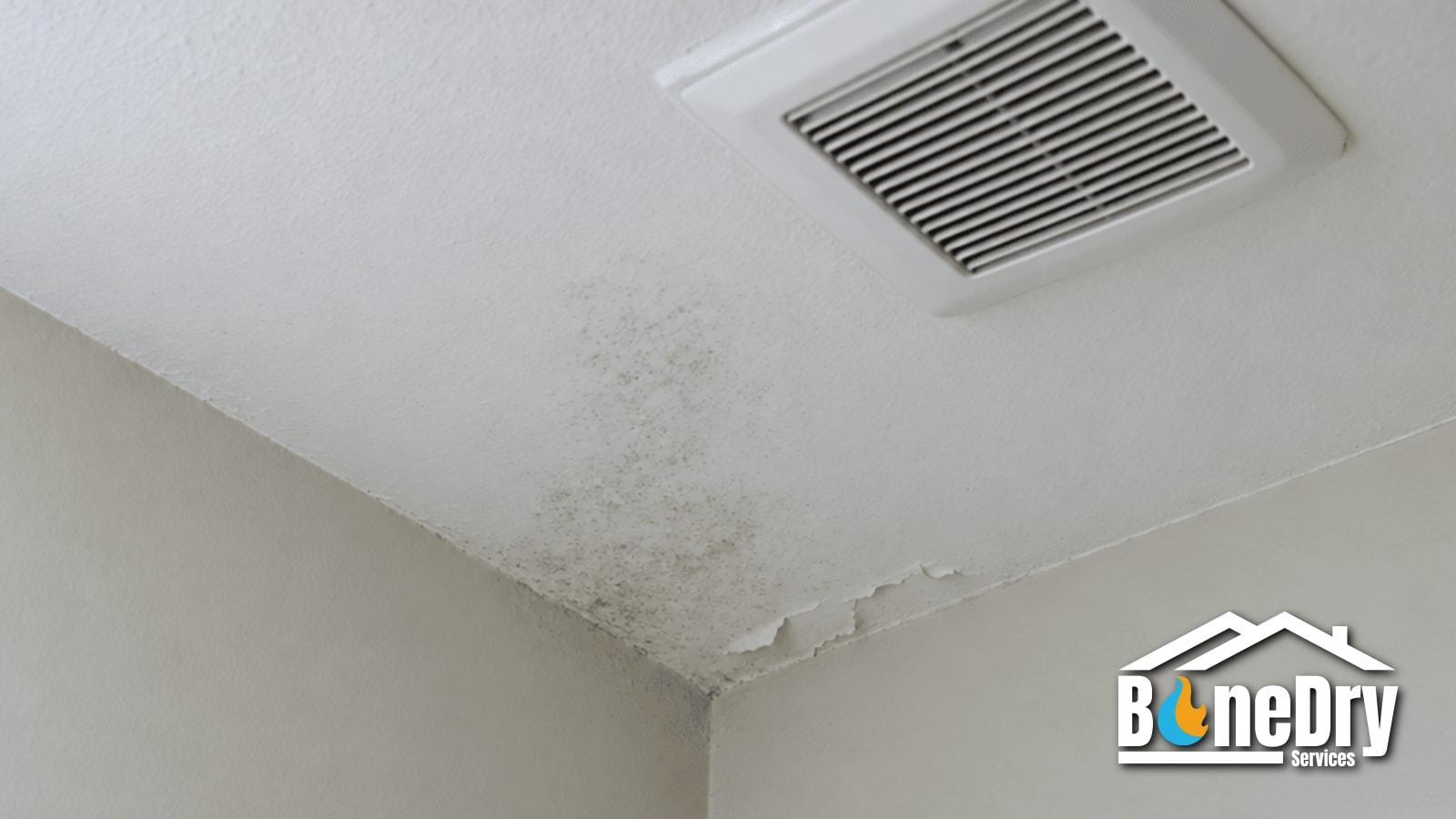



The most common signs of mold in a house are a musty smell that does not go away, spots or staining that come back after you clean them, and paint or wallpaper that bubbles, peels or feels damp. If you notice any of these, the next question is not what kind of mold it is, but where the moisture is coming from.
Mold only grows where something stays wet, so every sign points back to water: a slow leak, a damp basement, a bathroom that never dries out. That is why mold removal and remediation always starts by finding the source, not just cleaning the spot.
At BoneDry Services, we find mold in Colorado homes in the same handful of places, year after year. This guide covers the signs worth paying attention to, where to look, and when a spot is a weekend cleanup versus a reason to call.
The signs of mold you can see, smell and feel
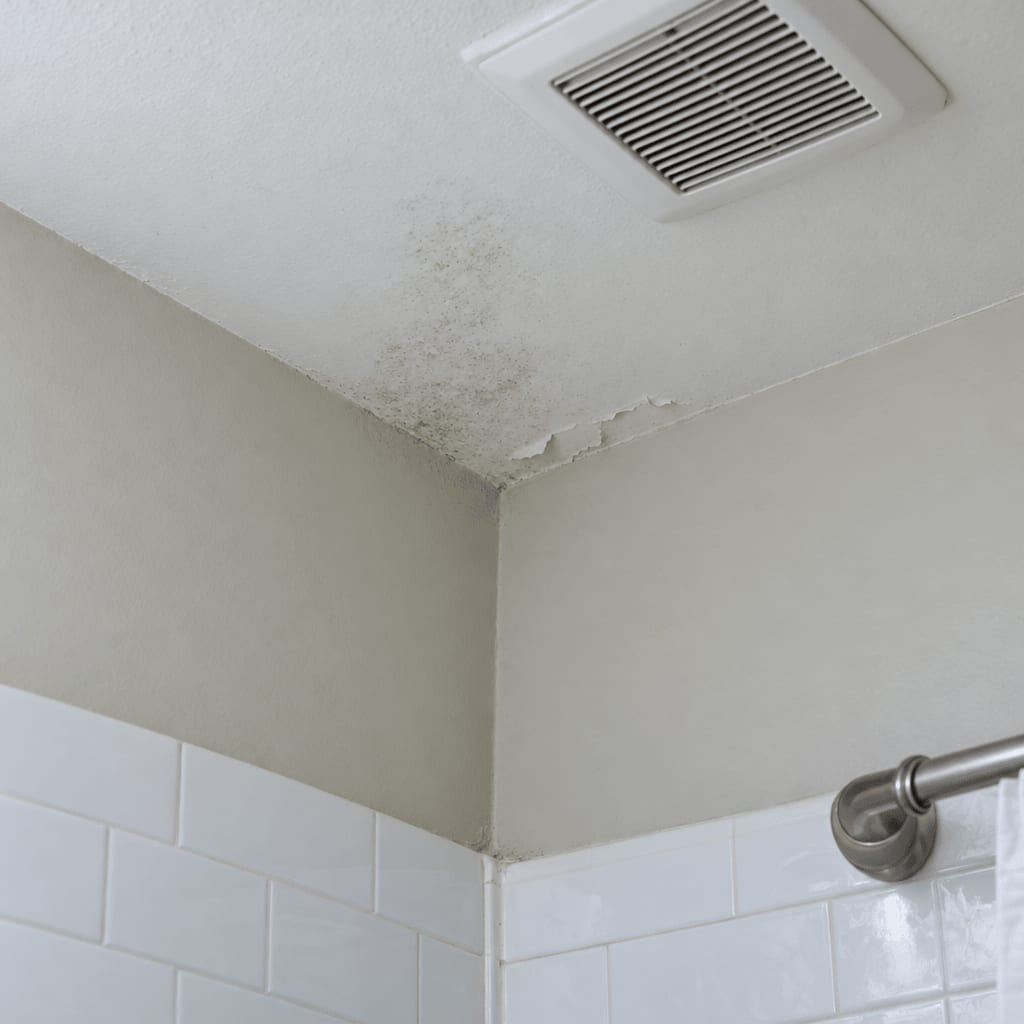
Visible mold does not always look like the dark, fuzzy patch people picture. It can be gray, green, white, brown or black, and it can look like a stain, a speckle, a powder or a soft fuzz. Small spots along caulk lines, window frames and the bottom of walls are common, and so is a shadow that looks like dirt but comes back a week after you wipe it away.
Other signs are about the surface rather than the mold itself. Paint that bubbles or peels, wallpaper that lifts at the seams, drywall that feels soft or cool to the touch, and baseboards that swell or separate from the wall all suggest moisture is getting in behind them. Water stains on ceilings and walls, especially ones that grow or darken over time, belong on the same list.
A musty smell is often the first sign
Many homeowners smell mold before they ever see it. An earthy, musty odor that is stronger in one room, stronger when the heat or air conditioning first kicks on, or stronger after rain usually means growth somewhere you cannot see, such as inside a wall, under flooring or in a crawl space. If air fresheners and cleaning do not make the smell go away for good, it is worth tracking down.
Allergy-like symptoms that ease when you leave
For some people, mold causes a stuffy nose, sore throat, coughing, wheezing, itchy eyes or a skin rash. On its own, that is not proof of mold, since plenty of things cause allergies. But if symptoms show up mostly at home and ease when you are away for a few days, mold is a reasonable suspect to rule out, and a doctor can help with the symptoms while you look into the house.
Where mold hides in Colorado homes
Colorado's dry climate fools people into thinking mold is a coastal problem. It is not, because mold does not need humid air when a house gives it a wet surface. Leaks, flooding and condensation provide that in any climate.
The places we check first are the ones where water collects or air cannot move. Finished basements, bathrooms without a working exhaust fan, the cabinet under the kitchen sink, the area behind the washing machine and the wall below a window that leaks in a storm are the usual suspects. Mountain homes add their own list, since cold roofs and empty houses both create damp spots that go unnoticed.
Basements and crawl spaces
Basements sit below ground, where foundation walls stay cool and window wells can fill during a storm. A finished basement can hide damp drywall and carpet pad for months, and the first sign is often a smell rather than a stain. Crawl spaces are worse, because nobody goes down there, so a torn vapor barrier or a slow plumbing leak can feed mold on the framing for a long time before anyone notices.
Swamp coolers and attics
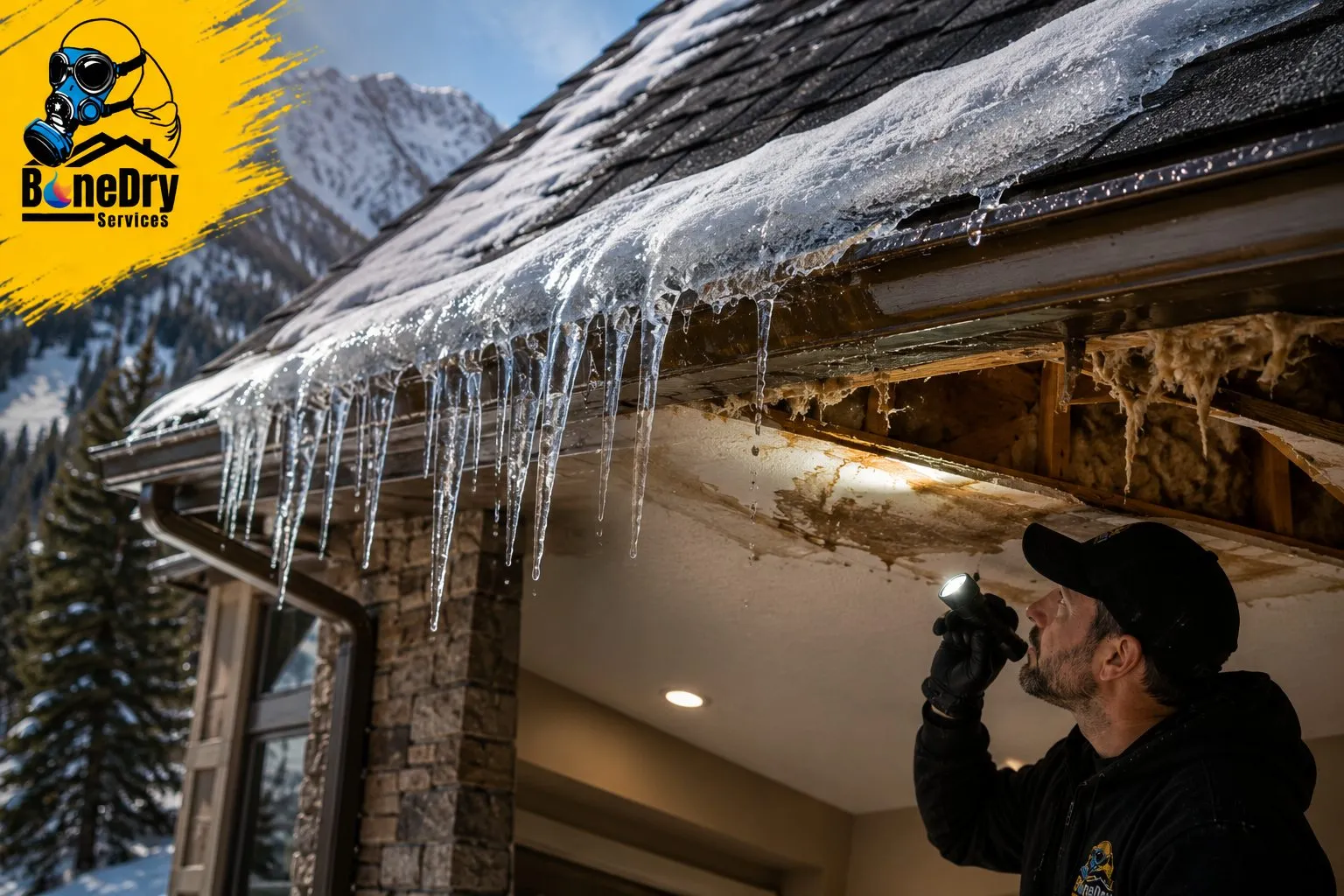
Evaporative coolers, which many Front Range homes use instead of air conditioning, work by adding moisture to the air. A cooler with a worn pad, a leaking line or a vent that drips can keep the surfaces around it damp, so check the ceiling and walls near the vent each fall when you shut it down. Attics are the other hidden spot: warm indoor air can freeze on a cold roof deck and drip when it melts, which our post on attic frost and late-fall mold explains in detail.
How the work is done
When the signs add up to more than a small spot, professional remediation follows a set order. Each step is there to remove the mold without spreading it, and to keep it from coming back.
- Find the moisture source: the crew traces the water to its cause, whether that is a leak, a drainage problem or condensation, because cleaning mold without fixing the water only resets the clock.
- Measure how far it goes: moisture meters and, where useful, thermal imaging show how far the damp area reaches beyond what you can see.
- Contain the area: plastic barriers and air filtration keep spores in the work area so they do not travel to clean rooms.
- Remove and clean: materials that cannot be cleaned, such as soaked drywall or insulation, are removed, and the rest is cleaned with HEPA vacuums and appropriate treatments.
- Dry and repair the cause: the structure is dried to normal moisture levels and the source is fixed so the problem does not return.
- Verify the result: independent clearance testing confirms the area is clean, rather than the same company grading its own work.
Once the mold is gone, a lingering smell can stay in fabrics and air ducts. Our odor removal service handles that part, so the house smells clean as well as being clean.
What acting promptly protects
Mold gets bigger and more expensive the longer it is left, and it grows on the same water that causes other damage. After any leak or flood, deal with the water exposure within 24 to 48 hours to stop mold before it spreads. Acting early protects four things:
- Your drywall and framing: a small area caught early can often be cleaned, while a large one usually means cutting out materials.
- The air you breathe: removing mold under containment keeps spores from spreading through the house.
- Your insurance claim: mold that follows a sudden, covered event like a burst pipe is more likely to be covered when you act promptly and document it.
- Your budget: the smaller the affected area, the smaller the job, so an early check almost always costs less than a late one.
If the mold followed a leak or a flood, the water damage needs attention too, and our Denver water damage and flood cleanup page explains how that part of the job is handled. We bill your insurer directly on a covered loss and only collect what insurance settles.
📞 Call BoneDry Services at (303) 276-4163 today for mold removal and remediation across Denver, Boulder, and the Front Range.
Frequently Asked Questions
What does mold smell like in a house?
Most people describe it as musty, earthy or like damp cardboard. The smell is often strongest in one room, in a closet or basement, or when the furnace or cooler first turns on. It tends to come back even after cleaning, because the source is behind a surface rather than on it. A smell that keeps returning is worth having checked even if you cannot see anything.
Can mold be growing inside my walls with no visible signs?
Yes. Mold inside a wall cavity, under flooring or in a crawl space often shows up only as a smell, a soft spot in the drywall or paint that bubbles. A past leak in that area makes it more likely. Moisture meters and thermal imaging can find damp areas behind a wall without opening it up first.
Should I get a mold test before calling anyone?
Usually not. If you can see or smell mold, you already know there is a problem, and the cleanup starts the same way whatever the species. Testing is most useful after remediation, to confirm the area is clean, or when you need paperwork for a home sale or a landlord. An assessment that finds the moisture source is a better first step for most homeowners.
Can a swamp cooler cause mold?
It can, if it leaks or keeps the area around the vent damp. Evaporative coolers add moisture to the air on purpose, which is fine in a dry climate as long as nothing stays wet. Check the pads, the water line and the ceiling around the vent at the start and end of each season. Staining or a smell near the vent is a sign to have it looked at.
When should I call a professional instead of cleaning it myself?
Small surface spots on tile, tubs or window frames are usually fine to clean yourself with detergent, gloves and good ventilation. Call a professional when the area is larger than a small patch, when it keeps coming back, when it is inside walls or ducts, or when it followed a flood or sewage backup. Also call if anyone in the home has asthma, allergies or a weakened immune system. An honest assessment will tell you if it is a job you can handle yourself.