


Ice Dam Mitigation in Colorado: Protecting Vaulted Ceilings from Roof-Edge Leaks
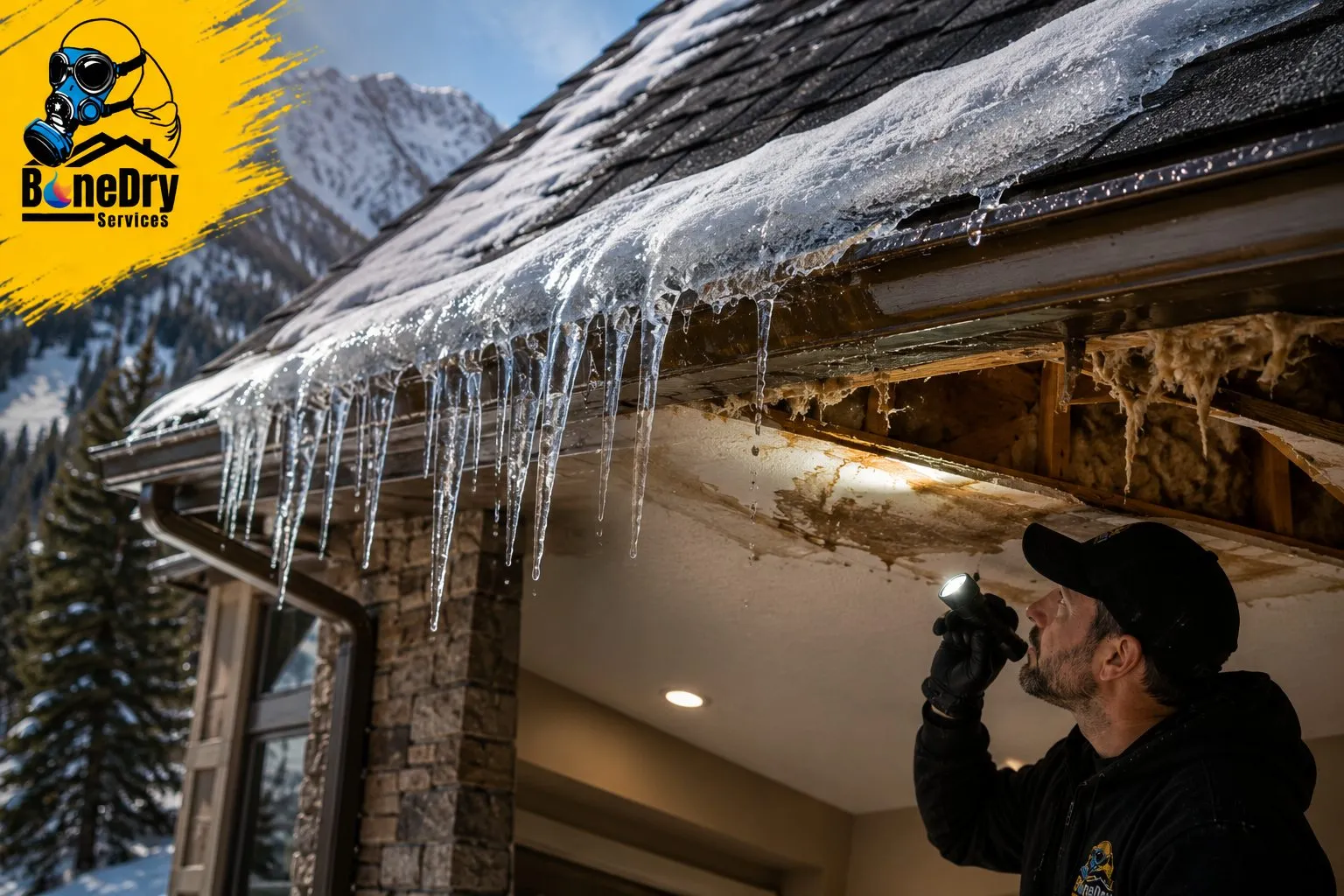
On a steep Colorado roof, an ice dam can force water where no rain ever could, and by the time it stains a vaulted ceiling below, water damage restoration is usually the only path back. Ice dams form at the roof’s edge during the freeze-thaw cycles that define Colorado winters, and they work by driving melted snow backward, up and under the shingles, into the structure. Understanding how that happens, and how the resulting ceiling damage is properly dried, is what protects a home’s most dramatic architectural feature. It is a problem that professional water damage restoration is uniquely equipped to solve.
The danger of an ice dam is that it defeats the roof’s basic design. Shingles are built to shed water flowing downhill, not to hold back water pushed uphill. When an ice dam forces meltwater under the shingles, it finds its way into the roof deck and, in a home with vaulted ceilings, into the tight, insulated cavity directly above the living space, where it saturates materials that are difficult to reach and dry.
At BoneDry Services, we understand both the physics of ice dams and the architecture of the Colorado mountain and foothills homes most affected by them. Understanding why ice dams form, how they push water under shingles, and how the resulting vaulted-ceiling leaks are dried explains why professional water damage restoration is essential when the roof edge fails.
Why Ice Dams Form on Steep Colorado Roofs
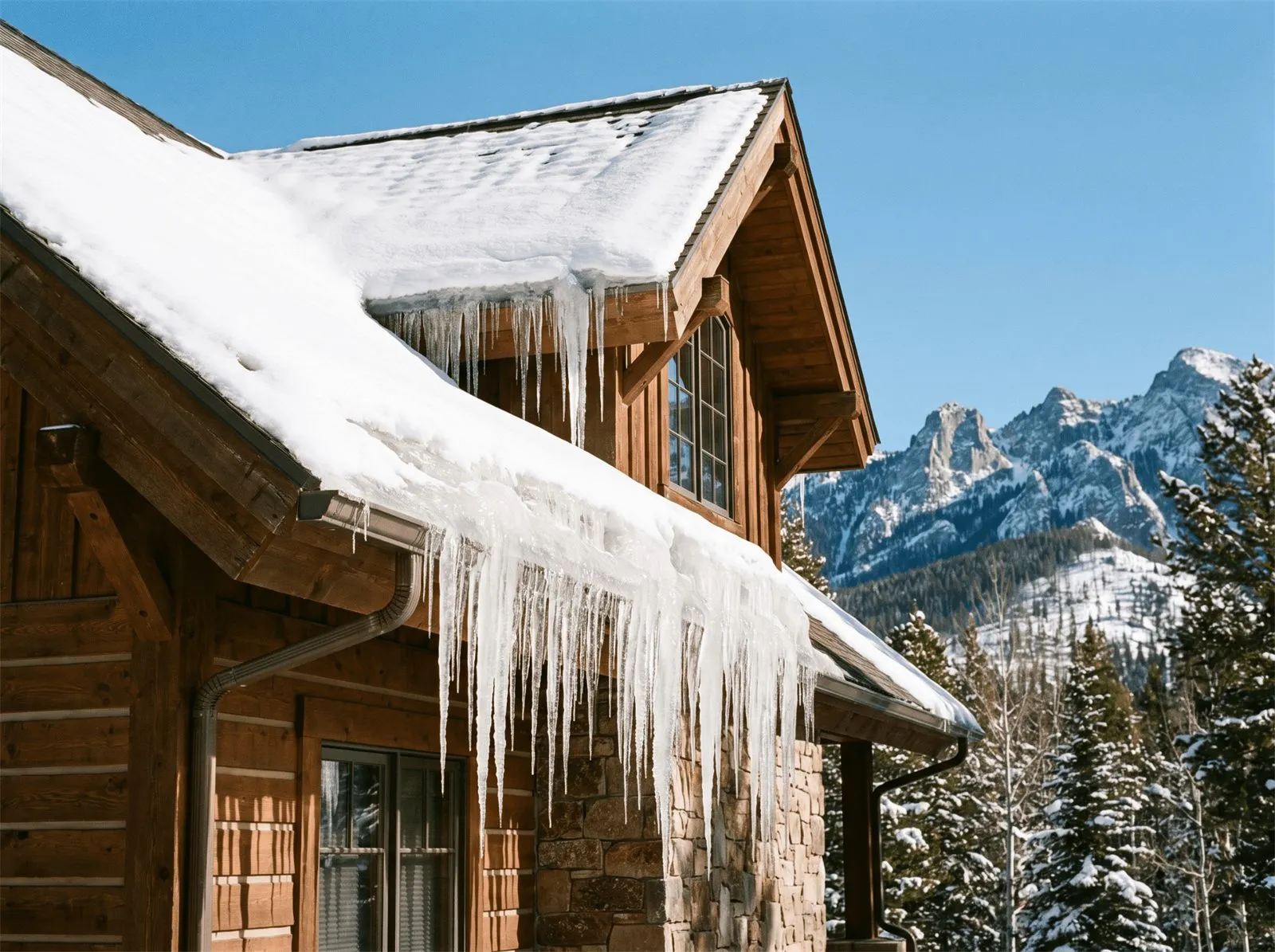
An ice dam is the product of an uneven roof temperature during a freeze-thaw cycle, a pattern Colorado winters produce in abundance. It begins when snow on the upper part of a roof melts while the roof’s edge stays frozen, and the result is a ridge of ice that traps water behind it.
The upper roof warms for a few reasons, sun exposure during the day and, often, heat escaping from the living space below into the roof assembly. That warmth melts the underside of the snowpack, and the meltwater runs down the slope. When it reaches the eave, the part of the roof that overhangs the exterior wall and has no heated space beneath it, it hits a colder surface and refreezes. As this repeats, ice builds up at the edge into a dam. Behind that dam, more meltwater collects and has nowhere to drain, so it pools against the roof and begins working its way under the shingles. Steep roofs and heavy Colorado snow loads make the setup especially common, and the freeze-thaw swings between sunny days and frigid nights keep the cycle running.
Once water is pooling behind an ice dam, the roof’s defenses are already compromised, and a leak into the structure is often only a matter of time. That is when the situation moves from a roofing concern to a water intrusion problem, the domain of professional water damage restoration.
The Role of the Freeze-Thaw Cycle
The freeze-thaw cycle is the engine behind every ice dam. A sunny Colorado afternoon can warm a snow-covered roof enough to melt its underside, while the temperature that night plunges below freezing again. Meltwater created during the warm hours refreezes at the cold eave overnight, and the next day the cycle repeats, adding to the dam. This daily swing between thaw and freeze, rather than steady cold, is what builds ice dams up over a period of days, which is why they are so common in Colorado’s sunny but cold winter climate.
Why Roof-Edge Temperature Differences Matter
The critical ingredient is a warm upper roof paired with a cold edge. If the whole roof were uniformly cold, the snow would not melt and no dam would form; if it were uniformly warm, meltwater would drain off before refreezing. The problem arises specifically because the section over the heated living space is warmer than the overhanging eave. Heat loss from the home into the roof assembly is often what creates that difference, which is why ice dams are as much a matter of insulation and heat escape as they are of weather.
How Ice Dams Force Water Into Vaulted Ceilings
The reason ice dams are so damaging is that they push water in a direction the roof was never built to resist, and in a home with vaulted ceilings, that water has a direct route into the structure above the living space. This is the moment a roof-edge problem becomes an interior one requiring water damage restoration.
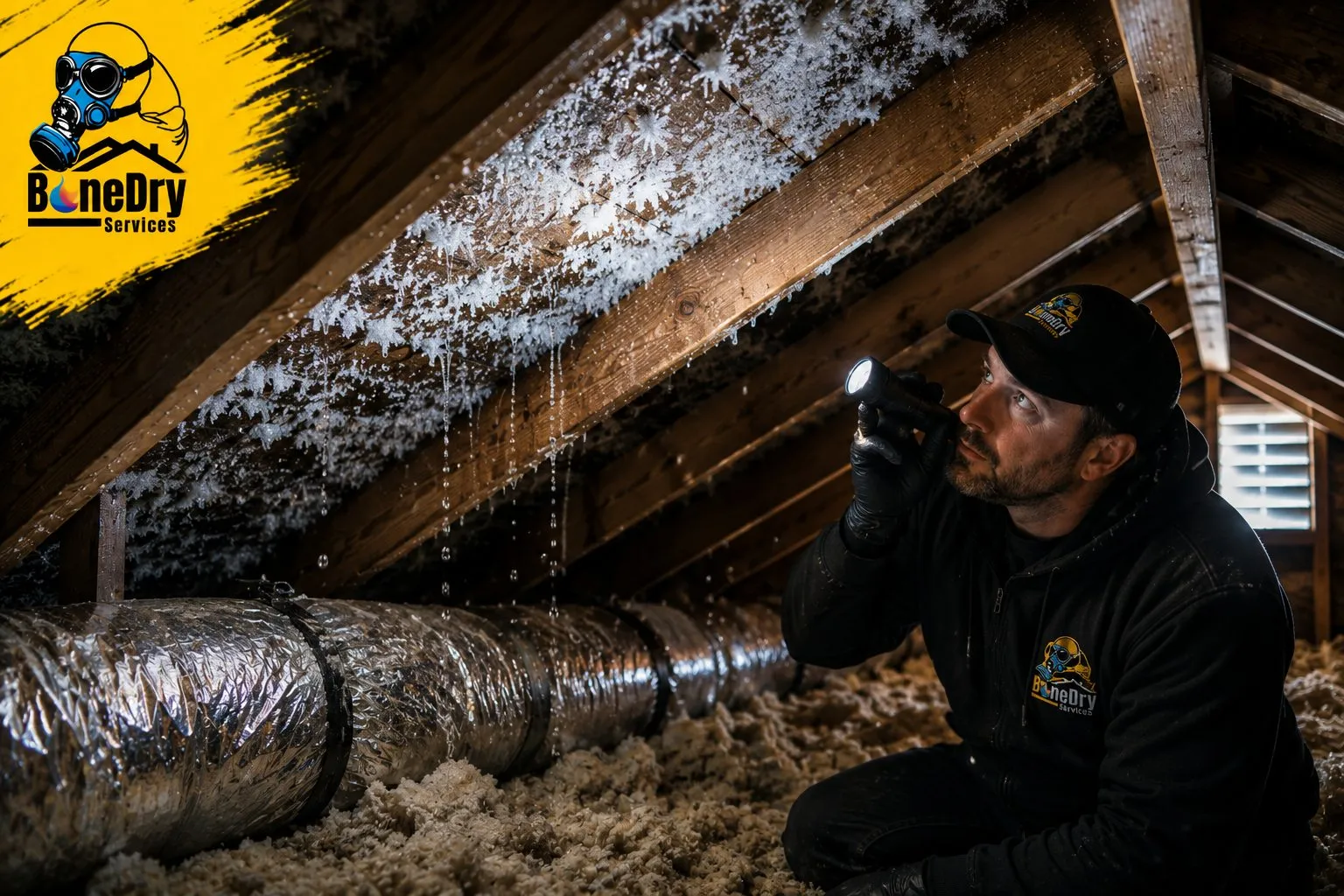
Roof shingles overlap like scales to shed water running downhill. When an ice dam causes water to pool and back up, that water is driven uphill, under the shingle edges, and onto the roof deck beneath. From there it soaks into the sheathing and, in a vaulted roof, into the insulated cavity that sits tight against the ceiling below. Unlike a standard home with an open attic that offers some room to catch and disperse water, a vaulted ceiling has a compact, sealed assembly with little space and little airflow. Water that enters it becomes trapped against the ceiling materials, saturating them and eventually showing as stains, sagging, or bubbling paint on the beautiful vaulted surface inside.
Because the moisture is sealed inside a tight roof assembly, it does not dry on its own, and it can linger to cause rot and mold in the structure. Reaching and drying that concealed space is a specialized task, closely related to the demands of our structural drying and dehumidification work, where trapped moisture must be drawn out of hard-to-access assemblies.
Why Shingles Cannot Stop Backed-Up Water
Shingles are a gravity-based system: they shed water that flows down and over them, relying on the downhill direction of the flow to keep the roof deck dry. They are not sealed against water moving the other way. When an ice dam forces water uphill and holds it against the roof, it seeps between and beneath the shingles and reaches the deck. No amount of shingle quality changes this, because the failure is directional; the water is simply going where the shingles were never designed to hold it back.
Why Vaulted Ceilings Trap the Moisture
A vaulted ceiling follows the line of the roof, so its insulated cavity is thin and enclosed, pressed between the roof deck above and the finished ceiling below. There is no roomy attic to buffer an intrusion and no easy airflow to help it dry. Water that gets in is held in this confined assembly, in direct contact with the ceiling materials, where it saturates them and has no path to evaporate. This is why vaulted ceilings both show ice-dam damage dramatically and require professional drying to resolve it, the moisture is locked in a space that cannot dry itself.
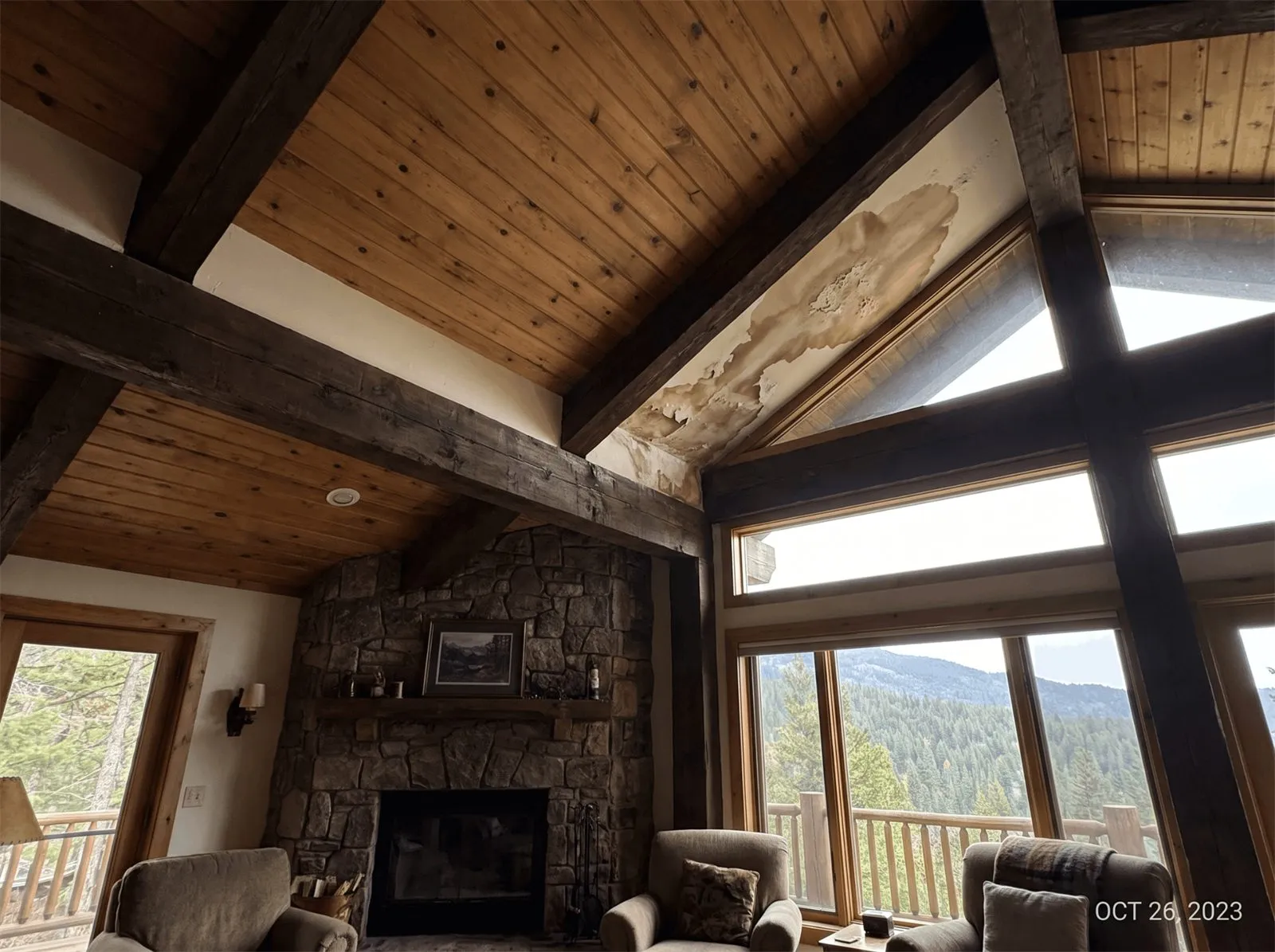
The Water Damage Restoration Process for Ice Dam Leaks
Restoring a vaulted ceiling after an ice dam leak follows a careful sequence built around reaching concealed moisture and drying it thoroughly. Because the water is trapped in a tight assembly, simply painting over a stain leaves the moisture, and the rot and mold risk, in place. This is the order the work generally follows:
- Stop the active intrusion — Steps are taken to address the ice dam and halt further water entry so the situation stops worsening.
- Assess the full extent of moisture — Moisture mapping traces how far water has traveled into the roof assembly and vaulted ceiling cavity.
- Access the trapped moisture — The concealed cavity is accessed as needed so the drying can reach the saturated materials inside.
- Deploy targeted drying — Air movers and dehumidifiers are positioned to draw moisture from the tight assembly and remove it from the air.
- Monitor and verify dryness — Moisture levels are tracked over time until the ceiling and structure are confirmed dry before any restoration.
Following this sequence ensures the hidden moisture is actually removed rather than sealed behind a fresh coat of paint. Because an ice dam is a winter emergency that can worsen overnight, our 24/7 water damage restoration team responds quickly to stop the intrusion and begin drying before the damage spreads deeper into the structure.
What Ice Dam Water Damage Restoration Protects in Colorado Homes
Properly drying a vaulted ceiling after an ice dam leak protects far more than the visible surface. The benefits of professional water damage restoration include:
- Preserved vaulted ceilings — Drying the assembly protects the dramatic ceilings and exposed beams that define a mountain home, avoiding costly reconstruction.
- Prevented structural damage — Removing moisture from the roof deck and framing protects the wood from the rot that trapped water causes.
- Mold prevention — Thorough drying of the enclosed cavity stops the mold growth that follows sealed-in moisture.
- Protected home value — A fully dried, structurally sound roofline preserves the property’s value, with documentation to support an insurance claim.
Because moisture trapped in a tight ceiling assembly so often leads to mold if it lingers, a complete recovery looks ahead to that risk. When the water has been present long enough to raise the concern, our mold removal and remediation teams assess and treat affected areas alongside the drying, so the home is restored as a whole.
📞 Call BoneDry Services at (303) 276-4163 today for professional water damage restoration that dries ice dam leaks and vaulted ceilings across Denver, Boulder, and Colorado’s mountain communities.
Frequently Asked Questions
What causes an ice dam on a roof?
An ice dam forms when a roof has an uneven temperature during freezing weather. Snow on the warmer upper roof melts, and the meltwater runs down to the colder eave, where it refreezes into a ridge of ice. As the freeze-thaw cycle repeats, the ice builds into a dam that traps more meltwater behind it. The upper roof often warms from a mix of sun and heat escaping from the living space below, which is why ice dams are tied to both weather and a home’s insulation and heat loss.
How does an ice dam cause a ceiling leak?
An ice dam traps meltwater behind it on the roof, and that pooled water backs up under the shingles, which are only designed to shed water flowing downhill. Once under the shingles, the water reaches the roof deck and soaks into the structure. In a home with vaulted ceilings, it enters the tight, insulated cavity pressed against the ceiling, where it saturates the materials and eventually shows as staining, sagging, or bubbling paint on the ceiling below. The leak comes from backed-up water, not from rain.
Why are vaulted ceilings harder to dry after a leak?
A vaulted ceiling follows the slope of the roof, so its insulated cavity is thin, enclosed, and pressed between the roof deck and the finished ceiling. Unlike a standard home with an open attic that offers room and airflow, a vaulted assembly traps water in a confined space with no way to dry on its own. Reaching and drying that concealed moisture requires professional access and targeted drying equipment, which is why vaulted-ceiling leaks should be handled by a restoration professional rather than simply painted over.
Can I just paint over a water stain on my ceiling?
Painting over a water stain hides the symptom but leaves the underlying moisture in place, which is a serious mistake after an ice dam leak. If the roof assembly and ceiling cavity are still damp, the trapped moisture can lead to wood rot and mold, and the stain will often bleed back through the new paint. The correct approach is to confirm the source is stopped, dry the structure thoroughly and verify it is dry, and only then restore the finish. A professional moisture assessment determines whether the area is truly dry.
Does homeowners insurance cover ice dam damage?
Many homeowners policies cover sudden water damage from an ice dam, though coverage varies by policy and situation. What consistently helps is thorough documentation of the damage and the restoration work performed. BoneDry works directly with insurance companies, providing detailed records, photos, and an itemized scope to support the claim and keep it moving. Because policies differ, homeowners should review their own coverage, but strong documentation is one of the most reliable ways to support a claim after ice dam damage.