


Essential Sump Pump Cleanup Denver: Tuning Systems to Avoid Front Range Flooding
The Front Range of Colorado presents a unique hydrological challenge. Between the rapid snowmelt from the Rockies and the torrential "monsoon" rains of late spring, Denver basements are often under-engineered for the volume of groundwater they face. At BoneDry Services, we see the aftermath of undersized systems every day. While prevention is the goal, our team provides the most thorough sump pump cleanup Denver residents can rely on to save their finished basements when a system fails.
The Hydrology of Front Range Runoff and Sump Pump Cleanup Denver
The geography of the Denver metro area creates a high-velocity runoff environment. When heavy precipitation hits our expansive clay soils, the earth quickly becomes hydrophobic, forcing massive amounts of water toward your foundation. If your sump basin is not optimized to handle the "GPM" (Gallons Per Minute) of a Front Range storm, you are essentially waiting for a sump pump cleanup Denver emergency to happen. Proper drainage and a high-capacity pump are the primary defenses against sewage cleanup issues caused by overwhelmed residential lines.
Understanding Hydrostatic Pressure in Colorado Soils
Hydrostatic pressure is the force exerted by stagnant groundwater against your foundation walls. In high-volume scenarios, this pressure can force water through microscopic fissures. An optimized sump system acts as a pressure relief valve. Without a high-capacity pump, that pressure finds a way into your living space, requiring an immediate sump pump cleanup Denver specialist to dry out saturated structural plates and subfloors.
.avif)
Scaling Pump Capacity to Avoid Sump Pump Cleanup Denver
Many Denver homes feature beautiful walk-out basements that represent a significant financial investment. A standard 1/3 HP pump is often insufficient for these layouts. To avoid the high costs of a sump pump cleanup Denver project, homeowners should consider scaling their pumping capacity to industrial standards. If your system has already been overwhelmed, our experts specialize in mold remediation to ensure that the lingering moisture from a pump failure doesn't lead to toxic growth.
- Vertical Lift vs. Flow Rate: As the height of the discharge pipe increases, the pump's effectiveness decreases. We calculate the "Head Pressure" to ensure your pump maintains high GPM to prevent a sump pump cleanup Denver scenario.
- Dual-Pump Manifolds: For high-risk zones, we recommend a dual-pump setup where two primary pumps sit in an oversized basin, doubling the evacuation rate.
- Clog-Resistant Vortex Impellers: Traditional pumps can clog with silt common in Denver groundwater. Vortex impellers allow debris to pass, reducing the likelihood of a mechanical failure and subsequent sump pump cleanup Denver needs.
High-Level Backup Systems: Your Final Defense
A power outage during a Denver thunderstorm is the most common catalyst for a flooded basement. Even the best primary pump is useless without a sophisticated backup. To ensure you never need an emergency sump pump cleanup Denver crew, your backup system must be as robust as your primary.
Redundant Battery Arrays for Long-Term Protection
Standard "big box" battery backups often last only a few hours. For high-volume runoff, we advocate for:
- Deep-Cycle AGM Batteries: These provide longer discharge cycles for sustained protection.
- Smart Controllers: These systems run self-tests and alert your smartphone if a sump pump cleanup Denver risk is detected due to pump failure.
- Water-Powered Backup Pumps: These use municipal water pressure to run indefinitely without electricity, providing a final fail-safe.
Why Industrial Components Prevent Sump Pump Cleanup Denver
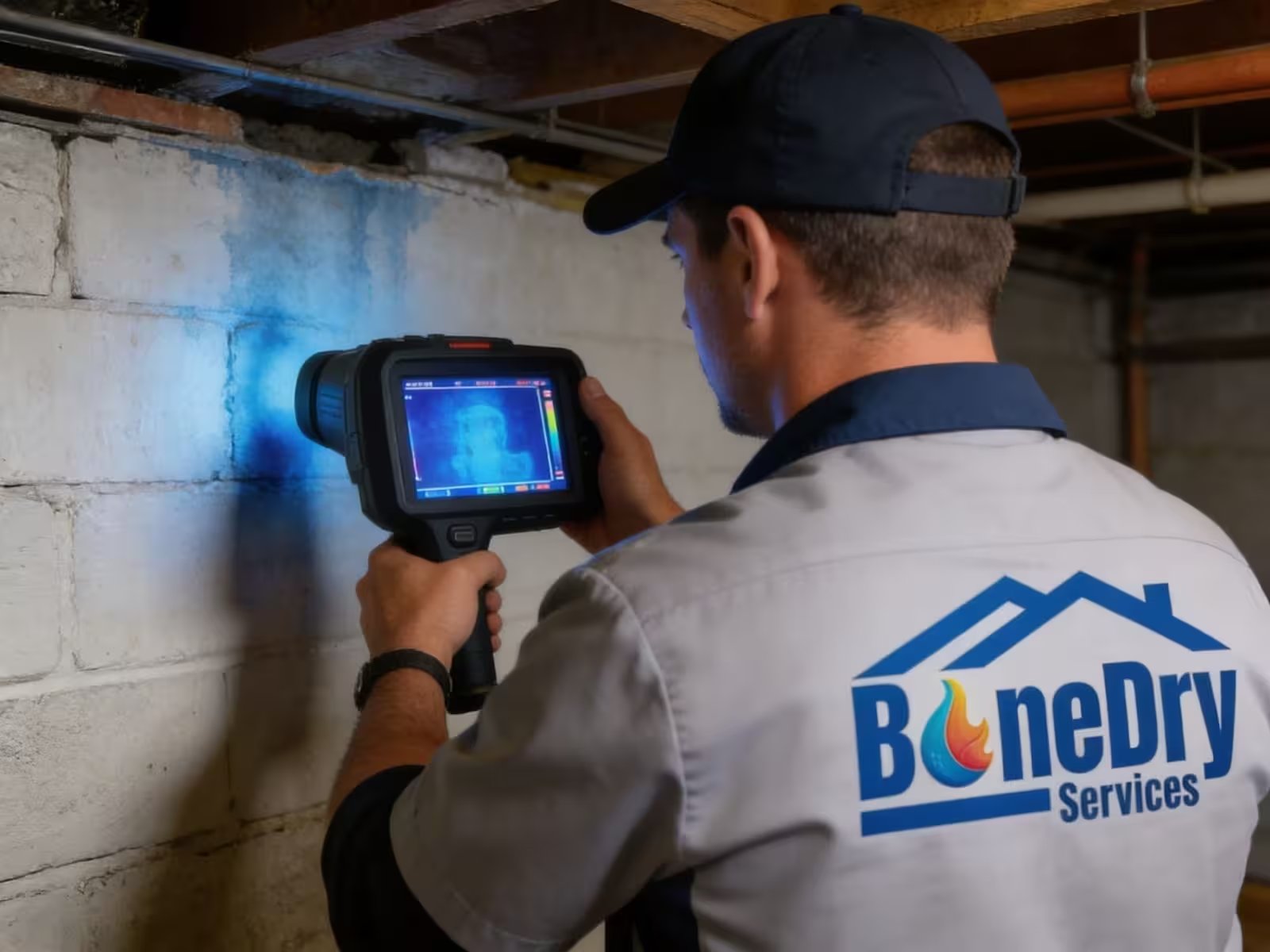
The difference between a "residential" pump and an "industrial" pump is the build quality. During a 24-hour rain event in Denver, a cheap pump can overheat and seize. Once the pump fails, the clock starts on microbial growth. This is when professional sump pump cleanup Denver becomes an immediate necessity to extract standing water and sanitize the area before drywall and flooring are permanently lost.
The Role of Check Valves in Avoiding Cleanup Costs
A silent killer of sump pumps is "short-cycling." If your check valve is faulty, water flows back into the pit, forcing the motor to work twice as hard. This wear and tear leads to premature failure. We install heavy-duty, "quiet" check valves that handle high-velocity shut-off, protecting you from the unexpected need for water damage restoration and sump pump cleanup Denver services.
Technical Maintenance for Sump Systems
Optimization is not a "set it and forget it" process. Because Denver’s soil contains high mineral content, your system needs technical calibration. If you haven't maintained your pit and it overflows, our sump pump cleanup Denver protocol involves deep-cleaning the basin and disinfecting the surrounding floor to remove "iron ochre" and bacterial silt.
- Annual Basin Cleaning: Silt can build up, slowing down the pump's intake.
- Float Switch Calibration: We set "on" and "off" points to maximize water removal.
- Discharge Line Inspection: We check for frozen or blocked exit points, common during Colorado's freeze-thaw cycles.
Trust BoneDry Services for Professional Water Damage Restoration
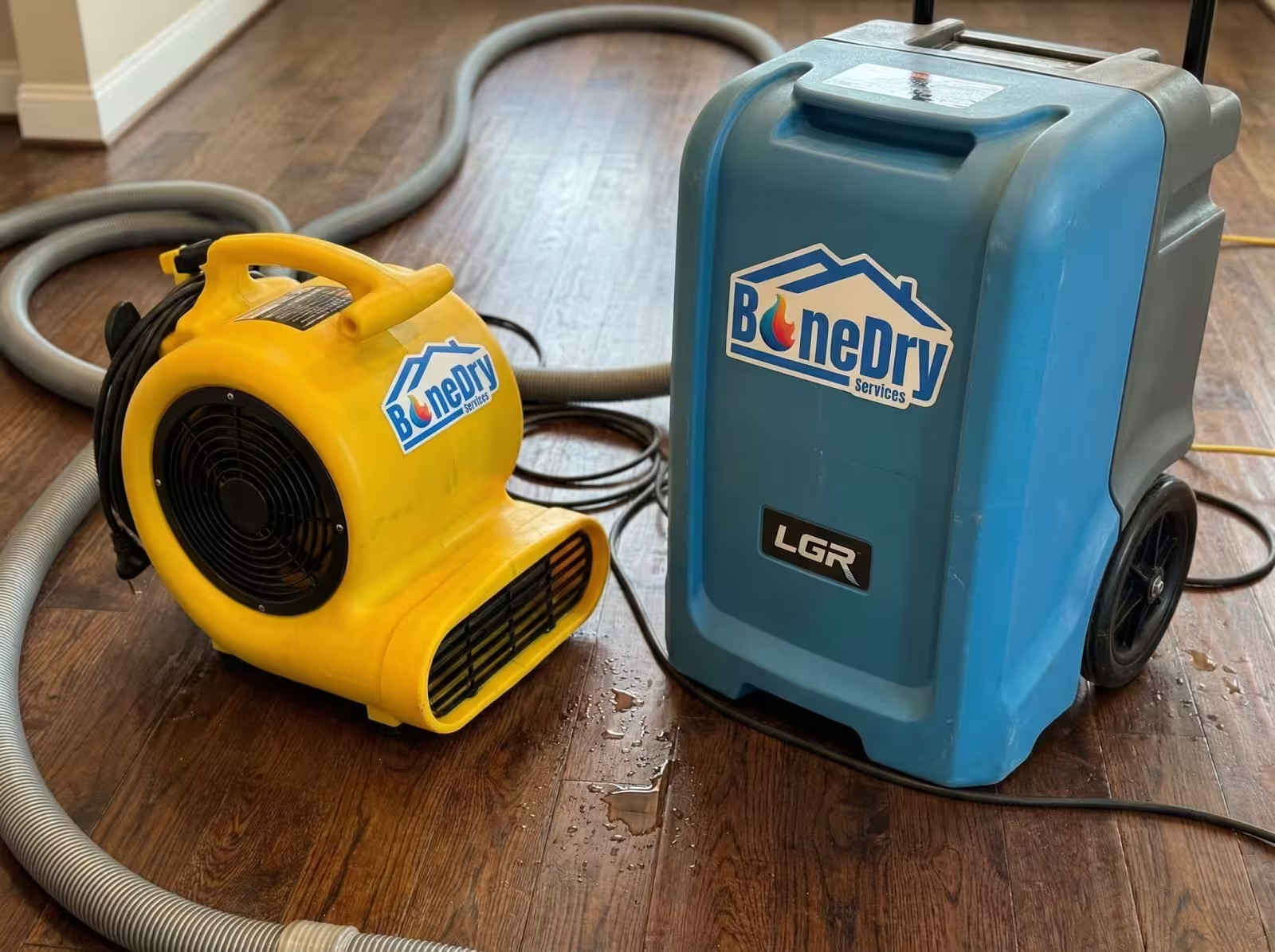
If your pump has already failed, you cannot afford to wait. The science of sump pump cleanup Denver requires moving beyond surface drying. At BoneDry Services, we use structural drying technology to fix the problem after it occurs. We go beneath the surface to ensure your home is restored to its dry standard, protecting your foundation and your family's health.
📞 Don’t wait for the next Denver storm. Call BoneDry Services at (303) 276-4163 for a system audit or emergency sump pump cleanup Denver today.
FAQ
Q1: Do you need a sump pump in Denver?
Absolutely. Denver’s unique "expansive clay" soil absorbs water like a sponge and then expands, creating immense pressure against foundation walls. During rapid snowmelt or high-volume rain events, this water has nowhere to go but into your basement. Without a functional sump pump, you are leaving your home's structural integrity to chance and significantly increasing your risk of needing extensive Water Damage Restoration.
Q2: How much does a sump pump typically cost?
The cost of the hardware varies based on capacity and material. A standard, light-duty pump may cost around $200, but for high-volume protection, a cast-iron submersible pump can range from $600 to $1,200. While the upfront cost is higher, industrial-grade pumps are a cost-effective alternative to the thousands of dollars you would spend on Water Damage Restoration after a single basement flood.
Q3: How much does it cost to replace a sump pump in Colorado?
A professional replacement in the Colorado market typically ranges from $800 to $2,500. This price fluctuation depends on whether you are simply swapping a motor or upgrading the entire basin, discharge lines, and backup power supply. Investing in a professional installation ensures your backup systems are calibrated correctly to prevent a catastrophic Water Damage Restoration scenario.
Q4: Do houses in Colorado have sump pumps?
Most homes built in Colorado after the mid-1980s are required to have a sump pit and pump system. However, many older homes in historic Denver neighborhoods were built before these codes existed. These older properties are the most vulnerable to groundwater intrusion and often require a professional retrofit to avoid recurring Water Damage Restoration needs.
Q5: What are the negatives of a sump pump?
The primary drawbacks include noise, the space taken up in the basement, and the need for regular technical maintenance. Furthermore, a sump pump provides a false sense of security if it lacks a battery backup; if the power goes out during a storm, the pump stops, and the water begins to rise. To avoid a Water Damage Restoration crisis, you must manage these negatives with a high-quality redundant power system.