

Water Damage Restoration and Advanced Injectidry Systems vs Floor Replacement
Hardwood flooring is one of the most significant investments in a Denver home, especially in modern luxury builds featuring wide-plank oak or exotic species. When a leak occurs, the immediate reaction is often to assume the floor is ruined and destined for the landfill. However, modern Water Damage Restoration has evolved far beyond simple air movers. At BoneDry Services, we utilize industrial suction-based technology to save floors that other companies would simply tear out. Understanding the difference between surface drying and sub-floor vacuum extraction is the key to successful, cost-effective Water Damage Restoration.
The Science of Suction Based Water Damage Restoration
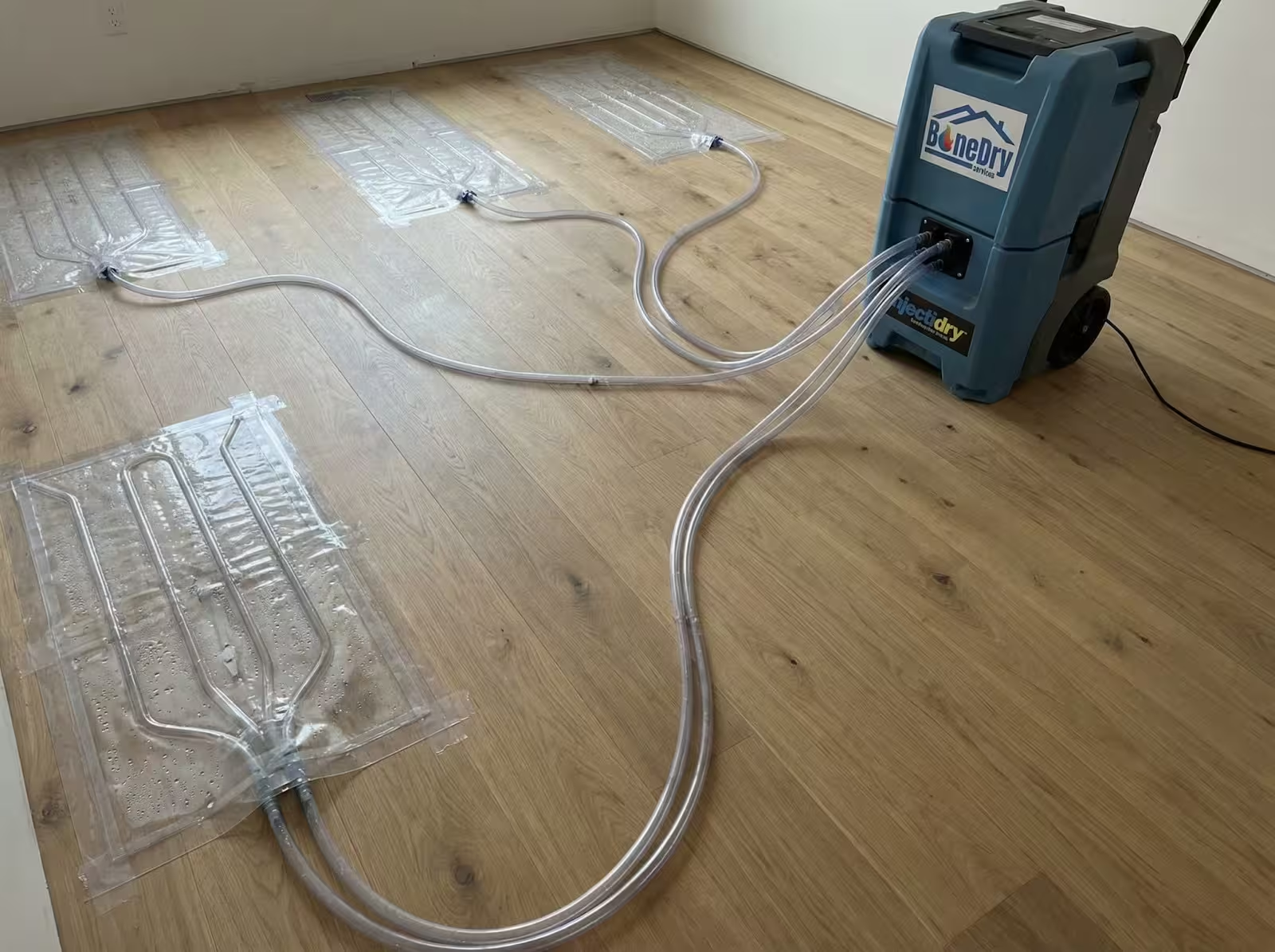
Traditional drying methods rely on blowing air across the surface of the wood. While this may dry the finish, it does nothing for the moisture trapped beneath the planks in the subfloor. To provide the specialized Water Damage Restoration Denver homeowners require, we utilize the Injectidry system. This technology uses high-pressure vacuum mats to create a localized airtight seal over the wood, literally pulling the "bound water" through the grain of the wood and out of the house.
How Vacuum Pressure Saves Wide Plank Oak
Wide-plank flooring is particularly susceptible to "cupping," where the edges of the board rise higher than the center due to moisture absorption in the bottom of the wood. Professional Water Damage Restoration must address this moisture imbalance immediately to prevent permanent cellular collapse of the wood. By applying consistent, regulated vacuum pressure, our teams can achieve several critical goals:
- Reverse Capillary Action: We pull water out through the same microscopic pores it used to enter the wood, essentially reversing the flood process.
- Subfloor Moisture Extraction: We reach the plywood or concrete layers beneath the hardwood without needing to remove a single board, which is essential for total Water Damage Restoration.
- Vapor Pressure Gradient: We create an environment where the air under the mats is extremely dry, forcing the moisture to migrate toward the surface at an accelerated rate.
Cellular Stabilization: By controlling the speed of the drying, we prevent the wood from "checking" or cracking due to rapid, uneven moisture loss.
Advanced Injectidry Systems vs Floor Replacement
The debate between specialized Water Damage Restoration and full floor replacement often comes down to cost and time. Replacing a custom hardwood floor in Denver can take weeks—involving messy demolition, acclimation of new wood to Colorado's dry climate, installation, sanding, and staining.
The Benefits of Choosing Technical Restoration
- Cost Efficiency: Professional Water Damage Restoration using Injectidry is typically a fraction of the cost of a full floor replacement, especially when considering the price of premium materials.
- Preservation of Originality: For historic Denver homes, keeping the original "old-growth" wood is vital for maintaining the property’s historical value and aesthetic charm.
- Minimized Disruption: While replacement forces you out of your home for weeks due to dust and fumes, suction-based Water Damage Restoration allows you to stay in the home while we work.
- Eco Friendly Approach: Restoring your floor reduces construction waste and prevents the unnecessary harvest of new exotic hardwoods or old-growth oak.
Pulling Moisture Through the Grain in Exotic Hardwoods
Exotic hardwoods like Teak, Ipe, or Brazilian Cherry are incredibly dense. Standard drying fans are almost completely ineffective on these species because the wood density prevents natural evaporation. Our Water Damage Restoration team understands that these materials require a higher vapor pressure differential. Using suction allows us to bypass the density of the wood and draw moisture out through the seams. If you don't use vacuum pressure, the water stays trapped, leading to a need for mold remediation under the floorboards months later.
Technical Monitoring During the Restoration Process
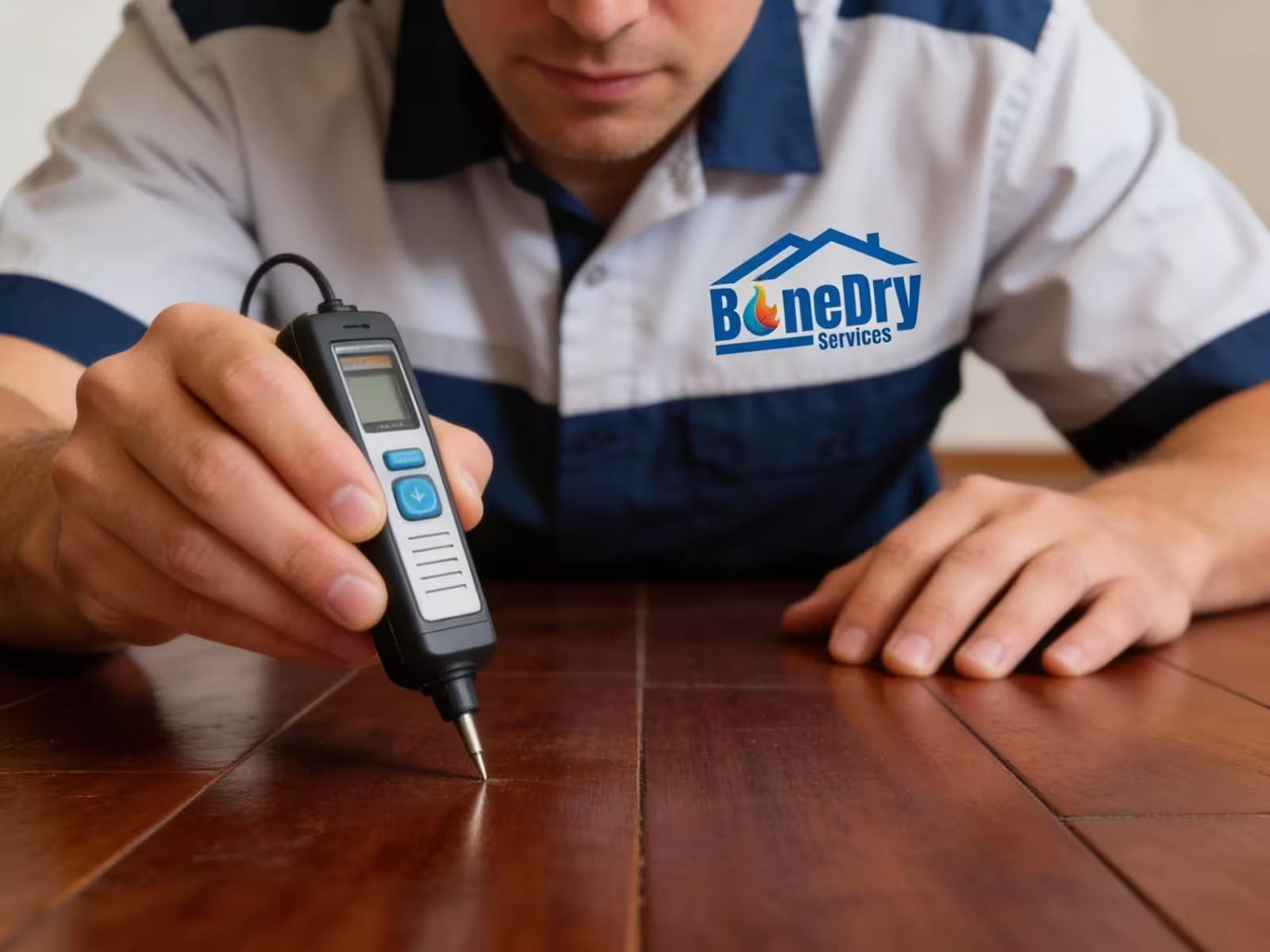
Success in Water Damage Restoration is measured in percentages, not "feel." We don't stop the machines until the affected wood matches the "Dry Standard" of an unaffected room in your home.
- Daily Moisture Mapping: We track the movement of the "wet front" to ensure the vacuum mats are placed in the most effective spots as the wood dries.
- Relative Humidity Control: We use LGR dehumidifiers to keep the room air extremely dry, which helps the vacuum system "pull" more effectively.
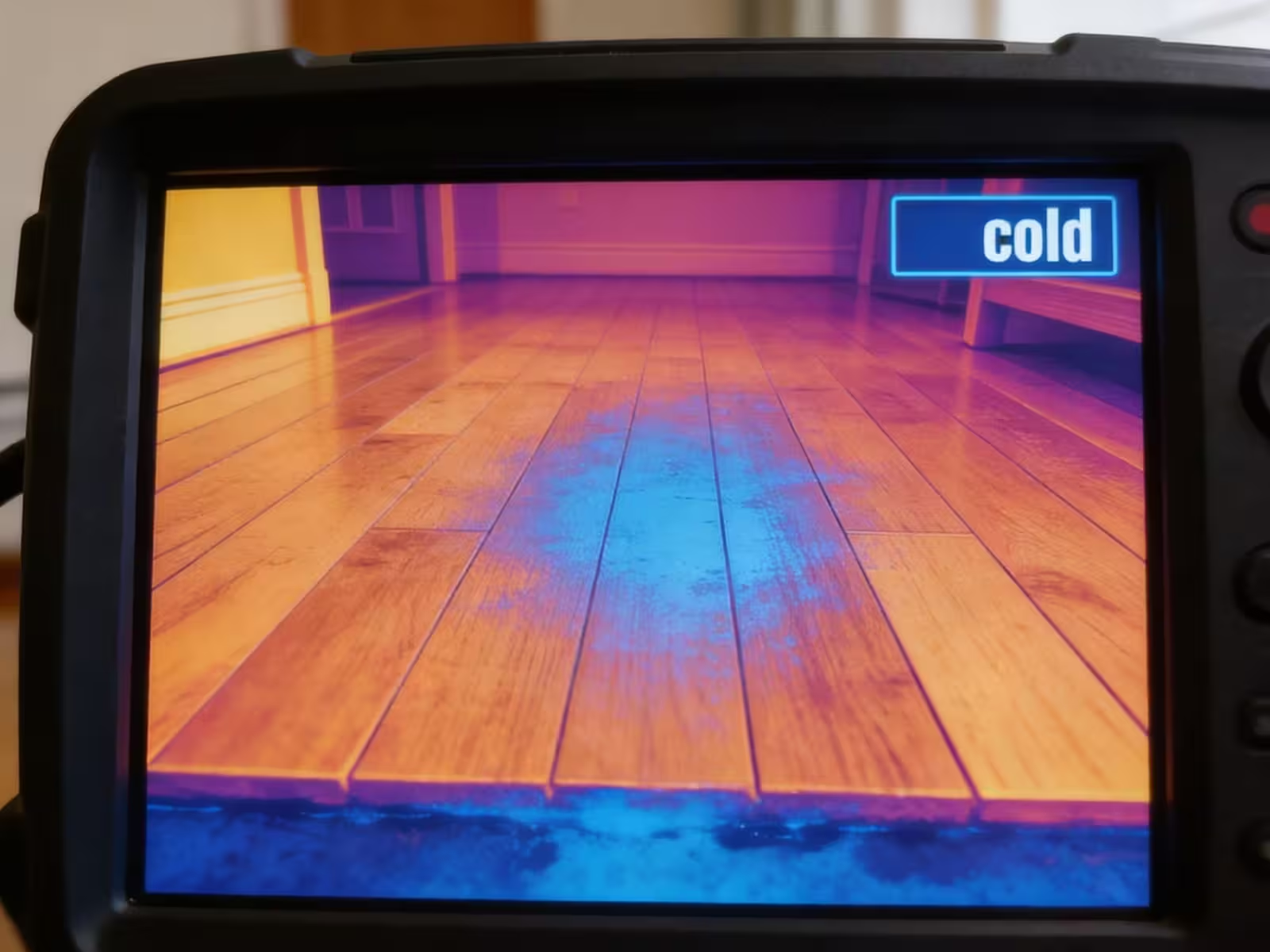
- Thermal Inspection: We use infrared cameras to see the "cool spots" where water is still hiding, a critical step also used in sewage cleanup.
- Grains Per Pound (GPP) Tracking: We monitor the moisture content of the exhaust air to verify that the machines are successfully removing water from the substrate.
Trust BoneDry Services for Specialized Water Damage Restoration
Your hardwood floors are the heart of your home’s aesthetic. Don't let a standard "blow and go" restoration company convince you that replacement is the only option. We provide the scientific Water Damage Restoration Denver residents need to save their property. At BoneDry Services, we have the equipment and the expertise to handle even the most complex flooring saves using the Injectidry system.
📞 Is your hardwood floor cupping? Call BoneDry Services today at (303) 276-4163 for an Injectidry evaluation and professional Water Damage Restoration.
FAQ
Q1: How effective is Injectidry?
Injectidry is highly effective and is considered the gold standard for saving specialty flooring. It is significantly more powerful than standard drying because it addresses the "bound water" trapped in the subfloor. In most cases, it can restore a cupped hardwood floor to its original flat state within 3 to 7 days of active Water Damage Restoration.
Q2: Does Injectidry prevent mold growth?
Yes, by rapidly removing moisture from the dark, stagnant spaces beneath floorboards and inside wall cavities, Injectidry eliminates the environment mold needs to survive. Because mold requires 24-48 hours of moisture to germinate, the speed of this Water Damage Restoration technology is your best defense against long-term fungal issues.
Q3: Can Injectidry dry walls?
Injectidry is a versatile tool that can also be used for "In-Place" wall drying. By using small, non-invasive injectors at the base of the wall, we can push or pull dry air through the wall cavity. This allows us to perform Water Damage Restoration without removing expensive wallpaper, built-in cabinetry, or specialized wall finishes.
Q4: Can water damaged floors be fixed?
Yes, if caught early, most water-damaged floors can be fully restored without being replaced. If the boards have only begun to "cup" (curl at the edges), technical Water Damage Restoration using vacuum pressure can often flatten them. However, if the wood has "buckled" or detached from the subfloor, replacement may be necessary.
Q5: How much to repair water damage on a floor?
The cost varies based on the square footage and the type of wood, but professional Water Damage Restoration typically ranges from $1,500 to $5,000 for a standard room. This is a significant saving compared to floor replacement, which can easily cost $10,000 to $20,000 when factoring in new materials, labor, and finishing.